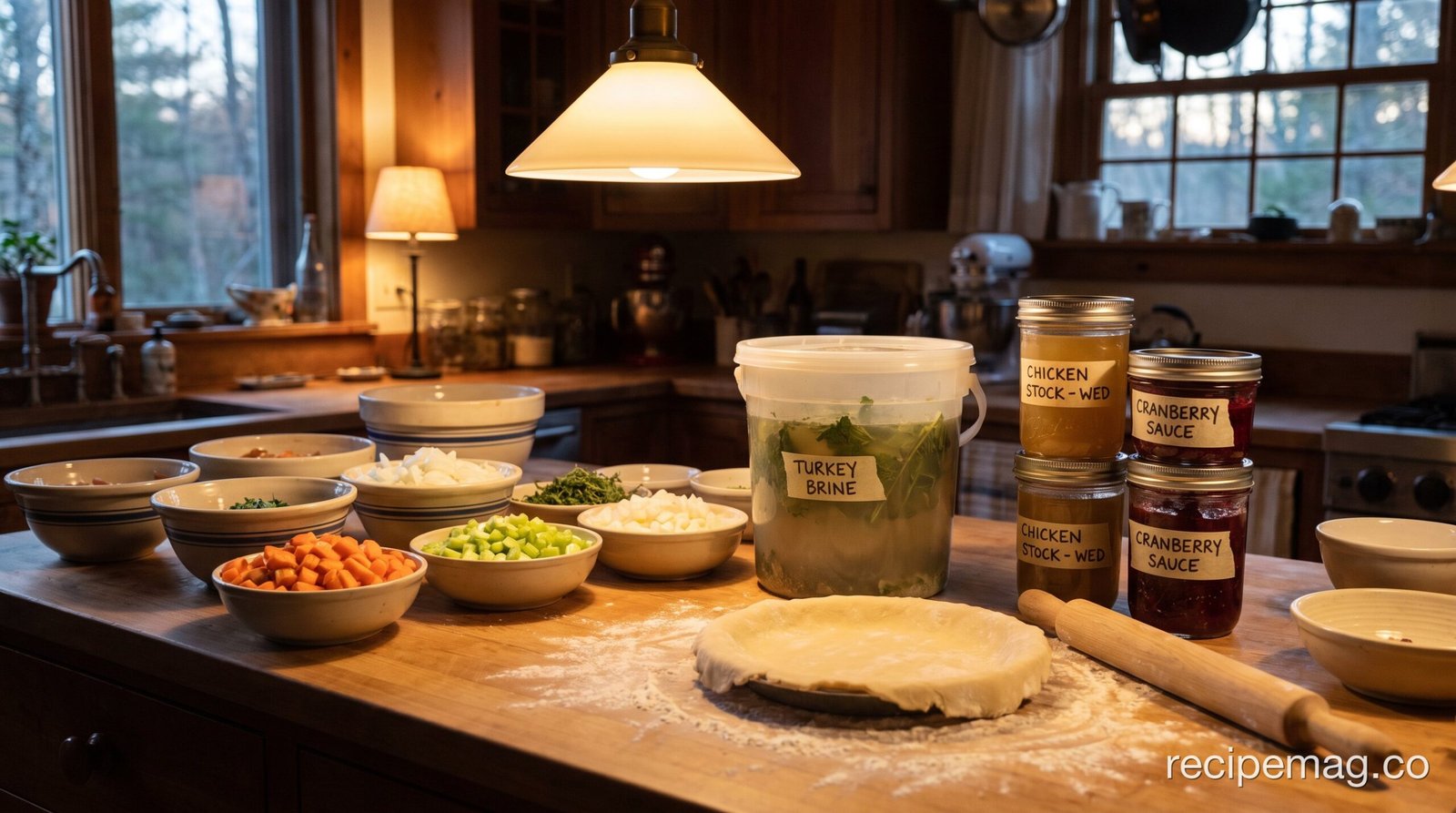
Thanksgiving Eve is for finishing, not starting, and the first thing to check is the turkey. USDA says a turkey thaws in the refrigerator at about 24 hours for every 4 to 5 pounds (USDA FSIS, 2025), so a 16-pound bird still frozen on Wednesday needs a cold-water bath today. Everything else on this plan fits around that.
Key Takeaways
- Check the turkey first: it must be fully thawed, with FSIS timing of 24 hours per 4 to 5 pounds in the fridge.
- Spend Wednesday on a short list: vegetables, dough, dressing base, sauce, table and fridge space.
- Cook nothing you can’t reheat well, and label every container with a name and a time.
- Be in bed by 10 p.m. Tired cooks make more mistakes than late timelines do.
What Should You Do the Night Before Thanksgiving?
Do the jobs that hold well overnight and skip the ones that don’t. USDA FSIS advises keeping the refrigerator at 40°F or below and not leaving perishable food out over 2 hours (USDA FSIS, 2025). That makes Wednesday a day for chopping, mixing and chilling, with the oven mostly saved for Thursday.
Here’s the order we follow, in our experience. It moves from the thing that can wreck dinner (the bird) to the things that only save time.
- Turkey: confirm it’s thawed, then season or brine it.
- Fridge space: clear two shelves.
- Vegetables and aromatics: wash, peel and cut.
- Doughs and pies: finish anything that needs to chill.
- Sauces and casseroles: cook, cool and assemble the ones that reheat well.
- The table and drinks: set it, chill what needs chilling.
- Thursday’s written plan: post it where you can see it.
Not sure what else belongs on Wednesday? Our Thanksgiving make-ahead guide sorts every dish by how early you can make it.
Is Your Turkey Actually Thawed?
Check now, because a partly frozen bird adds hours to Thursday. USDA FSIS lists cold-water thawing at about 30 minutes per pound, with fresh water every 30 minutes, and says a bird thawed that way must be cooked right away (USDA FSIS, 2025). Our turkey thawing guide has the full math.
How to Check
Reach into the cavity and feel for ice crystals. Wiggle a leg. Press the thickest part of the breast. If you meet resistance or crunch, it’s still frozen inside. Remove the neck and giblet bag with a spoon handle if the cavity has thawed enough to open.
If It’s Still Frozen
Fill a clean sink or cooler with cold tap water and submerge the wrapped bird breast-side down. Change the water every 30 minutes. A 14-pound turkey needs about 7 hours, so start this morning. Don’t use warm water, which brings the outer layer into the danger zone while the center stays frozen.
Once it’s thawed, you have two options. A dry brine goes on tonight and needs no extra container. Either way, don’t rinse the bird, since FSIS warns that rinsing raw poultry spreads bacteria around the sink.
What Can You Chop, Mix and Assemble on Wednesday?
Almost every raw vegetable and most doughs can be done a day ahead. USDA FSIS says cooked leftovers and prepared dishes should be refrigerated within 2 hours and used in 3 to 4 days (USDA FSIS, 2025), so a dish cooked Wednesday and eaten Thursday sits comfortably within that window.
Vegetables and Aromatics
- Onions, celery, carrots: dice for dressing, gravy and the roasting pan. Store in separate zip-top bags.
- Green beans: trim and wash, then refrigerate wrapped in a damp towel.
- Brussels sprouts: trim and halve. They hold two days.
- Potatoes: peel and keep them fully covered in cold water in the fridge. Uncovered, they brown. Better yet, follow our make-ahead mashed potatoes and finish the whole dish tonight.
- Herbs: chop sage, thyme and parsley for tomorrow, but leave basil-type tender herbs whole.
Doughs, Dressings and Casseroles
Pie dough benefits from the overnight rest. Bake pies tonight if your oven is free, or make the filling and bake Thursday morning. Cube and dry the bread for dressing so it soaks evenly. Assemble a casserole, such as green beans or sweet potatoes, but hold crunchy toppings in a separate bag so they stay crisp.
Here’s a trick most checklists skip: write the oven temperature and time on masking tape on each dish. By 2 p.m. Thursday, nobody remembers whether the sweet potatoes bake at 350°F or 375°F, and a sticky note on the foil beats a spreadsheet.
For pies, our Thanksgiving pie guide explains which fillings can be baked Wednesday and which should wait.
How Do You Make Room in the Fridge?
Clear space before you need it. The danger zone for bacterial growth runs from 40°F to 140°F, and USDA FSIS recommends a fridge at 40°F or below (USDA FSIS, 2025). A packed fridge circulates cold air poorly, so overloading it can push temperatures up.
Here’s what we do. Take everything out that isn’t for Thanksgiving, then group what’s left by when it will be used.
- Bottom shelf: raw turkey in a rimmed pan, so juices can’t drip onto anything else.
- Middle shelves: casseroles, pie dough, cranberry sauce, gravy.
- Top shelf and door: drinks, butter, cream, whipped cream ingredients.
- Garage or cooler: bottled drinks only. Chilling a cooler with ice is fine for beverages, not for raw meat.
Put a refrigerator thermometer on the middle shelf and check it. If it reads above 40°F, turn the dial colder tonight. It’s cheap insurance, and it’s one of the few things you can verify in ten seconds.
What’s a Realistic Wednesday Schedule?
A good Wednesday takes three to four hours of actual work, spread out. We’ve found that starting at 4 p.m. and finishing by 8 p.m. leaves you rested and calmer on Thursday. Nothing here needs perfect timing, and most tasks can slide by an hour.
| Time | Task | Where It Goes |
|---|---|---|
| Morning | Confirm turkey is thawed; grocery run for last items | Fridge, bottom shelf |
| Afternoon | Make cranberry sauce; bake pies or pie crusts | Fridge or counter |
| 4 p.m. | Chop vegetables and herbs; cube bread for dressing | Labeled bags |
| 5 p.m. | Assemble casseroles; prepare mashed potatoes | Fridge, middle shelf |
| 6 p.m. | Dinner (something simple, not leftovers of Thursday’s menu) | Table |
| 7 p.m. | Season or brine turkey; set the table; chill drinks | Fridge, counter |
| 8 p.m. | Write Thursday’s schedule; load the dishwasher | Fridge door |
Then take Thursday’s plan from our Thanksgiving Day timeline, and tape it next to the stove tonight.
Don’t Cook the Turkey Tonight
Some people roast the bird Wednesday to save time. We don’t recommend it unless you’re comfortable carving and reheating a whole turkey, since FSIS says leftovers must be reheated to 165°F. Reheating a sliced bird tends to dry it out, and the roasting is the best moment of the day.
How Do You Set Up the Table and Kitchen?
Do it tonight and you’ll thank yourself at noon. In our experience, setting a table for ten takes 20 to 30 minutes, and it’s a job that can’t be rushed once guests arrive. A clean, clear kitchen also makes the real cooking easier.
- Table: set plates, glasses, silverware and napkins. Put out serving spoons with sticky notes naming each dish.
- Serving dishes: match each dish to its bowl. You’ll find out now if you’re short.
- Counters: clear them. Thursday’s countertop is your workspace.
- Dishwasher and sink: run a load, empty it, and leave it ready.
- Trash and recycling: put in fresh bags. Add a bag for turkey wrappings.
- Coffee and drinks: set up the coffee maker and chill drinks. Check the grocery bags for that forgotten bottle of sparkling cider.
Every year, someone asks where the butter dish or gravy boat is, at the worst possible moment. In our kitchen, we pull every serving piece out on Wednesday and label it with a tag. It adds ten minutes tonight and saves a scramble on Thursday.
Frequently Asked Questions About Thanksgiving Eve Prep
Can I cook everything on Wednesday?
Not everything. Pies, cranberry sauce, mashed potatoes, rolls and many casseroles hold well. The turkey, gravy finishing and anything crisp are better on Thursday. USDA FSIS says prepared food should be refrigerated within 2 hours and eaten in 3 to 4 days, so cooking Wednesday is safe if you cool and chill promptly.
What if my turkey is still frozen on Wednesday?
Switch to cold-water thawing right away. USDA FSIS says to allow about 30 minutes per pound, changing the water every 30 minutes, so a 14-pound bird needs about 7 hours. Cook it immediately afterward. Don’t leave it on the counter, and don’t use hot water. Allow extra roasting time if any ice remains.
Should I brine the turkey tonight?
You can. A dry brine, which is salt rubbed on and left uncovered in the fridge, needs no extra equipment and works well overnight. A wet brine needs a large clean container kept at 40°F or below, which is hard on a crowded fridge. Our guidance is to dry brine unless you already own the cooler setup.
How early should I go to bed?
Aim for sleep by 10 p.m. A tired cook tends to misread timers and skip the thermometer, and a few late-night tasks aren’t worth it. Write the plan down, set two alarms, and trust the lists. Most Thanksgiving mistakes come from rushing on Thursday rather than prepping too little on Wednesday.
Finish Strong, Then Rest
Wednesday’s goal is a calm Thursday. Check the turkey, clear the fridge, chop what you can and write the schedule down. If a task isn’t done by 8 p.m., decide whether tomorrow’s timeline has room for it, and if not, drop it. Nobody remembers the missing garnish.
Turn off the kitchen light, set your alarms and go to bed. Tomorrow’s job is simply to follow the list. For hour-by-hour help, open the Thanksgiving Day timeline before you sleep, and happy cooking.
