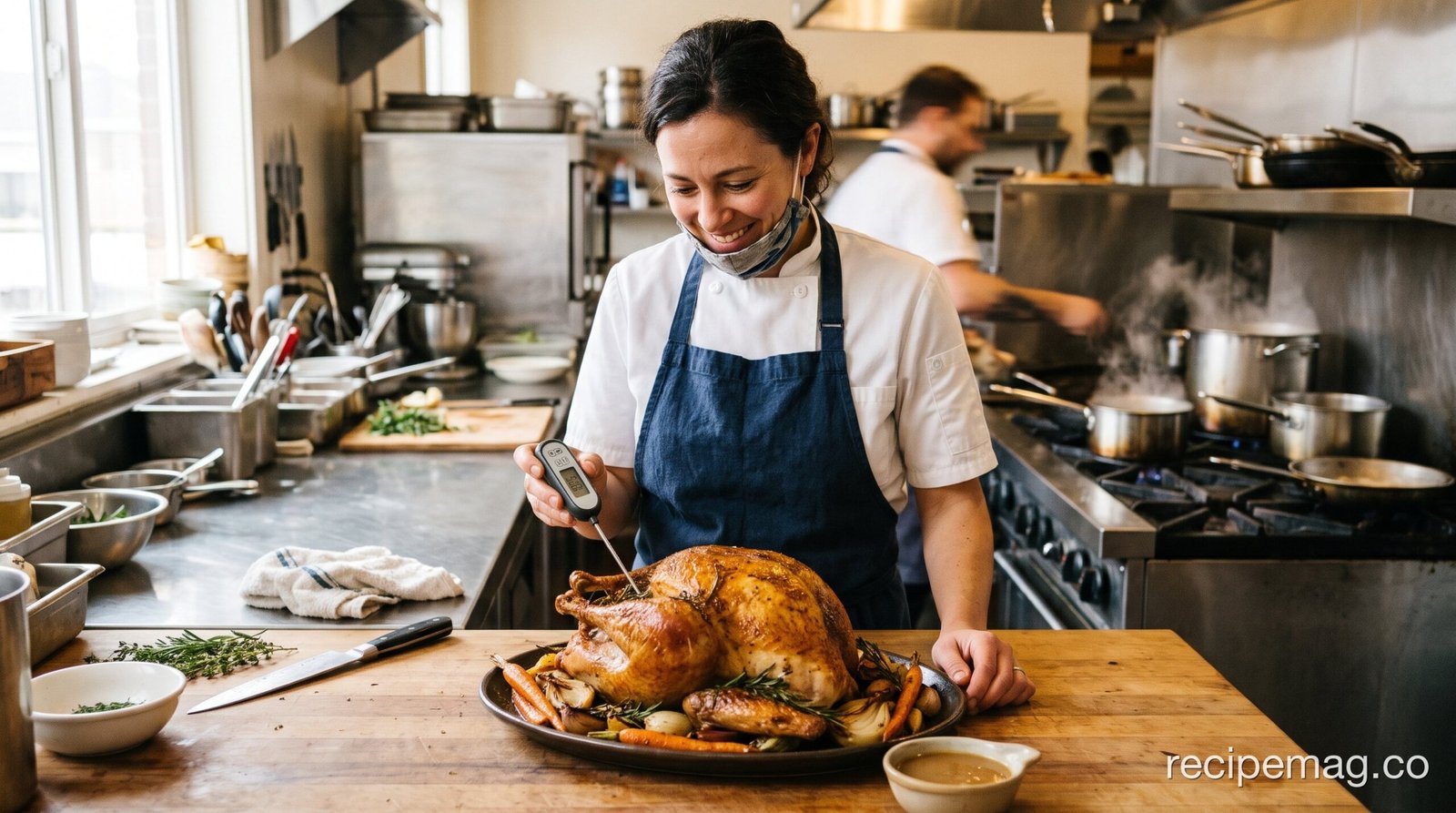
Most Thanksgiving problems have a quick fix, and the first tool is an instant-read thermometer. USDA FSIS says a turkey is safe at 165°F, measured in the thickest part of the breast, the innermost thigh and the innermost wing (USDA FSIS, 2025). Below are 12 problems cooks hit every year, with a fix for each that works on Wednesday night or Thursday at 2 p.m.
Key Takeaways
- A turkey is safe at 165°F in the breast, thigh and wing, per USDA FSIS. Pull it by temperature, not by the clock.
- A frozen bird can thaw in cold water at about 30 minutes per pound, or roast from frozen in roughly 50 percent more time.
- Gravy, stuffing and potatoes can all be rescued with broth, a sieve or a gentler hand.
- Keep hot food at 140°F or above and refrigerate leftovers within 2 hours.
What Do You Do When the Turkey Itself Goes Wrong?
Turkey trouble usually comes down to temperature and timing, and all four fixes below start with a thermometer. USDA FSIS says a turkey is safe once the breast, thigh and wing each reach 165°F, and that it should rest at least 20 minutes before carving (USDA FSIS, 2025). Panic less, probe more.
1. The turkey is still frozen
Don’t wait it out on the counter. USDA FSIS says a turkey in cold water thaws at about 30 minutes per pound, with the water changed every 30 minutes (USDA FSIS, 2025). A 14-pound bird needs about 7 hours. Our turkey thawing guide covers the full method.
Short on time? FSIS also says you can roast a turkey straight from frozen. Expect it to take at least 50 percent longer, and skip stuffing it. Pull out the giblet bag once the bird loosens, around the halfway point.
2. The breast is dry
Dry breast meat means it passed 165°F by a lot. Slice it thin, lay it in a baking dish and pour over 1 cup of warm broth with 2 tablespoons of melted butter. Cover with foil and hold it in a 200°F oven for up to 30 minutes. Serve the juices with it.
3. The skin is pale
Pale skin is almost always wet skin. If the turkey is cooked but not browned, remove any foil, raise the oven to 450°F and roast 10 to 15 minutes more. Watch it closely. Check the temperature again afterward, since extra heat can dry the outer meat.
4. The turkey finished too early
An early bird is a good problem. Tent it loosely with foil and wrap it in two clean towels, then set it in an empty cooler or a turned-off oven. In our experience, a 13-pound turkey holds hot for about an hour this way. Use that time for sides and gravy.
We’ve had a turkey hit 165°F a full 90 minutes ahead of plan. It carved beautifully after a long rest, and nobody noticed. A fast bird is far easier to manage than a slow one.
How Do You Fix Gravy That Is Lumpy, Thin or Too Salty?
Gravy has three common failures, and each one is fixable in under 10 minutes. The food-safety part is simple: USDA FSIS says to reheat leftover gravy to 165°F and bring it to a rolling boil if you’re warming it on the stove (USDA FSIS, 2025). Taste before you serve either way.
5. The gravy is lumpy
Pour it through a fine-mesh sieve into a clean pot, pressing the solids with a spoon. An immersion blender works too, in short pulses. Lumps come from flour hitting hot liquid too fast, so next time whisk in broth a little at a time. Our make-ahead turkey gravy avoids the problem by cooking the roux first.
6. The gravy is thin or too salty
For thin gravy, simmer it 5 to 10 minutes. Still loose? Stir 1 tablespoon cornstarch into 2 tablespoons cold water, whisk it in and simmer 2 minutes. For salty gravy, add unsalted broth or water and a splash of cream, then a few drops of lemon juice to brighten it. Don’t add more salt to anything until it’s balanced.
What Can You Do About Side Dish Disasters?
Sides recover easily if you act early. The one firm rule is safety: USDA FSIS says bacteria multiply fastest between 40°F and 140°F, so hot dishes need to stay above 140°F while they wait (USDA FSIS, 2025). Everything else below is about texture.
7. The stuffing is dry or soggy
Dry stuffing needs liquid. Drizzle warm broth over it, a ¼ cup at a time, until the bread looks damp but not pooled. Cover with foil and bake at 350°F for 15 minutes. Soggy stuffing needs the opposite: spread it out, leave it uncovered and bake at 400°F for 15 to 20 minutes.
8. The mashed potatoes are gluey
Gluey potatoes come from overworked starch, usually from a blender or food processor. You can’t fully undo it, but you can improve it. Fold in warm butter and hot cream gently, then taste for salt. Or spread them in a buttered dish, top with cheese and bake at 400°F until golden. Next year, try make-ahead mashed potatoes.
9. The sides went cold while you carved
Reheat in the microwave in short bursts, stirring between each, until steaming hot. A slow cooker can keep hot food hot, but FSIS says not to use one to reheat cold food, because it warms too slowly (USDA FSIS, 2025). Cover each dish with foil while it waits.
How Do You Solve Oven and Timing Problems?
Crowded ovens cause more stress than any single recipe. A 12- to 14-pound turkey takes about 3 to 3¾ hours at 325°F according to USDA FSIS (USDA FSIS, 2025), and that leaves little room for anything else. The fix is to stagger dishes around the turkey’s long rest.
10. There isn’t enough oven space
Use the rest. A turkey needs 30 to 40 minutes under foil, and that’s when your casseroles and rolls go in at 400°F. Move cold-friendly dishes to the stovetop or the microwave. For a complete rotation, see our Thanksgiving oven schedule. If you’re still shopping, start with our last-minute Thanksgiving checklist.
Here’s a contrarian take: write the schedule backward from the time you want to sit down, and don’t build in a “buffer” at the end. A 40-minute turkey rest is the buffer. Everything else should be done by the time it’s carved.
What Should You Do About Dessert and Leftover Problems?
Dessert troubles are mostly cosmetic, and leftover troubles are mostly about the clock. USDA FSIS says to refrigerate leftovers within 2 hours and eat them within 3 to 4 days (USDA FSIS, 2025). Set a timer when the plates come off the table.
11. The pumpkin pie cracked
Cracks mean the custard baked a little too long. Cover them with whipped cream or a ring of toasted pecans, and no guest will care. Next time, pull the pie when the edges are set and the center still wobbles slightly, then cool it slowly. An egg-rich filling should reach 160°F, per FSIS egg guidance.
12. The refrigerator is already full
Clear space on Wednesday by moving drinks to a cooler with ice. Pack leftover turkey, stuffing and gravy into shallow containers so they cool quickly, and label them with the date. Any dish left out past 2 hours goes in the trash, no matter how good it looked.
Frequently Asked Questions About Thanksgiving Problems
Can I cook a turkey that’s still partly frozen?
Yes. USDA FSIS says a frozen turkey is safe to roast, but it takes at least 50 percent longer than a thawed one. A partly frozen bird works the same way. Check the temperature in the breast, thigh and wing, and don’t stuff it. The bird is done at 165°F in all three spots.
What if my turkey is done but guests are an hour late?
Leave it whole, tent it with foil and wrap it in towels, then keep it somewhere warm. Carved meat cools faster than a whole bird. Under USDA’s 2-hour rule, hot food shouldn’t sit between 40°F and 140°F for longer than 2 hours total, so check it with a thermometer before serving.
Can I save gravy that tastes burnt?
Probably not by seasoning alone. If the burn is faint, strain the gravy into a clean pot without scraping the bottom, then thin it with fresh broth. If it still tastes bitter, make a quick batch of gravy from drippings, or start a pot of make-ahead gravy, and blend the two.
How long can leftovers sit out during dinner?
Two hours at most. USDA FSIS says perishable food left out longer than that should be discarded, and the limit drops if the room is hot. Put leftovers into shallow containers as soon as people finish eating. They’ll keep 3 to 4 days in the refrigerator.
Stay Calm and Keep Cooking
Almost nothing on Thanksgiving is truly ruined. Most mistakes come down to heat, moisture or timing, and each has a fix you can do in minutes. Keep a thermometer in reach, taste as you go and give the turkey a long rest.
If you haven’t finished your list, write the schedule down and pin it to the wall. A written plan prevents most of the problems above before they begin.
