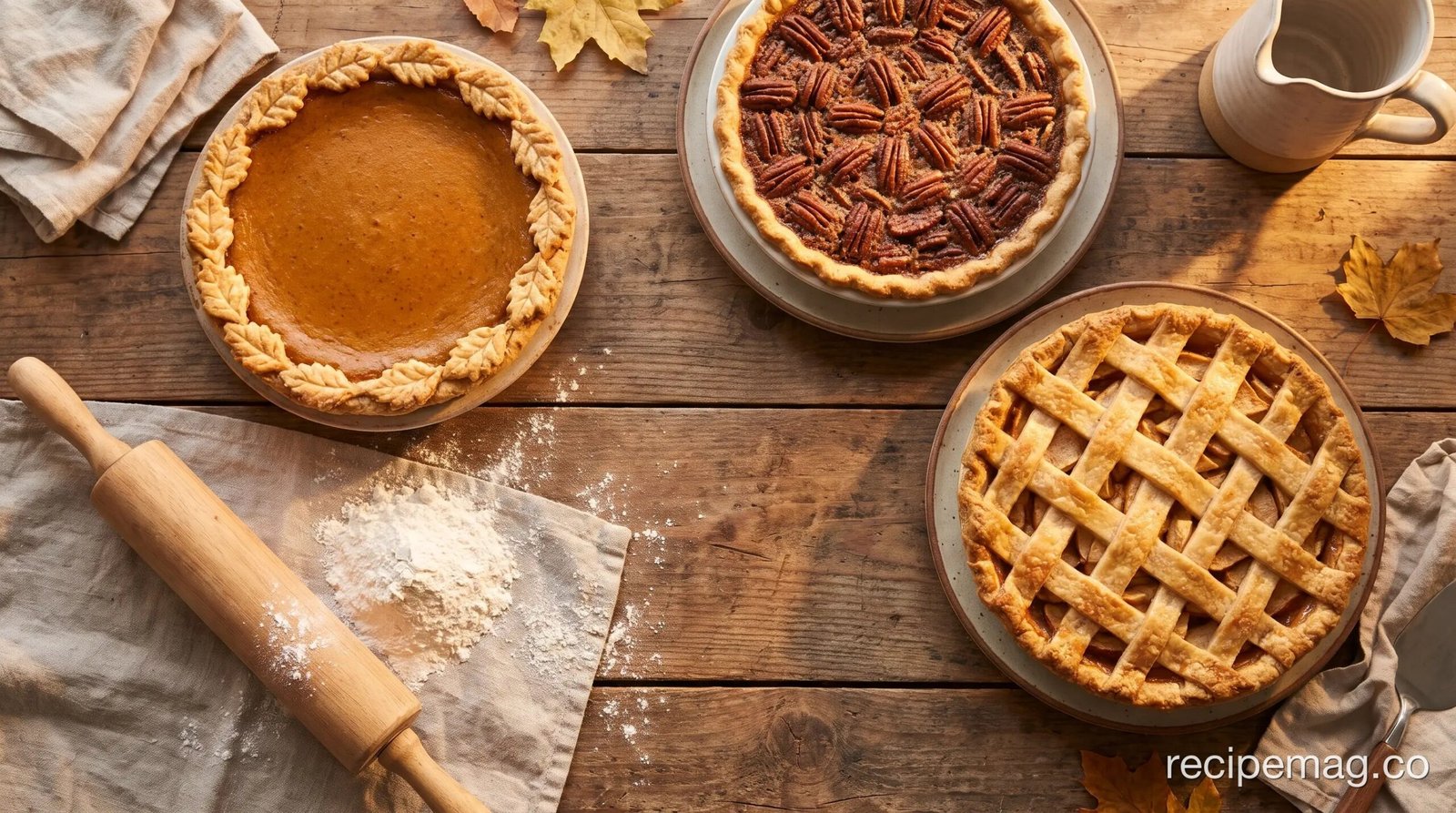
The easiest way to handle Thanksgiving pies is to make the dough early, bake on Tuesday and Wednesday, and treat custard pies as the perishable food they are. Pumpkin pie is made with eggs and milk, so it belongs in the fridge, where it keeps 3 to 4 days, or in the freezer for 1 to 2 months (USDA FoodKeeper, 2026). Fruit pies are more forgiving. This guide covers crusts, a day-by-day bake schedule for Thursday, November 26, 2026, and which pies hold up in the freezer.
Key Takeaways
- Make pie dough now. Wrapped disks keep about 3 months in the freezer and thaw overnight in the fridge.
- Pumpkin and pecan pies contain eggs, so refrigerate them. Pumpkin keeps 3 to 4 days (USDA FoodKeeper, 2026).
- Bake pecan on Tuesday, Nov. 24, and pumpkin and apple on Wednesday, Nov. 25, so Thursday’s oven belongs to the turkey.
- Freeze pecan pie baked and fruit pie unbaked. Never freeze cream or meringue pies.
- Plan one 9-inch pie for every 6 guests.
How Many Pies Do You Need for Thanksgiving?
A 9-inch pie cuts into 8 standard slices, but Thanksgiving guests rarely take one standard slice. They take a sliver of pumpkin and a sliver of pecan, then come back for apple. We’ve found that one pie for every 6 guests covers dessert with a little left over for Friday breakfast, which, let’s be honest, is half the point.
Three styles cover almost every preference at the table: a custard pie (pumpkin or sweet potato), a nut pie (pecan), and a fruit pie (usually apple). Their different storage needs are useful, too, because they spread your oven time over two days. If you’re still sorting out the turkey and sides, our Thanksgiving dinner planning guide covers the full menu and shopping list.
A Simple Pie Count by Guest List
- 4 to 6 guests: 1 pie, or 2 if you want both pumpkin and pecan (leftovers are not a problem).
- 8 to 12 guests: 2 pies, one custard and one fruit or nut.
- 12 to 18 guests: 3 pies, the classic pumpkin, pecan and apple trio.
- 20 or more: 4 pies, plus one non-pie dessert so the line moves.
For that non-pie option, a cheesecake works well because it’s made a day or two ahead and doesn’t compete for oven space on Wednesday. Our pumpkin Basque cheesecake gives you pumpkin flavor without another crust to roll.
What Makes a Good Thanksgiving Pie Crust?
A good crust is cold fat, flour, a little water, and time to rest. Butter brings the flavor, and U.S. butter must contain at least 80% milkfat (USDA Agricultural Marketing Service, 2026). Most of what’s left is water. In a hot oven that water turns to steam and pushes the dough into flaky layers, as long as the butter was still cold when it went in.
Butter, Shortening or Both?
All-butter crusts taste best and brown deeply, but they soften fast in a warm kitchen. Shortening stays solid at room temperature, so it rolls easily and bakes tender, with almost no flavor. New to pie? A half-and-half blend is forgiving. Otherwise, go all butter and keep everything cold.
The Three Dough Rules
- Keep it cold. Cube the butter and chill it, use ice water, and stop when you still see pea-size butter pieces. Those pieces are your flaky layers.
- Let it rest. Chill the dough at least 1 hour after mixing and 30 minutes after lining the pan. Resting relaxes the gluten, so the crust doesn’t shrink down the sides.
- Don’t overwork it. Add water a tablespoon at a time and stop as soon as the dough holds together when squeezed. Extra water and extra mixing make a tough crust.
For one 9-inch single crust, the basic formula is 1¼ cups all-purpose flour, ½ cup (1 stick) cold unsalted butter, ½ teaspoon salt, 1 tablespoon sugar and 3 to 5 tablespoons ice water. Double it for a double-crust apple pie.
When Should You Blind-Bake?
Blind-baking means baking the empty crust, lined with parchment and pie weights, before it’s filled. Pumpkin pie needs it, because a wet custard soaks into raw dough and leaves a pale, gummy bottom. Pecan pie benefits from a partial blind bake for the same reason. Double-crust fruit pies don’t get blind-baked. Instead, bake them on the lowest rack on a preheated sheet pan so the bottom gets direct heat.
Is store-bought crust cheating? Not at all. It’s a sensible shortcut in a week with a turkey in it. Blind-bake it the same way.
When Should You Bake Each Thanksgiving Pie?
Bake pecan pie on Tuesday, November 24, and pumpkin and fruit pies on Wednesday, November 25. Custard pies are perishable, and USDA FSIS advises against leaving perishable food at room temperature for more than 2 hours (USDA FSIS, 2026). Baking ahead means they’re chilled, set and out of the way before Thursday.
| When | Pie Task |
|---|---|
| Now through Sun., Nov. 15 | Make dough disks, wrap twice and freeze. |
| Sat. and Sun., Nov. 21 and 22 | Optional: assemble an apple pie and freeze it unbaked. Shop for eggs, cream, canned pumpkin and pecans. |
| Mon., Nov. 23 | Move frozen dough to the fridge to thaw overnight. Toast the pecans. |
| Tue., Nov. 24 | Roll, chill and blind-bake crusts. Bake the pecan pie. Refrigerate once cool. |
| Wed., Nov. 25 | Bake the pumpkin pie in the morning so it has hours to set. Bake the apple pie (fresh or from frozen). |
| Thu., Nov. 26 | Whip the cream. Pull custard pies from the fridge 30 minutes before dessert. Rewarm the apple pie while the turkey rests. |
Why not bake everything on Thursday? The turkey owns the oven, and pumpkin pie needs at least 3 hours to set before it slices cleanly. Pecan holds for days, so it goes first, and apple tastes best within a day. The schedule slots into our bigger Thanksgiving make-ahead guide, which lays out what to cook 3 days, 2 days and 1 day before.
Which Thanksgiving Pies Freeze Well?
Pecan pie and fruit pie freeze best. Baked pumpkin pie freezes too, holding 1 to 2 months according to the USDA FoodKeeper (2026), though its surface can weep a little after thawing. Cream pies and meringue pies don’t freeze well at all. Their fillings separate and turn watery, so make them the day before instead.
| Pie | Freeze Baked? | Freeze Unbaked? | Notes |
|---|---|---|---|
| Pecan | Yes, very well | Possible, but baked is better | Thaw overnight in the fridge. The filling barely changes. |
| Pumpkin or sweet potato | Yes, 1 to 2 months | No | Blot any surface moisture after thawing. Fresh tastes best. |
| Apple and other fruit | Yes | Yes, the best option | Bake from frozen. Add roughly 20 to 30 minutes and shield the edges. |
| Chocolate cream, banana cream, lemon meringue | No | No | Make the day before and keep refrigerated. |
| Raw pie dough | n/a | Yes, about 3 months | Freeze as flat disks. Thaw overnight in the fridge. |
How to Wrap a Pie for the Freezer
Freeze the pie uncovered on a level shelf until firm, about 2 hours, so the wrap doesn’t stick to the top. Then wrap it in two layers of plastic wrap and one layer of foil, and label it with the date. The open freeze matters more than the wrap. Wrapping a soft pie presses plastic into the filling, and you lose the pretty top you worked for.
How to Thaw a Frozen Pie
Thaw custard and pecan pies overnight in the refrigerator, never on the counter, since the eggs keep them perishable. Baked fruit pies can thaw at room temperature for a few hours. To bring back a crisp crust, warm a thawed fruit or pecan pie in a 350°F oven for 10 to 15 minutes. Pumpkin is best served cool, so skip the oven for that one.
How Do You Store and Serve Pies on Thanksgiving Day?
Fruit pies can sit at room temperature for up to 2 days, while pies made with eggs and dairy go in the fridge (USDA FoodKeeper, 2026). On the day, that means apple stays on the counter under a clean towel, and pumpkin and pecan come out of the fridge about 30 minutes before dessert, then go back within 2 hours.
Leftovers follow the same 2-hour clock, so get the custard pies back in the fridge before the second football game starts. Taking pie to someone else’s house? Carry custard pies flat in a cooler with an ice pack.
Toppings That Make Ahead
Whipped cream sweetened with a spoonful of powdered sugar holds in the fridge for several hours. Whip it to soft peaks in the morning and rewhisk briefly before serving. A scoop of homemade vanilla bean ice cream belongs on warm apple or pecan pie, and you can churn it up to a week ahead.
How Do You Fix the Most Common Pie Problems?
Most pie trouble comes down to temperature: a crust that wasn’t hot enough on the bottom, or a custard that got too hot in the middle. America’s Test Kitchen pulls pumpkin pie when the center reaches 175°F (America’s Test Kitchen, 2026), and an instant-read thermometer solves more pie problems than any trick.
Soggy Bottom Crust
Blind-bake crusts for custard pies until the bottom looks dry and lightly golden, not just set. For fruit pies, bake on the lowest rack over a preheated sheet pan. A glass pie plate helps too, because you can see whether the bottom has browned.
Cracked Pumpkin Pie
Cracks mean the custard overbaked. As eggs get too hot they tighten and squeeze out moisture, and the surface splits as it cools. Take the pie out while the center still jiggles slightly, then let it cool slowly at room temperature, away from drafts. It finishes setting as it cools.
Runny Fruit Pie
Fruit pies need 3 to 4 hours of cooling for the thickener to set. Cut it warm and the juices run everywhere. If your pie is still runny after cooling, the filling likely didn’t bubble long enough in the oven. Look for thick, slow bubbles through the vents before you pull it.
Frequently Asked Questions About Thanksgiving Pies
How far ahead can I make Thanksgiving pies?
Pecan pie can be baked on Tuesday, November 24, and pumpkin and fruit pies on Wednesday. Pumpkin pie keeps 3 to 4 days in the fridge, according to the USDA FoodKeeper (2026), so a Wednesday bake leaves room for leftovers. For an earlier start, freeze baked pecan pie or unbaked apple pie the weekend before.
Does pumpkin pie need to be refrigerated?
Yes. Pumpkin pie is an egg and milk custard, so it’s perishable and should be refrigerated once it has cooled. USDA FSIS advises not leaving perishable food at room temperature for more than 2 hours (2026). Pecan pie falls under the same rule because its filling is also set with eggs.
Can you freeze pumpkin pie?
Yes, for 1 to 2 months, according to the USDA FoodKeeper (2026). Freeze the baked, fully cooled pie uncovered until firm, then wrap it well. Thaw it overnight in the fridge and blot any moisture from the surface. The texture is very close to fresh, but a pie baked the day before still tastes better.
Do I need to blind-bake a pecan pie crust?
It isn’t required, but a partial blind bake gives a crisper bottom. Pecan filling is wet and bakes slowly, so a raw crust underneath can stay pale and soft. Bake the lined crust with weights for about 20 minutes, then 5 minutes without, before filling.
Which Thanksgiving pies should not be frozen?
Cream pies, such as chocolate cream and banana cream, and meringue-topped pies like lemon meringue. Their fillings separate and weep when thawed, and meringue turns rubbery. Make these the day before and keep them refrigerated. Pecan, pumpkin, sweet potato and fruit pies all freeze reasonably well, with fruit pies best frozen unbaked.
Make Your Pie Dough This Weekend
The best thing you can do for Thanksgiving dessert is make the dough now. A few disks in the freezer turn pie week into the fun part: rolling and baking.
From there, follow the schedule: pecan on Tuesday, pumpkin and apple on Wednesday, cream whipped on Thursday. Keep the custard pies cold, give every pie time to cool, and trust a thermometer over the clock.
Pick your three pies tonight and add the pecans, cream and canned pumpkin to this weekend’s shopping list. Your Wednesday self will thank you.
