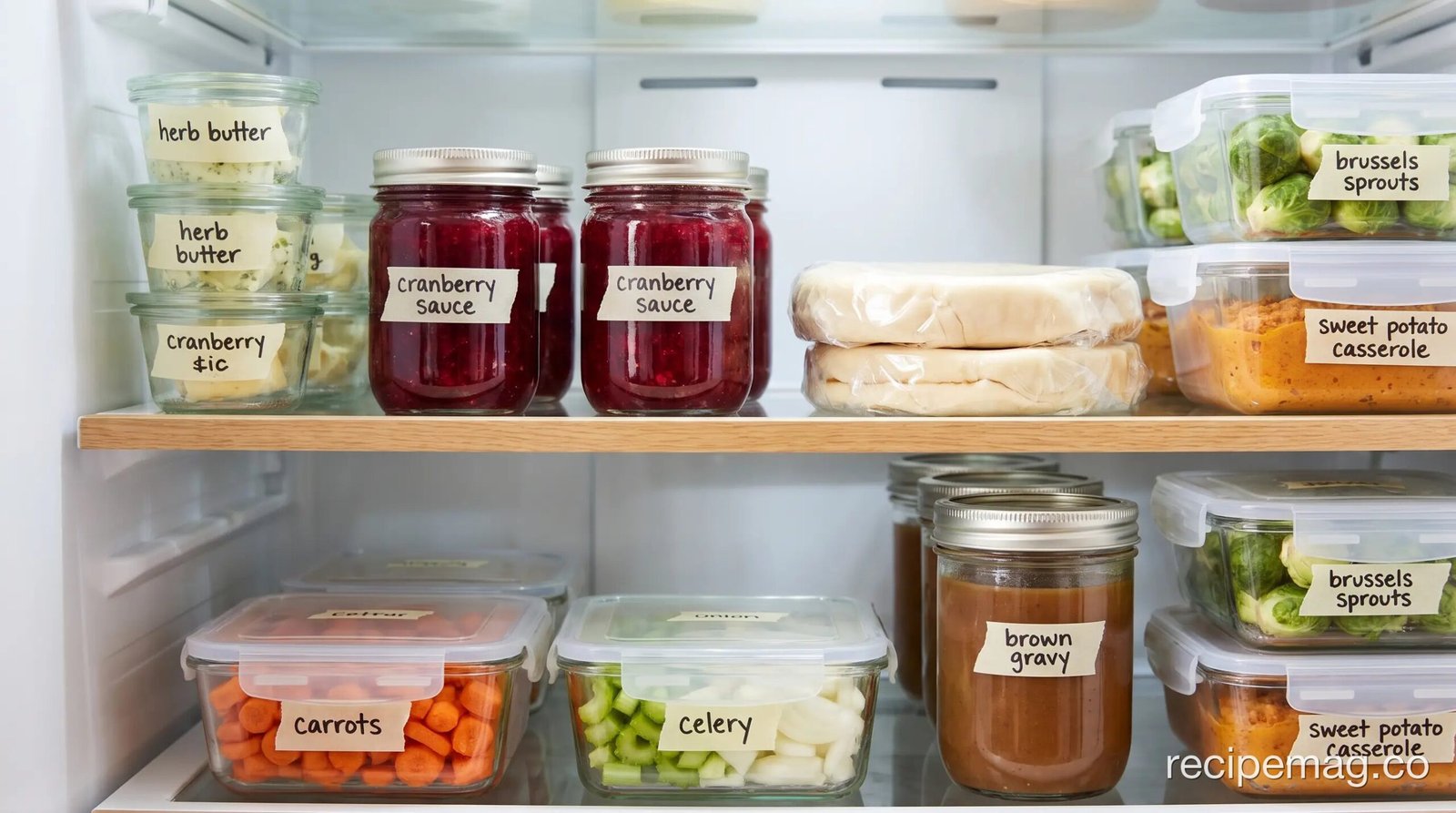
The smartest Thanksgiving make-ahead plan moves nearly everything except the turkey off Thursday: sauces and pie dough three days out, potatoes and casserole parts two days out, then pies and assembly the day before. The real limit is safety, not flavor. Cooked food keeps 3 to 4 days in the refrigerator, according to the USDA Food Safety and Inspection Service (2024), so Monday is as early as most dishes should go without the freezer.
Key Takeaways
- Cooked dishes keep 3 to 4 days in the fridge (USDA FSIS), so Monday, November 23, is the earliest fridge-only start for a November 26 dinner.
- The storage clock starts when you cook a dish, not when you serve it.
- Anything you want done sooner than Monday belongs in the freezer.
- Keep crunchy toppings and wet stuffing ingredients apart until Thursday.
- On the day, roast the turkey, bake casseroles while it rests and reheat everything to 165°F.
Thanksgiving 2026 falls on Thursday, November 26, and this countdown assumes a mid-afternoon dinner. Haven’t settled the menu or the guest count yet? Start with our Thanksgiving dinner planning guide, then come back here to schedule the cooking.
What Can You Make Ahead for Thanksgiving?
Nearly every side dish, sauce and dessert can be made ahead, and the freezer stretches that window even further. Food kept at 0°F stays safe indefinitely, per USDA FSIS (2024), though quality slowly fades. So safety rarely decides the schedule. Texture does: what reheats well, and what turns soggy.
Every dish on the table falls into one of three groups.
Make It Completely Ahead
Cranberry sauce, gravy, mashed potatoes, pies, stock, cornbread and baked dinner rolls. These either improve overnight or reheat so well that nobody can tell.
Make It in Parts
Casseroles and stuffing. Cook the components early, store them separately and combine them late. Combined too early, toppings go soggy and bread turns to paste.
Save It for Thursday
The turkey, roasted vegetables, anything fried or crisp, dressed salads and whipped cream. Even so, trim the Brussels sprouts on Wednesday and they’ll roast in about 25 minutes while the turkey rests.
How Far Ahead Is It Safe to Cook Thanksgiving Food?
Three days ahead is the practical limit for anything you refrigerate rather than freeze. USDA FSIS says to refrigerate cooked food within 2 hours and use it within 3 to 4 days (USDA FSIS, 2024). Cook on Monday, serve on Thursday, and you’re at day three: inside the window, with little to spare.
Here’s what most make-ahead timelines skip. The clock starts when you cook a dish, not when you serve it. Gravy made on Monday has roughly one day of leftover life left by Friday, so freeze whatever remains right after dinner. Dishes made on Wednesday give you the full window for Friday sandwiches.
Cooling matters as much as timing. Divide big batches into shallow containers so they chill fast; FSIS says hot food can go straight into the refrigerator. Keep the fridge at 40°F or below, as the FDA recommends, and check it with an appliance thermometer, since a packed fridge runs warm.
Before the Countdown: Freezer Cooking and the Turkey Thaw
Your first deadline is the turkey, and it lands before Monday. FSIS recommends thawing in the refrigerator and allowing about 24 hours for every 4 to 5 pounds (USDA FSIS, 2024). A 16- to 20-pound bird needs four to five days, so get it into the fridge by Saturday, November 21, or Sunday, November 22.
Our guide to thawing a turkey safely has the full chart by weight, plus a faster cold-water method. A thawed bird keeps another day or two in the fridge, so starting early costs nothing.
The weekend before is also freezer weekend. Make these now, freeze them, then move them to the fridge to thaw on Tuesday:
- Gravy. Freeze it flat in zip-top bags so it thaws fast.
- Pie dough. Wrap the discs tightly; they thaw overnight in the fridge.
- Cranberry sauce. It freezes with almost no change in texture.
- Dinner rolls and cornbread. Bake, cool completely and freeze.
- Turkey stock. Simmer roasted wings or necks and freeze it by the quart.
Then clear out the fridge. Eat down the leftovers and move drinks to a cooler with ice. In our experience, fridge space runs out long before oven space does.
What Should You Make 3 Days Before Thanksgiving?
Monday, November 23, is for sturdy things: sauces, dough and anything dry. All of them fit inside the 3-to-4-day refrigerator window USDA FSIS sets for cooked food, and none lose quality by Thursday. Gravy and cranberry sauce even improve with the wait.
- Make the gravy. Our make-ahead turkey gravy needs no drippings, so it can be finished days before the bird roasts. Skip this if yours is frozen.
- Cook the cranberry sauce. It takes about 15 minutes on the stove and sets as it chills.
- Make the pie dough. Wrap each disc and refrigerate it until Wednesday.
- Dry the bread for stuffing. Cube it and leave it uncovered on sheet pans at room temperature. Bake the cornbread now if you’re making dressing.
- Dry-brine the turkey. Once the bird is thawed enough to salt under the skin, start the brine; Monday or Tuesday both work.
That’s a two-hour evening, mostly hands-off. Why make Monday any harder?
What Can You Make 2 Days Before Thanksgiving?
Tuesday, November 24, is side-dish day. Mashed potatoes, casserole fillings and stuffing components all hold well for two days, leaving a full day of margin inside the USDA’s 3-to-4-day guidance for cooked food. Block out the whole evening, since it’s the longest session of the week.
- Make the mashed potatoes. Extra butter and dairy keep them creamy through a reheat, which is exactly how our make-ahead mashed potatoes are built.
- Make the sweet potato casserole filling. Spread it in the baking dish, cover and chill. Mix the streusel separately.
- Prep the green bean casserole. Blanch and chill the beans, make the mushroom sauce and fry the shallots. Store all three separately.
- Cook the stuffing’s wet components. Brown the sausage and soften the onion and celery, then refrigerate them. Keep the dry bread sealed at room temperature.
- Chop Thursday’s aromatics. Onions, celery, carrots and herbs, each in its own labeled container.
1 Day Before Thanksgiving: Pies, Assembly and the Oven Plan
Wednesday, November 25, is for baking pies and assembling everything that bakes on Thursday. Pumpkin and pecan pies are made with eggs, so they go into the fridge within the 2-hour limit FSIS sets for perishable food. A night of chilling helps anyway: custard slices cleaner and pecan filling firms up.
- Bake the pies. Cool them on a rack, then refrigerate them within about 2 hours.
- Assemble the casseroles. Fold the beans into their sauce, spread them in the dish, cover and chill. Keep shallots and streusel in separate containers.
- Prep the vegetables. Trim and halve the Brussels sprouts and wash the greens. Store both in bags lined with paper towels.
- Uncover the turkey. A dry-brined bird should sit uncovered on a rack in the fridge overnight. Dry skin roasts crisp.
- Set the table. Put a sticky note in each serving dish naming the food it will hold. Who wants to hunt for the gravy boat at 3 p.m.?
- Write Thursday’s oven schedule. Work backward from dinnertime.
Leave the stuffing in two bowls. FSIS advises refrigerating wet stuffing ingredients apart from the dry ones and mixing them just before cooking (USDA FSIS, 2024), which is also why you should never stuff the turkey the night before.
What Should You Leave for Thanksgiving Day?
Thursday is for roasting and reheating. The turkey is done at 165°F in the innermost part of the thigh and wing and the thickest part of the breast, and FSIS recommends letting it stand 20 minutes before carving (USDA FSIS, 2024). That rest, which can run longer under loose foil, is your oven window.
Use the Turkey’s Rest as Your Oven Window
Casseroles straight from the fridge usually need 30 to 45 minutes, longer than the rest itself. So slide the densest one, often the stuffing, onto the lower rack during the turkey’s last half hour. Once the bird is out, raise the oven to 375°F for the rest, and add the rolls for the final 10 minutes.
Reheat to 165°F, Not Just Until Warm
FSIS advises reheating leftovers to 165°F, and make-ahead dishes count, so check the center of each casserole with an instant-read thermometer. Bring gravy to a rolling boil. Mashed potatoes can hold in a slow cooker on warm, since FSIS says hot food should stay at 140°F or above.
What’s left for the last hour? Whip the cream, toss the salad and carve. That’s the whole point of the week.
Thanksgiving Make-Ahead Chart: Every Dish at a Glance
Here’s the whole schedule on one screen. The days assume refrigerator storage. Anything marked for the freezer can be made sooner and thawed in the fridge.
| Dish | Make it | On Thursday |
|---|---|---|
| Gravy | Monday, or freeze earlier | Bring to a rolling boil |
| Cranberry sauce | Monday, or freeze earlier | Serve chilled or at room temperature |
| Dry-brined turkey | Salt it Monday or Tuesday | Roast to 165°F |
| Mashed potatoes | Tuesday | Reheat, covered, to 165°F |
| Sweet potato casserole | Filling Tuesday | Add streusel and bake |
| Green bean casserole | Parts Tuesday, assemble Wednesday | Bake, then add the shallots |
| Stuffing or dressing | Parts Tuesday | Combine and bake to 165°F |
| Pumpkin and pecan pies | Wednesday | Serve chilled or at room temperature |
| Brussels sprouts | Trim Wednesday | Roast during the turkey’s rest |
| Dinner rolls | Bake and freeze the weekend before | Warm for 10 minutes |
Frequently Asked Questions About Thanksgiving Make-Ahead Cooking
Can I make the entire Thanksgiving dinner the day before?
Almost all of it, and you can even roast the turkey ahead. FSIS advises carving it before refrigerating, storing it in shallow containers and reheating the slices to 165°F, ideally with a splash of broth. You’ll lose the crisp skin and the tableside carving, which is why most cooks still roast the bird on the day.
Should make-ahead casseroles come to room temperature before baking?
Briefly, if at all. Twenty to 30 minutes on the counter while the oven preheats takes off the chill and stays well inside the FSIS 2-hour limit for perishable food. Baking straight from the fridge works too: add 10 to 15 minutes and check that the center reaches 165°F.
Which Thanksgiving dishes freeze best?
Gravy, cranberry sauce, pie dough, turkey stock, cornbread and baked rolls all freeze with little change in quality. Skip the freezer for crisp toppings, dressed salads and creamy casseroles, which can turn watery or grainy once thawed. Keep the freezer at 0°F, as USDA FSIS advises, and thaw everything in the refrigerator.
How long do leftovers last if I cooked some dishes ahead?
Count from the day you cooked each dish, not the day you served it. USDA FSIS puts the limit for refrigerated cooked food at 3 to 4 days. Wednesday’s pies are good into the weekend, but Monday’s gravy should be finished or frozen by Friday. Label every container with its cook date so nobody has to guess.
Write Your Countdown Tonight
Copy the chart onto one sheet of paper, cross out what isn’t on your menu and tape it to the fridge. A plan that lives only in your head tends to fall apart around Tuesday.
Still picking sides? Every recipe in our 25 Thanksgiving side dishes roundup has its own make-ahead note, so you can see where each one lands on this schedule.
Do the hard parts early, and Thursday becomes what it should be: an afternoon of roasting, reheating and sitting down with the people you cooked for.
