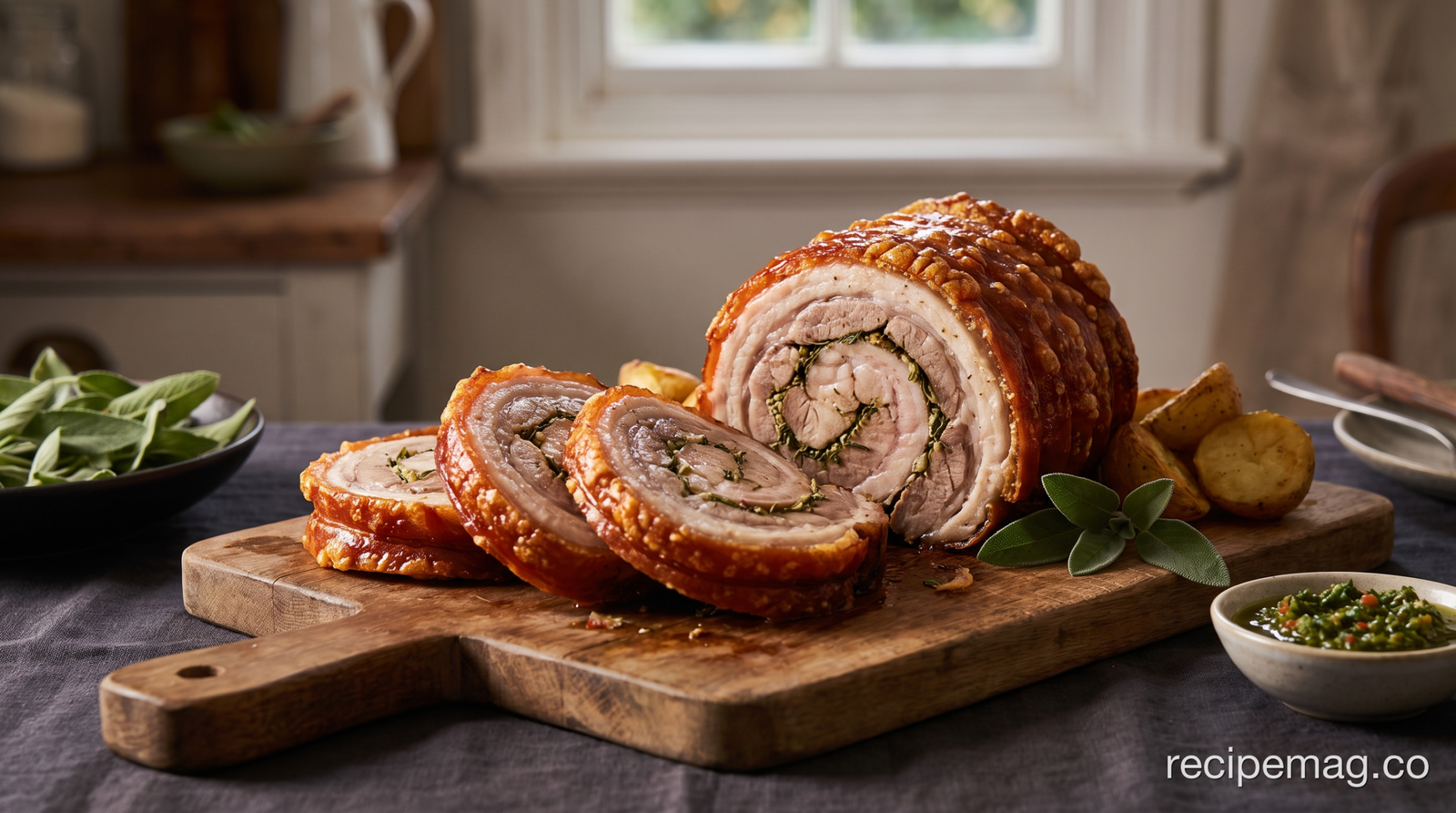
Porchetta is the great Italian roast, traditionally a whole deboned pig seasoned with garlic, fennel, and rosemary and spit-roasted until the skin turns to glass. The home version uses a slab of pork belly, and it works on exactly the same principle: a long slow roast to render the fat and soften the meat, followed by a short blast of high heat to blister the skin. Getting the skin right is entirely about moisture, and it starts a day ahead.
Key Takeaways
- Dry the skin uncovered in the fridge overnight; wet skin never crackles.
- Salt the skin, not the meat side, and brush it off before roasting.
- Low first at 300°F to render, then 475°F at the end for the crackling.
- Toast and crush the fennel seed; it is the defining flavour of porchetta.
- Rest 20 minutes, and slice with a serrated knife so the crackling does not shatter apart.
Ingredients
Serves 8. Active time 40 minutes. Total time 4 hours, plus overnight drying.
- 4 lb slab of skin-on pork belly, roughly rectangular
- 2 tbsp fennel seeds
- 1 tbsp black peppercorns
- 8 garlic cloves
- 3 tbsp chopped rosemary
- 2 tbsp chopped sage
- Zest of 2 lemons
- 1 tsp chilli flakes
- 2 tbsp kosher salt for the meat, plus 1 tbsp for the skin
- 2 tbsp olive oil
- Butcher’s twine
Ask the butcher for a rectangular slab with the skin on and the ribs removed. Skinless belly makes a good roast but no crackling, which is most of the point.
How to Make It
1. Score and dry (the day before). Score the skin in parallel lines about a quarter inch apart, cutting through the skin and just into the fat but never into the meat. Rub the tablespoon of salt into the skin. Set the belly skin side up on a rack over a tray and refrigerate uncovered 12 to 24 hours.
This is the step that decides whether you get crackling or leather. The open air dehydrates the skin, and dry skin puffs while damp skin toughens.
2. Make the paste. Toast the fennel seeds and peppercorns in a dry pan for 2 minutes until fragrant, then crush coarsely in a mortar. Combine with the garlic, rosemary, sage, lemon zest, chilli flakes, the 2 tablespoons of salt, and the olive oil to a rough paste.
3. Season and roll. Flip the belly skin side down and spread the paste over the meat only. Roll it tightly along the long edge into a cylinder and tie firmly with butcher’s twine at 1-inch intervals. Brush the salt off the skin and pat it dry once more.
4. Roast low. Heat the oven to 300°F. Roast on a rack over a tray for 3 hours. This renders the fat gradually and turns the meat tender without drying it.
5. Blast high. Raise the oven to 475°F and roast a further 20 to 30 minutes, watching closely, until the skin has puffed and blistered all over. If patches lag behind, move the roast around rather than leaving it longer.
6. Rest and slice. Rest 20 minutes on a board. Slice with a serrated knife using a sawing motion; a straight downward press shatters the crackling and squashes the roll.
Getting the Crackling Right
Dry, then dry again. The overnight uncovered rest does most of the work, but pat the skin once more immediately before it goes in the oven. Any moisture at all delays the puffing.
Salt the skin, then remove it. Salt draws water out during the fridge rest. Brushing it off before roasting matters, because salt left on the surface attracts moisture back and can leave the skin patchy.
Score, but not into the meat. The cuts let fat escape and steam vent. Cut into the meat and juices run up through the skin, and wherever that happens the crackling stays soft.
Keep the paste off the skin. Herbs and oil on the outside will burn at 475°F and prevent crisping. All the seasoning goes on the meat side only.
If it still will not crackle, cut the crackling off in one piece and put it back under a hot broiler on its own for a few minutes while the meat rests. It rescues almost every failure.
Serving and Leftovers
Porchetta wants acid and something starchy. Roast potatoes cooked in the dripping are the traditional answer. A sharp fennel and lemon salad cuts the richness, and so do our refrigerator pickles. Salsa verde is the classic sauce, and the herb sauce from our whole roasted cauliflower works exactly as written.
Leftovers are arguably the best part. Cold porchetta on crusty bread with pickles and mustard is the sandwich the dish exists for. It keeps four days refrigerated and freezes for three months once sliced.
Reheat slices in a hot dry pan rather than a microwave; the cut faces crisp and the edges caramelise. As a Sunday project it belongs alongside the others in our Sunday cooking roundup.
Timing It Around Guests
Porchetta is a four-hour roast with a high-stakes twenty minutes at the end, which makes the timing worth planning backwards rather than forwards.
Work from when you want to eat. Subtract twenty minutes for resting, thirty for the high-heat blast, and three hours for the low roast. That is your oven-on time, and it means a 7pm dinner needs the roast in by about 3pm.
The low stage is entirely unattended, so it is the part to schedule around anything else. The high-heat stage is not: it needs watching, and it is the one window where walking away costs you the crackling.
Everything else should be done before the blast begins. Potatoes can roast alongside during the low stage and finish while the pork rests. Sauces and salads should be made in the afternoon. The goal is that the last thirty minutes require nothing of you except watching the skin.
If guests arrive late, porchetta is forgiving in one direction only. It will hold at 200°F for an extra forty minutes without harm, but the crackling softens as it sits, so delay the high-heat stage rather than finishing early and waiting. Crackling made at the last minute is always better than crackling kept warm.
Frequently Asked Questions
Can I use pork loin instead of belly?
A traditional porchetta wraps loin inside belly, and that works well. Loin alone is much leaner and dries out over a three-hour roast, so reduce the low stage to about 90 minutes.
Why did my crackling stay soft?
Moisture, almost always. Either the skin was not dried overnight, the scoring cut into the meat and let juices through, or the final blast was not hot enough.
Can I prepare it further ahead?
Yes. Season, roll, and tie up to two days ahead and keep it uncovered in the fridge. The extra drying time only improves the skin.
What temperature should the pork reach?
Belly is judged by tenderness rather than a target temperature, and after three hours at 300°F it will be soft throughout. A skewer should meet no resistance.
Do I need butcher’s twine?
Yes. The roll must be tight and even, or it cooks unevenly and falls apart on slicing. Tie at 1-inch intervals.
Can I cook it on a grill?
Yes, with indirect heat at around 300°F, then over direct heat briefly for the skin. Watch it closely; rendering fat over flame causes serious flare-ups.
