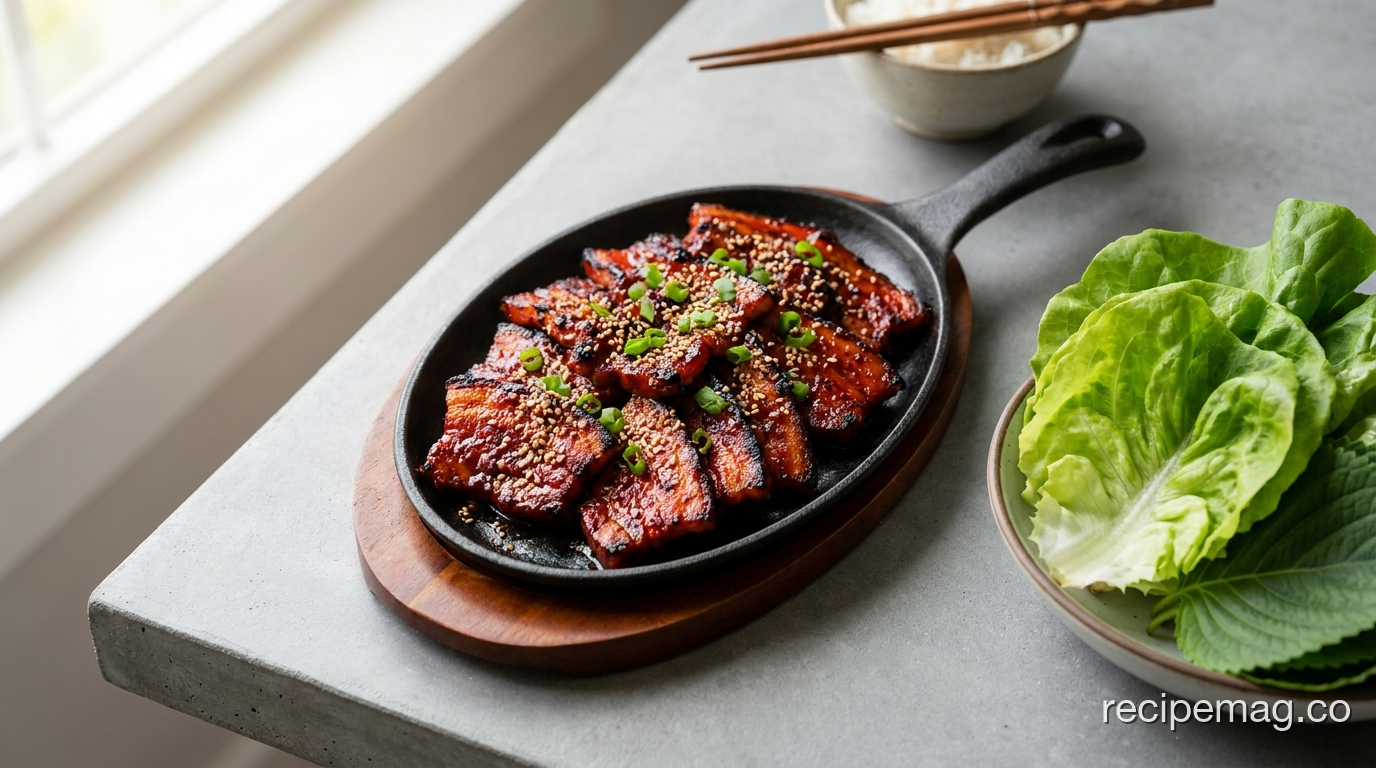
Korean gochujang grilled pork, known as dwaeji bulgogi, is thin-sliced pork marinated in a sweet-spicy gochujang sauce, then grilled fast and hot until the edges char and caramelize. The whole cook takes about 30 minutes after marinating, and it serves four. Gochujang is a fermented chili paste, and fermented foods like it are a cornerstone of the Korean diet, which the World Health Organization has highlighted for its health benefits (WHO, 2023). The result is smoky, sticky, and genuinely addictive.
Key Takeaways
- Ready in about 30 minutes of cooking after a marinade of 30 minutes to overnight.
- Gochujang, a fermented chili paste, brings sweet heat and deep umami in one ingredient.
- Fermented foods are central to the Korean diet and its recognized health benefits. ([WHO](https://www.who.int), 2023)
- Thin-sliced pork shoulder cooks in minutes over high heat, caramelizing from the sugar in the marinade.
- Serve in lettuce wraps with rice and pickled sides for a full Korean BBQ meal.
What Makes Gochujang Pork So Good?
Gochujang is the whole story here. This fermented Korean chili paste blends red chili powder, glutinous rice, fermented soybeans, and salt, aged for months into something sweet, spicy, and deeply savory all at once. That mix of natural sugars and glutamates is exactly what caramelizes on a hot grill (Maangchi, 2022). One ingredient does the work of five.
The pork matters too. Thin-sliced pork shoulder has enough fat to stay juicy under high heat, and its marbling renders as it chars. The sugar in the marinade browns fast, building that sticky, lacquered crust.
[PERSONAL EXPERIENCE] We’ve found the single biggest upgrade is slicing the pork thin, about an eighth of an inch. Freezing the shoulder for 30 to 45 minutes first firms it up so your knife glides through. Thin slices grab more marinade and char in a way that thick chops simply never will.
Ingredients You’ll Need
The marinade leans on Korean pantry staples that keep for months once you buy them. Pork itself is the most consumed meat in the world, accounting for roughly 36% of global meat intake, per the OECD (OECD-FAO, 2023). Pork shoulder (sometimes labeled pork butt or Boston butt) is the traditional cut for its fat content and flavor.
For the Pork
- 1½ lbs pork shoulder, thinly sliced (about ⅛ inch)
- 1 small onion, thinly sliced
- 2 scallions, cut into 2-inch pieces
For the Gochujang Marinade
- 3 tablespoons gochujang (Korean chili paste)
- 2 tablespoons soy sauce
- 2 tablespoons brown sugar or honey
- 1 tablespoon rice wine (mirin) or dry sherry
- 1 tablespoon toasted sesame oil
- 4 garlic cloves, minced
- 1 tablespoon fresh ginger, grated
- 1 teaspoon gochugaru (Korean chili flakes), optional for extra heat
To Finish
- 1 teaspoon toasted sesame seeds
- Extra sliced scallions
Buy gochujang in a tub, not a squeeze bottle, for the most traditional texture and flavor. Look for it at any Korean or Asian grocery, and increasingly in the international aisle of larger supermarkets. It lasts for months in the fridge.
How to Make the Gochujang Marinade
The marinade comes together in one bowl in under five minutes, and balance is everything. You’re aiming for equal pull between heat, sweet, salty, and savory. Marinating also does real work: the salt and acidity help the meat retain moisture and season it throughout rather than just on the surface (America’s Test Kitchen, 2022). Even 30 minutes makes a difference.
How to Make It
- In a large bowl, combine gochujang, soy sauce, brown sugar, rice wine, sesame oil, garlic, ginger, and gochugaru if using.
- Whisk until smooth. The paste will loosen into a glossy, pourable sauce.
- Taste it. Add more sugar to soften the heat, or more gochujang for a spicier, deeper edge.
- Add the sliced pork, onion, and scallions. Toss with your hands until every piece is coated.
Marinate for at least 30 minutes at room temperature, or cover and refrigerate for up to 24 hours. Longer marinating deepens the flavor, but don’t push past a day, or the salt starts to firm the texture of the thin slices.
How to Grill Gochujang Pork Without Burning It
The sugar that makes this pork so good is also what burns it, so heat control is the whole game. A 2021 review noted that the Maillard browning and caramelization that create grilled flavor accelerate sharply above 300°F, which is why sugary marinades scorch quickly (Serious Eats, 2021). The fix is high heat and constant attention, not walking away.
Step-by-Step Grilling
- Heat the grill or pan hot. Get a grill, grill pan, or cast-iron skillet to high heat before the pork goes on.
- Shake off excess marinade. Lift each piece and let the extra sauce drip back into the bowl. Too much marinade in the pan steams and burns instead of searing.
- Cook in batches. Lay the pork in a single layer without crowding. Crowding drops the heat and steams the meat. Work in two or three batches.
- Sear fast. Grill 2 to 3 minutes per side, until the edges char and the pork is cooked through. Thin slices cook quickly.
- Watch for burning. If the sugar is scorching before the pork cooks, move it to a cooler part of the grill or lower the heat slightly.
[UNIQUE INSIGHT] Most people crowd the pan, and it’s the difference between charred and gray pork. Thin slices release moisture fast, and a packed pan traps that steam so the meat boils in its own liquid. Cook fewer pieces at a time. You’ll spend five extra minutes and get caramelized edges instead of a pale, wet stir-fry.
The USDA lists 145°F as the safe minimum internal temperature for pork, followed by a 3-minute rest (USDA FSIS, 2023). With slices this thin, they’ll clear that easily by the time the edges char.
How to Serve Korean Gochujang Pork
This pork is built for a full Korean BBQ spread, and serving it right turns a dish into a meal. The classic move is ssam, or lettuce wraps: a leaf of lettuce, a spoon of rice, a few pieces of pork, and a dab of sauce, eaten in one bite. It’s interactive, fresh, and balances the richness of the meat with crisp greens.
Ways to Serve It
- Lettuce wraps (ssam): Butter lettuce or perilla leaves with rice, pork, sliced garlic, and ssamjang.
- Rice bowl: Over steamed short-grain rice with a fried egg and quick-pickled cucumber.
- With banchan: Alongside kimchi, pickled radish, and seasoned bean sprouts for a traditional table.
- Noodles: Tossed with cold or warm noodles and extra sauce for a heartier plate.
Finish every version with a shower of toasted sesame seeds and fresh scallions. Those two garnishes add nuttiness and a fresh bite that cut through the sticky, spicy pork.
Tips and Common Mistakes
A few small habits separate great gochujang pork from a burnt or bland version. The most common failure is heat management, since the sugary marinade punishes an inattentive cook. Getting the slice thickness and the pan temperature right solves most problems before they start. These are the details worth sweating.
- Slice thin, freeze first. Partially freeze the pork for 30 to 45 minutes so you can cut it into clean, thin slices that char fast.
- Don’t skip the fat. Use pork shoulder, not lean loin. The fat keeps the meat juicy under high heat and carries the flavor.
- Control the burn. High heat is right, but stay at the grill. Move pieces off direct heat the moment the sugar starts to scorch.
- Balance the marinade to taste. Gochujang brands vary in heat. Taste and adjust sugar or paste before adding the pork.
- Rest briefly, garnish generously. Let the pork rest a couple of minutes, then hit it with sesame seeds and scallions right before serving.
Korean Gochujang Grilled Pork
Prep Time: 15 minutes | Marinate: 30 minutes to overnight | Cook Time: 15 minutes | Serves: 4
Ingredients
Pork
- 1½ lbs pork shoulder, thinly sliced (about ⅛ inch)
- 1 small onion, thinly sliced
- 2 scallions, cut into 2-inch pieces
Marinade
- 3 tablespoons gochujang
- 2 tablespoons soy sauce
- 2 tablespoons brown sugar or honey
- 1 tablespoon rice wine (mirin) or dry sherry
- 1 tablespoon toasted sesame oil
- 4 garlic cloves, minced
- 1 tablespoon fresh ginger, grated
- 1 teaspoon gochugaru, optional
To Finish
- 1 teaspoon toasted sesame seeds
- Extra sliced scallions
Instructions
- Whisk gochujang, soy sauce, brown sugar, rice wine, sesame oil, garlic, ginger, and gochugaru into a smooth marinade.
- Add the sliced pork, onion, and scallions. Toss to coat. Marinate 30 minutes at room temperature or up to 24 hours refrigerated.
- Heat a grill, grill pan, or cast-iron skillet to high.
- Shake excess marinade off each piece. Grill the pork in batches, in a single layer, 2 to 3 minutes per side until charred and cooked through (145°F).
- Move pieces off direct heat if the sugar starts to burn before the pork cooks.
- Rest 2 minutes. Garnish with sesame seeds and scallions. Serve with rice and lettuce for wraps.
Notes
- Slice easier: freeze the pork 30 to 45 minutes before slicing.
- Adjust heat: add gochugaru for more spice, or extra sugar to soften it.
- No grill? A cast-iron skillet over high heat gives the best char indoors.
- Serve as ssam (lettuce wraps) with rice, garlic, and ssamjang for a full Korean BBQ meal.
Frequently Asked Questions About Gochujang Pork
What is gochujang and where do I buy it?
Gochujang is a fermented Korean chili paste made from red chili powder, glutinous rice, fermented soybeans, and salt. It’s sweet, spicy, and deeply savory. Find it in a tub at Korean and Asian grocery stores, and increasingly in the international aisle of large supermarkets. Once opened, it keeps in the refrigerator for several months, so one tub lasts a long time.
How spicy is gochujang grilled pork?
It’s moderately spicy, with the heat softened by sugar and balanced by savory depth. Gochujang brings a warm, building heat rather than a sharp burn, and the brown sugar tames it further. For a milder dish, use less gochujang and more sugar. For extra heat, add gochugaru chili flakes. You control the spice level entirely through the marinade ratio.
What cut of pork is best for this recipe?
Pork shoulder, also labeled pork butt or Boston butt, is the traditional and best choice. Its fat content keeps the thin slices juicy under high heat and carries the marinade’s flavor. Pork belly also works well and grills beautifully. Avoid lean cuts like tenderloin or loin chops, which dry out fast and don’t caramelize the same way.
Can I make gochujang pork without a grill?
Yes, absolutely. A cast-iron skillet or grill pan over high heat gives an excellent char indoors. Cook the pork in a single layer without crowding, in batches, so it sears instead of steams. You can also broil it on a sheet pan close to the element for a few minutes per side. Both methods deliver caramelized, smoky results.
How long should I marinate the pork?
Marinate for at least 30 minutes and up to 24 hours. Even a short 30-minute soak seasons the thin slices well, while an overnight marinade deepens the flavor considerably. Don’t marinate longer than a day, though. The salt in the soy and gochujang starts to firm the texture of thin pork slices past that point, making them slightly dense.
Korean gochujang grilled pork delivers restaurant-level flavor from a handful of pantry ingredients and 30 minutes at the stove. The fermented chili paste does the heavy lifting, turning ordinary pork shoulder into something sticky, spicy, and deeply savory.
Make it once and it earns a permanent spot in your rotation. Serve it in lettuce wraps for a fun, hands-on dinner, spoon it over rice for a fast weeknight bowl, or build a full Korean BBQ spread with kimchi and banchan on the side.
Slice the pork thin, keep the heat high, and stay at the pan. Get those three things right and the gochujang does the rest.
