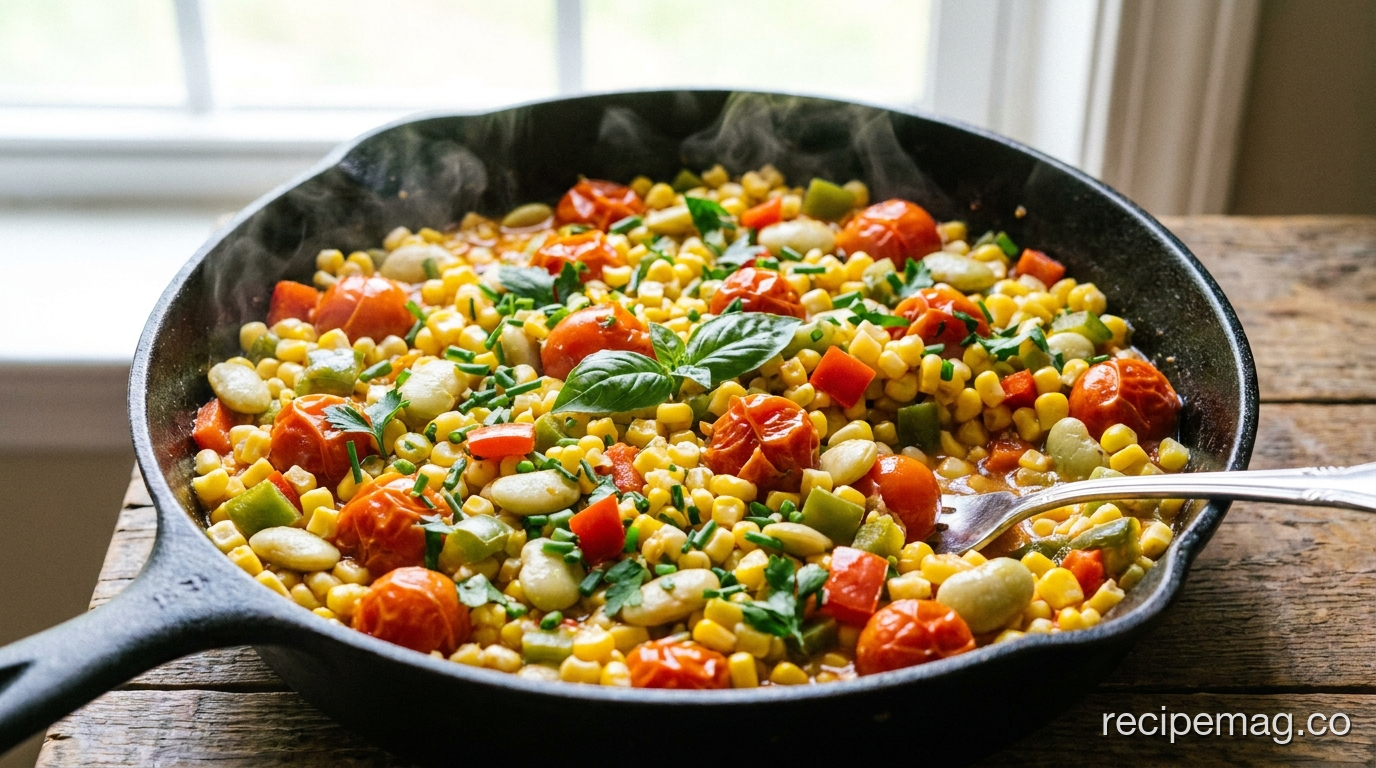
Fresh corn and tomato succotash is a 25-minute summer side dish built around peak-season sweet corn, ripe tomatoes, and tender lima beans, finished with butter and basil. It comes together in one skillet, serves six, and tastes best in July and August when corn sugars are highest. A single ear of sweet corn delivers about 9 grams of sugar at peak ripeness, which is why timing matters so much. ([USDA FoodData Central](https://fdc.nal.usda.gov), 2023) This is the side that disappears first at every cookout.
Key Takeaways
- Ready in 25 minutes in a single skillet, serving six as a side.
- Fresh summer corn carries roughly 9 grams of natural sugar per ear at peak. ([USDA FoodData Central](https://fdc.nal.usda.gov), 2023)
- Cut corn off the cob raw and add it late so it stays crisp and sweet.
- Lima beans bring the classic succotash texture, but edamame swaps in easily.
- Salt the tomatoes separately to keep the dish from turning watery.
What Is Succotash, Anyway?
Succotash is a dish of cooked corn and beans, and it’s one of the oldest recipes in American cooking. The name comes from the Narragansett word msickquatash, meaning boiled corn kernels, and the dish predates European arrival in New England. ([Smithsonian Magazine](https://www.smithsonianmag.com), 2021) Native communities paired corn with beans for a reason: together they form a more complete protein than either alone.
The modern version most cooks know layers in tomatoes, butter, onion, and fresh herbs. That summer spin is what we’re making here. It’s lighter and brighter than the heavy, cream-laced versions, and it lets the vegetables stay the stars.
Why does the corn-and-bean pairing keep showing up across centuries? Nutrition explains part of it. Corn is low in the amino acid lysine, while beans are rich in it, so the combination rounds out the protein profile naturally. Generations of cooks landed on this pairing long before anyone wrote down the science.
[PERSONAL EXPERIENCE] We’ve made this dish dozens of times across a single summer, and the biggest lesson was restraint. Early versions had too many add-ins, bell peppers, zucchini, corn, beans, tomatoes, all fighting for space. The cleaner the lineup, the better it tasted. Corn, beans, tomato, onion, basil, butter. Stop there.
Why Fresh Summer Corn Makes the Difference
Fresh corn is the entire point of this dish, and freshness is measured in hours, not days. Sweet corn starts converting its sugar into starch the moment it leaves the stalk, and warm weather accelerates that loss. University of Minnesota Extension recommends refrigerating corn immediately and eating it within a day or two for the sweetest flavor. ([University of Minnesota Extension](https://extension.umn.edu), 2022) Buy it the day you cook it whenever you can.
How to Pick the Best Ears
- Feel the kernels through the husk. They should be plump and tightly packed all the way to the tip, with no flat or empty spots.
- Check the silk. Look for moist, golden silk at the top. Dry, brown, brittle silk signals older corn.
- Look at the cut end. A pale, moist stem end means recent picking. A dried, chalky stem means it’s been sitting.
- Skip the peeking. Pulling back husks at the store dries the corn out. Trust the feel test instead.
Out of season, frozen corn beats sad winter ears every time. Frozen sweet corn is blanched and frozen within hours of harvest, locking in sugar that off-season fresh corn has already lost. Thaw it, pat it dry, and add it the same way you would fresh.
Ingredients for Corn Tomato Succotash
This recipe leans on a short list of peak-season produce, which is exactly why ingredient quality matters more than technique. Tomatoes are at their best in mid to late summer: USDA data shows that field-grown summer tomatoes carry more vitamin C and lycopene than off-season greenhouse fruit picked early and ripened in transit. ([USDA Agricultural Research Service](https://www.ars.usda.gov), 2022) Use the ripest tomatoes you can find.
For the Succotash
- 4 ears fresh sweet corn (about 3 cups kernels)
- 1½ cups fresh or frozen lima beans
- 2 cups ripe tomatoes, diced (or halved cherry tomatoes)
- 1 small red onion, finely diced
- 2 garlic cloves, minced
- 2 tablespoons butter
- 1 tablespoon olive oil
- ¼ cup fresh basil, torn
- 1 tablespoon fresh lemon juice or white wine vinegar
- Salt and black pepper to taste
Salt the diced tomatoes on their own first. Toss them with a pinch of salt in a strainer set over a bowl and let them sit while you prep everything else. This pulls out excess liquid that would otherwise turn your succotash into soup. You want bright tomato flavor, not a watery skillet.
Easy Swaps
- Beans: Edamame, butter beans, or fresh field peas all stand in for lima beans.
- Herbs: Fresh thyme, chives, or parsley work if basil isn’t on hand.
- Richness: A crumble of crisp bacon or a handful of feta adds a savory or salty edge.
How to Cut Corn Off the Cob Without the Mess
Cutting raw corn cleanly takes one simple trick, and it saves you from kernels flying across the kitchen. Stand the shucked ear upright inside a large, wide bowl, then slice downward with a sharp knife. The bowl catches every kernel. According to America’s Test Kitchen, cutting corn into a deep bowl rather than on a flat board contains the spray and keeps your counter clean. ([America’s Test Kitchen](https://www.americastestkitchen.com), 2021)
Step by Step
- Shuck the corn. Pull off the husks and rub away the silk strands with a dry paper towel.
- Steady the ear. Trim one end flat so it stands upright without wobbling.
- Stand it in a bowl. Place the flat end down in the center of a wide, deep bowl.
- Slice downward. Run a sharp knife down the cob in long strokes, rotating as you go. Stay close to the cob without cutting into it.
- Scrape the cobs. Run the back of the knife down each stripped cob to release the sweet “milk.” Add it to the bowl.
[UNIQUE INSIGHT] Most recipes tell you to cut the corn and stop. Scraping the cob afterward is the step people skip, and it’s the one that matters most. That milky liquid is loaded with sugar and starch, and it gives the finished dish a faint, natural creaminess without any cream at all. Don’t waste it.
How to Make Fresh Corn and Tomato Succotash
The secret to great succotash is cooking the corn the least. Sweet corn is best with just a few minutes of heat, which keeps the kernels crisp and sweet rather than soft and dull. Serious Eats recommends adding fresh corn near the end of cooking, since extended heat breaks down its sugars and texture. ([Serious Eats](https://www.seriouseats.com), 2022) Build the base first, then finish with the corn.
Cooking Instructions
- Cook the lima beans. If using fresh or frozen limas, simmer them in salted water for 6 to 8 minutes until tender, then drain. Skip this if they’re already cooked.
- Sweat the aromatics. Heat butter and olive oil in a large skillet over medium heat. Add the red onion and cook for 3 to 4 minutes until soft. Stir in the garlic and cook 30 seconds until fragrant.
- Add the corn. Turn the heat to medium-high. Add the corn kernels and cob milk. Cook for 3 to 4 minutes, stirring, just until the corn turns bright and barely tender.
- Fold in the beans. Add the cooked lima beans and warm through for 1 to 2 minutes.
- Add the tomatoes off the heat. Drain the salted tomatoes well, then fold them in after you turn off the burner. Residual heat warms them without turning them to mush.
- Finish bright. Stir in the lemon juice or vinegar and the torn basil. Season with salt and black pepper. Taste and adjust.
Serve it warm or at room temperature. Succotash is forgiving that way, which makes it a strong choice for a potluck or a make-ahead cookout side. The flavors actually settle and deepen after 20 minutes of resting.
Tips for the Best Summer Succotash
Small choices separate good succotash from forgettable succotash, and most of them come down to timing and seasoning. Salt is the biggest lever you have. A 2019 review in the journal Flavour confirmed that salt suppresses bitterness and amplifies perceived sweetness, which is exactly what you want with summer corn and tomatoes. ([Flavour, BioMed Central](https://flavourjournal.biomedcentral.com), 2019) Season in layers, not all at the end.
Do This
- Salt the tomatoes separately. It draws out water and concentrates flavor. This single step prevents a watery dish.
- Add corn last. Three to four minutes is plenty. Overcooked corn loses its snap and sweetness.
- Finish with acid. A squeeze of lemon or splash of vinegar lifts everything and balances the butter.
- Use real butter. The richness rounds out the sweet corn and acidic tomato in a way oil alone can’t.
Skip This
- Don’t boil the corn first. Raw kernels cut straight into the skillet stay sweeter and crisper.
- Don’t overload it. Too many vegetables muddy the dish. Keep the lineup tight.
- Don’t add tomatoes early. They break down and weep liquid. Fold them in at the very end.
What to Serve With Corn Tomato Succotash
Succotash plays the supporting role beautifully, pairing with almost anything off the grill. Grilling remains the dominant summer cooking method in America: a 2023 survey found that 64% of U.S. adults grill at least once a month during summer, making fresh vegetable sides a near-constant need. ([Hearth, Patio & Barbecue Association](https://www.hpba.org), 2023) This dish answers that need without competing for attention.
- Grilled chicken or steak. The bright, sweet vegetables cut through rich, charred meat.
- Pan-seared or grilled fish. Salmon, cod, or trout pair cleanly with the corn and tomato.
- Barbecue. Pulled pork, ribs, or smoked chicken get a fresh, light counterpoint.
- Vegetarian mains. Spoon it over polenta, grits, or a thick slice of grilled bread for a meal on its own.
Leftovers earn their keep too. Cold succotash makes a fast grain-bowl topping, folds into an omelet, or stirs straight into cooked pasta with a little olive oil. One skillet stretches across several meals.
Fresh Corn and Tomato Succotash
Prep Time: 15 minutes | Cook Time: 10 minutes | Serves: 6
Ingredients
- 4 ears fresh sweet corn (about 3 cups kernels)
- 1½ cups fresh or frozen lima beans
- 2 cups ripe tomatoes, diced (or halved cherry tomatoes)
- 1 small red onion, finely diced
- 2 garlic cloves, minced
- 2 tablespoons butter
- 1 tablespoon olive oil
- ¼ cup fresh basil, torn
- 1 tablespoon fresh lemon juice or white wine vinegar
- Salt and black pepper to taste
Instructions
- Toss the diced tomatoes with a pinch of salt in a strainer set over a bowl. Let drain while you prep.
- Cut the corn off the cobs into a deep bowl, then scrape the cobs with the back of the knife to release the milk.
- Simmer lima beans in salted water for 6 to 8 minutes until tender; drain. Skip if already cooked.
- Melt butter with olive oil in a large skillet over medium heat. Cook onion 3 to 4 minutes, then add garlic for 30 seconds.
- Raise heat to medium-high. Add corn and cob milk; cook 3 to 4 minutes until bright and barely tender.
- Fold in lima beans and warm through 1 to 2 minutes.
- Turn off the heat. Drain the tomatoes well and fold them in.
- Stir in lemon juice and basil. Season with salt and pepper. Serve warm or at room temperature.
Notes
- Salting the tomatoes separately keeps the dish from turning watery. Don’t skip it.
- Swap edamame or butter beans for lima beans freely.
- Add crisp bacon or crumbled feta for a richer, saltier version.
- Leftovers keep refrigerated for 3 days and taste great cold or stirred into pasta.
Frequently Asked Questions About Corn Tomato Succotash
Can I use frozen or canned corn instead of fresh?
Yes. Frozen sweet corn is the best off-season choice because it’s blanched and frozen within hours of harvest, preserving sugar that off-season fresh corn has lost. Thaw and pat it dry before adding. Canned corn works in a pinch but is softer and less sweet, so drain it well and add it at the very end just to warm through.
What beans are traditional in succotash?
Lima beans are the classic choice and give succotash its signature creamy, tender texture. Historically, the dish used whatever beans were available, including cranberry beans and field peas. If you dislike lima beans, edamame and butter beans are excellent modern swaps. They hold their shape, add protein, and pair just as well with sweet corn and ripe summer tomatoes.
How do I keep succotash from getting watery?
Salt and drain the diced tomatoes before cooking. Tossing them with a pinch of salt in a strainer pulls out excess liquid that would otherwise pool in the skillet. Then add the drained tomatoes off the heat at the very end. Cooking tomatoes too early releases even more water. These two steps keep the dish bright and concentrated rather than soupy.
Can I make corn tomato succotash ahead of time?
Yes, and it holds well. Succotash tastes great warm or at room temperature, so it’s an ideal make-ahead cookout side. Cook it up to a day in advance, refrigerate, and bring it back to room temperature before serving. Stir in the fresh basil and a fresh squeeze of lemon just before serving to keep the herbs vivid and the flavor bright.
Is succotash healthy?
Succotash is genuinely nutritious. The corn-and-bean pairing forms a more complete protein than either provides alone, and both add fiber. A typical serving offers vitamin C, folate, and plant protein with minimal added fat. Using olive oil and going lighter on the butter trims calories further. The fresh tomatoes contribute lycopene and more vitamin C, making this a balanced, vegetable-forward side dish.
Bring This One to the Cookout
Fresh corn and tomato succotash is summer cooking at its simplest and best. It asks for good produce and a little timing, then rewards you with a bright, colorful side that pairs with almost anything off the grill. Twenty-five minutes and one skillet, that’s the whole commitment.
Make it when corn is at its sweetest peak, in July and August, and taste the difference fresh produce makes. Salt the tomatoes, add the corn last, finish with basil and a squeeze of acid. Those small moves are what turn a pile of vegetables into a dish people ask about.
Double the batch. It disappears faster than you’d expect, and the leftovers are almost better the next day.
