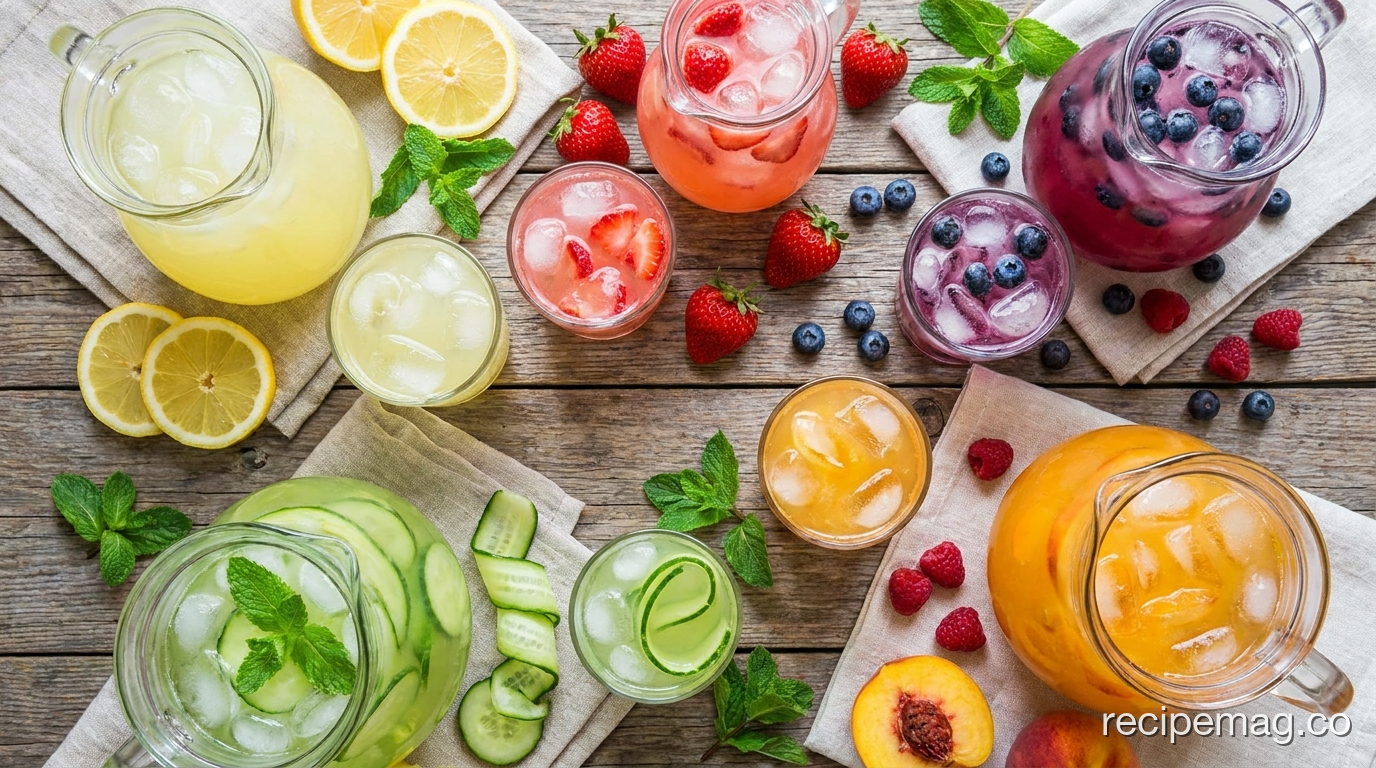
The best homemade lemonade recipe starts with a simple 1:1:1 ratio: one part fresh lemon juice, one part simple syrup, and four parts cold water, adjusted to taste. Fresh-squeezed beats bottled every time because the juice loses up to 90% of its vitamin C within 24 hours of squeezing, according to USDA FoodData Central (2023). Master the classic, then branch into five creative variations below.
Key Takeaways
- The classic ratio is 1 cup lemon juice : 1 cup simple syrup : 4 cups water, then tweak to taste.
- One medium lemon yields about 3 tablespoons of juice, so plan on 5-6 lemons per pitcher.
- Simple syrup dissolves instantly; granulated sugar never fully does in cold water.
- Fresh juice loses up to 90% of its vitamin C within a day (USDA, 2023), so squeeze just before serving.
- Five twists, strawberry-basil, lavender, watermelon-mint, ginger, and sparkling raspberry, build on the same base.
What Makes the Perfect Homemade Lemonade Recipe?
Great lemonade comes down to balance, not sweetness. Fresh lemon juice carries about 5-6% citric acid by volume, which delivers the bright sourness that bottled juice can’t match (Serious Eats, 2022). The goal is a drink where tart and sweet pull evenly. Too much sugar tastes flat; too little makes you wince.
Temperature matters more than people think. Cold dulls our perception of sweetness, so lemonade that tastes perfect at room temperature will taste thin and sour over ice. Mix it slightly sweeter than you think you want. Once it hits the ice, the balance lands where you intended.
Why does fresh-squeezed taste so different? The aromatic oils in lemon peel and pulp break down fast. That floral, almost perfumed top note vanishes within hours. Bottled juice, pasteurized and stored for months, simply can’t carry it. If you only change one thing, squeeze your own.
How Do You Make Classic Lemonade From Scratch?
The classic recipe follows a 1:1:1 base that you dilute with water. America’s Test Kitchen recommends this same starting ratio before any personal tweaks (America’s Test Kitchen, 2021). It makes roughly six servings and takes ten minutes. A medium lemon gives about 3 tablespoons of juice, so buy five or six to be safe.
Ingredients
- 1 cup fresh lemon juice (about 5-6 medium lemons)
- 1 cup granulated sugar
- 1 cup water (for the simple syrup)
- 4 cups cold water (to finish)
- Ice and lemon slices, to serve
Instructions
- Make the simple syrup. Combine 1 cup sugar and 1 cup water in a saucepan. Heat over medium, stirring, until the sugar fully dissolves, about 3 minutes. Don’t let it boil. Cool to room temperature.
- Juice the lemons. Roll them firmly on the counter first to break the membranes, then halve and squeeze. Strain out seeds and most of the pulp.
- Combine. In a large pitcher, stir together the lemon juice, cooled simple syrup, and 4 cups cold water.
- Taste and adjust. Too tart? Add syrup a tablespoon at a time. Too sweet? Add a squeeze of lemon or a splash of water.
- Chill and serve. Refrigerate at least 30 minutes. Serve over plenty of ice with lemon slices.
Prep time: 10 minutes | Cook time: 3 minutes | Chill: 30 minutes | Servings: 6
[PERSONAL EXPERIENCE] We’ve found that making the simple syrup a day ahead changes the whole experience. Cold syrup blends instantly with cold juice and water, so the lemonade is ready to drink the moment you mix it. No waiting for the warm syrup to cool down while your guests stand around thirsty.
What Are the Best Creative Lemonade Twists?
Once you’ve nailed the classic, variations take minutes. Specialty lemonades and house-made sodas rank among the fastest-rising beverage trends, partly because diners want flavorful non-alcoholic options (National Restaurant Association, 2023). Each twist below starts from the same 1:1:1 base, then adds one bold ingredient. Make a double batch of base and split it five ways for a party.
1. Strawberry-Basil Lemonade
Blend 1 cup hulled strawberries until smooth, then strain into a pitcher of classic lemonade. Bruise 6 basil leaves and stir them in. Let it sit 15 minutes so the basil infuses, then remove the leaves. The berry sweetness lets you cut the simple syrup by a couple tablespoons.
2. Lavender Lemonade
Steep 1 tablespoon dried culinary lavender in your hot simple syrup for 10 minutes, then strain before mixing. Lavender is potent, so don’t oversteep or it turns soapy. The floral note pairs naturally with lemon’s brightness. A drop of honey in place of some sugar rounds it out beautifully.
3. Watermelon-Mint Lemonade
Purée 2 cups seedless watermelon and strain the juice into your base. Muddle 8 mint leaves in the pitcher first. Watermelon is mild, so use the full syrup measure here. This is the lightest, most refreshing twist, ideal for the hottest July afternoons.
4. Ginger Lemonade
Simmer a 2-inch piece of sliced fresh ginger in your simple syrup, then let it steep 20 minutes and strain. The warmth plays against the sour lemon in a way that feels almost spicy. Top with sparkling water for a homemade ginger-lemon soda that settles the stomach, too.
5. Sparkling Raspberry Lemonade
Mash 1 cup raspberries with 2 tablespoons sugar, let them macerate 10 minutes, then strain. Stir the raspberry syrup into the lemon base, but cut the plain water to 2 cups. Finish each glass with chilled sparkling water for fizz. The pink color alone makes this the showstopper of the five.
[UNIQUE INSIGHT] Here’s something most recipes skip: when you add a fruit purée, you’re adding both sugar and water, so the classic 1:1:1 ratio drifts out of balance. We’ve found that cutting the plain water by half whenever you add a cup of fruit juice keeps the flavor concentrated. Otherwise the twist tastes washed-out and weak, more pink water than raspberry lemonade.
How Do You Balance Sweet and Tart?
Balancing lemonade is about the ratio of sugar to acid, not the absolute amount of either. Lemon’s roughly 5% citric acid needs close to equal sugar to taste bright rather than sour (UC Davis, 2021). Start with the 1:1:1 base, then trust your palate. Everyone’s preference sits a little differently on the sweet-tart line.
If your lemonade tastes flat, the fix is usually acid, not sugar. Add a tablespoon of fresh lemon juice and a tiny pinch of salt. Salt sounds odd, but it sharpens the other flavors and rounds off any harsh edges. Just a pinch per pitcher does the work.
Remember the ice factor. Lemonade should taste slightly too sweet before serving because melting ice and cold temperatures both mute sweetness. Mix it warm-tasting, then chill it hard. By the time it’s in the glass, it’ll be exactly right.
How Long Does Homemade Lemonade Last?
Homemade lemonade keeps for about 5 to 7 days refrigerated in a sealed container. The USDA notes that acidic drinks last toward the longer end because their low pH slows bacterial growth (USDA FSIS, 2023). Keep it covered and cold. If it smells off or tastes fizzy when it shouldn’t, toss it.
Fruit-based twists don’t last as long. Strawberry, raspberry, and watermelon versions start to ferment and dull after 2 to 3 days because the added pulp breaks down faster than juice alone. Make those fresh, in smaller batches. The classic and the ginger version are your make-ahead friends.
Want to keep it longer? Freeze lemonade in an ice cube tray. Lemonade cubes won’t water down your next glass the way plain ice does, and they’re perfect for blending into a quick frozen slushie on a brutal afternoon.
Frequently Asked Questions About Homemade Lemonade
Why use simple syrup instead of granulated sugar?
Granulated sugar doesn’t dissolve well in cold liquid, leaving a gritty layer at the bottom of the pitcher. Simple syrup is sugar already dissolved in water, so it blends instantly and evenly. It also lets you adjust sweetness with precision after mixing. The extra five minutes of cooking is the single biggest upgrade to homemade lemonade texture.
How many lemons do I need for a pitcher of lemonade?
Plan on 5 to 6 medium lemons for one cup of juice, which makes a standard six-serving pitcher. Each medium lemon yields roughly 3 tablespoons. Roll lemons firmly on the counter and bring them to room temperature first to extract more juice. Cold lemons straight from the fridge give up noticeably less.
Can I make lemonade less sour without adding sugar?
Yes. Add more water to dilute the acid, or stir in a tiny pinch of salt, which softens tartness without sweetening. A splash of fruit juice like watermelon or strawberry also mellows the sourness naturally. Avoid simply dumping in more sugar, since that flattens the bright flavor and makes the drink cloying rather than balanced.
Is fresh lemon juice really better than bottled?
Yes, by a wide margin. Bottled juice is pasteurized and often contains preservatives that add a faint bitter, metallic note. It also loses the aromatic oils that give fresh lemonade its floral lift. Fresh juice loses up to 90% of its vitamin C within a day per USDA data, so squeeze it close to serving for the best flavor and nutrition.
Can I make a sugar-free version?
Absolutely. Replace the simple syrup with a liquid sweetener like monk fruit or stevia syrup, starting with less than the recipe calls for since these are far sweeter than sugar. Honey works too, though it adds its own flavor. Taste as you go, and remember the cold-temperature rule, mix it slightly sweeter than seems right.
Pour a Glass and Make It Yours
The beauty of homemade lemonade is how forgiving it is. Master the 1:1:1 ratio once, and you’ll never need to measure exactly again. Your tongue becomes the recipe. A little more lemon today, a touch more syrup tomorrow, all from the same simple base.
Start with the classic this weekend. Then pick one twist that matches your mood: strawberry-basil for a garden lunch, ginger for something with a kick, sparkling raspberry when you want to impress. Each one takes minutes once the base is mixed and ready in the fridge.
Real lemonade asks for almost nothing: lemons, sugar, water, and ten minutes. Skip the powder and the bottle. Squeeze the fruit, taste as you go, and pour it over a tall glass of ice. Summer doesn’t get much simpler, or much better, than that.
