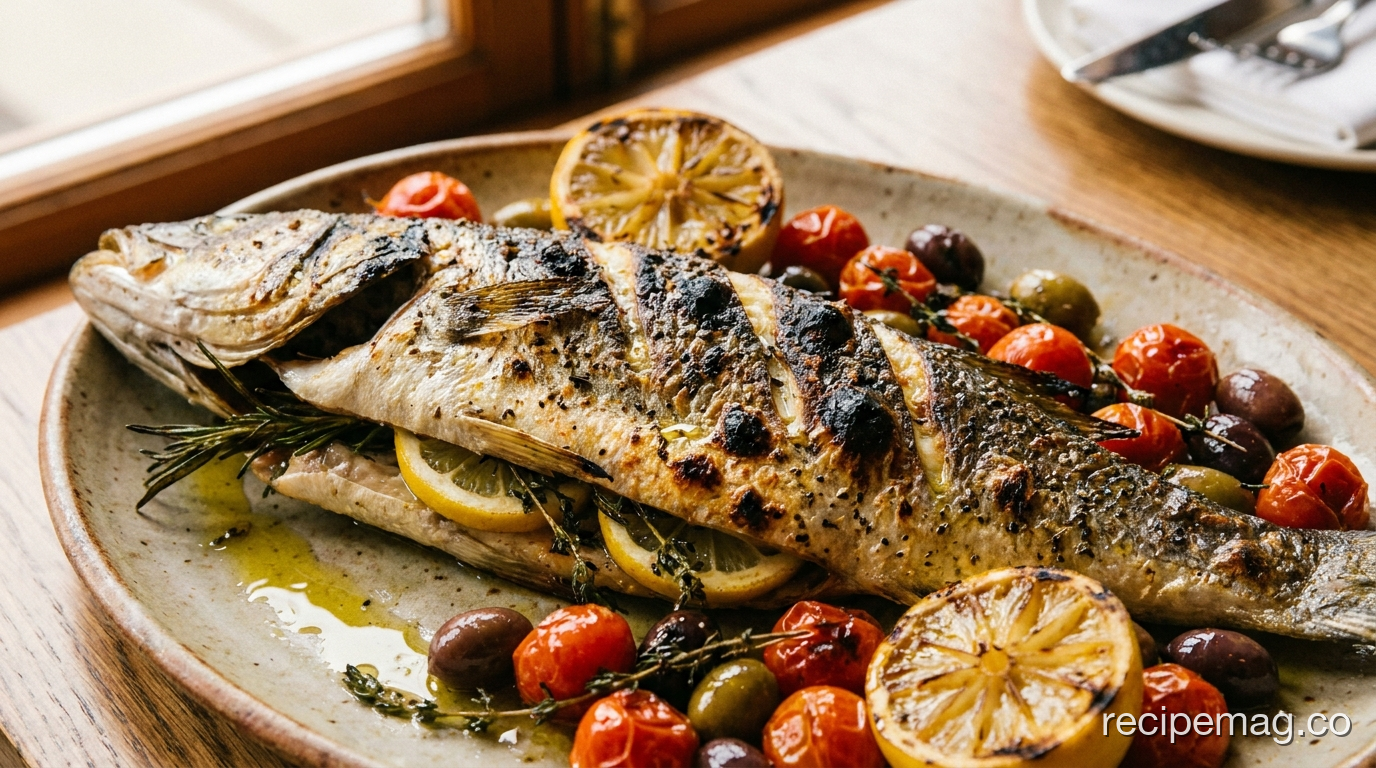
Whole grilled branzino is far easier than it looks, and it cooks in about 12 minutes total. The trick is a clean, hot, well-oiled grate plus the patience to leave the fish alone until the skin releases on its own. Score the sides, stuff the cavity with lemon and herbs, and check doneness at the spine. A whole 1-pound branzino feeds one generously or two as a starter, and grilling at high heat over direct flame is one of the fastest weeknight dinners you can pull off. According to the USDA, fish should reach an internal temperature of 145°F to be safely cooked. ([USDA FSIS](https://www.fsis.usda.gov), 2023)
Key Takeaways
- A whole 1-pound branzino grills in about 10 to 12 minutes total, roughly 5 to 6 minutes per side.
- Clean, hot, oiled grates are the single most important step for skin that releases instead of tearing.
- Don’t flip early. The skin tells you when it’s ready by lifting cleanly off the grate.
- Stuff the cavity with lemon slices and fresh herbs to season the flesh from the inside out.
- Fish is safely cooked at 145°F. Check at the spine, where the flesh is thickest. ([USDA FSIS](https://www.fsis.usda.gov), 2023)
Why Grill a Whole Fish Instead of Fillets?
A whole grilled fish recipe gives you better flavor and far more forgiveness than fillets. The skin and bones shield the flesh from the grill’s fierce direct heat, so the fish stays moist even if your timing slips by a minute. America’s Test Kitchen notes that cooking fish on the bone produces juicier, more evenly cooked results than thin fillets, which dry out fast over flame. ([America’s Test Kitchen](https://www.americastestkitchen.com), 2022) Branzino, a Mediterranean sea bass, is ideal here.
Branzino has mild, sweet, flaky white flesh and a thin skin that crisps beautifully. It’s sold at a manageable size, usually 1 to 1.5 pounds, which fits on any grill and cooks quickly. The fishmonger will scale and gut it for you, so the prep at home is minimal.
There’s also the matter of cost and presentation. A whole fish often costs less per pound than fillets, and bringing a blistered, herb-stuffed fish to the table makes a far bigger impression than a plate of anonymous white squares. It looks like you fussed. You didn’t.
[PERSONAL EXPERIENCE] We’ve grilled dozens of whole branzino over the years, and the failure point is almost never the fish itself. It’s the grate. Every torn, stuck, frustrating fish we’ve produced traces back to a grate that wasn’t clean enough, hot enough, or oiled enough. Fix those three things and the rest is easy.
How Do You Prep a Whole Fish for the Grill?
Good prep starts at the counter and takes about five minutes. Even if the fishmonger scaled and gutted the branzino, give it a quick check at home. The FDA recommends keeping fresh fish refrigerated at 40°F or below and cooking it within one to two days of purchase for the best quality and safety. ([FDA](https://www.fda.gov/food/buy-store-serve-safe-food), 2023) Pat the fish bone-dry before it ever touches the grill. Surface moisture is what makes skin stick.
Scale, Trim, and Dry
- Run the back of a knife along the skin from tail to head to catch any scales the fishmonger missed. They flick off easily.
- Trim the sharp fins with kitchen scissors if you like. It’s optional, but it makes the fish easier to handle.
- Rinse the cavity and check that the gut line is fully cleaned out. Rinse under cold water, then pat the whole fish completely dry, inside and out, with paper towels.
Score the Sides
Scoring is the step most home cooks skip, and it matters. Make three or four diagonal slashes through the skin into the flesh on each side, about half an inch deep. Scoring does two things: it helps the thick part of the fish cook at the same rate as the thin belly, and it lets heat, salt, and smoke reach the flesh directly. Season those cuts with salt and they carry flavor straight into the meat.
What Should You Stuff the Cavity With?
The cavity is your seasoning chamber, and lemon plus fresh herbs is the classic, foolproof combination. As the fish grills, the lemon releases steam and acid while the herbs give off aromatic oils, both seasoning the flesh from the inside out. Serious Eats recommends filling the cavity generously with lemon slices and sturdy herbs to perfume the flesh as it cooks over direct heat. ([Serious Eats](https://www.seriouseats.com), 2021) Don’t be shy. Pack it.
The Classic Lemon and Herb Combination
- Lemon: Two or three thin slices laid inside the cavity. Thin slices release more juice and steam than thick wedges.
- Hardy herbs: A few sprigs of thyme and rosemary hold up to heat without disintegrating.
- Soft herbs: Parsley, dill, or basil add fresh, green brightness. Use whole sprigs so they’re easy to remove later.
- Aromatics: A couple of smashed garlic cloves and a few thin slices of shallot deepen the flavor.
Before stuffing, rub the inside of the cavity with a little salt and olive oil. Then layer in the lemon and herbs. Brush the outside of the fish with oil and season the skin and the scored cuts well with salt. That salt on the exterior is what helps build a crisp, blistered skin.
How Do You Grill Fish Without It Sticking?
Sticking is the number one fear with grilled fish, and it comes down to three controllable factors: a clean grate, high heat, and oil. Get a charcoal or gas grill up to medium-high, around 400 to 450°F, before the fish goes on. Serious Eats stresses that a properly preheated, scrubbed, and oiled grate is what allows fish skin to sear, crisp, and release on its own. ([Serious Eats](https://www.seriouseats.com), 2021) Skip any of the three and the skin welds itself to the metal.
The Three Rules for a Non-Stick Grate
- Clean the grate. Scrub the hot grates hard with a grill brush until they’re shiny. Any leftover residue from last night’s burgers gives the skin something to grab onto.
- Get it hot. Let the grate preheat for a full 10 to 15 minutes. A hot grate sears the skin instantly, which is exactly what creates the release.
- Oil it right before cooking. Fold a paper towel, dip it in neutral oil, hold it with tongs, and wipe the grates several times until they glisten. Oil the fish too, not just the grate.
[UNIQUE INSIGHT] People oil the grate and call it done, but the oil on the grate burns off in seconds. The real insurance is oiling both the grate and the fish skin. That double layer is what gives you a reliable, clean release every single time. We’ve found this matters far more than any expensive grill basket.
When Should You Flip, and How Do You Know It’s Done?
Don’t flip early. This is the rule that saves more whole fish than any other. Lay the branzino down over direct heat and leave it completely alone for 5 to 6 minutes. When the skin has properly seared, it will release from the grate on its own. If it resists when you nudge it with a spatula, it isn’t ready, so wait another minute. The USDA confirms fish is fully cooked at 145°F, when the flesh turns opaque and flakes easily. ([USDA FSIS](https://www.fsis.usda.gov), 2023)
The Clean-Flip Test
Slide a thin metal spatula under the fish and lift gently. If it lifts cleanly, flip it. If it drags or tears, set it back down and give it 60 more seconds. A well-seared skin acts like a release agent. Flip carefully, using a second spatula or your tongs to support the fish so it doesn’t fold.
Check Doneness at the Spine
The thickest part of a whole fish is along the spine, so that’s where you check. Slide a paring knife or an instant-read thermometer into one of the scored cuts down to the backbone. The flesh should be opaque and pull away from the bone easily at 145°F. If it’s still translucent or clinging to the spine, give it another minute or two. The second side usually needs only 4 to 5 minutes since the fish is already partly cooked.
How Do You Serve a Whole Grilled Branzino?
Serving is simpler than it looks, and the fish does most of the work for you. Let the branzino rest for two or three minutes off the heat so the juices settle. Mediterranean diets built around grilled fish, olive oil, and herbs are among the most studied eating patterns in the world, linked to better heart health in research published by the American Heart Association. ([American Heart Association](https://www.heart.org), 2023) A squeeze of fresh lemon and a drizzle of good olive oil is all the finish a well-grilled branzino needs.
To plate it whole, slide the fish onto a platter and garnish with charred lemon halves and a handful of fresh herbs. To serve it filleted, run a knife along the spine and lift the top fillet off in one piece, then peel away the backbone to release the bottom fillet. The bones come out in one clean frame.
Pair it with bright, simple sides. A tomato and cucumber salad, grilled vegetables, herbed rice, or crusty bread to mop up the oil and juices all work well. The fish is the star, so the sides should stay out of its way.
—
Whole Grilled Branzino with Lemon and Fresh Herbs
Prep Time: 10 minutes | Cook Time: 12 minutes | Serves: 2
Ingredients
- 2 whole branzino (about 1 pound each), scaled and gutted
- 1 lemon, thinly sliced, plus 1 lemon for serving
- 4 sprigs fresh thyme
- 4 sprigs fresh parsley or dill
- 2 sprigs fresh rosemary
- 2 garlic cloves, smashed
- 1 shallot, thinly sliced (optional)
- 3 tablespoons olive oil, plus more for the grate
- Flaky sea salt and black pepper
- Neutral oil, for oiling the grate
Instructions
- Preheat the grill to medium-high (400 to 450°F). Scrub the grates clean while they heat.
- Pat each fish completely dry, inside and out. Score the skin with 3 to 4 diagonal slashes per side, about half an inch deep.
- Rub the cavities with salt and a little olive oil. Stuff each with lemon slices, thyme, parsley, rosemary, garlic, and shallot.
- Brush the outside of each fish with olive oil. Season the skin and the scored cuts generously with salt and pepper.
- Just before grilling, oil the hot grates: dip a folded paper towel in neutral oil, hold it with tongs, and wipe the grates until they glisten.
- Lay the fish over direct heat. Do not move them. Grill 5 to 6 minutes, until the skin releases cleanly when nudged with a spatula.
- Flip carefully and grill the second side 4 to 5 minutes, until the flesh near the spine is opaque and reaches 145°F.
- Rest 2 to 3 minutes. Serve whole or filleted, with fresh lemon and a drizzle of olive oil.
Notes
- If the skin sticks when you try to flip, it isn’t ready. Wait another minute and try again.
- No branzino? Whole trout, snapper, or sea bass all grill the same way. Adjust time for size.
- For extra char on the lemon, grill the serving lemon halves cut-side down for the last 2 minutes.
- Use a fish-friendly grill basket if you’re nervous, but a clean, hot, oiled grate makes one unnecessary.
—
Tips for the Best Whole Grilled Fish
- Dry is everything. Pat the fish bone-dry before oiling. Wet skin steams and sticks instead of searing and crisping.
- Salt the skin early. Salting the exterior a few minutes before grilling draws out surface moisture and builds a crisper skin.
- Don’t overcrowd. Leave space between fish on the grate so the heat stays high and the skin sears fast.
- Trust the release. Resist the urge to peek and prod. The fish flips when it’s ready, not when you’re impatient.
- Have two spatulas ready. Supporting the fish from both ends keeps it from folding or breaking during the flip.
Frequently Asked Questions About Whole Grilled Fish
How do I know when whole grilled branzino is done?
Check at the spine, the thickest part of the fish. Slide a paring knife or thermometer into a scored cut down to the backbone. The flesh should be opaque and pull away from the bone easily. The USDA confirms fish is safely cooked at an internal temperature of 145°F. ([USDA FSIS](https://www.fsis.usda.gov), 2023) For a 1-pound fish, that’s usually 10 to 12 minutes total.
Why does my fish skin always stick to the grill?
Sticking comes from three fixable problems: a dirty grate, a grate that isn’t hot enough, or not enough oil. Scrub the grates clean, preheat for 10 to 15 minutes, and oil both the grate and the fish right before cooking. Then leave the fish alone. A properly seared skin releases on its own, so if it’s stuck, it simply isn’t ready to flip yet.
Do I have to score the fish before grilling?
Scoring isn’t strictly required, but it helps a lot. Three or four diagonal slashes per side let the thick part of the fish cook at the same rate as the thin belly, and they carry salt and smoke into the flesh. Scoring also gives you an easy access point to check doneness at the spine. It takes 20 seconds and meaningfully improves the result.
Can I use a different fish instead of branzino?
Yes. Any whole fish of similar size works with this method. Whole trout, red snapper, porgy, or sea bass all grill the same way. Choose a fish around 1 to 1.5 pounds so it cooks through before the skin burns. Adjust the timing for size: thicker fish need a few extra minutes per side, and you should always check doneness at the spine.
Should the cavity stuffing stay in the fish when serving?
You can serve it either way. The lemon and herbs have already done their job seasoning the flesh during cooking, so many people remove them before plating for a cleaner look. Others leave a fresh sprig tucked in for presentation. The cooked herbs and lemon are edible but soft and spent, so they’re more garnish than food at that point.
Whole grilled branzino rewards a little attention to detail more than any complicated technique. Clean your grate, get it hot, oil both the metal and the fish, and then trust the process. The skin will tell you when to flip, and the spine will tell you when it’s done.
Once you’ve grilled one whole fish successfully, you’ll reach for this method again and again. It’s fast, it’s forgiving, and it turns a humble weeknight into something that feels like a celebration. The lemon-and-herb cavity does the seasoning for you, and the grill does the rest.
Fire up the grill this week. Buy the freshest whole fish you can find, score it, stuff it, and let those hot grates do their work. You’ll wonder why you ever bothered with fillets.
