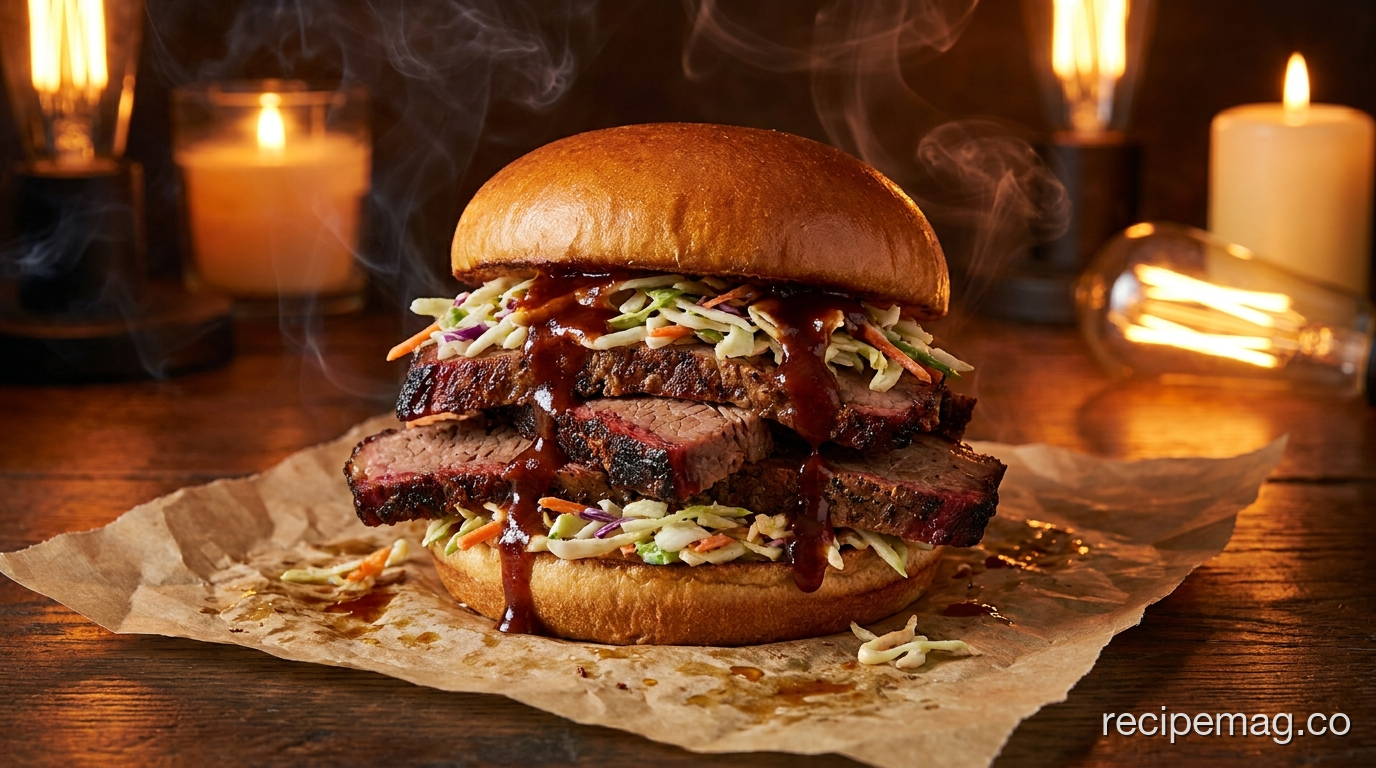
A great bbq brisket sandwich lives or dies on contrast: rich, smoky beef against something bright and sharp. That’s where a vinegar-based coleslaw earns its keep. It cuts straight through the fat instead of piling creamy weight on top of it. Pile tender brisket on a toasted bun, spoon over tangy slaw, add a swipe of sauce, and you’ve got a sandwich that tastes like a backyard cookout. Brisket is a forgiving cut, too: it’s the third most popular smoked meat at American barbecue joints, according to a 2023 industry survey by the National Barbecue and Grilling Association.
Key Takeaways
- A vinegar-based slaw cuts the richness of fatty brisket far better than a heavy mayo version.
- Brisket is properly tender at an internal temperature of 195°F to 205°F. ([USDA FSIS](https://www.fsis.usda.gov), 2023)
- Sliced brisket gives clean bites; chopped brisket soaks up more sauce and packs the bun.
- Always toast the bun. It’s the cheapest insurance against a soggy sandwich.
- Leftover or store-bought brisket turns this into a 20-minute weeknight dinner.
What Makes a Great BBQ Brisket Sandwich?
The best bbq brisket sandwich balances three things: tender smoky beef, a sharp acidic counterpoint, and a sturdy toasted bun. Brisket is a tough, collagen-heavy cut from the cow’s breast, and it only turns silky after hours of low, slow heat. The USDA notes that collagen breaks down into gelatin between roughly 160°F and 205°F, which is exactly why brisket needs patience. ([USDA FSIS](https://www.fsis.usda.gov), 2023) Rush it and you get a chewy, dry slab. Cook it right and it falls apart under a fork.
Acid is the second half of the equation, and it’s the part most home cooks skip. Fatty beef coats your palate fast. A vinegar slaw resets it bite after bite, so the last mouthful tastes as good as the first. Think of it as built-in seasoning rather than a side salad.
Then there’s the bun. A soft, untoasted bun collapses the second juicy brisket and sauce hit it. Toasting builds a thin, golden barrier that holds up. We’ll come back to that, because it matters more than people think.
Smoked or Braised: How Do You Cook the Brisket?
You have two reliable roads to tender brisket: smoke it low and slow, or braise it in the oven. Both work, and both finish around the same internal temperature. America’s Test Kitchen recommends pulling brisket near 200°F and resting it at least 30 minutes before slicing so the juices redistribute. ([America’s Test Kitchen](https://www.americastestkitchen.com), 2022) The smoker gives you a deep bark and ring of smoke. The oven gives you reliability and a free Saturday.
The Smoked Route
Smoke a seasoned brisket at 225°F to 250°F until it hits an internal temperature of 195°F to 205°F. For a whole packer brisket, that’s a long haul, often 1 to 1.5 hours per pound. Wrap it in butcher paper or foil once the bark sets and the internal temperature stalls around 165°F. The wrap pushes you through that stall and keeps the meat moist.
The Braised Route
No smoker? Braising delivers fork-tender brisket with zero special equipment. Sear a seasoned brisket flat, then braise it covered in a 300°F oven with beef stock and a splash of liquid smoke for that smoky note. Three to four hours later, it shreds easily. This is the route I reach for on a rainy weekend when standing by a smoker isn’t happening.
[PERSONAL EXPERIENCE] We’ve made this sandwich both ways dozens of times for weeknight crowds. The honest truth: most people can’t reliably tell braised brisket from smoked once it’s chopped, sauced, and stacked with slaw. A teaspoon of liquid smoke in the braise closes most of the gap.
Sliced vs Chopped Brisket: Which Is Better for a Sandwich?
Both work, but they create different sandwiches. Sliced brisket gives you clean, distinct bites and shows off a good smoke ring. Chopped brisket soaks up more sauce and packs into the bun for a juicier, messier mouthful. Texas tradition splits the brisket into the lean flat and the fattier point, and the point is usually what gets chopped because its extra fat keeps the meat from drying out. ([Texas Monthly](https://www.texasmonthly.com), 2023) For a sandwich, that fat is a feature, not a flaw.
[UNIQUE INSIGHT] Here’s the move most recipes miss: don’t choose one. Slice the lean flat, chop the fatty point, then mix them together for the sandwich. You get the clean texture of slices and the sauce-grabbing juiciness of chopped meat in the same bite. It’s the single best thing you can do with a whole brisket headed for a bun.
If you’re working with store-bought or leftover brisket, chopping is the friendlier choice. It hides uneven slicing, reheats more evenly, and grabs onto sauce, which matters when the meat has lost some of its original moisture in the fridge.
Why a Tangy Vinegar Slaw Beats Creamy Coleslaw
A vinegar slaw works because acid cuts fat. Rich brisket coats your mouth, and a sharp, crunchy slaw scrubs it clean for the next bite. Research published in Food Quality and Preference links sour and acidic flavors to a reduced perception of fattiness, which is the exact effect you want against fatty beef. ([Food Quality and Preference, Elsevier](https://www.sciencedirect.com/journal/food-quality-and-preference), 2019) A creamy mayo slaw, by contrast, stacks richness on richness and can make the whole sandwich feel heavy.
Texture is the other reason. A vinegar slaw stays crisp for hours because it isn’t drowning in mayo, so it adds the crunch a soft bun and tender meat both lack. It also won’t turn watery and sad if it sits, which makes it a better choice for cookouts and meal prep.
What Goes in the Slaw
- 4 cups shredded green cabbage (about half a small head)
- 1 cup shredded carrot
- ¼ cup thinly sliced red onion
- 3 tablespoons apple cider vinegar
- 1 tablespoon olive oil
- 1 tablespoon Dijon mustard
- 2 teaspoons sugar or honey
- ½ teaspoon celery seed (optional but great)
- Salt and black pepper to taste
Whisk the vinegar, oil, mustard, sugar, and celery seed together, then toss with the cabbage, carrot, and onion. Salt it, then let it sit at least 15 minutes. The cabbage softens slightly and drinks up the dressing. Make it up to a day ahead and it only gets better.
How Do You Build the Sandwich So It Holds Up?
Build order keeps the sandwich together instead of falling apart in your hands. The single most important step is toasting the bun. Toasting firms the cut surface and slows how fast juices soak in, which is the professional fix for a soggy sandwich. ([Serious Eats](https://www.seriouseats.com), 2022) Butter the cut sides and toast them face-down in a hot skillet for about a minute, until golden. That golden crust is your moisture barrier.
The Build, From Bottom to Top
- Toast the bun. Butter the cut sides and toast in a skillet until golden, about 1 minute.
- Sauce the bottom. Spread a thin layer of BBQ sauce on the toasted bottom bun. This anchors the meat and adds flavor from below.
- Pile the brisket. Add a generous mound of warm brisket, sliced, chopped, or both. Spoon over a little more sauce.
- Top with slaw. Add the tangy slaw directly on the meat. It acts as a crunchy buffer between the juicy beef and the top bun.
- Cap it. Press the top bun on gently and serve immediately, while the bun is still crisp.
Putting the slaw on top of the meat instead of on the bun is deliberate. It keeps the slaw’s moisture away from the bread and lets the crunch sit right against your bite. Serve right away, since a built sandwich is on a clock.
The Leftover and Store-Bought Brisket Shortcut
You don’t need to smoke a brisket to make this sandwich tonight. Pre-cooked brisket, whether it’s last night’s leftovers or a vacuum-sealed pack from the butcher counter or a good barbecue joint, gets you to dinner in about 20 minutes. The key is reheating gently so the meat doesn’t dry out.
How to Reheat Brisket Without Drying It Out
- Add moisture. Place the brisket in a covered dish with a few tablespoons of beef stock or water. Steam is your friend.
- Go low. Reheat in a 300°F oven, covered with foil, for 20 to 30 minutes until warmed through. Low and covered prevents drying.
- Or use the stovetop. Warm chopped brisket in a skillet with a splash of stock and a spoonful of BBQ sauce over medium-low heat.
- Sauce after, not before. Add most of your BBQ sauce once the meat is hot so it glazes rather than scorches.
Store-bought slaw works in a pinch too, but check the label. Most tubs are mayo-based and creamy. Toss a couple tablespoons of vinegar and a pinch of sugar into a creamy slaw to sharpen it up, or just make the five-minute vinegar slaw above. It’s genuinely faster than driving to buy one.
Smoky BBQ Brisket Sandwich with Tangy Coleslaw
Prep Time: 20 minutes | Cook Time: 3.5 hours (braised) | Serves: 6
Ingredients
Brisket
- 3 to 3.5 lb brisket flat
- 2 tablespoons brown sugar
- 1 tablespoon smoked paprika
- 2 teaspoons kosher salt
- 1 teaspoon black pepper
- 1 teaspoon garlic powder
- 1 teaspoon onion powder
- 1 cup beef stock
- 1 teaspoon liquid smoke (if braising)
Tangy Vinegar Slaw
- 4 cups shredded green cabbage
- 1 cup shredded carrot
- ¼ cup thinly sliced red onion
- 3 tablespoons apple cider vinegar
- 1 tablespoon olive oil
- 1 tablespoon Dijon mustard
- 2 teaspoons sugar or honey
- ½ teaspoon celery seed
- Salt and black pepper to taste
To Build
- 6 brioche or potato buns
- 2 tablespoons butter, softened
- ½ to ¾ cup BBQ sauce
Instructions
- Mix brown sugar, smoked paprika, salt, pepper, garlic powder, and onion powder. Rub all over the brisket. For best flavor, refrigerate uncovered 4 hours or overnight.
- To braise: sear the brisket in a Dutch oven over high heat until browned on both sides. Add beef stock and liquid smoke. Cover and braise in a 300°F oven for 3 to 3.5 hours, until fork-tender. To smoke: cook at 225°F to 250°F until the internal temperature reaches 195°F to 205°F, wrapping at the 165°F stall.
- Rest the cooked brisket at least 30 minutes before cutting.
- Make the slaw: whisk vinegar, oil, mustard, sugar, and celery seed. Toss with cabbage, carrot, and onion. Season with salt and pepper. Let sit at least 15 minutes.
- Slice the lean parts of the brisket and chop the fattier ends. Mix together and toss with a little BBQ sauce.
- Butter the cut sides of the buns and toast face-down in a hot skillet until golden, about 1 minute.
- Build: spread sauce on the bottom bun, pile on warm brisket, top with tangy slaw, and cap with the top bun. Serve immediately.
Notes
- Shortcut: use 1.5 to 2 lb of leftover or store-bought cooked brisket. Reheat covered at 300°F with a splash of stock for 20 to 30 minutes, then skip to step 4.
- Make the slaw up to a day ahead. It holds its crunch because it has no mayo.
- Sliced, chopped, or both: mixing the two gives the best texture for a sandwich.
- No liquid smoke? A pinch of smoked paprika in the braise adds a smoky background note.
Frequently Asked Questions About BBQ Brisket Sandwiches
What’s the best cut of brisket for sandwiches?
The point cut is ideal for sandwiches because its higher fat content keeps chopped meat juicy. The leaner flat slices cleanly and looks beautiful but can dry out. The best approach is to use both: slice the flat, chop the point, and mix them. If you can only buy one, a brisket flat is more common in grocery stores and works fine when you don’t overcook it.
Can I make a brisket sandwich without a smoker?
Absolutely. Braising in a covered Dutch oven at 300°F for 3 to 3.5 hours produces fork-tender brisket with no special equipment. Add a teaspoon of liquid smoke or a tablespoon of smoked paprika to the braising liquid for that smoky note. Once the meat is chopped, sauced, and topped with slaw, most people can’t tell it wasn’t smoked.
Why is my brisket tough?
Tough brisket is almost always undercooked, not overcooked. Brisket is full of collagen that only breaks down into gelatin around 195°F to 205°F internal temperature. If you pull it at 160°F like a steak, it stays chewy. Keep cooking, low and slow, until a probe slides in like butter. Resting at least 30 minutes afterward also makes a real difference in tenderness.
How far ahead can I make the components?
Brisket can be cooked up to three days ahead and refrigerated, then gently reheated with a splash of stock. It also freezes well for up to three months. The vinegar slaw can be made a full day in advance and actually improves as it sits. Only the bun toasting and final assembly should happen right before serving, so the sandwich stays crisp.
What bun holds up best to brisket?
Brioche and potato buns are the top choices because they’re soft but sturdy, with enough structure to handle juicy meat and sauce once toasted. Toasting is non-negotiable: it creates a barrier that slows sogginess. Avoid thin, flimsy buns or crusty rolls that fight your bite. The bun should yield to the brisket, not compete with it.
A bbq brisket sandwich is comfort food with a backbone. Smoky beef does the heavy lifting, but it’s the tangy vinegar slaw that makes every bite feel balanced instead of heavy. That contrast is the whole point.
You don’t need a competition smoker or a free weekend to pull it off. Braise a brisket flat on a lazy afternoon, or lean on leftovers and a store-bought pack for a fast weeknight version. Either way, make the slaw, toast the bun, and don’t skip the sauce.
Build it, eat it right away, and keep napkins close. This is a sandwich worth getting your hands dirty for.
