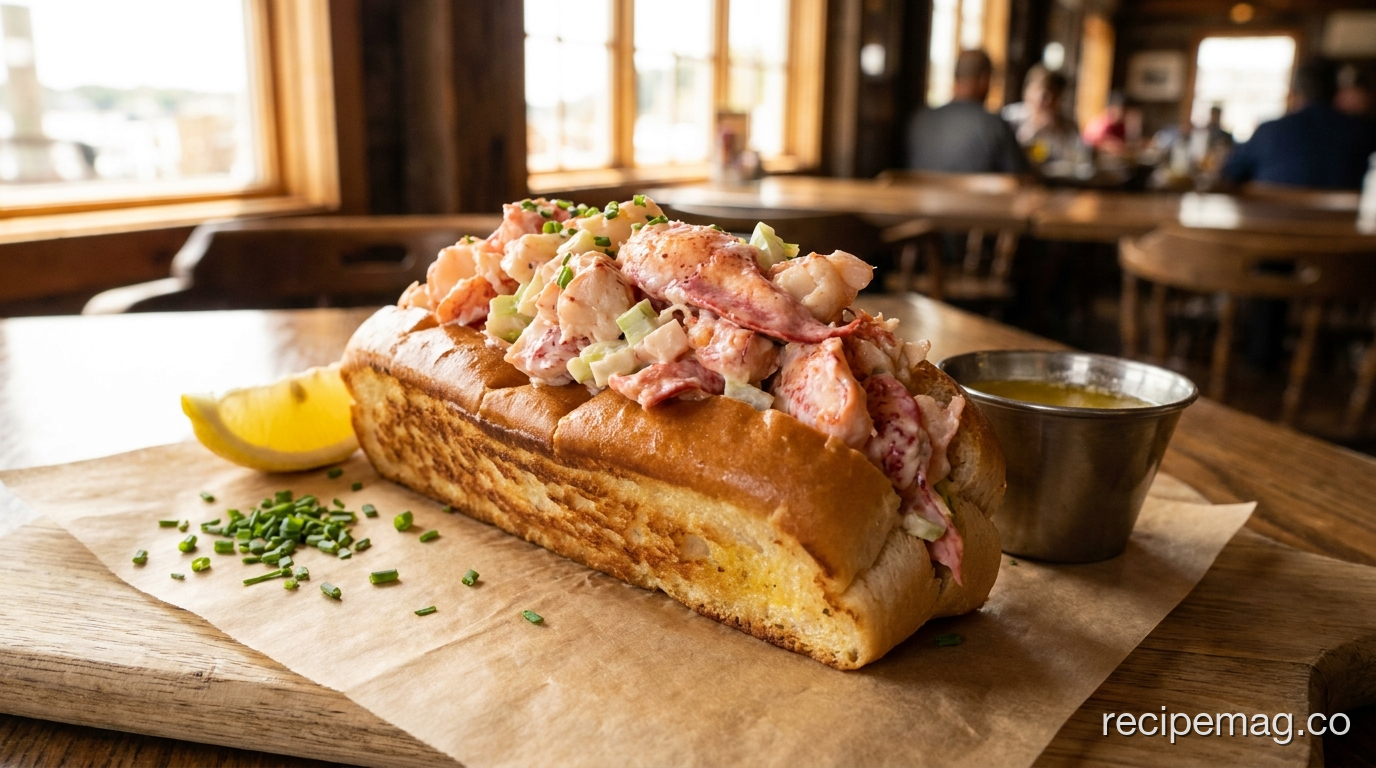
A great lobster roll is mostly about restraint. The New England classic splits into two camps: Maine style serves chilled lobster bound in just enough mayonnaise with a squeeze of lemon, while Connecticut style serves it warm, tossed in drawn butter. Both pile generous chunks of sweet meat onto a buttery, griddled split-top bun. The cardinal rule for both: don’t drown good lobster. American lobster supports a fishery worth over $460 million at the dock in 2022, and most of it lands in Maine. ([NOAA Fisheries](https://www.fisheries.noaa.gov), 2023)
Key Takeaways
- Maine style is cold, lightly dressed with mayo and lemon; Connecticut style is warm, tossed in drawn butter.
- You need about 1 pound of cooked lobster meat to fill 4 rolls generously.
- Always griddle the split-top bun in butter on its flat sides until golden. This is non-negotiable.
- Lobster is lean and high in protein, with roughly 19 grams of protein and under 100 calories per 3-ounce serving. ([USDA FoodData Central](https://fdc.nal.usda.gov), 2023)
- Buying pre-cooked, picked lobster meat turns this into a 20-minute recipe.
What Is the Difference Between a Maine and Connecticut Lobster Roll?
The split comes down to temperature and fat. Maine style is served cold: the lobster is chilled, then dressed lightly with mayonnaise, a little lemon, and sometimes celery or chives. Connecticut style is served warm, with the meat gently heated and tossed in melted butter, no mayo at all. Food historians credit a Connecticut stand in the late 1920s with the original warm-butter version. ([New England Historical Society](https://www.newenglandhistoricalsociety.com), 2022)
Both styles share the same foundation: high-quality lobster meat and a properly toasted split-top bun. The choice between them is genuinely personal. Maine style tastes brighter and lighter, good for a hot June evening. Connecticut style is richer and more indulgent, the butter amplifying that natural sweetness.
[PERSONAL EXPERIENCE] We’ve served both side by side at the same table more than once, and the vote is always split right down the middle. Our advice: if your lobster is exceptionally fresh and sweet, go Connecticut and let the butter carry it. If you want a cleaner, more refreshing bite, Maine style with a whisper of lemon wins.
Maine Style at a Glance
- Served cold or at room temperature
- Dressed in a small amount of mayonnaise
- Brightened with lemon juice and often chives or celery
- Light, bright, and refreshing
Connecticut Style at a Glance
- Served warm
- Tossed in melted or drawn butter, no mayo
- Often finished with a pinch of flaky salt
- Rich, buttery, and indulgent
What Lobster Should You Buy for Lobster Rolls?
You have two good paths: cook live lobsters yourself, or buy cooked, picked meat. Maine alone landed about 98 million pounds of lobster in 2022, which keeps fresh and frozen picked meat widely available year-round. ([Maine Department of Marine Resources](https://www.maine.gov/dmr), 2023) For four rolls, you want roughly 1 pound of cooked meat, which usually means two 1.5-pound live lobsters or one container of picked claw-and-knuckle meat.
The shortcut most home cooks reach for is pre-cooked, picked lobster meat from the seafood counter. It’s a legitimate move, not a cheat. Look for claw and knuckle meat specifically. It’s sweeter and more tender than tail meat, and it’s the traditional choice for rolls. Give it a sniff: good lobster smells clean and faintly of the sea, never fishy or of ammonia.
[UNIQUE INSIGHT] Many recipes push you toward all tail meat because it looks impressive, but that’s a mistake for rolls. Claw and knuckle meat has a more delicate texture that soaks up dressing better and gives a more even bite. Save the firm tail meat for dishes where you want big, dramatic chunks. For a roll, the soft, sweet claw meat is the prize.
Ingredients
The ingredient list is short on purpose. A lobster roll lives and dies by the quality of its parts, and lobster is the lean, protein-rich star, delivering roughly 19 grams of protein per 3-ounce serving with very little fat. ([USDA FoodData Central](https://fdc.nal.usda.gov), 2023) Everything else exists to support it, not to compete with it.
For Both Styles
- 1 pound cooked lobster meat (claw and knuckle preferred), cut into bite-size chunks
- 4 split-top (New England style) hot dog buns
- 4 tablespoons unsalted butter, softened, for the buns
- Flaky sea salt, to finish
For Maine Style (Cold)
- 3 tablespoons good-quality mayonnaise
- 1 tablespoon fresh lemon juice
- 1 stalk celery, very finely diced (optional)
- 1 tablespoon fresh chives, snipped
- Salt and black pepper to taste
For Connecticut Style (Warm)
- 4 tablespoons unsalted butter, melted (drawn)
- 1 teaspoon fresh lemon juice (optional)
- Pinch of flaky salt
One note on the buns: the New England split-top bun is the right vessel because its flat sides toast on the griddle while the top stays soft. If you can’t find them, a regular hot dog bun works in a pinch. Just trim the rounded crusts off one side so it sits flat and toasts evenly.
How Do You Toast a Split-Top Bun the Right Way?
This step separates a homemade lobster roll from a great one. The bun should be buttered on its flat outer sides and griddled in a skillet until deep golden and crisp, like a grilled cheese. America’s Test Kitchen has long pointed to butter-toasted split-top buns as the defining textural element of a proper lobster roll. ([America’s Test Kitchen](https://www.americastestkitchen.com), 2021) Skip this and you’ve made a cold lobster sandwich, not a lobster roll.
Step-by-Step Bun Toasting
- Heat a skillet or griddle over medium heat. Cast iron or nonstick both work. You want it hot enough to sizzle butter but not smoke.
- Butter the flat outer sides of each split-top bun. Spread softened butter generously on both flat sides, the way you’d butter bread for grilled cheese.
- Griddle until golden. Place the buttered sides down in the skillet. Toast for 1 to 2 minutes per side until deep golden brown and crisp.
- Open and warm the inside (optional). For Connecticut style, briefly toast the inner cut surface too, so it grips the warm buttered meat.
- Fill immediately. A warm, crisp bun straight off the griddle is the whole point. Don’t let it sit and soften.
How to Make a Maine-Style Lobster Roll (Cold)
Maine style is about a light touch. The goal is to coat the lobster, not bury it. Use just enough mayonnaise to make the chunks glisten, then brighten everything with lemon. Lobster meat is delicate and perishable, so the FDA advises keeping cooked seafood refrigerated at or below 40°F and serving it well chilled to stay in the safe zone. ([FDA](https://www.fda.gov/food/buy-store-serve-safe-food), 2023)
- Make sure your cooked lobster meat is well chilled. Cut it into bite-size chunks.
- In a bowl, combine the mayonnaise, lemon juice, finely diced celery, and chives.
- Gently fold in the lobster meat. Use a light hand. You want the meat coated, not crushed or over-mixed.
- Season carefully with salt and black pepper. Taste, then adjust lemon if needed.
- Pile the chilled lobster generously into the warm, toasted split-top buns.
- Finish with a few extra chives and a pinch of flaky salt. Serve right away.
How to Make a Connecticut-Style Lobster Roll (Warm)
Connecticut style is even simpler, and the butter does the heavy lifting. The meat is gently warmed in melted butter just until heated through, never simmered hard, which would make it rubbery. Lobster is a lean protein, so the warm butter adds the richness that mayo provides in the Maine version. Keep the heat low and your eye on the pan.
- Cut the cooked lobster meat into bite-size chunks.
- Melt the butter in a skillet over low heat. Don’t let it brown.
- Add the lobster meat and toss gently, just until warmed through, about 2 to 3 minutes.
- Stir in the optional teaspoon of lemon juice for a touch of brightness, if you like.
- Using a slotted spoon, pile the warm, buttery lobster into the toasted split-top buns.
- Finish with a pinch of flaky salt and a little of the warm butter spooned over the top. Serve immediately.
Tips for the Best Lobster Roll
A few small choices make a big difference. The most common home-cook mistakes are over-dressing the lobster and skipping the bun toast. Get those two right and you’re 90% of the way to a stand-quality roll. The rest is about handling delicate meat gently and seasoning with a light, confident hand.
- Don’t over-dress. Start with less mayo or butter than you think you need. You can always add more. You can’t take it back out.
- Use claw and knuckle meat. It’s sweeter and more tender than tail meat, and it’s the traditional roll choice.
- Toast the bun in butter, always. The crisp, golden, buttery bun is half the experience.
- Chill matters for Maine style. Cold lobster and cold mayo keep the salad tight and refreshing.
- Warm gently for Connecticut style. Low heat and a short time keep the meat tender.
- Season at the end. A finishing pinch of flaky salt wakes up the sweetness of the lobster.
- Serve immediately. Lobster rolls don’t wait. Build them just before eating.
—
Classic New England Lobster Rolls (Maine and Connecticut Style)
Prep Time: 15 minutes | Cook Time: 5 minutes | Serves: 4
Ingredients
Base (Both Styles)
- 1 pound cooked lobster meat (claw and knuckle preferred), cut into chunks
- 4 New England split-top hot dog buns
- 4 tablespoons unsalted butter, softened, for the buns
- Flaky sea salt, to finish
Maine Style (Cold)
- 3 tablespoons good-quality mayonnaise
- 1 tablespoon fresh lemon juice
- 1 stalk celery, finely diced (optional)
- 1 tablespoon snipped fresh chives
- Salt and black pepper to taste
Connecticut Style (Warm)
- 4 tablespoons unsalted butter, melted
- 1 teaspoon fresh lemon juice (optional)
- Pinch of flaky salt
Instructions
- Cut the cooked lobster meat into bite-size chunks. For Maine style, keep it well chilled.
- Toast the buns: spread softened butter on the flat outer sides of each split-top bun. Griddle in a skillet over medium heat for 1 to 2 minutes per side until deep golden and crisp.
- Maine style: Whisk mayonnaise, lemon juice, celery, and chives in a bowl. Gently fold in the chilled lobster. Season with salt and pepper.
- Connecticut style: Melt butter in a skillet over low heat. Add lobster and toss gently for 2 to 3 minutes, just until warmed through. Stir in lemon juice if using.
- Pile the lobster generously into the toasted buns.
- Finish with flaky salt. For Connecticut style, spoon a little warm butter over the top. Serve immediately.
Notes
- Shortcut: buy pre-cooked, picked lobster meat to make this a 20-minute recipe.
- No split-top buns? Trim one flat side off regular hot dog buns so they griddle evenly.
- Don’t over-dress. Add mayo or butter gradually; you can’t undo too much.
- Keep cooked lobster refrigerated at or below 40°F until you build the rolls.
—
Frequently Asked Questions About Lobster Rolls
How much lobster meat do I need per roll?
Plan on about 4 ounces of cooked lobster meat per roll, so roughly 1 pound total fills four generously. That usually means two 1.5-pound live lobsters or one container of picked claw-and-knuckle meat. A proper lobster roll should look overstuffed, with the meat mounding well above the bun. Skimping is the fastest way to a disappointing result.
Can I use frozen or pre-cooked lobster meat?
Yes, and pre-cooked picked meat is the easiest shortcut for home cooks. Look for claw and knuckle meat from a trusted seafood counter, and thaw frozen meat in the refrigerator overnight. Pat it dry before dressing so the salad isn’t watery. The quality of the meat matters far more than whether you cooked it yourself, so buy the best you can find.
Which is better, Maine or Connecticut style?
Neither is objectively better; it’s a matter of taste. Maine style (cold, light mayo, lemon) is brighter and more refreshing, great for hot weather. Connecticut style (warm drawn butter) is richer and more indulgent, letting the lobster’s natural sweetness shine. If your lobster is exceptionally fresh, the warm butter version showcases it beautifully. When in doubt, make both and let your guests decide.
What kind of bun is a split-top bun?
A split-top bun is a New England-style hot dog bun that opens from the top rather than the side, with flat outer faces. Those flat sides are what let you butter and griddle the bun like a grilled cheese. That crisp, golden, buttery crust is essential to an authentic lobster roll. If you can’t find them, trim a flat side onto a standard hot dog bun.
How do I keep the lobster from getting watery?
Pat the cooked meat dry with paper towels before dressing it, especially if it was frozen or stored in liquid. Excess moisture thins out the mayo in Maine style and dilutes the butter in Connecticut style. Dress the lobster just before serving rather than letting it sit, and build each roll at the last minute so the bun stays crisp and the filling stays tight.
A lobster roll is one of summer’s simplest pleasures, and now you can make both classics at home. The whole thing comes down to good meat, a buttered and griddled split-top bun, and the discipline to stop dressing before you’ve gone too far.
Pick your camp, or don’t. Make a cold Maine roll with lemon and chives for a bright June evening, or a warm Connecticut roll glistening with butter when you want something richer. With pre-cooked lobster meat, either one is on the table in about 20 minutes.
Buy the best lobster you can find, toast those buns properly, and serve the rolls the moment they’re built. That’s the whole secret. Everything else is just lobster getting out of its own way.
