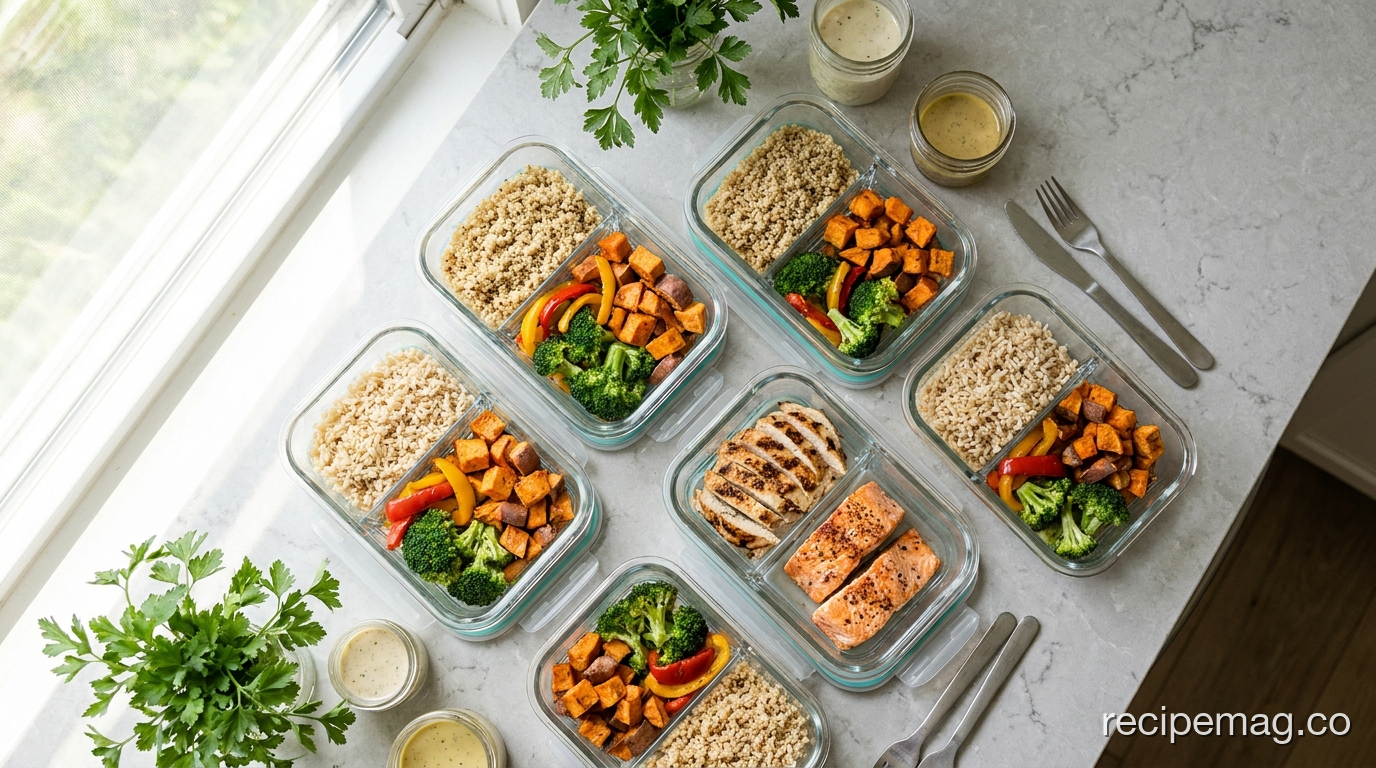
Batch cooking works best when you cook versatile bases once, then remix them into different meals all week. Instead of making five finished dinners on Sunday, you make a big pot of grains, a tray of roasted vegetables, and a batch of seasoned protein, then combine them differently each night. According to a 2023 survey by the International Food Information Council, 58% of Americans now batch-cook at least one meal a week to save time on weeknights (International Food Information Council, 2023). The trick is building flexibility in, not boredom.
Key Takeaways
- Batch cooking means cooking flexible bases once; meal prep usually means portioning finished, fixed meals.
- The best foods to batch are sturdy grains, big proteins, and roasted vegetables that reheat without turning to mush.
- The USDA says to cool cooked food and refrigerate it within 2 hours, then use it within 3 to 4 days (USDA FSIS, 2023).
- One Sunday session of 90 minutes can power five to seven different weeknight meals.
- Store bases separately so you can remix them into bowls, wraps, soups, and stir-fries all week.
What Is Batch Cooking and How Is It Different From Meal Prep?
Batch cooking and meal prep overlap, but they aren’t the same thing. Batch cooking means making a large quantity of one component, like a pot of rice or a tray of roasted vegetables, that you’ll use across several meals. Meal prep usually means assembling complete, portioned dishes you reheat as-is. A 2023 International Food Information Council survey found 58% of Americans batch-cook weekly, largely to cut weeknight cooking time (International Food Information Council, 2023). Batch cooking is the more flexible of the two.
Here’s the practical difference. With strict meal prep, Wednesday’s lunch is decided on Sunday and it never changes. With batch cooking, you cook the parts and decide later. Monday those roasted vegetables go into a grain bowl. Thursday the same vegetables get folded into a frittata. The food is identical; the meal is different.
Why does that matter? Because the biggest reason people quit meal prep is boredom. Eating the same sealed container four days running gets old fast. Batch cooking sidesteps that by keeping the components modular and the final dish open.
[UNIQUE INSIGHT] The hidden advantage of batch cooking over rigid meal prep is psychological, not nutritional. When the components stay separate, you preserve the daily choice of what to eat, and that small bit of variety is what keeps people doing it past week two. Fixed, pre-assembled containers fail not because the food spoils but because the cook gets tired of them.
Which Foods Are Best to Batch Cook?
The best foods to batch cook are sturdy ones that survive cooling, storage, and reheating without falling apart. The USDA Food Safety and Inspection Service confirms that cooked grains, vegetables, and proteins stored airtight at 40°F or below stay safe and good for 3 to 4 days (USDA FSIS, 2023). That window is your planning horizon. Choose foods that taste as good on day three as they do fresh.
Grains and Starches
Grains are the backbone of batch cooking. Brown rice, quinoa, farro, and barley all hold their texture for days and reheat cleanly. Cook a double batch and you’ve got the base for bowls, salads, and fried rice. Potatoes and sweet potatoes batch well too, roasted or boiled, though they’re best within three days.
Proteins
Cook proteins in big, plain batches so they stay flexible. Shredded chicken, ground beef or turkey, baked tofu, and pots of beans or lentils all take seasoning later, which lets the same protein become tacos one night and a grain bowl the next. Season lightly during cooking, then build flavor at assembly.
Roasted Vegetables
Roasted vegetables are the most underrated batch food. Broccoli, carrots, cauliflower, zucchini, and onions roast at the same 425°F and reheat without going soggy if you don’t overcook them the first time. Avoid watery vegetables like cucumber and most leafy greens; those go in fresh at the end.
What Does a Simple Sunday Batch Cooking Workflow Look Like?
A good batch cooking session runs on overlap: you start the slowest item first and stack everything else around it. In about 90 minutes you can produce enough bases for most of the week. Households that plan meals in advance waste meaningfully less food. The USDA estimates that 30 to 40% of the U.S. food supply goes to waste, much of it at the household level, and advance planning is one of the most effective fixes (USDA, 2023). Batch cooking is planning you can eat.
A 90-Minute Sequence
- Start the grains (0:00). Get a big pot of rice, quinoa, or farro going first. It cooks unattended while you prep everything else.
- Heat the oven and load the vegetables (0:05). Chop your vegetables, spread them across two sheet pans, oil and salt them, and roast at 425°F. Two pans, not one crowded one.
- Cook the protein (0:20). While the oven works, poach or bake chicken, brown ground meat, or simmer a pot of beans on the stovetop.
- Make one sauce or dressing (0:50). A single versatile sauce, like a tahini drizzle, a vinaigrette, or a quick salsa, ties the week’s meals together. It stores for up to a week.
- Cool everything (1:10). Spread hot food into shallow containers so it cools fast. Get it into the fridge well within the 2-hour USDA window.
- Label and store (1:25). Date each container. Store the components separately so you can mix and match later in the week.
[PERSONAL EXPERIENCE] We’ve found the single biggest time-saver is doing all the chopping before anything hits the heat. When you stop to peel a carrot mid-session, the rhythm breaks and the whole thing drags past two hours. Twenty minutes of prep up front, then everything cooks in parallel. That one change turned our Sunday sessions from a two-hour slog into a tidy 90 minutes.
How Should You Cool and Store Batch-Cooked Food Safely?
Cooling is the step most home cooks rush, and it’s the one that matters most for safety. The USDA’s two-hour rule says perishable food held between 40°F and 140°F for over two hours falls into the bacterial danger zone and should be tossed (USDA FSIS, 2023). Big, deep containers of hot food cool slowly and can linger in that zone. Shallow containers fix it. Spread food thin and it chills fast.
A few habits make safe storage automatic. Divide a large batch into shallow containers no more than two inches deep. Leave the lid off or ajar until the steam stops, then seal and refrigerate. Don’t wait for food to reach room temperature on the counter; that’s exactly how the two-hour window gets blown.
How Long Does It Keep?
- Refrigerator: Most cooked grains, vegetables, and proteins keep 3 to 4 days at 40°F or below (USDA FSIS, 2023).
- Freezer: Cooked grains, beans, soups, and many proteins freeze well for 2 to 3 months. Roasted vegetables freeze poorly and turn mushy.
- Sauces: Most dressings and sauces hold a full week refrigerated in a sealed jar.
Freezing Tips
Freeze in single-meal portions so you only thaw what you need. Cooked rice freezes especially well: spread it flat in a zip-top bag, freeze it thin, and it reheats straight from frozen in minutes. Label every bag with the contents and the date, because frozen food becomes anonymous fast.
How Do You Reheat Batch-Cooked Food Without Ruining It?
Reheating is where batch cooking either shines or disappoints, and temperature is the rule that keeps it safe. The USDA advises reheating cooked leftovers to an internal temperature of 165°F (USDA FSIS, 2023). Beyond safety, technique protects texture. Grains and proteins dry out in the microwave, so a splash of water and a cover make a real difference. Roasted vegetables crisp back up far better in a hot oven or skillet than under microwave steam.
- Grains: Add a tablespoon of water per portion, cover, and microwave in short bursts. The steam loosens grains that have firmed up cold.
- Proteins: Reheat gently and only to 165°F. Overheating turns chicken rubbery and dries out ground meat.
- Roasted vegetables: Skip the microwave. A few minutes in a 400°F oven or a hot skillet brings back the crisp edges.
- Soups and stews: These reheat best of all. Warm on the stovetop to a gentle simmer.
How Do You Turn One Base Recipe Into Multiple Meals?
This is the heart of cook-once-eat-all-week: one set of bases, many finished meals. The principle is simple. Keep the components plain and separate, then change the format and the seasoning at assembly. A 2022 review in Nutrients linked home cooking and meal planning to better diet quality and lower added-sugar intake, partly because cooking in advance removes the daily pressure that pushes people toward takeout (Nutrients, MDPI, 2022). Variety is what makes the habit stick.
One Base, Five Meals
Say your Sunday bases are cooked rice, shredded chicken, and roasted vegetables. Here’s a week from those three things:
- Monday, grain bowl: Rice, chicken, and vegetables with a tahini drizzle.
- Tuesday, tacos: Shredded chicken warmed with cumin and lime, folded into tortillas with fresh toppings.
- Wednesday, fried rice: Rice and chopped vegetables stir-fried with a scrambled egg and soy sauce.
- Thursday, soup: Chicken and vegetables simmered in broth with a handful of fresh greens at the end.
- Friday, wrap: Chicken and vegetables rolled in a tortilla with hummus and a quick salad.
Notice what changed: the format and the seasoning, not the cooking. The chicken never got cooked twice. Each meal feels distinct because a new sauce, a new wrapper, or a new fresh element walked in at the end.
[UNIQUE INSIGHT] The lever that creates variety isn’t the base, it’s the finishing touch. A pile of plain rice and chicken becomes Mexican with lime and cumin, Mediterranean with lemon and tahini, or East Asian with soy and ginger, all from the same fridge. Invest your effort in three different sauces, not three different proteins, and the perceived variety multiplies for a fraction of the work.
Frequently Asked Questions About Batch Cooking Tips
How long does batch-cooked food last in the fridge?
Most batch-cooked grains, vegetables, and proteins stay safe and good for 3 to 4 days when stored airtight at 40°F or below, according to the USDA Food Safety and Inspection Service (USDA FSIS, 2023). For anything you won’t eat within that window, freeze it in single-meal portions instead. Always cool food and refrigerate it within two hours of cooking.
Is batch cooking the same as meal prep?
Not quite. Batch cooking means making large quantities of flexible components, like a pot of grains or a tray of roasted vegetables, that you remix into different meals all week. Meal prep usually means assembling complete, portioned dishes you reheat as-is. Batch cooking gives you more day-to-day variety because you decide the final meal later, which is exactly why so many people find it easier to sustain.
Can you freeze batch-cooked meals?
Yes, and freezing extends your options well past the fridge’s 3-to-4-day limit. Cooked grains, beans, soups, stews, and many proteins freeze well for 2 to 3 months. Roasted vegetables are the main exception; they turn watery and soft after thawing. Freeze in single-meal portions, label each one with the date, and reheat to an internal temperature of 165°F (USDA FSIS, 2023).
How do I keep batch-cooked food from getting boring?
Keep the bases plain and separate, then change the seasoning and format at assembly. The same rice and chicken can become tacos, a grain bowl, fried rice, or soup depending on the sauce and the wrapper. Making two or three versatile sauces ahead of time does more for variety than cooking different proteins. The finishing touch, not the base, is what makes each meal feel new.
What foods should you avoid batch cooking?
Avoid foods that don’t survive cooling and reheating. Crisp salads, cucumbers, and most leafy greens go limp and watery, so add them fresh at the end. Fried foods lose their crunch, and creamy or dairy-heavy sauces can separate when reheated. Roasted vegetables reheat well but freeze badly. Stick to sturdy grains, proteins, beans, and roasted vegetables for the best results across the week.
Start Your First Batch Cooking Week
Batch cooking pays off the most when you start small. Pick three bases for your first week: one grain, one protein, and one tray of roasted vegetables. Cook them on a single afternoon, cool them fast, and store them separately. That’s the whole system. Everything else is just deciding what to combine each night.
The rules that keep it safe are short. Refrigerate within two hours, eat within three to four days, freeze anything beyond that, and reheat to 165°F. Follow those and the food stays as safe as it is convenient. The rest is yours to remix.
Make a couple of sauces alongside your bases this weekend. By Wednesday, when the same rice and chicken have become a third completely different dinner, you’ll understand why cook-once-eat-all-week is the habit that actually lasts.
