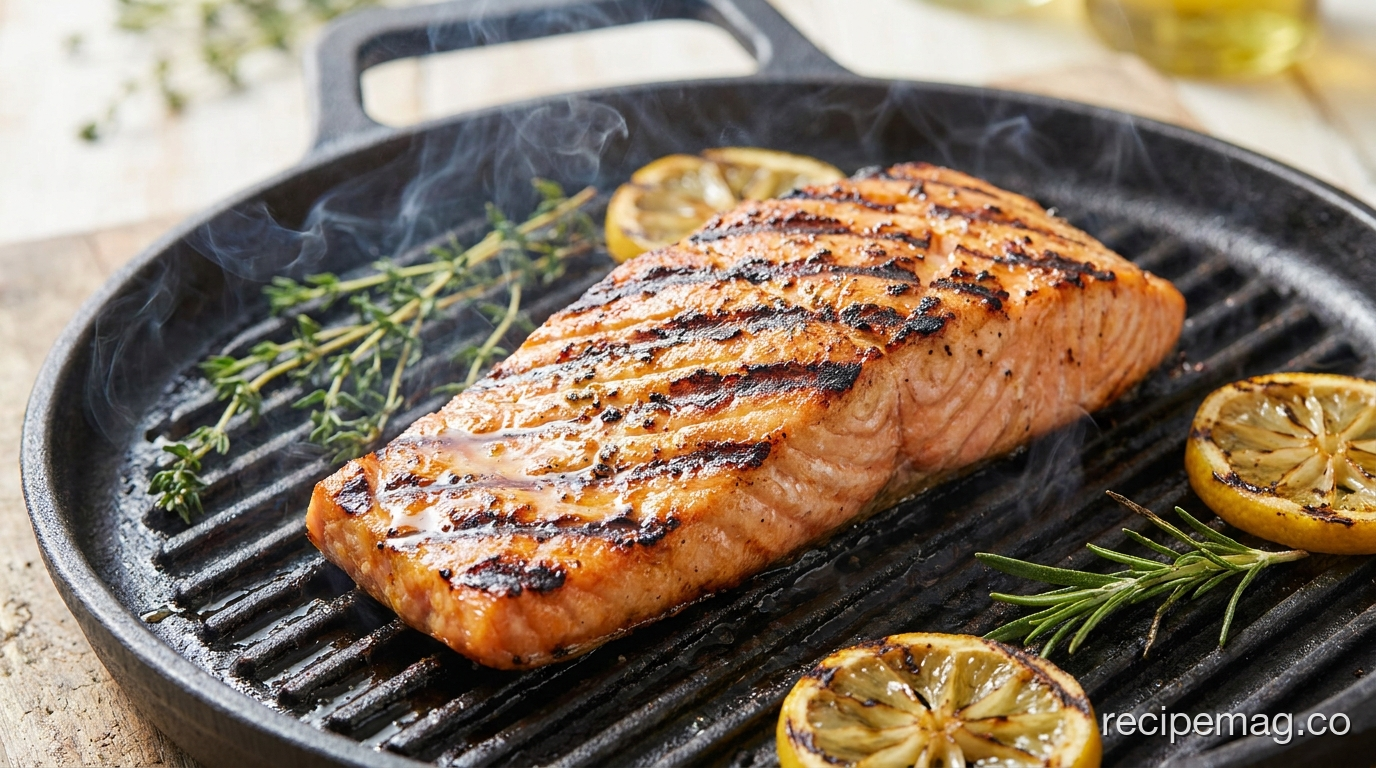
Fish sticks to the grill for one main reason: you flip it too early, before a proper sear has formed and released the flesh on its own. Get three things right and sticking disappears. Clean and preheat your grates until they’re screaming hot, oil the fish instead of the grates, and leave each side alone until it lifts cleanly. Heat matters: the proteins in fish set and release between roughly 140°F and 145°F internal, and the surface needs to hit a hard sear first (USDA FSIS, 2023). Master those steps and grilled fish stops being intimidating.
Key Takeaways
- Sticking is almost always a heat-and-timing problem, not a grill problem.
- Preheat grates 10-15 minutes until they hit 450-500°F, then scrape them clean.
- Oil the fish, not the grates: coat each fillet lightly so it sears instead of grips.
- Don’t flip until the fish releases on its own, usually 4-6 minutes per side over medium-high heat.
- Firm fish wins: salmon, swordfish, and tuna hold together far better than delicate flaky fillets.
Why Does Fish Stick to the Grill?
Fish sticks because its proteins bond to metal the instant they touch a cool or dirty surface. According to America’s Test Kitchen, fish flesh contains soluble proteins that fuse to bare metal unless a hot sear forms first to release them (America’s Test Kitchen, 2022). On a cold grate, the protein grabs and won’t let go. On a clean, hot, oiled grate, a crust forms in seconds and the fish lifts away.
The second culprit is impatience. Most cooks flip fish the moment it looks done on the edges, long before the sear has finished. A finished sear releases itself. An unfinished one tears. That’s the whole mystery.
Moisture plays a role too. A wet fillet steams on contact instead of searing, and steam between fish and metal turns into glue once it cools. Pat every fillet bone-dry with paper towels before it ever sees the grill. Dry surface, hot metal, light oil. That’s the formula.
How Do You Prep the Grill Grates?
Clean, hot grates are the foundation of every stick-free fillet. The University of Minnesota Extension recommends preheating grates 10-15 minutes and scrubbing them clean before food touches them, because leftover carbon and residue give fish protein something to grip (UMN Extension, 2021). A dirty grate is a sticky grate, no matter how much oil you use.
The three-step grate routine
- Preheat hot. Close the lid and run the grill on high for 10-15 minutes. You want the grates at roughly 450-500°F so they sear on contact.
- Scrape clean. Once hot, scrub the grates with a sturdy grill brush or a tightly wadded ball of foil held in tongs. Old residue burns off and lifts away easily when the metal is hot.
- Wipe with oil. Fold a paper towel, dip it in a high-smoke-point oil, hold it with tongs, and wipe the bars two or three times. This seasons the grate and gives the fish a clean, slick surface to meet.
Heat is what makes this work. A hot grate sears; a lukewarm one sticks. Don’t rush the preheat to save ten minutes. It’s the most important ten minutes of the whole process.
Should You Oil the Fish or the Grates?
Oil the fish, not the grates. Serious Eats recommends brushing a thin layer of high-smoke-point oil directly onto the fillet, because that puts the lubricating barrier exactly where the protein meets the metal (Serious Eats, 2021). Oil poured on the grate mostly drips into the fire, causing flare-ups and leaving the fish dry where it counts.
Use an oil that can take the heat. Grates often run past 450°F, and an oil with a low smoke point will burn, turn bitter, and create the exact sticky residue you’re trying to avoid. Reach for avocado, grapeseed, refined canola, or light olive oil. Skip butter and unrefined oils on direct high heat.
How to oil the fish properly
- Dry first. Pat the fillet completely dry. Oil can’t grip a wet surface, and water under oil still steams and sticks.
- Coat lightly. Brush or rub a thin, even film of oil over the whole fillet, including the skin if it’s skin-on. You want a sheen, not a puddle.
- Season after oiling. Salt and spices stick to the oil and stay put. Season just before grilling so the salt doesn’t pull moisture to the surface.
Skin-on fillets get a bonus here. The skin acts as a built-in barrier between the delicate flesh and the metal, so it crisps up and shields the fish. Lay skin-side down first and let it do its job.
How Hot Should the Grill Be for Fish?
Medium-high direct heat, around 400-450°F at the grate, is the sweet spot for most fish. The USDA confirms fish is safe and done at an internal temperature of 145°F, and a medium-high grill drives the center there while building a sear on the outside (USDA FSIS, 2023). Too cool and the fish sticks and steams; too hot and the surface scorches before the inside cooks.
There’s a useful contradiction here. You need the grate roaring hot when the fish lands, so the sear forms fast and releases. But once the fillet is searing, medium-high keeps the inside from overcooking before the crust is ready. Preheat on high, then dial back slightly when the fish goes on.
An instant-read thermometer takes out the guesswork. Pull thick fillets at 130-135°F for medium and let carryover heat finish them, or cook straight to 145°F if you prefer fish fully set. A few degrees is the line between juicy and dry.
What Is the No-Flip Rule?
The no-flip rule is simple: don’t flip the fish until it releases on its own. Cook’s Illustrated calls this the natural-release test, noting that properly seared fish lifts cleanly while underseared fish clings and tears (Cook’s Illustrated, 2022). If your spatula meets resistance, the sear isn’t finished. Wait thirty more seconds and test again.
Here’s the rhythm. Lay the fish down, close the lid, and walk away for 4-6 minutes per side over medium-high heat. Resist the urge to peek, poke, or nudge. Every time you fiddle with it, you risk tearing the crust that’s forming underneath.
The release test, step by step
- Wait. Give the first side at least four minutes before you touch it. Thicker fillets need closer to six.
- Test gently. Slide a thin metal spatula under one edge and lift slightly. If it sticks, stop. It needs more time.
- Flip once. When the fish glides free without resistance, flip it a single time. One flip, not ten.
- Finish. Cook the second side until the fish reaches your target internal temperature, then pull it onto a clean plate.
One flip is the goal. Every extra flip is another chance to shred the fillet. Trust the heat, trust the time, and let the fish tell you when it’s ready.
What Are the Best Fish to Grill?
Firm, fattier fish are the most forgiving on a grill. The Oregon State University Seafood Lab notes that denser, higher-fat fish like salmon and swordfish hold their structure over direct heat, while lean flaky fish break apart (OSU Seafood Lab, 2021). If you’re learning, start with sturdy fish and save delicate fillets for foil or a grill basket.
Salmon
Salmon is the easiest grilling fish for most cooks. It’s fatty enough to stay moist, firm enough to hold together, and the skin crisps into a built-in non-stick layer. Grill it skin-side down first over medium-high heat, and don’t flip until the skin releases. Pull it at 130-135°F for a moist, just-set center.
Swordfish
Swordfish grills almost like a steak. Its dense, meaty texture takes high heat beautifully and won’t fall through the grates. Cut steaks at least an inch thick, oil them well, and sear each side hard. It’s done at 145°F and forgives a little extra time without drying out as fast as leaner fish.
Tuna
Tuna is built for fast, hot grilling. Thick ahi steaks sear in a minute or two per side and are best served rare to medium-rare in the center. Get the grate blazing, oil the fish, sear hard, and pull it early. Overcooked tuna turns dry and chalky, so lean toward less time, not more.
Other firm options
- Mahi-mahi: firm, mild, and holds up well to direct heat.
- Halibut: meaty but lean, so watch it closely to avoid drying out.
- Snapper and grouper: grill best skin-on, which protects the flesh.
Delicate fish like flounder, sole, or tilapia can still hit the grill, but use a grill basket or a foil bed. They’re too flaky to flip directly without falling apart.
Frequently Asked Questions About Grilling Fish
Why does my fish always stick even when I oil the grates?
Oiling the grates alone rarely solves sticking. The bigger fixes are preheating the grates until they’re genuinely hot, around 450-500°F, and not flipping until the fish releases on its own. Oil the fish directly rather than the grate, pat the fish bone-dry first, and wait for the natural-release test before you touch it.
How long do you grill fish per side?
Most fillets and steaks take 4-6 minutes per side over medium-high heat, depending on thickness. A good rule is roughly 8-10 minutes total per inch of thickness. Thin tuna steaks may need only 1-2 minutes per side. The reliable signal isn’t the clock though: it’s the fish lifting cleanly off the grate and reaching 145°F inside.
Do you grill fish skin-side down first?
Yes, almost always. The skin acts as a protective barrier between the delicate flesh and the hot grate, so it crisps up and shields the fillet from sticking and tearing. Lay skin-side down first, let it sear and release fully, then flip once to finish the flesh side. Crispy skin is a bonus you get for free.
What temperature is grilled fish done?
The USDA recommends a safe internal temperature of 145°F for fish, measured at the thickest part (USDA FSIS, 2023). Many cooks pull thick fillets a few degrees early, around 130-135°F, and let carryover heat finish them for a juicier result. Tuna is the exception, often served rare in the center. Use an instant-read thermometer to be sure.
Can you grill fish without skin?
You can, but it’s less forgiving. Skinless fillets have no protective barrier, so prepping matters more. Choose a firm fish, oil it well, preheat the grates fully, and absolutely wait for the natural release before flipping. A grill basket or a sheet of foil with holes poked in it gives extra insurance for skinless or delicate fillets.
Fire Up the Grill This Weekend
Grilling fish without sticking comes down to a short, repeatable routine. Preheat the grates hot, scrub them clean, and oil the fish instead of the grill. Then leave it alone until the sear sets and the fish releases on its own. That’s the entire game.
Start with a forgiving fish while you build confidence. A skin-on salmon fillet or a thick swordfish steak gives you margin for error and rewards you with crispy edges and a moist center. Keep an instant-read thermometer handy and pull the fish at 145°F, or a few degrees earlier for thicker cuts.
Do it once successfully and the fear is gone for good. Clean grates, hot heat, oiled fish, one patient flip. That’s how you grill fish without it sticking, every single time.
