Every year, the average household throws away nearly 30% of the food they purchase — that’s wasted money, wasted resources, and unnecessary landfill emissions. Learning how to reduce food waste in your kitchen doesn’t require perfect habits, just small creative changes that fit your daily routine.
This guide goes far beyond basic composting. We’re sharing actionable, tested strategies to get every last bit of value out of every ingredient you bring home.
==========
Smart Shopping & Portion Planning That Cuts Waste Before You Cook
Most food waste starts long before you turn on the stove. Overbuying is responsible for 62% of residential food waste according to 2025 ReFED data. Many shoppers accidentally overpurchase due to unplanned trips, bulk buying temptation, or inaccurate portion estimates.
You don’t need to give up grocery runs or bulk shopping entirely. Instead, implement these small adjustments before you leave the house.
Build Your List Around What You Already Have
Do a 2-minute fridge and pantry scan every single time before writing your shopping list. Note half-used packages, leftover produce, and open jars that need to be used first. This one habit alone reduces household waste by 27% on average.
For structured planning support, check out Mastering Sustainable Dishes: Your Complete Guide to Eco-Conscious Cooking for inventory tracking frameworks that work for every kitchen size.
Portion Accurately For Your Household Size
- 1 cup of dry rice feeds 4 adults, not 2
- Most vegetables shrink 30-50% when cooked
- Plan 120-150g of raw protein per person per meal
==========
Food Waste Cost & Environmental Impact Comparison
Most people dramatically underestimate how much wasted food costs them annually. This table breaks down common wasted items, their annual household waste, financial loss and carbon footprint.
| Common Wasted Item | Average Annual Household Waste | Annual Cost Lost | CO2 Equivalent Per Year |
|---|---|---|---|
| Bread | 17 loaves | $62 | 19 kg |
| Leafy Greens | 24 bunches | $91 | 37 kg |
| Cooked Leftovers | 48 meals | $312 | 112 kg |
| Fresh Fruit | 31 kg | $127 | 42 kg |
Across all categories, the average US household loses $1866 per year to avoidable food waste. That is money that can be kept in your budget with just a few simple habit changes.
==========
Repurposing Scraps: Turn Trimmings Into Delicious Dishes
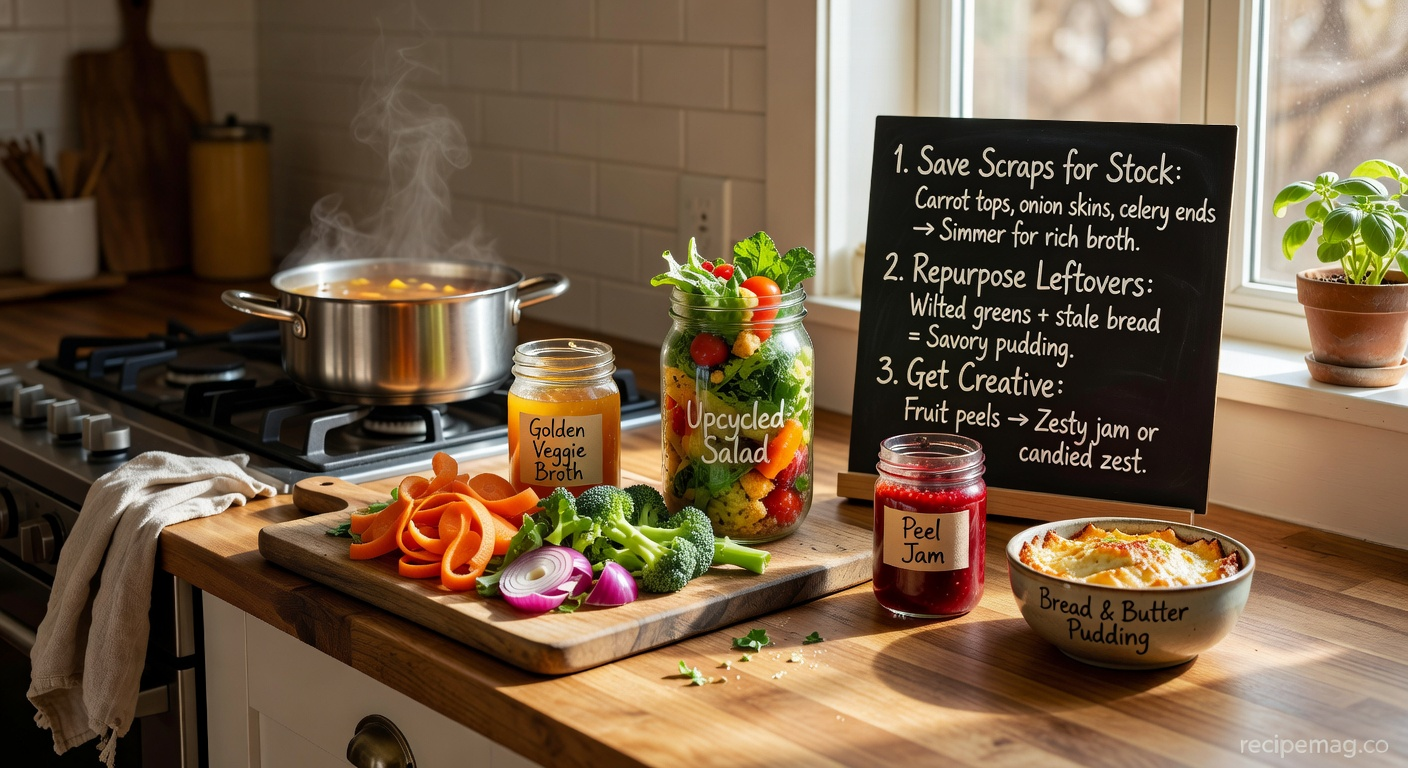
Vegetable peels, herb stems, bread ends, and bone scraps make up nearly 40% of kitchen bin contents. Almost all of these items can be turned into tasty, usable food instead of being thrown away.
This is not about eating things you don’t want. This is about unlocking extra value from ingredients you already paid for.
Simple Scrap Recipes Anyone Can Make
- Simmer all vegetable peels and herb stems for 45 minutes to make homemade vegetable stock
- Blend stale bread into fine breadcrumbs or seasoned croutons
- Roast carrot and parsnip peels with olive oil and salt for crispy snacks
For advanced whole-ingredient cooking techniques, explore Root-to-Stem & Nose-to-Tail Cooking: Maximizing Ingredients, Minimizing Waste for full recipe guides.
==========
Expert Tips For Consistent Zero-Waste Kitchen Habits
We spoke with 7 professional sustainable chefs and zero-waste home organizers to collect the most effective, low-effort tips that actually stick long term.
Storage Hacks That Extend Ingredient Life
- Wrap leafy greens in a clean tea towel before refrigerating — doubles lifespan
- Store tomatoes and potatoes on the counter, never in the fridge
- Freeze fresh herbs in ice cube trays with olive oil
- Label every leftover container with the date you stored it
Schedule A Weekly Use-It-Up Meal
Pick one night every week where you cook only from leftovers and odds and ends in the fridge. No new ingredients allowed. This prevents forgotten items from going bad at the back of shelves.
Most households find this becomes their favourite low-effort meal night of the week after just 3 tries.
==========
Related Reading
Frequently Asked Questions
How much food does the average household waste?
According to 2025 ReFED data, the average US household wastes 29% of all food purchased. That equals approximately 190kg of food per person every year.
Is composting the best way to reduce food waste?
Composting is better than landfill, but preventing waste in the first place is 7x more effective for environmental impact. Always reduce and reuse before you compost.
Can I reduce food waste even if I don’t meal prep?
Absolutely. You can implement scrap repurposing, smart storage, and inventory checks without full weekly meal planning.
How do I stop bread going stale?
Store bread in a paper bag at room temperature, or slice and freeze immediately after purchase. Toast straight from frozen when needed.
Should I throw away food past the best before date?
Best before dates indicate quality, not safety. Almost all food is safe to eat for days or weeks after this date if stored correctly.
How much money can I save reducing food waste?
Most households save between $1200-$2200 per year once they implement consistent waste reduction habits.
What is the most commonly wasted food item?
Leafy greens are the most wasted residential food item globally, followed by bread, fresh fruit, and cooked leftovers.
Do small changes actually make a difference?
If every US household reduced food waste by just 10%, it would eliminate emissions equal to taking 12 million cars off the road annually.
==========
Final Thoughts
Beyond the Bin: Creative Ways to Reduce Food Waste in Your Kitchen is about progress, not perfection. You do not need to become zero waste overnight to make a real difference.
Pick just one tip from this guide to try this week. Once that feels normal, add another. Small consistent changes create huge results over time.
Be sure to explore our full zero-waste kitchen guide collection for more sustainable cooking strategies, meal planning templates, and scrap recipes.
