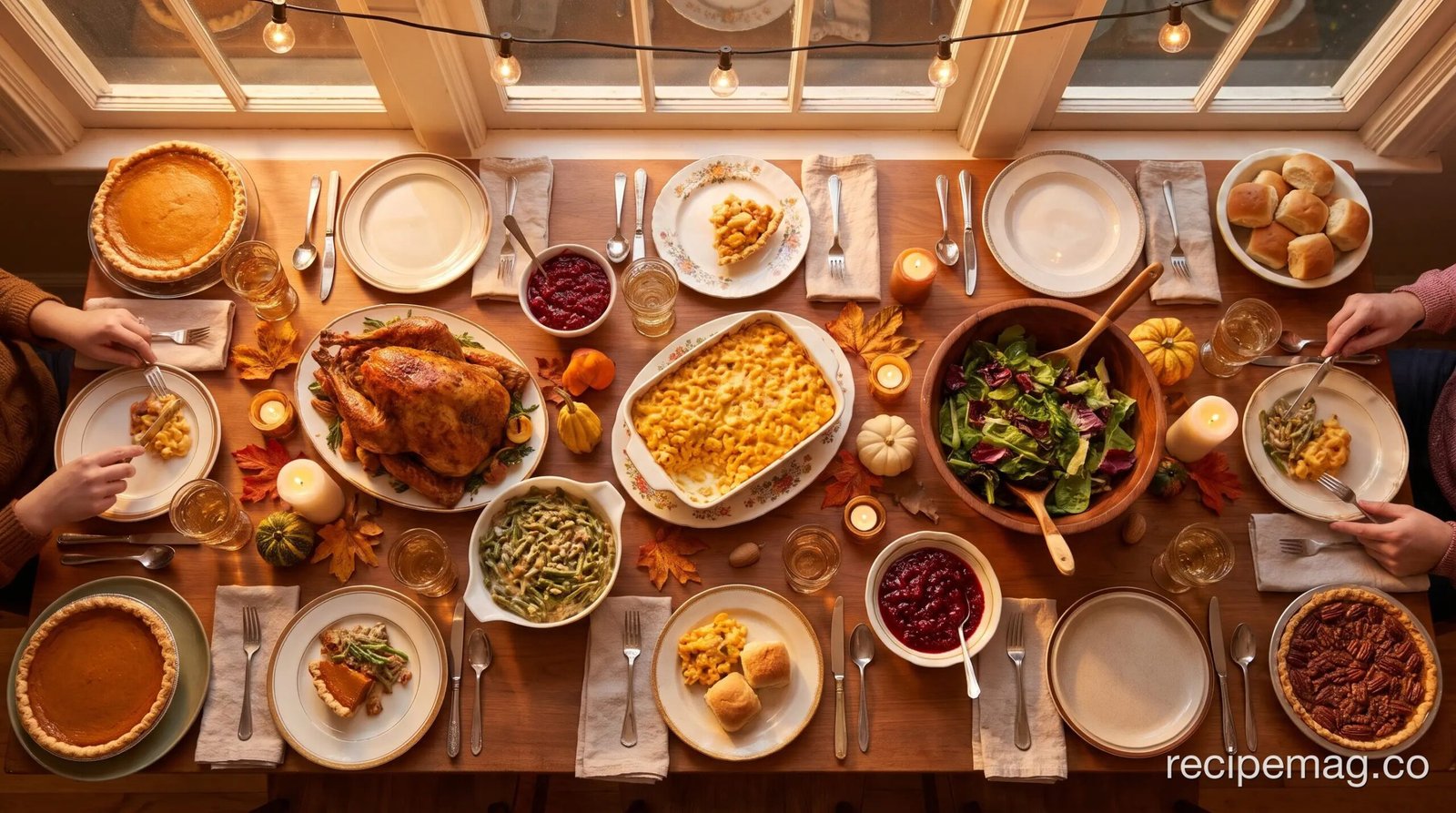
To host Friendsgiving without the chaos, roast the turkey yourself and run everything else as a planned potluck: a sign-up sheet by category, one arrival time and a clear plan for your oven and fridge. Most potluck trouble is logistics, not cooking. Food safety is part of that, because USDA FSIS says perishable food shouldn’t sit out longer than 2 hours, and bacteria in the 40°F to 140°F “danger zone” can double in as little as 20 minutes (USDA FSIS, 2026).
Key Takeaways
- The host handles the turkey, gravy, ice and drinks. Guests sign up by category.
- For 12 guests, plan on about 9 shared dishes plus the turkey.
- Only 2 or 3 guest dishes should need your oven. The rest arrive ready to serve or plug in.
- Keep hot food at 140°F or above and refrigerate leftovers within 2 hours, per USDA FSIS.
- Send a reminder 3 days out with the arrival time and the oven plan.
When Should You Host Friendsgiving in 2026?
Thanksgiving 2026 falls on Thursday, November 26, so the easiest Friendsgiving dates are Saturday, November 21, and Saturday, November 28. The weekend before usually wins. Friends haven’t left town yet, nobody is tired of turkey, and if you’re also cooking the family dinner, you get a full rehearsal.
Pick the date, then work out the turkey. A frozen bird needs about 24 hours in the refrigerator for every 4 to 5 pounds, according to USDA FSIS (2026). For a Saturday dinner with a 12- to 16-pound turkey, move it to the fridge by Tuesday, November 17. A fresh turkey skips the thaw, but order it early in the week.
What Should the Host Make, and What Should Guests Bring?
The host roasts the turkey, makes the gravy and covers ice and drinks. Guests bring everything else. The turkey ties up the oven for hours and travels badly, while sides, salads, rolls and pies travel well.
The Host’s List
- The turkey. Plan on about 1 pound of whole turkey per guest, or 1½ pounds for leftovers, a rule of thumb long used by university extension services (University of Illinois Extension, 2026). Our Thanksgiving dinner planning guide has a turkey-size table by headcount, and a spatchcock turkey roasts in about 90 minutes if oven time is tight.
- Gravy. Make it ahead and freeze it, then reheat it on the stove while the turkey rests.
- Ice, water and a drinks station. Buy more ice than seems reasonable. A cooler of drinks on the porch saves fridge space.
What Guests Bring
Give each household one slot, and make it a category, not a recipe. People cook better when they choose the dish. Our 25 Thanksgiving side dishes come with make-ahead notes for each, a handy link for the group chat.
Non-cooks can bring bakery rolls, plates, to-go containers or bags of ice. Ask one person to cover non-alcoholic drinks, like sparkling cider or a big jug of iced tea. If wine or beer is on the table, make sure anyone driving has a designated driver or a ride home.
In our experience, the most useful thing a host can provide isn’t food. It’s empty fridge space. Clear one shelf the night before for the dishes that arrive cold.
How Many Dishes Do You Need for a Friendsgiving Potluck?
For 12 guests, plan on about 9 shared dishes plus the turkey: one appetizer, two starches, two vegetables, a salad, bread and two desserts. With that many choices, people take a spoonful of nearly everything, so a 9×13-inch casserole that serves 10 to 12 at a sit-down dinner goes further here.
| Guests | Appetizers | Starches | Vegetables | Salads | Bread | Desserts | Shared Dishes |
|---|---|---|---|---|---|---|---|
| 8 | 1 | 2 | 1 | 1 | 1 | 1 | 7 |
| 12 | 1 | 2 | 2 | 1 | 1 | 2 | 9 |
| 16 | 2 | 3 | 2 | 1 | 1 | 2 | 11 |
| 20 | 2 | 3 | 3 | 2 | 1 | 3 | 14 |
These are our planning numbers, not official figures. “Starches” means potatoes, stuffing, mac and cheese or rice. Hand out slots by household rather than by person, since a group of 12 usually includes a few couples.
We’ve found that starches go first and green salads often come home half full. If the sheet looks thin a few days out, add a third starch before a second salad.
The Potluck Sign-Up Sheet, Column by Column
A good sign-up sheet stops five people from bringing mashed potatoes, shows how each dish will arrive and flags allergens. A shared spreadsheet or a pinned group-chat note both work. What matters is what you ask for.
- Category slots. Copy the table above: “Starch 1,” “Starch 2,” “Vegetable 1” and so on. When a slot fills, it’s gone.
- The dish name. “Something with potatoes” doesn’t help you plan. “Scalloped potatoes” does.
- How it arrives. Three choices: ready to serve, needs the oven, or needs an outlet for a slow cooker.
- Allergens. A quick note on nuts, dairy, gluten, eggs or shellfish.
- One wild-card slot. Someone always wants to bring the dish their grandmother made. Let them.
Then set one arrival time, an hour before dinner, rather than “come around six.”
The “how it arrives” column is the one most hosts skip, and it decides whether your kitchen can cope. If more than three dishes need the oven, ask a couple of people to switch to a slow cooker or a room-temperature dish now, not at 5 p.m. with a cold casserole in their hands.
How Do You Handle One Oven When Everyone Brings Food?
Give the oven to the turkey, then open it to guests while the bird rests. USDA FSIS recommends letting a roast turkey stand 20 minutes before carving (USDA FSIS, 2026), and a big bird stays warm under foil for 30 to 45 minutes. That window is your reheating slot, so sort every dish into one of three lanes.
Lane 1: Ready to Serve
Salads, cranberry sauce, rolls, dips and pies need nothing but a spot on the table, so steer as many guests as you can into this lane. Our Thanksgiving appetizers that don’t need the oven are built for it.
Lane 2: Needs the Oven
Cap this lane at two or three dishes. Ask those guests to bring their casserole fully cooked and warm if possible, since a chilled 9×13 can need 45 minutes or more to heat through. Cold arrivals wait in the fridge. Reheat until the center reaches 165°F.
Lane 3: Plug-In Dishes
Slow cookers should hold food, not reheat it. USDA FSIS advises reheating cooked food on the stove, in the microwave or in the oven to 165°F first, then keeping it in a preheated slow cooker at 140°F or above (USDA FSIS, 2026). Spread plug-in dishes across outlets in more than one room so you don’t trip a breaker.
How Do You Keep Potluck Food Safe?
Keep hot food hot, cold food cold and nothing out longer than 2 hours. USDA FSIS defines the danger zone as 40°F to 140°F and says perishable food left out more than 2 hours, or 1 hour above 90°F, should be thrown away (USDA FSIS, 2026). At a potluck, that clock includes the car ride.
- Cold dishes travel cold. Pack salads, dips and cream pies in a cooler with ice packs, then move them to the fridge, which the FDA says should stay at 40°F or below (2026).
- Hot dishes travel hot or chilled, never lukewarm. Foil and a couple of towels keep a casserole hot for a short drive. Anything that cools on the way gets reheated to 165°F.
- Pack leftovers within 2 hours. Refrigerated leftovers keep 3 to 4 days, per USDA FSIS (2026). Hand out to-go containers before dessert.
Label Every Dish
Set a card by each dish with its name, the cook and any major allergens. U.S. food law recognizes nine: milk, eggs, fish, crustacean shellfish, tree nuts, peanuts, wheat, soybeans and sesame, which joined the FDA’s list in 2023. “Contains pecans” saves a guest with a nut allergy a lot of questions.
A Friendsgiving Timeline, From One Week Out to Leftovers
Start the sign-up sheet a week out, then put the day itself on a schedule. A 12- to 14-pound unstuffed turkey roasts in about 3 to 3¾ hours at 325°F, according to the USDA FSIS timetable (2026). For a 6 p.m. dinner, that puts the bird in around 1:30 p.m., with a cushion built in.
One Week Out: Saturday, November 14
- Send the sign-up sheet with the date, the arrival time and the categories.
- Buy or order the turkey, and count chairs, plates and serving spoons.
Three to Four Days Out: November 17 and 18
- Move a frozen 12- to 16-pound turkey to the fridge by Tuesday.
- Count the oven answers and rebalance if there are more than three.
- Send a reminder with the address, parking and arrival time.
The Day Before: Friday, November 20
Clear a fridge shelf, fill a cooler with drinks and thaw the gravy in the fridge. Set out serving spoons and blank label cards, then pat the turkey dry and season it.
The Day Of: Saturday, November 21
| Time | Task |
|---|---|
| 12:30 p.m. | Turkey out of the fridge. Set up the drinks station. |
| 1:00 p.m. | Preheat the oven to 325°F. |
| 1:30 p.m. | Turkey in. |
| 4:00 p.m. | Start checking the turkey. Set out plates and label cards. |
| About 4:45 p.m. | Turkey hits 165°F in the breast, thigh and wing. Tent it with foil. Oven up to 350°F. |
| 5:00 p.m. | Guests arrive. Oven-lane casseroles go in, covered. Cold dishes into the fridge, slow cookers plugged in, appetizers out. |
| 5:30 p.m. | Reheat the gravy and carve the turkey. |
| 6:00 p.m. | Dinner, served buffet-style. |
| 8:00 p.m. | Food off the table. Pack and hand out leftovers. |
Turkey running behind? Slide a casserole in beside it at 325°F if there’s room, and let dinner slip 15 minutes.
Frequently Asked Questions About Hosting Friendsgiving
What is Friendsgiving?
Friendsgiving is a Thanksgiving-style dinner shared with friends, instead of or alongside the family meal. It’s usually a potluck held the weekend before or after Thanksgiving, so people can still travel home for the holiday itself. In 2026, that points to Saturday, November 21, or Saturday, November 28.
What’s the best dish to bring to a Friendsgiving potluck?
A dish that holds its heat or tastes good at room temperature, so it doesn’t need the host’s oven. Casseroles, cornbread dressing, grain salads, cranberry sauce and pies all travel well. Skip anything fried, and pack salad dressing separately. Bring your own serving spoon and a label card.
How much food should each guest bring?
One dish sized for 8 to 12 servings: a 9×13-inch casserole, a 9-inch pie or a big salad bowl. With seven or more dishes on the table, people take small portions of each, so one full batch per household is plenty. Guests who don’t cook can cover ice, drinks, plates or bakery rolls.
How long can potluck food sit out?
No more than 2 hours, according to USDA FSIS, or 1 hour if it’s above 90°F, and that window includes the drive over. Keep hot dishes at 140°F or above and cold dishes at 40°F or below. Refrigerate leftovers within 2 hours of serving and eat them within 3 to 4 days.
Send the Sign-Up Sheet This Weekend
A smooth Friendsgiving is mostly decided before anyone cooks. Pick the date, buy the turkey and send a sign-up sheet with categories, a “how it arrives” column and an allergen note. Then fix any oven traffic jam while it’s still a text message.
On the day, your jobs are the turkey, the gravy, the ice and the clock. Let your friends handle the rest.
