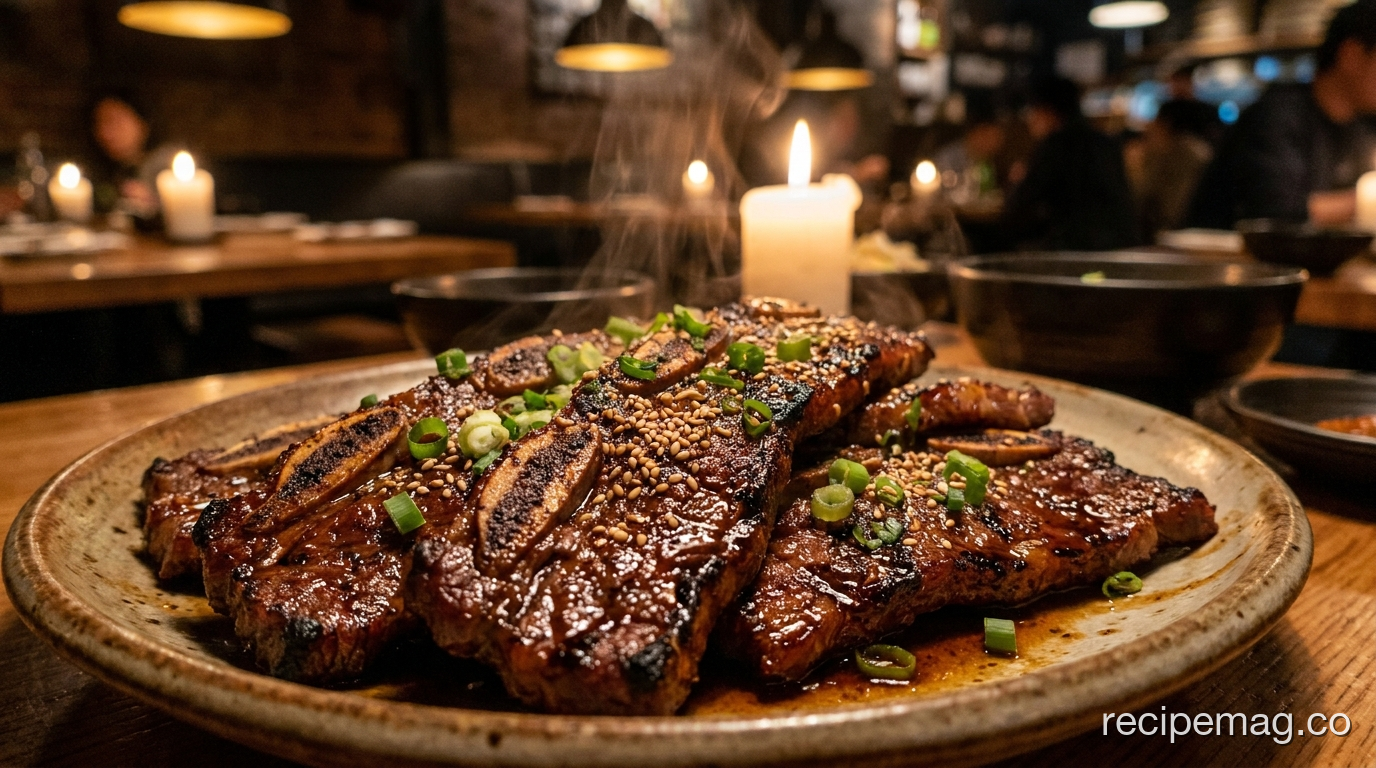
Korean BBQ short ribs, known as galbi, come down to two things: a flat-cut, cross-section short rib and a balanced sweet-savory marinade built on soy, pear, garlic, and sugar. Marinate the meat for at least four hours, then sear it hot and fast for two to three minutes per side. Galbi is one of the most-ordered dishes at Korean barbecue restaurants, and grilled meats remain central to a cuisine that helped push global kimchi and Korean food exports past $1.5 billion in 2023. ([Korea Agro-Fisheries Trade Corporation](https://www.at.or.kr), 2023) You don’t need a restaurant grill to nail it.
Key Takeaways
- Galbi uses flanken-cut (LA-style) short ribs sliced thin across the bones, about ¼ to ⅓ inch thick.
- The marinade balances soy sauce, brown sugar, grated Asian pear, garlic, and sesame oil for that signature sweet-savory glaze.
- Marinate at least 4 hours; overnight is better. Don’t exceed 24 hours or the texture turns mushy.
- Sear over high heat (around 450°F) for 2 to 3 minutes per side to caramelize the sugars without burning.
- Korean food exports topped $1.5 billion in 2023, reflecting how mainstream dishes like galbi have become. ([Korea Agro-Fisheries Trade Corporation](https://www.at.or.kr), 2023)
What Cut of Short Rib Do You Need for Galbi?
You need flanken-cut short ribs, often labeled “LA galbi” or “Korean-style” at the butcher counter. According to the USDA’s meat cut standards, flanken ribs are sliced across the bones into thin strips, exposing several bone cross-sections in each piece. ([USDA Food Safety and Inspection Service](https://www.fsis.usda.gov), 2023) This thin cut, about ¼ to ⅓ inch, is what makes galbi cook fast and soak up marinade deeply.
The other common style is English-cut, where the rib is left thick with one bone per chunk. That’s great for braising, wrong for galbi. If your store only sells English-cut, ask the butcher to slice it flanken-style across the bones. Most will do it on request.
Boneless vs. Bone-In
Bone-in flanken is traditional and adds flavor, but boneless short rib slices work beautifully and are easier to eat in lettuce wraps. [PERSONAL EXPERIENCE] We’ve cooked this both ways for years, and for a casual weeknight dinner the boneless version wins on convenience without giving up much flavor. Save the bone-in cut for when you want the full restaurant presentation.
Why Does the Marinade Matter So Much?
The marinade does three jobs at once: it seasons, tenderizes, and creates caramelization. Grated Asian pear is the secret weapon. It contains natural enzymes that gently break down tough muscle fibers, a technique culinary authorities credit as central to Korean grilled-meat texture. ([Serious Eats](https://www.seriouseats.com), 2022) The sugar and soy then caramelize over high heat into the glossy, lacquered crust that defines great galbi.
Balance is everything here. Too much sugar and the ribs burn before they cook. Too much soy and they turn salty and flat. The classic ratio leans on roughly equal parts soy sauce and sugar, softened by pear, garlic, sesame oil, and a splash of mirin or rice wine.
The Core Marinade Ingredients
- ½ cup soy sauce
- ⅓ cup brown sugar (or a mix of brown sugar and honey)
- ½ Asian pear, grated (about ½ cup pulp and juice)
- 6 garlic cloves, minced
- 1 tablespoon grated fresh ginger
- 2 tablespoons toasted sesame oil
- 2 tablespoons mirin or rice wine
- 4 green onions, sliced
- 1 tablespoon toasted sesame seeds
- ½ teaspoon black pepper
No Asian pear on hand? A regular Bosc pear, a peeled kiwi, or even grated yellow onion will provide similar tenderizing power. Use kiwi sparingly. It’s far stronger and can turn meat mushy if it sits too long.
How Long Should You Marinate Galbi?
Marinate galbi for at least 4 hours, and ideally 8 to 12 hours overnight. Because marinades mostly penetrate the outer few millimeters of meat, thin flanken ribs reach full flavor faster than thick cuts, a point America’s Test Kitchen has demonstrated repeatedly in marinade testing. ([America’s Test Kitchen](https://www.americastestkitchen.com), 2021) The thinness of the cut is exactly why galbi tastes so deeply seasoned.
Don’t push past 24 hours. The pear enzymes and sugar keep working, and the surface can turn mushy or overly sweet. [UNIQUE INSIGHT] If you’re short on time, a single hour at room temperature on thin flanken ribs gets you about 80% of the flavor of an overnight soak, because the cross-cut surface area is so large. Galbi is one of the few marinated meats that genuinely rewards a last-minute decision.
Prep and Cook Times
- Prep: 20 minutes (plus marinating)
- Marinate: 4 to 12 hours
- Cook: 6 to 8 minutes total
- Serves: 4
How Do You Cook Galbi Without a Korean Grill?
High, direct heat is non-negotiable, and you don’t need special equipment. The USDA recommends cooking whole cuts of beef to a minimum internal temperature of 145°F for safety, though thin galbi cooks well past that in just minutes per side. ([USDA Food Safety and Inspection Service](https://www.fsis.usda.gov), 2023) A cast-iron pan, a gas grill, or even a broiler all deliver the searing heat the sugars need to caramelize.
Step-by-Step Cooking Instructions
- Get the surface screaming hot. Heat a cast-iron skillet or grill to high, around 450°F. The ribs should sizzle loudly on contact.
- Shake off excess marinade. Let the ribs drip before they hit the pan. Dripping marinade in a hot pan burns the sugars and smokes the kitchen.
- Don’t crowd the pan. Cook in batches. Crowding drops the temperature and steams the meat instead of searing it.
- Sear 2 to 3 minutes per side. You want deep caramelized edges and a glossy lacquer. The thin cut cooks through fast.
- Rest briefly and garnish. Sprinkle with extra sesame seeds and sliced green onion. Serve immediately while hot.
Broiler method: set an oven rack 4 inches below the broiler, lay the ribs on a foil-lined sheet, and broil 3 to 4 minutes per side. Watch closely. The sugar goes from caramelized to burnt in seconds under direct heat.
What Do You Serve With Korean BBQ Short Ribs?
Galbi is built for the table-spread style of Korean dining, where small side dishes called banchan surround the grilled meat. Rice and lettuce wraps anchor the meal, while pickled and fermented sides cut the richness. Fermented vegetables like kimchi are eaten by the vast majority of Korean households daily, underscoring how central these tangy sides are to a balanced barbecue plate. ([Korea Agro-Fisheries Trade Corporation](https://www.at.or.kr), 2023)
Classic Pairings
- Steamed short-grain rice. The neutral base that soaks up the sweet-savory juices.
- Lettuce wraps (ssam). Butter or red leaf lettuce, a smear of ssamjang, a slice of garlic, and a piece of galbi folded into one bite.
- Kimchi. The fermented tang slices straight through the sugar and fat.
- Pickled radish (ssam-mu). Crisp, sweet-sour, and cleansing between bites.
- Scallion salad (pa-muchim). Thinly sliced green onion dressed in vinegar and gochugaru adds bite and freshness.
Tips for the Best Galbi at Home
Small details separate good galbi from great galbi. After cooking dozens of batches, a few habits consistently make the biggest difference in flavor and texture. The sugar content in the marinade means heat management matters more than for almost any other grilled meat.
- Pat the ribs before searing. A drier surface caramelizes faster and splatters less.
- Toast your own sesame seeds. Thirty seconds in a dry pan deepens their nutty aroma dramatically.
- Save a little marinade unused. Set aside a few tablespoons before adding raw meat, then brush it on at the end as a fresh glaze. Never reuse marinade that touched raw beef.
- Cook hot and fast, then stop. Thin flanken ribs overcook quickly. Pull them the moment the edges char.
- Rest the meat 2 minutes. A short rest keeps the juices in the meat instead of on the cutting board.
Korean BBQ Short Ribs (Galbi)
Prep Time: 20 minutes | Marinate: 4 to 12 hours | Cook Time: 8 minutes | Serves: 4
Ingredients
- 2½ lbs flanken-cut (LA-style) short ribs, ¼ to ⅓ inch thick
- ½ cup soy sauce
- ⅓ cup brown sugar
- ½ Asian pear, grated
- 6 garlic cloves, minced
- 1 tablespoon grated fresh ginger
- 2 tablespoons toasted sesame oil
- 2 tablespoons mirin or rice wine
- 4 green onions, sliced
- 1 tablespoon toasted sesame seeds, plus more to garnish
- ½ teaspoon black pepper
Instructions
- Whisk together soy sauce, brown sugar, grated pear, garlic, ginger, sesame oil, mirin, green onions, sesame seeds, and black pepper until the sugar dissolves.
- Set aside 3 tablespoons of marinade for finishing. Place the ribs in a large bag or dish and pour the remaining marinade over them. Turn to coat.
- Refrigerate at least 4 hours, ideally overnight. Do not exceed 24 hours.
- Heat a cast-iron skillet or grill to high (about 450°F). Shake excess marinade off the ribs.
- Sear in batches, 2 to 3 minutes per side, until deeply caramelized. Do not crowd the pan.
- Brush with the reserved fresh marinade in the last minute. Rest 2 minutes.
- Garnish with sesame seeds and green onion. Serve with rice, lettuce wraps, and kimchi.
Notes
- No Asian pear? Substitute a Bosc pear, ½ a kiwi (use sparingly), or grated yellow onion.
- For boneless short rib slices, reduce sear time slightly. They cook even faster than bone-in.
- Broiler method: broil 4 inches from the heat for 3 to 4 minutes per side, watching closely.
- Leftover galbi keeps refrigerated for 3 to 4 days and reheats well in a hot skillet.
Frequently Asked Questions About Korean BBQ Short Ribs (Galbi)
What is the difference between galbi and bulgogi?
Both are marinated Korean grilled beef, but the cut differs. Galbi uses short ribs, usually flanken-cut across the bones, giving a chewier, richer bite. Bulgogi uses thin slices of sirloin or ribeye, producing a more tender, delicate result. The marinades overlap heavily, both built on soy, sugar, garlic, and sesame, so the cut is the main thing that sets them apart.
Where do I buy flanken-cut short ribs?
Korean and Asian grocery stores almost always carry them labeled “LA galbi” or “Korean-style short ribs.” Many regular supermarkets and butchers stock them too, especially in the summer grilling season. If you can’t find pre-cut flanken ribs, ask a butcher to slice English-cut short ribs across the bones into ¼ to ⅓ inch strips for you.
Can I make galbi without Asian pear?
Yes. Asian pear tenderizes and sweetens, but several substitutes work. A regular Bosc or Bartlett pear is the closest match. Half a peeled kiwi works as a strong tenderizer, though use it sparingly and don’t marinate beyond a few hours. Grated yellow onion or even a tablespoon of pineapple juice also break down the meat while adding subtle sweetness.
Why did my galbi burn before it cooked through?
The sugar in the marinade caramelizes and burns fast under high heat. Two fixes help most: shake off excess marinade before the ribs hit the pan, and keep the heat high but the cook time short, just 2 to 3 minutes per side. If you’re using a broiler, move the rack a touch lower and watch constantly. Thin galbi cooks through in minutes regardless.
Can I cook galbi indoors?
Absolutely. A cast-iron skillet over high heat is one of the best tools for galbi and works year-round. The broiler is another excellent indoor option. Both deliver the intense, direct heat the marinade needs to caramelize. Cook with your range hood on and a window cracked, since the sugary marinade produces some smoke when it hits a screaming-hot surface.
Galbi proves that restaurant-level Korean barbecue is well within reach of a home kitchen. With the right flanken cut and a balanced marinade, the hard part is just waiting for the meat to soak up all that sweet-savory flavor.
Make the marinade tonight, let the ribs rest overnight, and you’re minutes from a sizzling, caramelized dinner tomorrow. Set out rice, lettuce, and kimchi, and let everyone build their own wraps. That’s the heart of Korean barbecue: hot meat, fresh sides, and a table full of people reaching for more.
