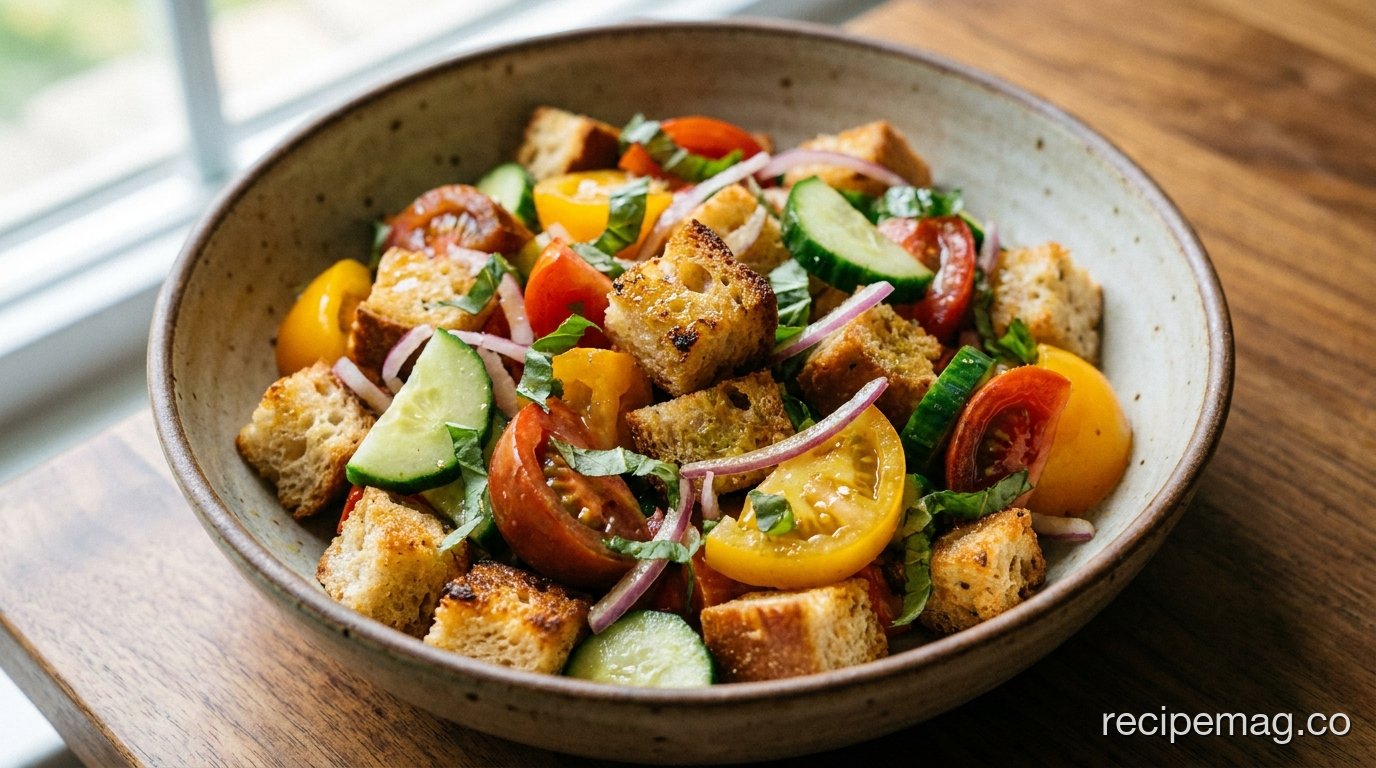
This classic panzanella salad recipe turns stale bread and peak-season heirloom tomatoes into one of the best things you’ll eat all summer. The Tuscan original works because day-old bread soaks up tomato juices and a sharp red wine vinaigrette without going to mush. It takes about 20 minutes of hands-on work, serves four as a main, and tastes better after it sits. Heirloom tomatoes carry it: they hold roughly 20% more sugars and acids than standard supermarket varieties, which is exactly why flavor shines here. ([UC Davis](https://www.ucdavis.edu), 2021)
Key Takeaways
- Real panzanella starts with stale or toasted bread, never fresh, so it absorbs dressing without disintegrating.
- Heirloom tomatoes deliver up to 20% more sugars and acids than common varieties, driving the salad’s flavor. ([UC Davis](https://www.ucdavis.edu), 2021)
- Salting the tomatoes first pulls out juices that become part of the dressing.
- It’s a 20-minute recipe that improves after resting 20 to 30 minutes.
- A simple red wine vinaigrette with good olive oil ties everything together.
What Is Panzanella and Where Does It Come From?
Panzanella is a Tuscan bread salad built to rescue stale bread, and it has fed Italian tables for centuries. The dish dates to at least the 1500s, when frugal cooks soaked hardened bread and tossed it with whatever the garden offered. Food waste remains the reason it endures: Italian households throw away significant quantities of bread each year, and panzanella turns that loss into a meal. ([Coldiretti](https://www.coldiretti.it), 2022) Originally it leaned on onions and bread, with tomatoes joining only after they spread through Italy.
The word likely combines pane (bread) with zanella, a deep bowl or dish. Early versions were humble. There were no heirloom tomatoes, no fancy oil, just bread, water, vinegar, onion, and good sense.
What hasn’t changed is the principle. Good panzanella respects the bread. You want chew and structure, not soggy paste, and that single idea guides every step below.
Why Do Heirloom Tomatoes Make the Best Panzanella?
Heirloom tomatoes make better panzanella because they’re bred for flavor, not shelf life. Standard supermarket tomatoes are selected for uniform color and shipping durability, which often dulls taste. Heirlooms keep their sugar and acid: UC Davis researchers have found flavor-bred varieties can carry around 20% higher sugar and acid concentrations than commercial hybrids. ([UC Davis](https://www.ucdavis.edu), 2021) In a salad this simple, that difference is the whole show.
Color signals variety, and variety means flavor range. Brandywine brings deep, wine-like sweetness. Green Zebra adds tang. Cherokee Purple lands smoky and rich. Mixing three or four types gives you a salad that tastes layered rather than flat.
[PERSONAL EXPERIENCE] We’ve made this with both heirlooms and out-of-season supermarket tomatoes, and the gap is dramatic. In January, even good technique can’t save a pale, mealy tomato. This is genuinely a recipe to make in July and August, when a farmers market tomato still smells like the vine it came from.
How to Pick the Right Tomatoes
- Go by smell and weight. A ripe tomato smells sweet at the stem and feels heavy for its size.
- Mix colors. Three or four varieties give the best flavor and the prettiest bowl.
- Avoid the fridge. Cold storage below 55°F mutes tomato flavor and turns the texture grainy. Keep them on the counter.
- Use them ripe. Slightly overripe is fine here. Firm and underripe is not.
How Do You Keep the Bread From Getting Soggy?
You keep the bread from going soggy by drying it out before it ever touches dressing. Fresh bread collapses; dry bread drinks liquid and stays chewy. America’s Test Kitchen recommends toasting cubed bread in a 400°F oven until crisp and golden, then dressing it just before serving so it absorbs flavor without breaking down. ([America’s Test Kitchen](https://www.americastestkitchen.com), 2020) Stale day-old bread works too, which is the whole origin of the dish.
Use a sturdy, rustic loaf. Ciabatta, sourdough, or a country boule all have the open crumb and firm crust that hold up. Sliced sandwich bread won’t survive. It turns to paste the moment it meets the tomato juice.
[UNIQUE INSIGHT] Most recipes treat toasting as optional, but it’s the single most important step. The traditional Tuscan method actually soaks dried bread in water, then squeezes it dry. Toasting is the modern shortcut that gives you the same absorbent-yet-structured result with better flavor, because the oven adds a layer of nutty browning the soak never could.
Two Ways to Prep the Bread
- Oven toast (recommended). Tear or cube the loaf into one-inch pieces, toss with olive oil, and bake at 400°F for 12 to 15 minutes until crisp and golden at the edges.
- Use stale bread. If your bread is already a day or two old and hard, you can skip the oven. Cube it and let it briefly meet the dressing.
Ingredients for Classic Panzanella Salad
Panzanella needs only a handful of ingredients, which is exactly why each one matters. There’s nowhere to hide. Olive oil does heavy lifting here, and quality counts: the International Olive Council reports that extra virgin olive oil retains the polyphenols and aromatic compounds responsible for its peppery, fruity flavor, the very notes that lift a simple salad. ([International Olive Council](https://www.internationaloliveoil.org), 2022) Buy the best tomatoes, bread, and oil you can, and the rest follows.
For the Salad
- 1 pound rustic bread (ciabatta, sourdough, or country loaf), cut into 1-inch cubes
- 2 pounds ripe heirloom tomatoes, mixed colors, cut into wedges or large chunks
- 1 small red onion, thinly sliced
- 1 small cucumber, halved and sliced (optional but traditional in many versions)
- 1 cup fresh basil leaves, torn
- 3 tablespoons olive oil (for toasting the bread)
- Salt for the tomatoes
For the Red Wine Vinaigrette
- 1/4 cup extra virgin olive oil
- 2 tablespoons red wine vinegar
- 1 small garlic clove, minced or grated
- 1/2 teaspoon Dijon mustard (optional, helps emulsify)
- Salt and freshly ground black pepper to taste
Soaking the sliced red onion in cold water for 10 minutes takes the harsh raw bite out while keeping the crunch. Drain it well before adding. This small step is the difference between onion that complements the tomatoes and onion that overwhelms them.
Why Should You Salt the Tomatoes First?
Salting the tomatoes first does two jobs: it seasons them deeply and draws out the juices that become part of your dressing. When salt hits cut tomatoes, osmosis pulls water and dissolved sugars to the surface within 15 to 20 minutes, concentrating flavor. ([Serious Eats](https://www.seriouseats.com), 2019) You don’t discard that liquid. You whisk it into the vinaigrette so every bite tastes like ripe tomato.
Place the cut tomatoes in a colander set over a bowl. Sprinkle with about half a teaspoon of salt, toss gently, and let them sit for 15 to 20 minutes. The collected juice is liquid gold. Pour it into your vinaigrette.
This step also prevents a watery salad. By pulling moisture out before assembly, you avoid the puddle at the bottom of the bowl that dilutes everything. The tomatoes stay flavorful and the bread stays in control.
Step-by-Step Method
- Toast the bread. Toss bread cubes with 3 tablespoons olive oil and a pinch of salt. Bake at 400°F (200°C) for 12 to 15 minutes until golden and crisp. Let cool.
- Salt the tomatoes. Cut tomatoes into chunks, place in a colander over a bowl, sprinkle with salt, and rest 15 to 20 minutes. Reserve the drained juice.
- Soak the onion. Slice the red onion thinly and soak in cold water for 10 minutes. Drain well.
- Make the vinaigrette. Whisk olive oil, red wine vinegar, garlic, Dijon, and the reserved tomato juice. Season with salt and pepper.
- Combine. In a large bowl, toss the toasted bread, tomatoes, drained onion, cucumber, and most of the basil with the vinaigrette.
- Rest, then serve. Let the salad sit 20 to 30 minutes so the bread absorbs the dressing. Top with the remaining basil just before serving.
Variations and Add-Ins for Panzanella
Classic panzanella is a template that welcomes seasonal additions. The Mediterranean approach to vegetable-forward eating is part of why it stays relevant: the Mediterranean diet, which centers vegetables, olive oil, and whole grains, has been ranked the best overall diet by U.S. News experts for multiple consecutive years. ([U.S. News & World Report](https://health.usnews.com), 2024) A bread salad fits that pattern perfectly, and small additions keep it interesting all summer.
Popular Add-Ins
- Fresh mozzarella or burrata. Torn over the top turns panzanella into a fuller meal. Creamy cheese against acidic tomato is a classic Italian pairing.
- Capers or olives. A spoonful of capers or a handful of Kalamata olives adds salty depth and a briny lift.
- Roasted peppers. Jarred or freshly roasted red peppers bring sweetness and a soft texture contrast to the crisp bread.
- Anchovies. Finely chopped into the dressing, they add savory umami without tasting fishy.
- Peaches or nectarines. In high summer, stone fruit alongside the tomatoes is unexpected and excellent.
Seasonal Swaps
- Late summer: Add grilled corn kernels and zucchini for a heartier bowl.
- Early fall: Roasted cherry tomatoes extend the season when raw tomatoes fade.
- Herb swaps: Mint or oregano can stand in for, or join, the basil.
How to Store and Serve Panzanella
Panzanella is best eaten the day it’s made, but smart timing makes it shine. Unlike most salads, it actually needs a rest: 20 to 30 minutes lets the bread soak up the dressing and tomato juices. Food-safety guidance from the USDA recommends keeping prepared salads refrigerated and consuming them within three to four days, though panzanella’s texture is best within hours. ([USDA Food Safety and Inspection Service](https://www.fsis.usda.gov), 2023) Serve it at room temperature, never cold.
- Serve at room temperature. Cold mutes tomato flavor. Pull it from the fridge 30 minutes before eating if it was chilled.
- Make-ahead trick: Prep the components separately and combine 30 minutes before serving for the ideal texture.
- Leftovers: Refrigerate up to 2 days. The bread softens fully but the flavor stays good. Treat day-two panzanella as a different, mellower dish.
- Don’t freeze. Tomatoes and bread both break down when frozen and thawed.
—
Classic Panzanella Salad with Heirloom Tomatoes
Prep Time: 20 minutes | Cook Time: 15 minutes | Rest Time: 25 minutes | Serves: 4
Ingredients
Salad
- 1 pound rustic bread (ciabatta, sourdough, or country loaf), cut into 1-inch cubes
- 2 pounds ripe heirloom tomatoes, mixed colors, cut into chunks
- 1 small red onion, thinly sliced
- 1 small cucumber, halved and sliced (optional)
- 1 cup fresh basil leaves, torn
- 3 tablespoons olive oil (for toasting)
- Salt for the tomatoes
Red Wine Vinaigrette
- 1/4 cup extra virgin olive oil
- 2 tablespoons red wine vinegar
- 1 small garlic clove, minced
- 1/2 teaspoon Dijon mustard (optional)
- Salt and black pepper to taste
Instructions
- Preheat oven to 400°F (200°C). Toss bread cubes with 3 tablespoons olive oil and a pinch of salt. Bake 12 to 15 minutes until golden and crisp. Cool.
- Cut tomatoes into chunks. Place in a colander over a bowl, sprinkle with salt, and rest 15 to 20 minutes. Reserve the drained juice.
- Slice the red onion thinly and soak in cold water 10 minutes. Drain well.
- Whisk olive oil, red wine vinegar, garlic, Dijon, and reserved tomato juice. Season with salt and pepper.
- In a large bowl, toss toasted bread, tomatoes, drained onion, cucumber, and most of the basil with the vinaigrette.
- Let rest 20 to 30 minutes. Top with remaining basil and serve at room temperature.
Notes
- Use only ripe, in-season tomatoes. Out-of-season supermarket tomatoes won’t deliver the flavor this simple salad needs.
- Add torn burrata or fresh mozzarella to turn it into a fuller main course.
- If your bread is already stale and hard, you can skip the oven toasting step.
- Best eaten within a few hours. Leftovers keep refrigerated for up to 2 days with softer bread.
—
Frequently Asked Questions About Panzanella Salad
Can I make panzanella ahead of time?
Partly. Toast the bread, salt the tomatoes, and make the vinaigrette in advance, then store them separately. Combine everything 20 to 30 minutes before serving so the bread has time to absorb the dressing without turning to mush. Fully assembled panzanella holds for a couple of hours at room temperature but is best the day it’s made. Day-two leftovers taste good but lose their signature texture.
What bread is best for panzanella?
A sturdy, rustic loaf with an open crumb and firm crust works best. Ciabatta, sourdough, and country boules all hold their structure after absorbing dressing. Avoid soft sandwich bread, which turns to paste instantly. The bread should be stale or oven-toasted, never fresh and soft. That dryness is what lets it soak up tomato juices and vinaigrette while staying pleasantly chewy.
Do I have to use heirloom tomatoes?
No, but they make a real difference. Any ripe, in-season tomato works, including vine-ripened or farmers market varieties. The goal is flavor and ripeness, not the heirloom label specifically. Heirlooms simply tend to carry more sugar, acid, and aroma than standard supermarket tomatoes. Whatever you choose, ripeness matters most. A pale, underripe tomato will leave the whole salad flat no matter the variety.
Why is my panzanella watery?
Watery panzanella usually means the tomatoes weren’t salted and drained first, or the bread wasn’t dry enough. Salting cut tomatoes for 15 to 20 minutes pulls out excess liquid before assembly, and reserving that juice for the dressing keeps the flavor in the salad. Make sure your bread is well-toasted or properly stale so it absorbs moisture instead of letting it pool at the bottom of the bowl.
Is panzanella served cold or at room temperature?
Room temperature, always. Cold temperatures mute tomato flavor and harden the olive oil in the dressing. If you refrigerated the components, let the assembled salad sit out for about 30 minutes before serving. Room-temperature tomatoes taste sweeter and more aromatic, and the bread stays softer and more pleasant. This is one salad you should never serve straight from the fridge.
Classic panzanella proves that a few great ingredients beat a long list every time. Toasted bread, ripe heirloom tomatoes, good olive oil, and a splash of red wine vinegar add up to a summer dish that tastes far more impressive than the effort it takes.
Make it when tomatoes are at their peak, somewhere between July and early September. Salt your tomatoes, toast your bread, and give the finished salad time to rest. Those three habits are the whole secret.
Once you’ve made it once, you’ll start saving every heel of good bread just to make it again. That’s exactly how the Tuscans intended it.
