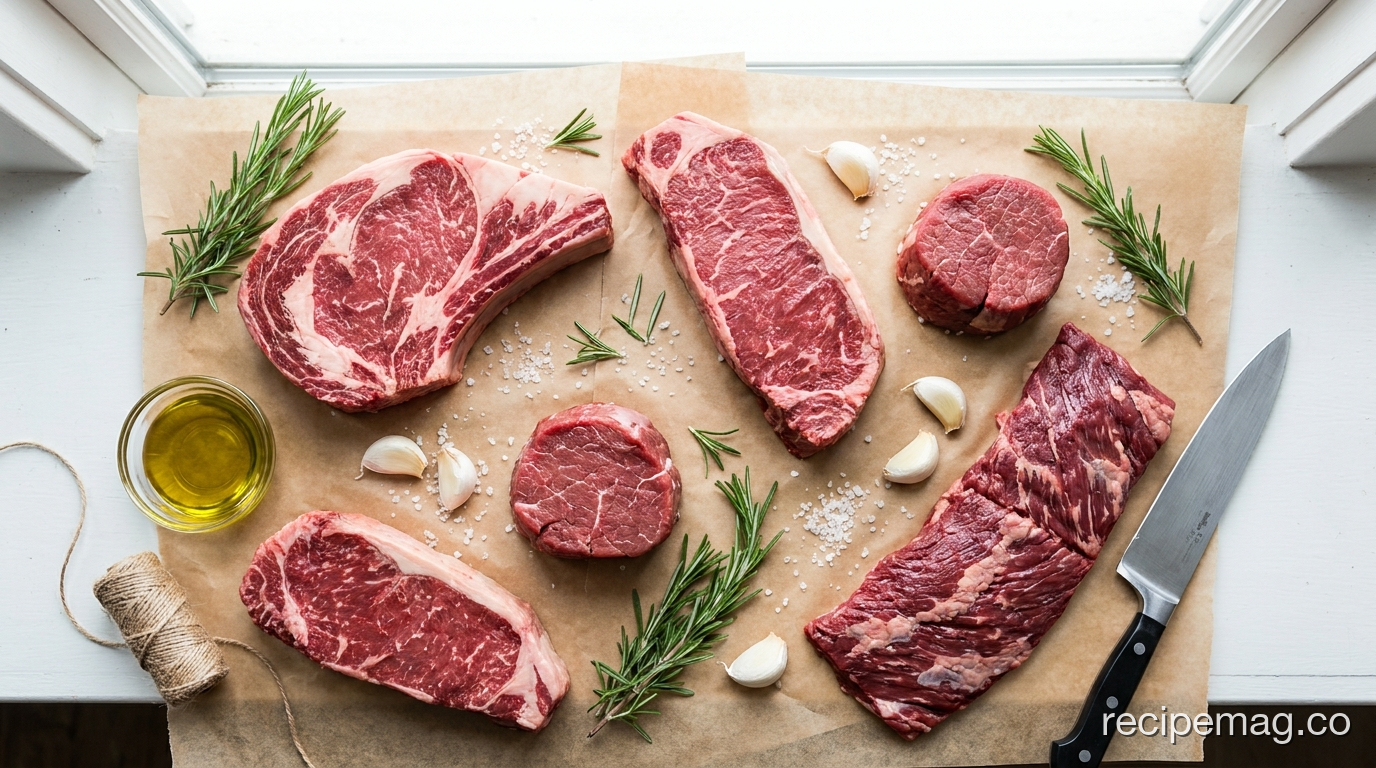
The best steak cuts for grilling, ranked, are ribeye, New York strip, filet mignon, tri-tip, skirt, and flank, in that order for most backyard cooks. Ribeye wins on flavor thanks to heavy intramuscular fat, the marbling that USDA grading rewards with its top Prime and Choice grades. According to USDA data, only about 2 to 3% of graded beef earns the Prime label. ([USDA Agricultural Marketing Service](https://www.ams.usda.gov), 2023) Below, each cut is ranked with notes on flavor, tenderness, price, and exactly how to grill it for Father’s Day.
Key Takeaways
- Ribeye ranks first for grilling: its heavy marbling self-bastes over high heat and stays forgiving if you slightly overshoot temperature.
- Pull every steak at 130 to 135°F for a true medium-rare, then rest. The USDA safe-temperature floor for beef is 145°F with a 3-minute rest. ([USDA FSIS](https://www.fsis.usda.gov), 2023)
- Tender cuts (ribeye, strip, filet) grill best hot and fast. Lean, fibrous cuts (skirt, flank) need a marinade and slicing against the grain.
- Only 2 to 3% of graded beef is USDA Prime, so most great grilling steaks are well-marbled Choice.
- Price climbs with tenderness, but tri-tip and flank deliver huge flavor for far less money.
How Are the Best Steak Cuts for Grilling Ranked?
Marbling drives this ranking more than any other factor, and it’s something you can see before you buy. The USDA grades beef largely on intramuscular fat, with Prime, Choice, and Select reflecting how much marbling threads through the muscle. ([USDA Agricultural Marketing Service](https://www.ams.usda.gov), 2023) More marbling means more flavor and more insurance against drying out over live fire. That’s why fatty cuts top this list and lean cuts sit lower.
Tenderness comes second. Muscles that do little work, like the rib and short loin, stay tender. Hard-working muscles from the flank and plate are chewier, though often more deeply beefy in flavor.
Price is the third lever. Tenderness usually costs more, but a few cuts break that rule. Tri-tip and flank punch far above their price, which makes them smart picks when you’re feeding a crowd on Father’s Day.
[UNIQUE INSIGHT] Most ranking guides treat tenderness as the whole story, but for a celebratory grill we’d argue forgiveness matters more. A ribeye outranks a leaner filet here partly because its fat buys you a wider window. Miss your pull temperature by 5 degrees on a ribeye and it’s still juicy. Miss it on a filet and you’ve got an expensive hockey puck.
Why Is Ribeye the Best Steak for Grilling?
Ribeye earns the top rank because it combines the most marbling with real tenderness. Cut from the lightly used rib primal, it renders fat as it cooks, which bastes the meat from the inside and produces deep, beefy flavor. America’s Test Kitchen consistently rates the ribeye among the most flavorful and forgiving steaks for high-heat cooking. ([America’s Test Kitchen](https://www.americastestkitchen.com), 2022) For Father’s Day, it’s the cut that rewards a cook the most.
Flavor, Tenderness, and Price
- Flavor: Top of the class. Heavy marbling and the prized fat cap deliver rich, almost buttery beef.
- Tenderness: Very tender, just behind filet.
- Price: High, typically $15 to $25 per pound depending on grade and whether it’s boneless or bone-in.
How to Grill It
Pat dry, salt generously, and grill over direct high heat for 4 to 5 minutes per side for a 1.25-inch steak. Watch for flare-ups from rendering fat: keep a cooler zone ready to dodge flames. Pull at 130 to 135°F and rest 8 minutes before slicing.
Is New York Strip a Good Cut for the Grill?
New York strip ranks second and is arguably the most balanced grilling steak you can buy. It offers firm, satisfying chew and clean beef flavor with moderate marbling, all at a slightly lower price than ribeye. Beef remains America’s grilling centerpiece: a survey by the Hearth, Patio and Barbecue Association found 64% of U.S. households own a grill or smoker, and steak ranks among the most-cooked foods. ([HPBA](https://www.hpba.org), 2022) The strip is the workhorse behind a lot of those cookouts.
Flavor, Tenderness, and Price
- Flavor: Robust and beefy, less fatty than ribeye but more characterful than filet.
- Tenderness: Tender with a pleasant firmness. A band of fat runs along one edge.
- Price: Moderate to high, roughly $13 to $20 per pound.
How to Grill It
Strip steaks love a hard sear. Grill over direct high heat, 4 to 5 minutes per side, rotating 90 degrees halfway for crosshatch marks. The fat edge can flare, so sear it briefly on its side using tongs. Pull at 130 to 135°F and rest.
Should You Grill Filet Mignon?
Filet mignon is the most tender steak on the grill, which is exactly why it ranks third rather than first. Cut from the tenderloin, a muscle that barely moves, it’s buttery soft but low in fat, so it’s milder and dries out fast. Culinary authority Serious Eats notes that filet’s leanness makes it the least forgiving premium cut and recommends adding fat to round it out. ([Serious Eats](https://www.seriouseats.com), 2021) It’s a splurge that demands precision.
Flavor, Tenderness, and Price
- Flavor: Mild and delicate. Often wrapped in bacon or topped with herb butter to add richness.
- Tenderness: The most tender cut, cuts like soft butter.
- Price: Highest of the common cuts, often $20 to $30 per pound.
How to Grill It
Because it’s thick and lean, use a two-zone fire. Sear all sides over high heat for color, then move to the cooler side to finish gently. Pull at 130°F. A pat of compound butter at rest does a lot of work here.
Is Tri-Tip Worth Grilling for a Crowd?
Tri-tip ranks fourth and is the best value cut on this list for feeding a group. This triangular cut from the bottom sirloin delivers big, beefy flavor and a tender-enough bite at a fraction of ribeye’s price. Beef’s standing at the cookout is steady: the Hearth, Patio and Barbecue Association reports grilling participation has held strong, with the Fourth of July, Memorial Day, and Father’s Day among the top grilling occasions of the year. ([HPBA](https://www.hpba.org), 2022) Tri-tip feeds a Father’s Day crowd without draining the budget.
Flavor, Tenderness, and Price
- Flavor: Deep and beefy, a West Coast barbecue favorite.
- Tenderness: Moderately tender when sliced correctly against the grain.
- Price: Low to moderate, often $8 to $13 per pound.
How to Grill It
Treat tri-tip like a small roast. Sear over high heat on all sides, then move to indirect heat and grill to 130 to 135°F internal. Rest at least 10 minutes. The grain changes direction in this cut, so look closely and slice thin against it.
How Do You Grill Skirt and Flank Steak?
Skirt and flank round out the ranking as the flavor-packed budget champions, ideal for fajitas, tacos, and steak salads. Both are lean and fibrous, so two rules matter: marinate them, and always slice thin against the grain. Cutting across the long muscle fibers is what makes these cuts tender, a point food scientists and test kitchens both stress. ([Serious Eats](https://www.seriouseats.com), 2020) Done right, they punch far above their price.
Skirt Steak
Flavor: Intensely beefy, the classic fajita cut. Tenderness: Chewy unless sliced correctly. Price: Moderate, often $10 to $15 per pound. Grill very hot and fast, 2 to 3 minutes per side, since it’s thin. Pull at 130°F.
Flank Steak
Flavor: Lean and robust. Tenderness: Firm; marinade helps. Price: Moderate, around $10 to $14 per pound. Grill over high heat 4 to 5 minutes per side, rest, then slice thin on a sharp diagonal against the grain.
[PERSONAL EXPERIENCE] We’ve found the single biggest fix for a tough skirt or flank steak isn’t the marinade at all, it’s the knife. Slicing pencil-thin and dead against the grain has rescued more borderline steaks in our test cookouts than any tenderizer. Hold the blade at a 45-degree angle and the slices come out wider and even more tender.
What Temperature Should You Grill Steak To?
Pull your steak about 5 degrees below your target, because carryover cooking finishes the job during the rest. For medium-rare, that means lifting it at 130 to 135°F. The USDA sets 145°F with a 3-minute rest as the safe minimum internal temperature for whole cuts of beef. ([USDA FSIS](https://www.fsis.usda.gov), 2023) An instant-read thermometer is the one tool that turns guesswork into a reliable result, especially on thick cuts like tri-tip and filet.
Quick Doneness Targets (Pull Temperatures)
- Rare: 120 to 125°F
- Medium-rare: 130 to 135°F
- Medium: 135 to 145°F
- Medium-well: 145 to 155°F
Always rest steaks 5 to 10 minutes after grilling. Resting lets the juices redistribute so they stay in the meat instead of flooding your cutting board. Tent loosely with foil if your patio is cool.
Frequently Asked Questions About the Best Steak Cuts for Grilling
What is the most flavorful steak for grilling?
Ribeye is widely considered the most flavorful grilling steak because of its heavy marbling. As that intramuscular fat renders over high heat, it bastes the meat and produces a rich, beefy taste few cuts match. If you want maximum flavor for a fraction of the cost, skirt steak and tri-tip are the standout budget alternatives, both intensely beefy when grilled hot and sliced against the grain.
How thick should a grilling steak be?
For most cuts, aim for 1.25 to 1.5 inches thick. That thickness lets you build a deep, browned crust over high heat while keeping the interior at a juicy medium-rare. Thinner steaks like skirt and flank are the exception: they cook in just 2 to 3 minutes per side and need fast, very hot grilling to avoid overcooking before they develop any color.
Do I need to marinate steak before grilling?
It depends on the cut. Tender, well-marbled steaks like ribeye, strip, and filet need nothing but salt and pepper. Lean, fibrous cuts like skirt and flank benefit from a 2 to 4 hour marinade with acid, oil, and salt, which adds flavor and a bit of surface tenderizing. Avoid marinating premium cuts: it masks the beef flavor you paid for.
What is the best budget steak for Father’s Day?
Tri-tip is the best budget grilling steak for a crowd, often $8 to $13 per pound. It delivers deep, beefy flavor and slices into tender portions when cooked to medium-rare and cut against the grain. Flank and skirt are close runners-up, especially if you’re serving tacos or fajitas. All three let you grill generously without the ribeye price tag.
How long should steak rest after grilling?
Rest steaks 5 to 10 minutes after pulling them off the grill. Thinner cuts like skirt need only about 5 minutes, while thick cuts like tri-tip and filet do better with 8 to 10. Resting lets the muscle fibers relax and reabsorb juices, so they stay in the steak rather than running out the moment you slice. Tent loosely with foil to keep it warm.
Fire Up the Grill This Father’s Day
The ranking is your shortcut, but the cut you choose should match your crowd and your budget. Splurge on ribeye or strip if it’s a smaller gathering and flavor is the whole point. Reach for tri-tip, flank, or skirt when you’re feeding a table full of hungry people and want every dollar to count.
Whatever you grill, the fundamentals don’t change. Salt early, sear hot, pull around 130 to 135°F for medium-rare, and rest before slicing. A good thermometer matters more than any fancy seasoning. And for the lean cuts, remember the knife: thin slices against the grain make all the difference.
Father’s Day is the perfect excuse to cook the steak you’ve been meaning to try. Pick your cut, get the fire ripping, and let the beef do the talking.
