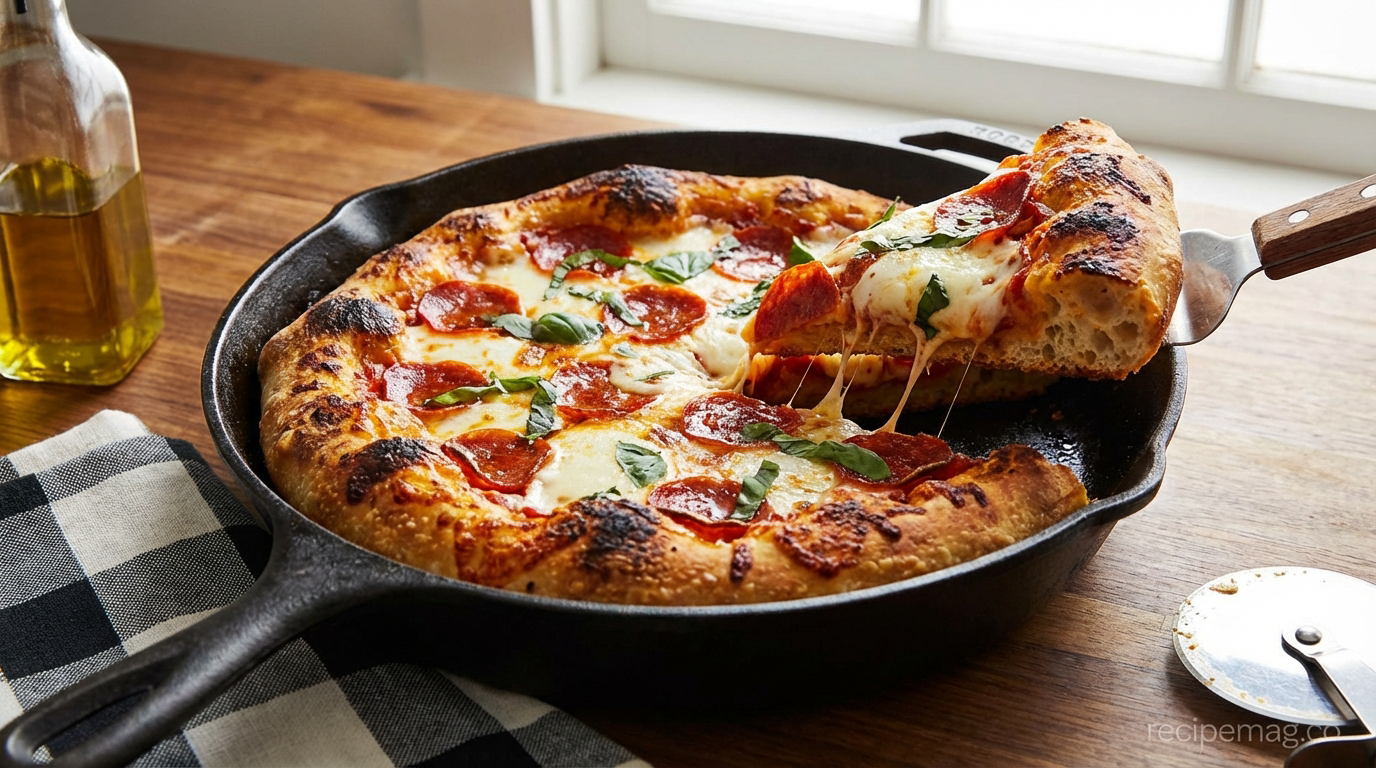
Nothing beats the mouthwatering aroma of freshly baked dough bubbling with melted cheese in your own kitchen. If you have been searching for the perfect weekend cooking project, making a simple crispy pan pizza is an absolute game-changer. This foolproof method guarantees a crunchy crust and fluffy interior every single time.
You do not need a fancy wood-fired oven or specialized equipment to achieve pizzeria-quality results. By using a standard cast iron skillet, you can recreate that coveted golden-brown bottom right in your home oven. It is an approachable technique that transforms basic pantry staples into an extraordinary homemade meal.
In this comprehensive guide, we will break down exactly how to master this beloved comfort food at home. From perfecting the easy dough to layering your toppings for maximum flavor, you will learn everything needed for a successful pizza night. Get ready to elevate your home cooking with techniques that are as fun as they are delicious.
Why a Cast Iron Skillet Makes the Best Pizza
The secret to an unforgettable homemade pizza lies in the cooking vessel you choose. A heavy-duty cast iron skillet is the undisputed champion for baking thick, focaccia-style crusts. Its unique thermal properties create an environment that standard baking sheets simply cannot match.
When you prepare a pizza in a skillet, you are essentially frying the bottom of the dough while the top bakes. This dual-action cooking process results in a texture that is incredibly satisfying. You get an audible crunch on the outside while maintaining a tender, airy crumb on the inside.
Heat Retention and Crispy Crusts
Cast iron is famous for its exceptional heat retention capabilities. Once the heavy metal gets hot, it stays hot, even when cold raw dough is pressed into it. This consistent, radiant heat is exactly what dough needs to achieve a rapid oven spring.
Standard aluminum pans often lose their heat quickly, resulting in pale, floppy pizza bottoms. A pre-heated cast iron skillet transfers thermal energy directly into the dough’s base. The result is a deeply caramelized crust that can easily support heavy toppings without sagging.
Versatility from Stovetop to Oven
One of the greatest advantages of skillet baking is the ability to move seamlessly between heat sources. Your cast iron pan is completely at home on a gas or electric burner, as well as in a scorching hot oven. This flexibility gives you absolute control over the cooking process.
If your pizza finishes baking but the bottom is not quite crispy enough, the solution is brilliantly simple. You can just pop the skillet directly onto a stovetop burner for a few minutes. This targeted burst of heat will toast the undercarriage to perfection without burning the cheese on top.
Building Seasoning for Better Flavor
Every time you bake in your cast iron skillet, you are contributing to its natural non-stick seasoning. The layers of polymerized oil built up over years of cooking impart a subtle, savory depth to the crust. It is a flavor profile that commercial non-stick pans simply cannot replicate.
A well-seasoned pan also guarantees that your pizza will release effortlessly after baking. There is nothing quite as satisfying as watching a perfectly baked pie slide right out of the skillet. Just remember to maintain that seasoning with a light coat of oil after washing.
Essential Ingredients for Pan Pizza Success
Great cooking always starts with high-quality ingredients, and pizza is certainly no exception. Because the ingredient list is so short, each component plays a crucial role in the final flavor and texture. Understanding what goes into your dough will make you a much better home baker.
You do not need to buy expensive, imported Italian products to make an incredible meal. Simple, everyday supermarket staples can produce extraordinary results when combined correctly. Let us explore the core elements that make up the perfect skillet pizza.
Choosing the Right Flour
The foundation of any great pizza is the flour, as it dictates the structure and chew of the crust. For a simple crispy pan pizza, bread flour is almost always the superior choice. Its higher protein content develops a stronger gluten network, allowing the dough to trap more gas bubbles.
If you only have all-purpose flour in your pantry, do not worry; it will still work nicely. However, the resulting crust will be slightly more tender and cake-like, rather than chewy. For that authentic, bakery-style stretch and pull, investing in a bag of bread flour is highly recommended.
Hydration Levels Explained
In the baking world, hydration refers to the ratio of water to flour in a recipe. Pan pizzas thrive on a high-hydration dough, usually hovering around the 70 to 75 percent mark. This extra moisture is what creates those beautiful, airy pockets inside the baked crust.
Working with wet dough can feel intimidating at first because it is quite sticky. However, this stickiness is exactly what you want for a light, fluffy interior. Resist the temptation to add extra flour during the mixing process, as it will make the final crust dense and heavy.
The Role of Olive Oil in Sizzle
Generous amounts of olive oil are non-negotiable when making a proper skillet pizza. The oil serves two distinct purposes: flavoring the dough and shallow-frying the crust. You should never skimp on the oil coating the bottom of your pan.
When the wet dough hits the hot oil in the oven, a chemical reaction occurs that creates an irresistible crunch. You want to use a good quality extra virgin olive oil for the best flavor. This rich, fruity oil seeps into the bottom of the dough, making every bite incredibly decadent.
Step-by-Step Dough Preparation Process
Making pizza dough from scratch is a deeply rewarding process that requires very little active effort. The secret ingredient in this recipe is actually time, not vigorous physical labor. By utilizing a slow fermentation method, the dough develops complex flavors naturally.
This hands-off approach makes it the perfect recipe for beginners and busy home cooks alike. You mix the ingredients the night before, and the yeast does all the heavy lifting while you sleep. The next day, you are rewarded with a bubbly, vibrant dough ready for the pan.
Mixing the Wet and Dry Ingredients
Start by combining your flour, salt, and a small amount of instant yeast in a large mixing bowl. Whisking the dry ingredients together first ensures the yeast and salt are evenly distributed. Once mixed, you pour in lukewarm water to activate the yeast and bind the flour.
Use a sturdy wooden spoon or your hands to bring the shaggy mass together. You do not need to knead it; just mix until no dry spots of flour remain at the bottom of the bowl. It will look rough and messy, but that is perfectly normal at this stage.
The No-Knead Resting Period
Once your dough is mixed, cover the bowl tightly with plastic wrap or a damp kitchen towel. Let it sit at room temperature for 12 to 18 hours. During this long rest, enzymes break down the starches, and the gluten network develops on its own.
You will know the dough is ready when it has more than doubled in size and the surface is dotted with bubbles. It should look jiggly, webbed, and smell pleasantly of mild alcohol and yeast. This slow rise is the ultimate secret to achieving a light, digestible crust.
Stretching the Dough in the Pan
Pour a generous few tablespoons of olive oil into your cast iron skillet, coating the bottom and sides completely. Gently transfer the fermented dough into the center of the pan, turning it over once to coat it in oil. Now comes the fun part: gently stretching it to the edges.
Using oiled fingertips, press and dimple the dough outward toward the sides of the skillet. If the dough springs back stubbornly, let it rest for 15 minutes to relax the gluten, then try again. Once it reaches the edges, let it proof in the pan for another hour before topping.
Topping Strategies for Skillet Pizzas
Now that your dough is perfectly proofed in the pan, it is time to build your masterpiece. Topping a thick pan pizza requires a slightly different approach than a thin New York slice. Because the crust is substantial, it can handle bolder flavors and heavier ingredients.
However, balance remains the key to a successful pie. Overloading your pizza can lead to a soggy center that fails to bake through properly. By applying your ingredients strategically, you ensure an even bake and a harmonious bite every time.
Sauce Placement and Quantity
A great pizza requires a great foundation of flavor, which usually comes from the tomatoes. For the best results, you want a robust, flavorful sauce that isn’t too watery. If you want to elevate your pie, checking out the ultimate guide to homemade pizza sauce will transform your cooking.
Apply the sauce with a light hand, spreading it evenly but leaving a small border for the crust to rise. Too much liquid will weigh down the dough and prevent the center from cooking. A few dollops spread thin with the back of a spoon is usually sufficient.
Cheese Distribution to the Edges
One of the defining characteristics of a legendary simple crispy pan pizza is the caramelized cheese edge. To achieve this, you must scatter your cheese all the way to the rim of the skillet. You actually want the cheese to touch the hot cast iron.
As the pizza bakes, the cheese against the metal melts, fries, and turns into a dark, crispy halo known as a “frico.” Low-moisture whole milk mozzarella is the absolute best cheese for this job. It melts beautifully without releasing excess water into your beautiful crust.
Balancing Moisture in Fresh Toppings
Fresh vegetables and wet meats can ruin a perfectly good pizza by releasing steam during baking. If you are using moisture-heavy toppings like mushrooms, peppers, or fresh tomatoes, consider pre-cooking them slightly. Sautéing them beforehand removes the excess water and intensifies their flavor.
When applying your toppings, space them out evenly so the hot oven air can circulate around them. This helps the moisture evaporate quickly, keeping your crust crisp and sturdy. Remember the golden rule: less is more when it comes to loading up your skillet.
Baking Your Simple Crispy Pan Pizza to Perfection
The baking phase is where all your patient preparation finally pays off. A home oven operates very differently than a commercial pizza deck, so we must adapt our technique. Maximizing heat transfer is the ultimate goal for a stunning final product.
Do not be afraid of high temperatures. Pizza thrives in intensely hot environments, which creates that desirable oven spring and fast browning. A timid oven will result in a dry, overcooked crust rather than a crisp, airy one.
Pre-Heating Techniques
You must pre-heat your oven to its absolute maximum temperature, usually between 500°F and 550°F (260°C to 290°C). Allow the oven to sit at this high temperature for at least 30 minutes before baking. The oven walls need to absorb the heat to recover quickly when you open the door.
Some bakers like to pre-heat a baking stone or steel on the bottom rack, then place the skillet directly on it. This creates an intense blast of bottom heat that supercharges the crust’s rise. If you do not have a stone, the cast iron alone will still do a fantastic job.
Oven Placement Matters
Where you place the skillet in the oven drastically affects how the pizza bakes. For the best bottom crunch, bake the pizza on the lowest rack possible for the first 12 to 15 minutes. This ensures the heavy cast iron receives direct, intense heat from the lower heating element.
If you notice the bottom is cooking faster than the top, move the skillet to the middle or top rack. This shift will help broil the cheese and toppings without burning the underside. Keeping a close eye on the pie during the final five minutes is critical.
The Stovetop Finish Trick
Sometimes, despite your best efforts, the top of the pizza finishes before the bottom achieves maximum crunch. Do not panic; this is easily remedied thanks to your cast iron skillet. Simply pull the pan from the oven and set it on a stovetop burner over medium heat.
Let it sizzle on the burner for 2 to 3 minutes, checking the bottom frequently with a spatula. You will hear the oil frying the crust, signaling that it is crisping up perfectly. Once golden and firm, slide it out, let it rest, and serve it alongside a fresh halloumi salad recipe for a complete meal.
Comparing Homemade Pizza Styles
Understanding the differences between pizza styles can help you appreciate why the skillet method is so reliable. While Neapolitan and New York styles require specialized equipment and high-level dough stretching skills, pan pies are incredibly forgiving. The cast iron provides a supportive boundary that makes shaping absolutely foolproof.
The table below highlights why a simple crispy pan pizza is often the best choice for home cooks. It requires minimal active prep time and delivers restaurant-quality satisfaction with standard kitchen tools.
| Pizza Style | Cooking Vessel | Ideal Oven Temp | Crust Texture | Effort Level |
|---|---|---|---|---|
| Pan Pizza | Cast Iron Skillet | 500°F – 550°F | Thick, airy interior, fried crispy bottom | Low (No-knead, easy stretching) |
| Neapolitan | Pizza Stone / Steel | 800°F – 900°F | Thin, soft, floppy center, charred puffy edges | High (Requires intense heat and dough skills) |
| New York Style | Pizza Screen / Stone | 550°F – 600°F | Thin, foldable, crisp yet chewy | Medium (Requires careful hand stretching) |
Expert Tips for Foolproof Homemade Pan Pizza
Even the most approachable recipes can benefit from a few insider secrets. Over the years, professional bakers have discovered small tweaks that make a massive difference in the final product. Implementing these pro tips will elevate your homemade pizza from good to truly extraordinary.
- Grate Your Own Cheese: Pre-shredded bagged cheeses are coated in anti-caking agents like cellulose. This prevents them from melting smoothly. Always buy block mozzarella and grate it yourself for a creamy, flawless melt.
- Let the Dough Relax: If the dough shrinks back when you try to stretch it to the edges of the pan, stop fighting it. Cover it and let it rest for 15 minutes. The gluten will relax, making it incredibly easy to stretch.
- Oil Your Hands: Wet, high-hydration dough loves to stick to everything. Rubbing a generous amount of olive oil on your hands before handling the dough will prevent a sticky mess and add extra flavor to the crust.
- Mind the Rest Period: Do not cut into your pizza the second it comes out of the oven. Letting it rest on a wire cooling rack for 5 minutes allows the cheese to set and prevents the crust from getting soggy.
- Try a Cheese Blend: While low-moisture mozzarella is the base, adding a handful of sharp provolone or a dusting of hard parmesan elevates the flavor profile immensely.
- Use a Metal Spatula: When checking the bottom of your pizza or transferring it to a cutting board, a sturdy metal fish spatula is your best friend. It easily slides under the crust without tearing it.
Frequently Asked Questions about simple crispy pan pizza
What size cast iron skillet do I need?
A standard 10-inch or 12-inch cast iron skillet works best for most homemade pan pizza recipes. A 10-inch pan will yield a slightly thicker, fluffier crust, while a 12-inch pan produces a crust that is slightly thinner but wider. Make sure your skillet is well-seasoned to prevent sticking.
Can I make the dough ahead of time?
Absolutely. You can mix the dough and let it undergo its first rise, then place it in the refrigerator for up to 3 days. This cold fermentation process actually develops a much deeper, more complex flavor. Just let it come to room temperature before stretching it into the pan.
Do I have to use a cast iron pan?
While cast iron is highly recommended for its heat retention, it is not strictly mandatory. You can use a heavy stainless steel skillet, a dark metal cake pan, or a dedicated deep-dish pizza pan. Avoid thin aluminum pans or glass baking dishes, as they will not crisp the bottom properly.
Why is my pizza dough sticking to the pan?
Dough usually sticks for two reasons: a lack of oil or a poorly seasoned pan. Ensure you are using at least two to three tablespoons of olive oil to coat the bottom of the skillet. Also, make sure the oven is fully preheated so the dough fries immediately upon contact with the heat.
How do I get the cheese perfectly bubbly?
For beautifully browned, bubbling cheese, use low-moisture whole milk mozzarella. If the crust is done but the cheese needs more color, switch your oven to the broiler setting for the last 1 to 2 minutes. Watch it very closely so it does not burn.
Can I freeze pan pizza dough?
Yes, pizza dough freezes wonderfully. After the initial bulk fermentation, form the dough into a ball, lightly oil it, and seal it in an airtight freezer bag. When you are ready to bake, thaw it overnight in the fridge and let it proof in the oiled skillet for a few hours before baking.
What is the best cheese for pan pizza?
Low-moisture, whole milk mozzarella is the gold standard for pan pizza. It melts incredibly well without turning your pizza into a watery mess. For the classic crispy edges, spreading a bit of cheddar or Monterey Jack around the very perimeter works wonders.
How do I reheat leftover pan pizza?
Never use the microwave, as it will make the crust rubbery and tough. The best method is to place a slice in a dry skillet over medium-low heat and cover it with a lid. The skillet recrisps the bottom while the trapped heat melts the cheese on top.
Can I use store-bought pizza dough?
Yes, store-bought dough is a great shortcut if you are short on time. Let the store-bought dough come to room temperature so it is easy to stretch into the pan. However, homemade no-knead dough usually yields a much lighter, airier crust.
Mastering the simple crispy pan pizza is one of the most rewarding culinary skills you can develop for your home kitchen. The combination of an airy, open crumb, a richly fried bottom crust, and deeply caramelized edges is simply irresistible. Once you experience how easy it is to produce pizzeria-quality results using just a cast iron skillet, you will never want to order delivery again.
Remember that pizza making is an art that thrives on experimentation and patience. Feel free to tweak the toppings, experiment with cheese blends, and perfect your baking times. If you love fast, satisfying meals but do not have time for overnight dough, check out our 30+ Quick Weeknight Dinners Under 30 Minutes for more weeknight inspiration. Happy baking!
