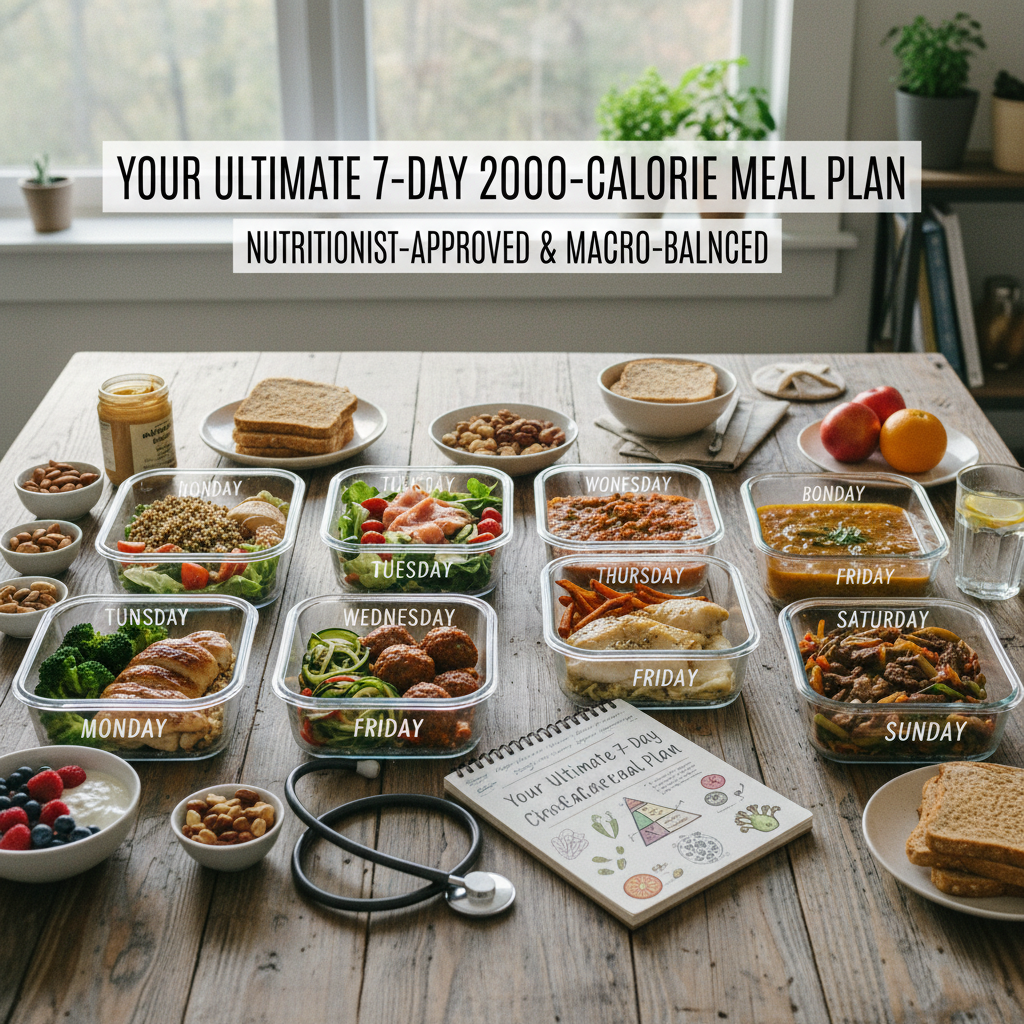
This comprehensive 7-day 2000-calorie meal plan offers a meticulously crafted, nutritionist-approved approach to balanced eating, designed to fuel your body, manage weight, and enhance overall well-being. It provides a clear roadmap to achieving your health goals with a delicious array of macro-balanced meals and snacks.
Your Ultimate 7-Day 2000-Calorie Meal Plan
Embarking on a journey towards better health often begins with understanding what you eat. Our ultimate 7-day 2000-calorie meal plan is expertly designed to provide optimal nutrition, ensuring you receive a balanced intake of macronutrients—proteins, carbohydrates, and healthy fats—essential for sustained energy and vitality. This plan is perfect for individuals looking to maintain weight, support an active lifestyle, or establish healthy eating habits without feeling deprived.
This guide goes beyond just a list of meals; it’s a holistic approach to understanding your nutritional needs. You’ll discover how a well-structured 2000-calorie diet plan can be both satisfying and incredibly effective for your health goals. Get ready to transform your eating habits with delicious, easy-to-follow recipes that prioritize whole, unprocessed foods.
What Does a 2000 Calorie Day Look Like?
A typical 2000-calorie day is a balanced mosaic of nutrient-dense meals and strategic snacks, designed to keep you energized and satisfied throughout. It generally includes three main meals—breakfast, lunch, and dinner—each contributing a significant portion of your daily calorie and macro targets, complemented by 1-2 snacks. This structure prevents extreme hunger and supports consistent energy levels, making healthy eating sustainable.
The emphasis is on whole foods: lean proteins, complex carbohydrates, healthy fats, and an abundance of fruits and vegetables. For instance, a day might feature oatmeal with berries for breakfast, a large salad with grilled chicken for lunch, a handful of almonds as a snack, and salmon with roasted vegetables and quinoa for dinner. This variety ensures you get a broad spectrum of vitamins and minerals.
Essentials of a Macro Balanced 2000 Calorie Diet Plan
Achieving a macro-balanced 2000-calorie diet plan is crucial for optimizing health, energy, and body composition. It’s about more than just calorie counting; it’s about the quality and distribution of those calories. Understanding these core principles will empower you to make informed food choices.
Here are the essential takeaways for a successful and balanced 2000-calorie plan:
- Optimal Macro Distribution: Aim for a balance of approximately 25-35% protein, 40-55% carbohydrates, and 20-30% healthy fats. This ratio supports muscle maintenance, sustained energy, and satiety.
- Nutrient Density is King: Prioritize whole, unprocessed foods like lean meats, fish, eggs, fruits, vegetables, whole grains, nuts, and seeds. These foods offer maximum nutrients for fewer calories.
- Consistent Hydration: Drink plenty of water throughout the day. Hydration is vital for metabolism, nutrient transport, and overall bodily function.
- Fiber-Rich Foods: Incorporate high-fiber foods such as legumes, whole grains, fruits, and vegetables. Fiber aids digestion, promotes satiety, and helps regulate blood sugar.
- Mindful Snacking: Choose snacks that contribute to your daily nutrient goals, like a piece of fruit with nuts, Greek yogurt, or vegetable sticks with hummus.
- Portion Control: Even healthy foods contribute to your calorie count. Learning appropriate portion sizes is key to staying within the 2000-calorie target.
Is a 2000 Calorie Diet Healthy?
A 2000-calorie diet can be incredibly healthy and effective for a wide range of individuals, depending on their age, sex, activity level, and specific health goals. For many adults, particularly those with moderate activity levels, 2000 calories represents a good baseline for weight maintenance or gradual weight loss. It provides sufficient energy to perform daily activities and supports metabolic functions without leading to excessive restriction or overconsumption.
The healthiness of any diet, including a 2000-calorie plan, hinges on the quality of food choices. A plan rich in whole, unprocessed foods, balanced macronutrients, and diverse micronutrients will always be superior to one filled with empty calories from highly processed items. Consult with a healthcare professional or registered dietitian to determine if a 2000-calorie diet aligns with your personal health needs.
Understanding the scientific principles behind this approach further clarifies its effectiveness.
The Science Behind a Nutritionist Approved 2000 Calorie Meal Plan
The foundation of a nutritionist-approved 2000-calorie meal plan lies in scientific principles of energy balance and nutrient requirements. Our bodies require a certain amount of energy (calories) to perform basic functions, known as our Basal Metabolic Rate (BMR), plus additional energy for physical activity. For many, 2000 calories provides this necessary fuel.
Nutritionists emphasize macronutrient balancing because each plays a vital role: proteins for tissue repair and muscle growth, carbohydrates for primary energy, and fats for hormone production and nutrient absorption. A balanced approach prevents deficiencies, stabilizes blood sugar, and supports long-term health. The plan focuses on satiety through fiber and protein, preventing hunger pangs that often lead to unhealthy choices.
The Complete 7-Day 2000 Calorie Meal Plan
This meticulously crafted 7-day plan provides a delicious and varied approach to consuming 2000 calories daily. Each day is designed to be macro-balanced, incorporating a wide array of whole foods to ensure you receive all essential nutrients. Feel free to adjust portion sizes slightly to meet your exact individual needs, always aiming for consistency.
Remember, flexibility is key. If you don’t like a specific meal, swap it with another from this plan that fits similar macro and calorie profiles. This plan makes healthy eating accessible and enjoyable.
Here’s a detailed breakdown of each day’s meals, carefully designed to meet your nutritional needs.
Day One: High Protein Focus
Start your week strong with a focus on lean protein to support muscle health and satiety.
Day Two: Healthy Fats and Lean Proteins
Emphasize healthy fats for brain health and sustained energy, alongside lean proteins.
- Breakfast (Approx. 400 calories): Avocado toast: 2 slices whole-wheat toast, 1/2 mashed avocado, 1 poached egg, sprinkle of chili flakes.
- Lunch (Approx. 600 calories): Turkey & veggie wrap: 4 oz sliced turkey breast, 1/4 cup hummus, 1 cup mixed greens, 1/4 cup shredded carrots, 1 whole-wheat tortilla. Served with 1 cup baby carrots.
- Snack (Approx. 200 calories): Handful (1/4 cup) of mixed nuts (almonds, walnuts).
- Dinner (Approx. 800 calories): Lean ground beef stir-fry (5 oz cooked) with 2 cups mixed stir-fry vegetables (bell peppers, snap peas, broccoli) and 1 cup brown rice. Use low-sodium soy sauce.
Day Three: Plant-Based Energy
Discover the power of plant-based foods for fiber, vitamins, and minerals.
- Breakfast (Approx. 450 calories): Oatmeal (1 cup cooked) with 1/2 cup berries, 1/4 cup chopped walnuts, and a drizzle of maple syrup.
- Lunch (Approx. 550 calories): Large lentil soup (2 cups) with 1 slice whole-grain bread and a side salad (1 cup mixed greens with light dressing).
- Snack (Approx. 200 calories): 1 cup edamame (steamed).
- Dinner (Approx. 800 calories): Black bean burgers (2 patties, homemade or low-sodium store-bought) on whole-wheat buns with lettuce, tomato, onion, and a side of 1 cup sweet potato fries (baked, not fried).
Day Four: Incorporating Your Favorite Meal Plan Recipe
Today, enjoy a delicious meal while staying on track. This is a great opportunity to explore new tastes.
Day Five: Quick Prep Essentials
Focus on meals that are easy to prepare, perfect for a busy weekday.
- Breakfast (Approx. 450 calories): Scrambled eggs (3 large) with 1/2 cup spinach and 1 slice whole-wheat toast.
- Lunch (Approx. 550 calories): Tuna salad (5 oz canned tuna, water-packed) mixed with 2 tbsp Greek yogurt, diced celery, served on 2 large lettuce cups with 1/2 cup whole-grain crackers.
- Snack (Approx. 200 calories): Rice cakes (2) with 2 tbsp peanut butter.
- Dinner (Approx. 800 calories): Sheet pan chicken and veggies: 6 oz chicken thighs (skinless, boneless) with 2 cups chopped bell peppers, zucchini, and onions, tossed in 1 tbsp olive oil and herbs. Bake until cooked.
Day Six: Weekend Flexibility
Enjoy a slightly more relaxed approach while still making healthy choices.
- Breakfast (Approx. 400 calories): Whole-wheat pancakes (2 small) with 1/2 cup berries and a small drizzle of maple syrup.
- Lunch (Approx. 600 calories): Homemade pizza (1/2 of a small whole-wheat crust) with tomato sauce, 2 oz low-fat mozzarella, and plenty of vegetable toppings.
- Snack (Approx. 200 calories): Small handful of air-popped popcorn (3 cups).
- Dinner (Approx. 800 calories): Grilled steak (5 oz lean cut) with a large baked potato (medium size) topped with 2 tbsp Greek yogurt and chives, and a side of 1.5 cups asparagus.
Day Seven: Rest and Recovery Fuel
Focus on nutrient-rich foods to aid recovery and prepare for the week ahead.
- Breakfast (Approx. 450 calories): Cottage cheese (1 cup, 2% fat) with 1/2 cup sliced peaches and 1/4 cup slivered almonds.
- Lunch (Approx. 550 calories): Leftover Grilled Steak with a large mixed green salad.
- Snack (Approx. 200 calories): Hard-boiled eggs (2).
- Dinner (Approx. 800 calories): Shrimp scampi (6 oz shrimp) with 1.5 cups whole-wheat pasta and a generous serving of steamed green beans.
Daily Macro and Calorie Tables
Understanding the nutritional breakdown of your meals helps reinforce healthy eating habits. This table provides an approximate daily summary of calories and macronutrients for the 7-day plan, demonstrating the macro-balanced approach. Individual meal components may vary slightly, but the overall daily targets remain consistent.
| Day | Total Calories (Approx.) | Protein (g) (Approx.) | Carbs (g) (Approx.) | Fat (g) (Approx.) |
|---|---|---|---|---|
| One | 2000 | 150 | 200 | 65 |
| Two | 2000 | 140 | 190 | 75 |
| Three | 2000 | 100 | 250 | 60 |
| Four | 2000 | 130 | 220 | 70 |
| Five | 2000 | 145 | 185 | 70 |
| Six | 2000 | 120 | 230 | 65 |
| Seven | 2000 | 135 | 200 | 70 |
Creating a 2000 Calorie Meal Plan Tailored to Your Body
While this 7-day plan provides an excellent starting point, tailoring a 2000-calorie meal plan to your unique body and goals is crucial for long-term success. Consider your activity level, dietary preferences, existing health conditions, and specific objectives like weight loss or muscle gain. A personalized approach ensures sustainability and optimal results.
Start by tracking your current intake for a few days to understand your baseline. Then, adjust portion sizes or swap out ingredients within the 2000-calorie framework to better suit your needs. Remember, consistency and listening to your body are key.
Different goals require specific adjustments to the core plan.
Healthy 2000 Calorie Meal Plan for Weight Loss
For weight loss, a 2000-calorie plan needs to create a slight caloric deficit for many individuals. Focus on maximizing satiety with high-fiber vegetables, lean proteins, and complex carbohydrates. Opt for cooking methods that use minimal added fats, such as baking, grilling, and steaming. Incorporating a weight loss recipe (/) that emphasizes nutrient density and lower calorie ingredients can be particularly effective.
Prioritize whole, unprocessed foods and limit sugary drinks, refined grains, and excessive unhealthy fats. Regular physical activity will also significantly enhance your weight loss efforts within this calorie target.
2000 Calorie Meal Plan for Muscle Gain
To support muscle gain on a 2000-calorie plan, the emphasis shifts slightly towards a higher protein intake, typically 0.7-1 gram of protein per pound of body weight. Distribute protein evenly throughout the day across all meals and snacks to optimize muscle protein synthesis. Ensure adequate complex carbohydrates to fuel workouts and replenish glycogen stores, and healthy fats for hormone production.
Consider including protein shakes as convenient snacks. While 2000 calories might be a maintenance or slight deficit for some, for others, especially smaller individuals or those new to training, it can support lean muscle gain when paired with a structured resistance training program.
High Protein 2000 Calorie Meal Plan Variations
A high protein 2000-calorie meal plan is excellent for satiety, muscle preservation, and recovery. To achieve this, increase portion sizes of lean protein sources like chicken breast, fish, eggs, Greek yogurt, and legumes. You might swap some carbohydrate-dense snacks for protein-focused options.
For example, instead of an apple with granola, opt for cottage cheese or a protein smoothie. Ensure you’re still getting enough fiber from fruits and vegetables and healthy fats from avocados, nuts, and seeds to maintain overall balance and nutrient intake.
7 Day 2000 Calorie Meal Prep Guide
Meal prepping is a game-changer for sticking to any diet plan, especially a 2000-calorie one. Dedicating a few hours on a weekend can save you significant time during the busy work week, ensuring you always have healthy, nutritionist-approved meals ready to go. This guide provides practical tips to streamline your cooking process.
Start by planning your meals for the entire week using the provided 7-day plan. Then, create a comprehensive grocery list. Batch cooking staples like grains, proteins, and roasted vegetables will be your secret weapon.
Effective meal preparation can significantly streamline your healthy eating efforts.
Time-Saving Cooking Instructions
Efficient meal prep is about smart strategies:
- Batch Cook Grains: Cook a large batch of quinoa or brown rice at the beginning of the week.
- Prep Proteins: Grill or bake chicken breasts, salmon fillets, or hard-boil eggs in advance.
- Chop Veggies: Wash and chop all your vegetables at once for salads, stir-fries, or roasting. Store them in airtight containers.
- Make Dressings/Sauces: Prepare your salad dressings or stir-fry sauces in bulk.
- Portion Control: Divide cooked meals into individual containers for easy grab-and-go options.
- Utilize Appliances: Slow cookers, instant pots, and sheet pans can significantly reduce active cooking time.
Comprehensive Master Grocery List
Having a detailed grocery list will make your shopping trip quick and efficient. Here’s a master list covering most items in the 7-day plan:
- Produce: Mixed greens, spinach, berries (strawberries, blueberries), apples, bananas, avocados, cucumbers, cherry tomatoes, bell peppers (various colors), carrots, broccoli, asparagus, zucchini, onions, sweet potatoes, lemons.
- Proteins: Chicken breast, salmon fillets, lean ground beef, shrimp, turkey breast (sliced), canned tuna (water-packed), eggs, Greek yogurt (plain), cottage cheese, lentils, black beans, edamame.
- Grains/Starches: Whole-wheat bread, whole-wheat pita, whole-wheat tortillas, quinoa, brown rice, whole-wheat pasta, oatmeal, whole-grain crackers, granola, popcorn kernels.
- Healthy Fats/Nuts/Seeds: Almond butter, peanut butter, almond milk, olive oil, chia seeds, mixed nuts (almonds, walnuts), avocado oil.
- Spices/Condiments: Salt, pepper, chili flakes, herbs (dried or fresh), low-sodium soy sauce, maple syrup, apple cider vinegar.
- Optional (for specific recipes): Pineapple, peaches, protein powder.
Adding a Weight Loss Recipe to Your Week
Flexibility is essential for sustainable eating. If you find yourself wanting to switch things up or have specific weight loss recipe (/) goals, feel free to swap meals. For instance, if you’re looking to cut down on calories slightly for a day, you might replace a higher-calorie dinner with a lighter, yet equally satisfying option from another day in the plan, or a known weight loss recipe that fits the calorie target.
Always consider the macronutrient balance when making swaps. Aim to keep your protein, carbs, and fats within a similar range to maintain consistency. This approach prevents boredom and helps you adhere to your 2000-calorie target effortlessly.
Sticking to Your Nutritionist-Approved Plan
Adhering to a nutritionist-approved 2000-calorie meal plan is a powerful step towards achieving your health and fitness aspirations. This comprehensive 7-day guide provides the structure, variety, and expert insights needed to make healthy eating an enjoyable and sustainable part of your lifestyle. Remember, consistency, mindful eating, and listening to your body are the cornerstones of long-term success.
By focusing on whole foods, balanced macronutrients, and smart meal prep, you’ll not only meet your calorie goals but also nourish your body with the nutrients it needs to thrive. Embrace this plan as a foundation, adapt it to your preferences, and enjoy the journey to a healthier, more vibrant you.
