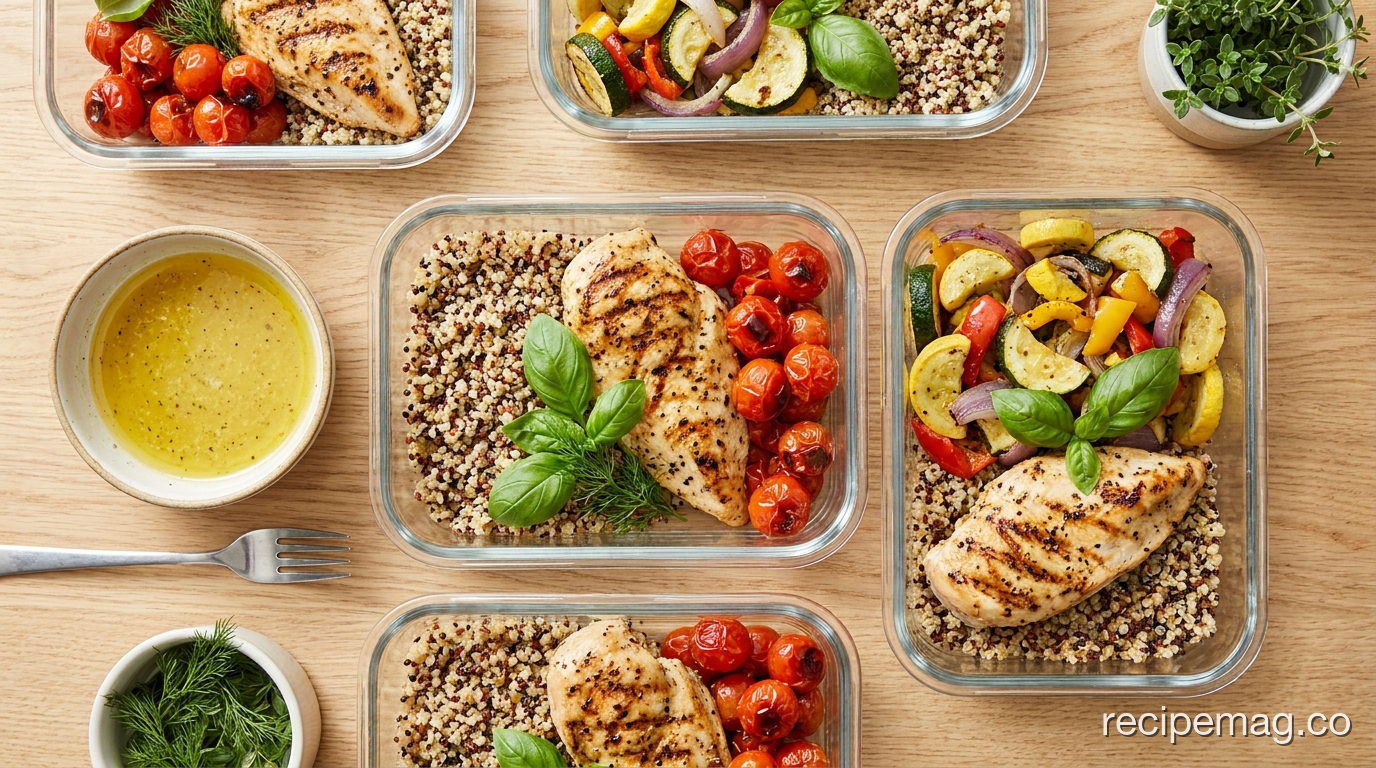
Summer meal prep isn’t complicated, but it is different. Heat changes what holds up, what wilts, and what you actually want to eat. According to a 2023 survey by the International Food Information Council, 52% of Americans say they meal prep at least occasionally, yet most report abandoning it by mid-summer when heat kills their appetite for the food they made. The fix is a smarter approach, not more effort.
Key Takeaways
- Summer prep works best when you separate cooked components from fresh ones rather than assembling full meals ahead of time.
- A focused 90-minute Sunday session covers proteins, grains, and bases for five full days.
- 52% of Americans meal prep occasionally but many quit in summer because the food doesn’t hold well (IFIC, 2023).
- The right containers extend produce life by up to three days compared to standard zip-lock storage.
- Five proteins and two grain bases can generate at least 15 distinct summer meals without repetition.
Why Is Summer Meal Prep Different From the Rest of the Year?
Bacteria multiply twice as fast when kitchen temperatures exceed 90°F, according to the USDA Food Safety and Inspection Service (USDA FSIS, 2023). That single fact changes everything about summer prep strategy. Hot, assembled meals that hold perfectly in January can spoil by Wednesday in July if you’re not careful about storage and temperature control.
Summer eating also shifts toward lighter, cooler meals. Nobody wants reheated pasta bake in August. You want grain bowls, cold salads, chilled proteins, and things you can throw together in five minutes from prepped components. Prep for that reality, not the meal plan you’d run in October.
The other difference is produce. Summer vegetables and fruits are at their peak, but they’re also more perishable. Prepping everything Sunday and eating it Friday works for roasted sweet potato. It doesn’t work for sliced tomatoes or fresh herbs. Summer prep is about knowing which category every ingredient falls into.
What Should You Prep vs. What Should You Leave Fresh?
Cut leafy greens lose up to 75% of their vitamin C within three days of preparation, according to research published in Postharvest Biology and Technology (2021). That’s the clearest argument for keeping certain items whole until you need them. Not everything belongs in Sunday’s prep session, and knowing the dividing line saves both time and nutrition.
Safe to Prep Sunday for the Whole Week
Proteins handle advance prep well. Grilled chicken, poached eggs, roasted chickpeas, and cooked shrimp all keep four to five days refrigerated without quality loss. Cooked grains (quinoa, farro, brown rice) hold five days easily and actually improve as they absorb moisture. Roasted vegetables keep three to four days with no issue. Dressings and sauces can be made Sunday and used all week.
Prep Two to Three Days at a Time
Sliced cucumbers, halved cherry tomatoes, and blanched green beans fall into the middle category. They’re fine Tuesday but past their best by Friday. Prep a smaller batch midweek for the second half of the week. Cooked fish is also in this camp; it keeps two to three days but not five.
Always Prep Day-Of
Avocado, fresh herbs, and anything dressed with vinegar or citrus should wait until the day you eat it. Cut melon turns watery overnight. Fresh corn on the cob loses sweetness within 24 hours. Keeping these items whole until needed is the habit that separates summer prep that stays delicious from prep that disappoints by midweek.
The Sunday Prep Session: A Step-by-Step Plan
People who prep meals in advance eat 28% more vegetables per day than those who don’t, according to the University of Minnesota (2022). A 90-minute Sunday session is enough to cover five full days of summer eating. The key is sequencing tasks so the oven, stovetop, and cutting board are all working in parallel rather than one at a time.
First 20 Minutes: Start the Long-Cook Items
Get grains going first. Quinoa takes 15 minutes, farro takes 30. Start whichever you chose, set a timer, and move on. Preheat the oven to 400°F and get any proteins ready for roasting. Toss a sheet pan of chickpeas or chicken thighs in olive oil and seasoning while the oven heats.
Minutes 20-60: Active Prep at the Cutting Board
While grains simmer and proteins roast, work through the cutting board tasks. Wash and dry all produce. Chop vegetables that fall in the “two to three days” category, not the day-of items. Make your dressings and any sauces. Portion washed greens into their storage containers while they’re still cold from the rinse. This is also the time to hard-boil eggs if they’re on your plan.
Final 30 Minutes: Cool, Portion, and Store
Everything that comes off the heat needs to cool fully before refrigerating. Hot food raises the refrigerator’s internal temperature and accelerates spoilage across all your other containers. Spread grains on a sheet pan for ten minutes to cool fast. Once cool, portion into individual containers or family-size batches, label with the date, and stack in the fridge by day of use.
What Containers and Tools Actually Matter?
The right containers aren’t about aesthetics on Instagram. They extend food life by days. A 2022 Consumer Reports review of food storage containers found that glass containers with airtight lids kept prepped vegetables fresh up to 40% longer than loosely sealed plastic alternatives (Consumer Reports, 2022). That difference is the gap between food that makes it to Friday and food that gets thrown out Thursday.
Containers Worth Buying
Glass containers with locking lids are the top choice for cooked proteins and grains. They don’t absorb odors, go from fridge to microwave, and last years. For produce, produce-specific containers with vented lids and internal ridges (brands like OXO or Prepworks make solid options) keep greens and vegetables dry, which is the main driver of freshness. Avoid sealing wet greens in airtight containers; they’ll wilt within 24 hours.
Tools That Speed Up the Session
A salad spinner is essential. Wet greens are the fastest path to wilted greens. A sheet pan with a wire rack doubles your roasting capacity without adding oven time. A rice cooker or Instant Pot frees up stovetop burners while grains cook hands-free. A set of wide-mouth mason jars handles dressings, overnight oats, and grain salads in one container that pours cleanly.
Which 5 Summer Proteins Are Best for Batch Cooking?
The Academy of Nutrition and Dietetics recommends 20-30 grams of protein per meal to support muscle synthesis, especially relevant during active summer months (AND, 2023). Batch cooking one or two proteins on Sunday guarantees that target is met all week without turning on the stove every evening. These five proteins hold well, work across multiple meals, and are built for summer eating.
1. Grilled Chicken Thighs
Chicken thighs stay moist after refrigeration in a way that chicken breast does not. Season simply with olive oil, garlic, and cumin, then grill in one batch. Slice into strips for grain bowls, chop for wraps, or serve cold over salad. [LINK: recipe – simple grilled chicken thighs for meal prep]
2. Cold Poached Shrimp
Shrimp cooks in three minutes and serves cold without reheating, which makes it the most summer-friendly protein on this list. Poach in salted water with lemon and bay leaf, cool immediately in ice water, and refrigerate uncovered to keep them firm. Use in salads, tacos, or grain bowls through Wednesday.
3. Crispy Roasted Chickpeas
Chickpeas are the best plant-based batch protein for summer. One can yields two to three servings. Roast at 425°F for 25-30 minutes with olive oil and smoked paprika until crispy. They hold four days in a loosely covered container and add texture to anything from salads to wraps.
4. Hard-Boiled Eggs
Hard-boiled eggs keep up to seven days in their shells in the refrigerator, making them the longest-lasting protein on this list. Cook eight at once. Peel as needed rather than all at once. Use for salads, as a quick protein alongside grain bowls, or simply with flaky salt as a standalone snack.
5. Sesame-Glazed Tofu
Press extra-firm tofu dry, cube it, and bake at 400°F for 25-30 minutes until golden. Toss with sesame oil, soy sauce, and a small amount of honey while still hot. It holds five days refrigerated and works cold or at room temperature over rice, noodles, or chopped salad. [LINK: recipe – baked sesame tofu for grain bowls]
What Are the Best Make-Ahead Grains and Salad Bases?
Quinoa provides 8 grams of complete protein per cooked cup and actually improves in flavor after a day or two in the fridge, according to the Whole Grains Council (2023). That makes it the single best meal prep grain for summer. The base grains and salad foundations below cover the full spectrum of summer meals from light to satisfying.
Top Grains for Summer Prep
Quinoa, farro, and cooked farro hold best. Brown rice works but can dry out by day four; add a splash of water before using. Orzo pasta holds well dressed lightly in olive oil. Avoid white rice for multi-day prep; it turns chalky and hard when refrigerated.
Salad Bases That Last
Shredded cabbage lasts five days refrigerated and actually softens into a better texture over time when tossed lightly with a small amount of salt. Kale holds two to three days after washing and drying. Romaine and Little Gem hold well whole or as full leaves; chop only the portion you’ll eat that day. Arugula is the most delicate green and should always be a day-of prep item.
Building a No-Wilt Grain Salad
The trick to a grain salad that doesn’t turn soggy is separating the dressing from the base until serving. Store the grain in one container and the dressing in a small jar. Toss just before eating. This simple separation keeps the base fresh and the flavors bright through day four or five without compromise.
How Do You Keep Produce Fresh All Week?
Ethylene gas from fruits like peaches and tomatoes accelerates decay in nearby vegetables, according to the University of California Cooperative Extension (UC Cooperative Extension, 2022). Simply storing fruit separately from leafy greens and cruciferous vegetables extends produce life by two to three days with zero extra effort. That one habit changes how much of your Sunday shop survives to Friday.
The Moisture Rule
Most produce fails early because of moisture imbalance: either too wet (wilts and rots) or too dry (shrivels). Greens should be washed, spun completely dry, and stored with a dry paper towel inside the container to absorb any residual moisture. Root vegetables and whole citrus prefer dry, open airflow; don’t seal them in airtight bags.
Herbs Are a Special Case
Treat fresh herbs like flowers. Trim the stems, place them in a glass with an inch of water, cover loosely with a plastic bag, and refrigerate upright. Cilantro, parsley, and basil stored this way last five to seven days versus two to three days rolled in a paper towel. Basil, however, is cold-sensitive; keep it at room temperature on the counter rather than refrigerated.
The Two-Shop System
For a full week of fresh eating, split your grocery shopping into two visits: Sunday for the full shop, and Wednesday for the second-half fresh items. Tomatoes, avocados, fresh corn, and stone fruit all benefit from a midweek purchase rather than sitting in the fridge from Sunday. The two-shop system takes 15 minutes Wednesday and prevents the “sad fridge” problem by Thursday.
Frequently Asked Questions About Summer Meal Prep
How long does summer meal prep last in the fridge?
Cooked proteins and grains keep four to five days refrigerated at or below 40°F. Cut vegetables last two to four days depending on the item. The USDA recommends never leaving cooked food at room temperature for more than two hours, a window that shrinks to one hour when ambient temperatures exceed 90°F (USDA FSIS, 2023). Label containers with the prep date and use the oldest items first.
Can you meal prep salads for the whole week?
You can prep the components but not the assembled salad. Store greens, grains, proteins, and toppings separately and combine at mealtime. Research in Postharvest Biology and Technology (2021) confirmed that pre-dressed greens lose nutritional value within 24 hours. A five-second assembly at lunch is a worthwhile trade for salads that still taste fresh on Thursday.
What is the best protein to batch cook for summer?
Grilled chicken thighs are the most versatile batch protein for summer: they stay moist cold, work across at least five different meal types, and hold quality for four to five days. Cold poached shrimp is the best choice if you don’t want to reheat anything. Both options cover the 20-30 gram per meal protein target recommended by the Academy of Nutrition and Dietetics (AND, 2023).
Is summer meal prep worth it if you only cook for one or two people?
Yes, and it’s arguably more valuable for small households. Buying and prepping a full batch of grains or proteins costs less per serving than buying daily. A 2022 USDA Economic Research Service report found that meal planning reduces household food waste by an average of 25%, a meaningful saving for one or two-person households where unused produce and leftovers are the biggest waste driver (USDA ERS, 2022).
Build Your Summer Week Around Five Containers
Summer meal prep doesn’t require a perfect system. It requires five decisions made on Sunday: one protein, one grain, one salad base, one sauce or dressing, and a plan for which fresh items you’ll buy midweek. That’s it. Everything else assembles itself in five minutes at mealtime.
Start with a single 90-minute session this Sunday. Cook one protein from the list above. Make a double batch of quinoa or farro. Wash and dry your greens. Blend a dressing. Put it all in labeled containers. You’ll spend less time cooking Tuesday through Friday than you did reading this article.
The habit builds quickly. By week three, you’ll have a rotation that runs on autopilot and a fridge that’s genuinely ready for the week rather than full of ingredients you haven’t decided how to use yet.
