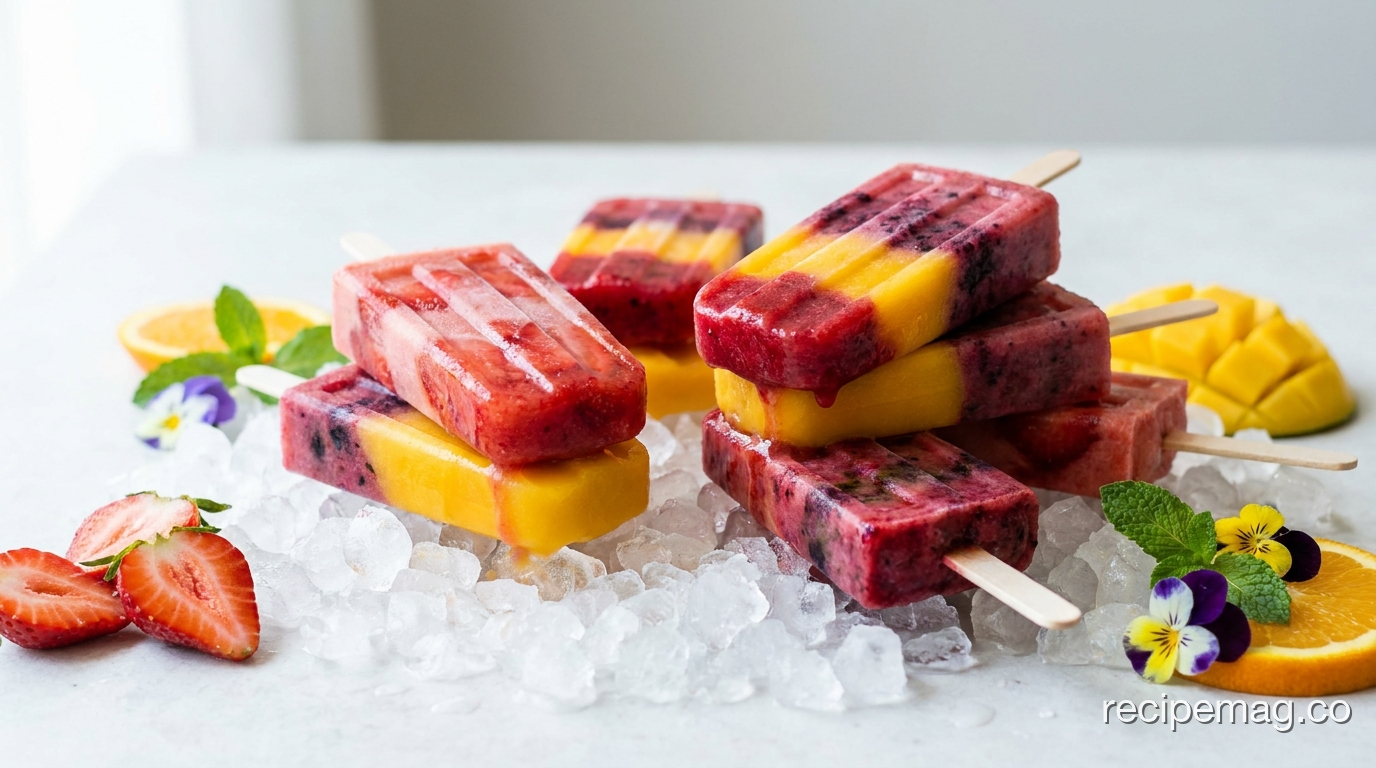
Homemade popsicles win because you control what goes in them. Store-bought ice pops can carry 15 to 20 grams of added sugar each, while a homemade fruit pop often has half that or less, according to the USDA Dietary Guidelines (2020). These nine recipes cover creamy, fruity, and grown-up options, and every one freezes in a standard mold with ingredients you already recognize. Kids get a fun treat. Adults get one without the guilt.
Key Takeaways
- Homemade popsicles cut added sugar dramatically, often to half of what packaged pops contain (USDA, 2020).
- Most pops freeze fully solid in 4 to 6 hours; overnight is safest for clean release.
- A quick warm-water dip loosens any mold in about 15 seconds.
- Fresh fruit, yogurt, and coconut milk form the base for nearly all nine recipes.
- Three of these recipes are adult-only, built with coffee, wine, or a splash of liqueur.
Why Are Homemade Popsicles Better Than Store-Bought?
You decide the sugar, the fruit, and the portion. The American Heart Association recommends children consume no more than 25 grams of added sugar per day, yet a single packaged ice pop can use most of that in one bite (American Heart Association, 2016). Homemade pops built on real fruit, yogurt, or coconut milk sidestep that problem. You also skip the artificial dyes and stabilizers that fill a lot of freezer-aisle brands.
There’s a cost angle too. A box of eight name-brand pops runs a few dollars, but a single batch of homemade pops made from a bag of frozen berries and a tub of yogurt costs less per pop and makes more. The math favors your kitchen.
[PERSONAL EXPERIENCE] We’ve made hundreds of batches testing recipes over the years, and the biggest lesson is simple: taste the mix before you freeze it. Freezing dulls sweetness noticeably, so a blend that tastes just right at room temperature will read flat once frozen. Nudge it slightly sweeter than you think it needs.
What You Need to Get Started
A basic popsicle mold and some wooden sticks handle every recipe below. Silicone molds release the easiest. No mold? Small paper cups with a stick pushed through foil work fine. A blender helps for the creamy and fruit-puree pops, but several recipes need nothing more than a bowl and a spoon.
The 9 Best Homemade Popsicle Recipes
These nine are grouped by type: fresh fruit pops first, creamy pops next, then three grown-up versions. Each lists the core ingredients and the freeze time. Mix and match sticks and molds however you like. Every recipe fills a standard six-pop mold.
1. Three-Ingredient Strawberry Banana Pops
Blend 2 cups strawberries, 1 ripe banana, and a splash of orange juice until smooth. Pour into molds and freeze for 5 hours. The banana adds natural creaminess without any dairy, and the fruit alone carries enough sweetness for most kids. This is the recipe to start with if you’ve never made pops before.
2. Watermelon Lime Ice Pops
Blend 3 cups seedless watermelon with the juice of one lime and freeze. Watermelon is over 90% water, per the USDA FoodData Central database (2023), so these freeze into a clean, refreshing ice rather than a creamy pop. Add a few tiny mint leaves to each mold before pouring for a farmers-market look.
3. Coconut Mango Cream Pops
Blend 1 can full-fat coconut milk, 1.5 cups mango, and 2 tablespoons honey. The coconut fat makes these luxuriously smooth, closer to ice cream than ice. Freeze for 6 hours. Mango and coconut is a classic tropical pairing, and this dairy-free version works for lactose-sensitive kids and adults alike.
4. Creamy Fudge Pops
Whisk 2 cups whole milk, 3 tablespoons cocoa powder, 3 tablespoons sugar, and a pinch of salt over low heat until dissolved, then cool and freeze. These taste like the classic chocolate fudge pops from childhood but with real cocoa. A tablespoon of cornstarch cooked into the milk gives them that dense, non-icy texture packaged fudge pops are known for.
5. Yogurt Berry Swirl Pops
Layer plain Greek yogurt sweetened with honey against a quick berry puree, then drag a skewer through for a marble effect. Greek yogurt delivers roughly 10 grams of protein per half cup, according to USDA FoodData Central (2023), turning these into a snack with real staying power. They’re a favorite for breakfast on hot mornings.
6. Orange Cream Pops
Blend 1 cup orange juice, 1 cup vanilla yogurt, and 1 teaspoon vanilla extract. These are the homemade answer to the creamsicle, with bright citrus against soft vanilla cream. Freeze for 5 hours. Use fresh-squeezed juice if you can, since the flavor comes through far more clearly than from concentrate.
7. Cold Brew Coffee Pops (Adults)
Mix 1.5 cups cold brew coffee with 1 cup sweetened condensed milk and freeze. These are for the grown-ups: a frozen iced-coffee treat with a genuine caffeine kick. The condensed milk keeps them creamy and prevents the coffee from freezing rock-hard. Serve one as an afternoon pick-me-up on a scorching day.
8. Rosé Wine and Berry Pops (Adults)
Combine 1.5 cups rosé, 1 cup mixed berries, and 2 tablespoons simple syrup, then freeze for a full 8 hours or longer. Alcohol lowers the freezing point, so these need extra time and never freeze fully solid. That slushy texture is the point. Keep them clearly separated from the kids’ pops in the freezer.
9. Espresso Amaretto Cream Pops (Adults)
Blend 1 cup cream, 1 cup milk, 2 shots espresso, 3 tablespoons sugar, and 1 tablespoon amaretto. The small pour of liqueur adds warmth without stopping the freeze. These lean dessert-forward, rich and boozy, and pair beautifully with a summer dinner party. Serve them in place of an after-dinner coffee and drink.
How Long Do Homemade Popsicles Take to Freeze?
Most fruit and cream pops freeze solid in 4 to 6 hours at 0°F, the temperature the FDA recommends for home freezers (FDA, 2023). Water-heavy pops like watermelon set fastest. Cream-based pops take a bit longer because fat slows the freeze. For clean, no-fuss release, overnight is always the safest bet, especially before a party.
Alcohol changes the rules. The rosé and amaretto pops need 8 hours minimum and still stay slightly soft, because alcohol lowers the freezing point. That’s expected. If they aren’t freezing at all after a full day, the alcohol ratio is too high; cut it with more juice or cream next time.
Getting Pops Out of the Mold Cleanly
Run the outside of the mold under warm (not hot) tap water for about 15 seconds, then pull the stick gently and steadily. Yanking snaps sticks and leaves the pop behind. If a pop resists, dip again for a few more seconds. Silicone molds release without any water trick at all, which is why they’re worth the small upgrade.
How Do You Make Popsicles Creamy Instead of Icy?
Fat is what makes a pop creamy. Food scientists at the University of Guelph note that fat interrupts the large ice crystals responsible for an icy, grainy mouthfeel (University of Guelph Food Science, 2021). That’s why coconut milk, whole milk, cream, and sweetened condensed milk all produce smoother pops than plain juice. If your pops come out icy, add fat.
[UNIQUE INSIGHT] There’s a cheaper trick most recipes skip: a single tablespoon of cornstarch cooked into a milk base does nearly as much for texture as extra cream. Whisk it in while heating the milk, let it thicken slightly, then cool and freeze. It binds free water so fewer ice crystals form. This is the secret behind the dense pull of the fudge pops above, and it costs almost nothing.
A spoon of honey or corn syrup helps too. Sugars interfere with ice crystal growth the same way fat does, which is why an all-fruit pop with no added sweetener freezes harder and icier than one with a little honey stirred in. Balance matters, though. Too much sugar and the pop won’t fully freeze.
Are Homemade Popsicles Healthy for Kids?
They can be, when built on whole fruit. The American Academy of Pediatrics advises limiting added sugars for children over age two, and homemade pops make that easy since you choose every ingredient (American Academy of Pediatrics, 2019). Whole-fruit pops also carry fiber, vitamin C, and potassium that dyed, syrup-based store pops simply don’t have.
They double as a hydration tool. On the hottest days, a watermelon or fruit pop gets water and electrolytes into a kid who’d rather play than stop for a drink. Sneaking a handful of spinach into a berry blend is another easy win; the color hides it and the berries carry the flavor.
Frequently Asked Questions About Homemade Popsicle Recipes
How long do homemade popsicles last in the freezer?
Homemade fruit and cream pops keep their best flavor and texture for about two to three weeks in a sealed freezer bag or airtight container. They stay safe to eat longer, since the FDA notes food held at 0°F stays safe indefinitely, but the texture turns icy and the flavor fades over time. Wrap each pop individually to prevent freezer burn and off flavors.
Can I make popsicles without a mold?
Yes. Small paper or plastic cups work well. Fill each cup, cover the top tightly with foil, then push a wooden stick through the center of the foil, which holds the stick upright while it freezes. Ice cube trays with toothpicks make bite-sized pops for toddlers. Once frozen, peel away the paper cup and serve.
Why do my popsicles freeze too hard to bite?
All-water and all-fruit pops freeze hardest because they lack fat and sugar to interrupt ice crystals. Add a tablespoon of honey, a splash of cream, or some coconut milk to soften the final texture. Letting a rock-hard pop sit at room temperature for two to three minutes before eating also helps considerably. Cream-based recipes rarely have this problem.
Can I use frozen fruit instead of fresh?
Absolutely, and it’s often cheaper and just as nutritious. A 2017 study in the Journal of Food Composition and Analysis found frozen produce matched or beat fresh store-bought produce in many nutrients because it’s frozen near harvest (JFCA, 2017). Let frozen fruit thaw slightly before blending so your blender handles it easily, or add a little extra liquid.
How do I keep alcohol popsicles from staying too soft?
Alcohol lowers the freezing point, so boozy pops never freeze fully solid. Keep the alcohol to about one-third of the total liquid or less, and balance the rest with juice, cream, or fruit puree. Freeze them for at least 8 hours, ideally overnight. If they’re still slushy, that’s normal and expected; that soft, granita-like texture is part of their appeal.
Start Freezing This Weekend
Homemade popsicles are one of the lowest-effort, highest-reward projects in a summer kitchen. You need a mold, a few sticks, and whatever fruit is ripe on your counter. The nine recipes above give you a starting point for every crowd, from toddlers to a backyard dinner party.
Start with the three-ingredient strawberry banana pops to get a feel for your mold and freeze time. Once you’ve nailed the release and the texture, branch into the creamy and grown-up versions. Taste every mix before it goes in the freezer, and remember to nudge it a touch sweeter than seems right.
The best part is how forgiving this all is. There’s no baking, no precise measuring, and almost nothing you can ruin. Blend, pour, freeze, and pull. Summer does the rest.
