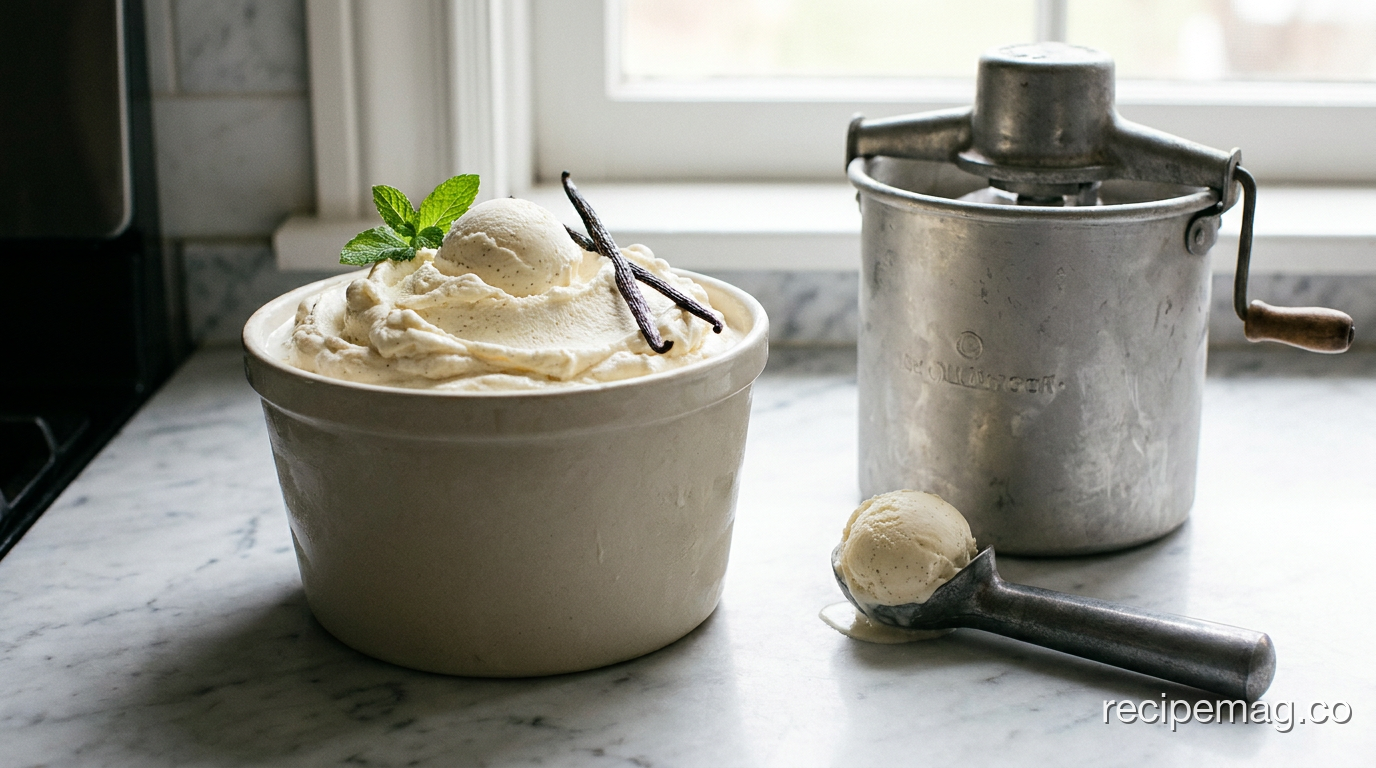
You can make ice cream at home two ways: churned in a machine for the smoothest texture, or no-churn with whipped cream and condensed milk for zero equipment. Both work. The secret to a creamy result, not an icy one, comes down to controlling fat, sugar, and ice crystal size. Americans eat about 4 gallons of ice cream per person each year, according to the International Dairy Foods Association (2023), and homemade versions let you control every ingredient that goes in.
Once you have the method down, work through 6 Best Ice Cream Recipes You Can Make Without a Machine.
Key Takeaways
- Churned ice cream needs a machine but delivers the smoothest, softest scoop.
- No-churn ice cream uses whipped heavy cream plus sweetened condensed milk, no equipment required.
- Fat content of at least 10% is what legally defines ice cream and what keeps it creamy. ([FDA](https://www.fda.gov), 2023)
- Smaller ice crystals mean smoother texture, so fast freezing and constant agitation matter most.
- Homemade ice cream keeps its best texture for about 2 weeks in the freezer.
What Actually Makes Ice Cream Creamy?
Creaminess is not luck. It’s the result of small ice crystals, and three ingredients control their size: fat, sugar, and air. The FDA defines ice cream as a frozen product with at least 10% milkfat by weight (FDA, 2023). That fat physically coats water molecules and blocks them from clumping into large, crunchy crystals as the mixture freezes.
Sugar does more than sweeten. It lowers the freezing point of the base, which keeps a portion of the mix soft rather than rock-solid. Too little sugar and you get a brick. Too much and it never firms up. The balance is why recipes call for such specific amounts.
Air is the third piece. Churning whips air into the base, a quality the industry calls overrun. That trapped air lightens the texture and makes the ice cream scoopable. Machine churning and hand-whipped no-churn methods both accomplish this in different ways.
[UNIQUE INSIGHT] Home cooks obsess over the flavor and ignore the freezing speed. Freezing speed matters more. The faster your base freezes, the smaller the crystals stay. That’s why a pre-frozen machine bowl and a shallow, chilled pan beat a warm bowl in a cold freezer every single time.
How Do You Make Ice Cream With a Machine?
A machine gives you the smoothest possible result because it churns and freezes at the same time. According to America’s Test Kitchen, a custard base heated to 170-175°F sets up richer and smoother thanks to egg yolk proteins (America’s Test Kitchen, 2022). The constant churning keeps crystals microscopic while the cold bowl freezes the mix fast.
The Base Ratio That Works
A reliable custard base uses 2 cups heavy cream, 1 cup whole milk, 3/4 cup sugar, 6 egg yolks, and a pinch of salt. This hits the fat and sugar targets that keep the texture soft. Vanilla, cocoa, coffee, or fruit purées fold into this same base without changing the ratios much.
Step by Step
- Freeze the bowl first. Most machine bowls need 18 to 24 hours in the freezer. If it sloshes when you shake it, it isn’t ready.
- Warm the milk and cream. Heat them with half the sugar until steaming, not boiling.
- Temper the yolks. Whisk yolks with the remaining sugar, then slowly whisk in the hot cream to avoid scrambling them.
- Cook to 170-175°F. Return everything to the pot and stir until it coats the back of a spoon.
- Strain and chill. Pour through a fine sieve, then refrigerate at least 4 hours or overnight. A cold base churns better.
- Churn 20 to 25 minutes. The base should look like soft-serve. Transfer to a chilled container and freeze 4 hours to firm up.
[PERSONAL EXPERIENCE] We’ve found that chilling the base overnight, not just for the minimum four hours, makes a noticeable difference. A base that starts at 40°F churns faster and freezes into a finer texture than one that starts lukewarm. The machine simply can’t keep up if the mix goes in warm.
Can You Make Ice Cream Without a Machine?
Yes, and no-churn ice cream is genuinely good. The method skips the machine by using two shortcuts: whipped cream provides the air, and sweetened condensed milk provides sugar plus a texture that stays scoopable. Serious Eats notes this pairing mimics churning because the condensed milk’s dissolved sugars lower the freezing point (Serious Eats, 2021).
The Two-Ingredient Base
- 2 cups cold heavy whipping cream
- 1 can (14 oz) sweetened condensed milk
- Pinch of salt and 1 teaspoon vanilla (optional but recommended)
Step by Step
- Whip the cream to stiff peaks. Cold cream and a cold bowl whip faster. Stop when the peaks hold their shape.
- Whisk the condensed milk. In a separate bowl, stir the condensed milk with salt and vanilla.
- Fold gently. Add a third of the whipped cream to the condensed milk to lighten it, then fold in the rest. Keep the air in.
- Add mix-ins. Swirl in cocoa, crushed cookies, fruit purée, or caramel now.
- Freeze in a loaf pan. Cover the surface with plastic wrap and freeze at least 6 hours, ideally overnight.
The trade-off is honesty: no-churn ice cream is a touch denser and sweeter than churned custard. But it takes ten minutes of active work and no gear. For a spontaneous summer craving, it’s hard to beat.
Why Is My Homemade Ice Cream So Icy?
Iciness almost always traces back to one cause: crystals grew too large. The University of Guelph’s dairy science program notes that ice crystals above 50 microns register as gritty on the tongue (University of Guelph, 2022). Slow freezing and temperature swings are the usual culprits behind that texture.
Common Fixes
- Freeze faster. Use a shallow metal pan, not a deep plastic tub. Metal conducts cold quickly and shrinks crystal size.
- Chill the base fully. A warm base freezes slowly and forms big crystals from the start.
- Don’t skimp on fat or sugar. Low-fat, low-sugar bases freeze harder and icier. The richness is functional.
- Keep the freezer cold and closed. Every thaw-refreeze cycle grows crystals. Store ice cream at the back, not the door.
- Add a spoonful of alcohol or corn syrup. Both lower the freezing point and keep the scoop softer without changing flavor much.
What Flavors and Mix-Ins Work Best?
Both base methods take flavor the same way. The key is adding solids that won’t freeze into hard shards or dilute the base with too much water. Fat-soluble and low-water additions blend in cleanest.
Reliable Flavor Directions
- Vanilla bean. Split a pod into the warm base, or use a tablespoon of good extract off the heat.
- Chocolate. Whisk 1/3 cup cocoa powder into the warm base, or melt 4 oz chopped chocolate in.
- Coffee. Steep 2 tablespoons coarse-ground coffee in the warm cream, then strain.
- Fruit. Cook fruit into a thick purée first to drive off water, then swirl it in. Raw fruit adds ice.
- Cookies and candy. Fold in at the very end so they stay in distinct pieces.
How Long Does Homemade Ice Cream Last?
Homemade ice cream is safe far longer than it tastes good. The USDA notes that ice cream stored at 0°F stays safe indefinitely, but quality declines after a few weeks as crystals grow (USDA FSIS, 2023). For the best texture, eat homemade batches within about two weeks.
- Use an airtight container. Press plastic wrap directly onto the surface to block freezer burn.
- Store it deep, not in the door. The door is the warmest, most temperature-variable spot.
- Let it soften before scooping. Five to ten minutes on the counter makes homemade ice cream scoop cleanly.
Frequently Asked Questions About Making Ice Cream at Home
Do I need an ice cream machine to make good ice cream?
No. A machine produces the smoothest, softest texture because it churns and freezes at once, but the no-churn method delivers excellent results with just whipped cream and sweetened condensed milk. No-churn is slightly denser and sweeter. For most home cooks craving ice cream on a hot afternoon, it’s more than good enough and requires no equipment at all.
Why does my ice cream freeze rock hard?
Rock-hard ice cream usually means too little sugar or fat, both of which lower the freezing point and keep the scoop soft. Homemade batches also freeze harder than store-bought because they contain less air and no stabilizers. Let it sit on the counter for 5 to 10 minutes before scooping. Adding a tablespoon of corn syrup or alcohol to the base helps too.
Can I make ice cream without eggs?
Yes. Philadelphia-style ice cream skips eggs entirely and uses only cream, milk, sugar, and flavoring. It tastes cleaner and brighter than custard-style but is slightly less rich. The no-churn method is also egg-free. Both are good options if you want to avoid cooking a custard or have an egg allergy in the house.
How do I keep mix-ins from sinking to the bottom?
Add mix-ins at the very end, once the base has thickened to soft-serve consistency in a machine or after folding no-churn cream together. A thicker base suspends chips, cookies, and fruit swirls in place rather than letting them sink. For heavier items like candy chunks, layer them between spoonfuls of ice cream as you pack the container.
Is homemade ice cream cheaper than store-bought?
It depends on the version. A basic no-churn batch made with cream and condensed milk often costs a little more than budget store brands but less than premium pints. The real value is control: you choose the fat level, sugar, and flavorings, and you avoid stabilizers and additives. For quality-per-dollar against premium ice cream, homemade usually wins.
Start With One Batch This Weekend
Making ice cream at home is far simpler than it looks. Pick your path: pull out the machine for the silkiest custard, or whip up a no-churn batch when you want a scoop by tonight. Both start with the same principle, keep the crystals small and the fat generous.
Begin with a plain vanilla base before you chase elaborate flavors. Once you understand how your freezer and your base behave together, every variation gets easier. Chocolate, coffee, and fruit swirls are just small tweaks on the foundation you’ll build this weekend.
Freeze one batch, taste it, and adjust. That’s the whole method. Summer rewards the effort more than any other season.
