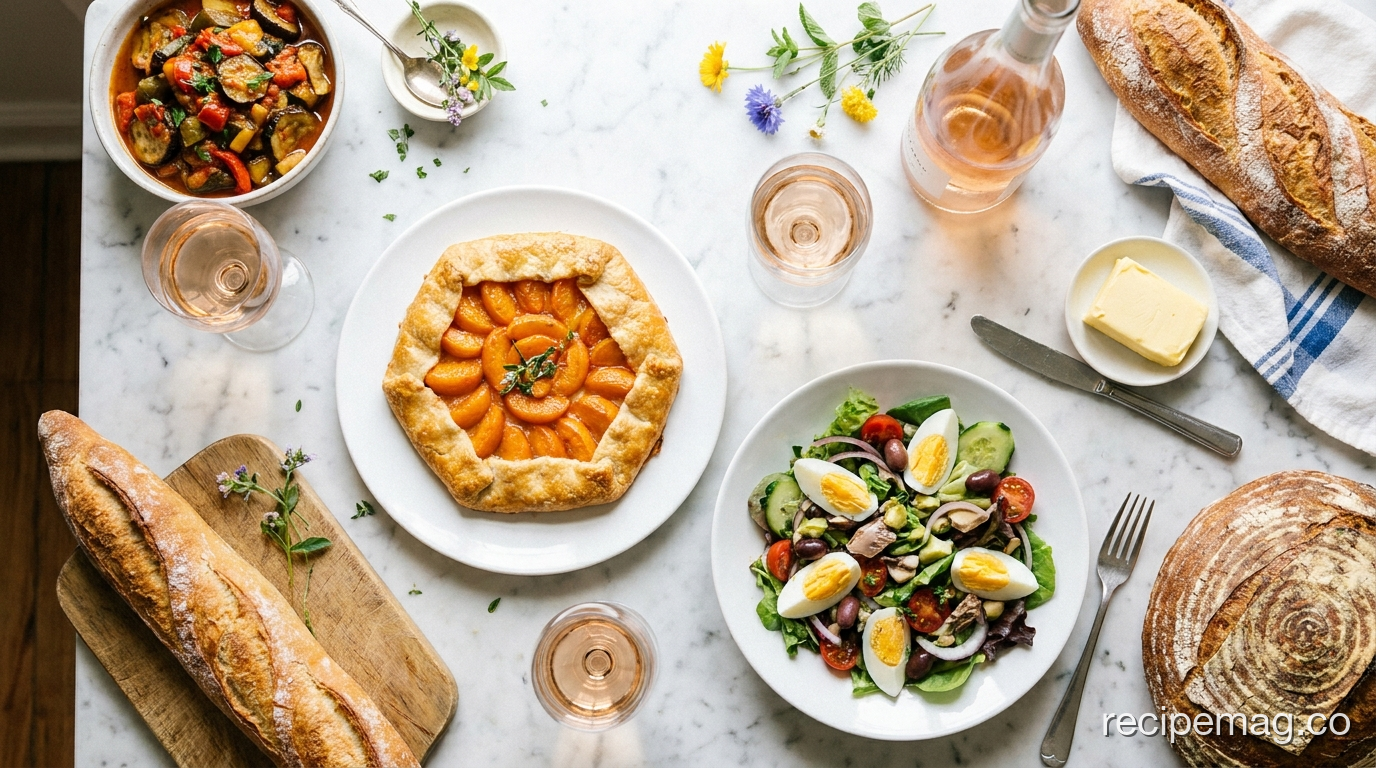
French summer cooking is easier than its reputation suggests. The best bistro dishes lean on ripe July produce, a good bottle of olive oil, and restraint rather than technique. That approach has deep roots: France operates more than 10,000 open-air food markets, and roughly 80% of French shoppers still buy fresh produce at a market at least occasionally (Business France, 2023). This roundup gathers nine easy French summer recipes built for warm nights, a Bastille Day table, and vegetables at their peak.
Key Takeaways
- French summer food is built on peak produce and simple technique, not complicated cheffy steps.
- Bastille Day (July 14) is the natural excuse for a Provençal-style spread of shareable dishes.
- Tomatoes, zucchini, eggplant, and stone fruit all hit their July and August peak, when flavor is highest (USDA AMS, 2023).
- Most dishes here are vegetable-forward, make-ahead friendly, and taste better at room temperature.
- A good olive oil and flaky salt do more for these recipes than any expensive equipment.
What Makes a Dish a French Summer Bistro Recipe?
A French summer bistro dish is defined by seasonality and simplicity more than by any single ingredient. Provençal cooking, the backbone of French summer food, sits inside the Mediterranean tradition that was again ranked the best overall diet for 2025 by a panel of experts (U.S. News & World Report, 2025). The through-line is vegetables at peak ripeness, good olive oil, herbs, and very little fuss.
Bistro cooking was born from thrift. The word itself describes small, affordable neighborhood restaurants serving hearty, unpretentious plates. In summer, that translates to dishes you can make ahead, serve at room temperature, and stretch across a long table.
Think of the format as a framework. A few vegetables, a protein or an egg, a sharp vinaigrette, and bread to catch the juices. You don’t need to be trained to cook this way. You need a good market and a little patience.
[PERSONAL EXPERIENCE] After cooking through a Provençal summer, we’ve found that the single biggest upgrade is buying tomatoes that were never refrigerated. Cold storage flattens their aroma permanently, and no amount of salt or oil brings it back. Room-temperature, vine-ripened tomatoes are the whole game.
Which Vegetables Should You Buy for a French Summer Menu?
Buy what’s peaking, because July is the richest month of the produce year. The USDA Agricultural Marketing Service places tomatoes, zucchini, eggplant, and peppers all at their U.S. peak across July and August (USDA AMS, 2023). These four vegetables carry most of the recipes below, and they cost less at peak than at any other time.
The core summer basket
- Tomatoes: The anchor. Buy a mix of ripe beefsteak, Roma, and cherry for salads, sauces, and tarts.
- Zucchini and summer squash: Firm, glossy, and heavy for their size. Smaller squash have fewer seeds and more flavor.
- Eggplant: Look for taut, shiny skin and a light feel. Heavy, dull eggplant is often bitter and seedy.
- Bell peppers: Red and yellow are sweeter than green and roast beautifully.
- Fresh herbs: Basil, thyme, and flat-leaf parsley. A bunch of each covers nearly everything here.
The 9 Easy French Summer Bistro Recipes
These nine dishes cover a full Bastille Day spread: a couple of vegetable centerpieces, a composed salad, something off the grill, and a light dessert. Each one is forgiving, most improve with a little resting time, and none demand special equipment. Start with two or three and build from there.
1. Ratatouille
The Provençal vegetable stew is the definitive French summer dish. Eggplant, zucchini, peppers, and tomatoes are cooked down with garlic and herbs into something greater than its parts. The authentic method cooks each vegetable separately before combining, which keeps every element distinct instead of collapsing into mush. Serve it warm, cold, or at room temperature, with bread or a fried egg on top.
2. Salade Niçoise
A composed salad from Nice built around tuna, green beans, potatoes, eggs, olives, and tomatoes. It’s a full meal on one platter and the ideal make-ahead centerpiece for a hot day. The components stay separate rather than tossed, so each bite is its own combination. A sharp Dijon vinaigrette pulls it together.
3. Pan Bagnat
Essentially a niçoise salad packed into a crusty round roll and pressed until the bread soaks up the vinaigrette and tomato juice. It’s the classic French beach sandwich, designed to be made hours ahead and eaten cold. Wrap it tight, weigh it down, and let it sit. The waiting is the recipe.
4. Grilled Herbes de Provence Chicken
Chicken marinated with olive oil, lemon, garlic, and the dried herb blend that defines the region. Thyme, rosemary, savory, and a little lavender give it the unmistakable scent of the south of France. Grill over medium heat and rest before slicing. It’s the easiest protein on this list and it feeds a crowd.
5. Tomato and Goat Cheese Tart
Puff pastry, a layer of soft goat cheese, and concentric rings of ripe summer tomatoes baked until the edges puff and brown. A scatter of thyme and a drizzle of olive oil finish it. Use store-bought puff pastry with no apology, and salt the tomatoes first to draw off excess water so the pastry stays crisp.
6. Soupe au Pistou
A summer vegetable soup finished with pistou, the French cousin of pesto made from basil, garlic, and olive oil (traditionally without pine nuts). Loaded with white beans, green beans, and zucchini, it’s served warm or at room temperature. The spoonful of pistou stirred in at the end is what makes it sing.
7. Ratatouille Tian
The photogenic cousin of ratatouille: thin slices of zucchini, eggplant, and tomato fanned in a spiral over a bed of caramelized onions, then baked. It’s the dish the Pixar film made famous. More assembly, less stirring, and a genuine showstopper for a Bastille Day table.
8. Clafoutis
A rustic baked dessert of summer fruit suspended in a custardy, flan-like batter. Cherries are traditional (and classically left unpitted for flavor), but apricots, plums, and berries all work. It comes together in one bowl, needs no special skill, and lands somewhere between a pancake and a flan.
9. Peaches in Rosé
Sliced ripe peaches macerated in chilled rosé with a little sugar and mint. That’s the entire recipe. It leans on peak stone fruit, which hits its stride in July and August (USDA AMS, 2023). Serve it cold in a glass, and drink the leftover wine.
[UNIQUE INSIGHT] Most of these dishes taste better a few hours after cooking, which is unusual for summer food. Ratatouille, pan bagnat, niçoise, and pistou all improve as they sit and the flavors settle. That makes a French summer menu one of the least stressful to host: you cook in the cool morning and serve in the warm evening, and the delay works in your favor.
How Do You Build a Bastille Day Menu Around These Recipes?
Build the menu around one or two centerpieces and let everything else be simple. Bastille Day falls on July 14, commemorating the 1789 storming of the Bastille, and it’s traditionally marked with communal, shared meals (Encyclopaedia Britannica, 2024). Its high-summer timing means the market does most of the work for you.
A relaxed spread for six
- To start: Tomato and goat cheese tart, sliced small, with rosé.
- The centerpiece: Salade niçoise on a big platter, plus a warm dish of ratatouille.
- Off the grill: Herbes de Provence chicken for anyone who wants a heartier plate.
- To finish: Clafoutis or peaches in rosé, both make-ahead.
- On the table throughout: A good baguette, salted butter, olives, and cornichons.
Cook the ratatouille and tart in the morning. Assemble the niçoise components and chill them. Grill the chicken just before serving. The only hot work near dinner is the grill, which keeps the kitchen cool and you out of it.
Frequently Asked Questions About French Summer Recipes
What is the most famous French summer dish?
Ratatouille is the most recognized French summer dish worldwide, helped in part by the 2007 Pixar film. It captures the essence of Provençal cooking: peak summer vegetables, olive oil, and herbs cooked simply. Salade niçoise and pan bagnat are close behind, both originating in Nice on the Mediterranean coast, where summer produce and seafood define the local table.
Do I need special ingredients for French summer cooking?
No. The most important ingredients are ripe, in-season vegetables and a good olive oil. Herbes de Provence, Dijon mustard, and quality olives help, and all are available in most supermarkets. French summer food was built by home cooks and small bistros working with what the local market offered that week, not with rare or expensive imports.
Can I make these recipes vegetarian or vegan?
Most already are, or convert easily. Ratatouille, ratatouille tian, and soupe au pistou are naturally vegan. Salade niçoise works without the tuna and eggs. The tomato tart can use a plant-based pastry and cheese. Provençal cooking is heavily vegetable-forward by tradition, so a fully vegetarian French summer menu requires almost no substitution.
What wine goes with a French summer menu?
Chilled rosé, especially from Provence, is the classic pairing and complements nearly everything here. Its acidity and light body cut through olive oil and vinaigrette without overwhelming delicate vegetables. A crisp white like Picpoul de Pinet or a light red served slightly cool also work well. Serve all of them colder than you think you should on a hot day.
How far ahead can I prepare these dishes?
Many improve when made ahead. Ratatouille, pan bagnat, and soupe au pistou can be made a full day in advance and often taste better for it. Assemble niçoise components and dress just before serving. The tart is best within a few hours of baking. Grilled chicken and fresh salads are the only elements worth timing close to the meal.
Bring the South of France to Your Table This July
French summer cooking rewards the cook who buys well and does little. The recipes above ask for ripe tomatoes, good oil, a handful of herbs, and the confidence to leave things alone. That’s the whole philosophy of a Provençal July.
Start with ratatouille and a niçoise salad. They’re the two dishes that best capture the season, they scale easily for a crowd, and both are forgiving of a first attempt. Add a tart or a clafoutis when you want to stretch the table into a proper Bastille Day feast.
Pour the rosé cold, put everything on the table at once, and let people help themselves. That, more than any single recipe, is how the French eat in summer.
