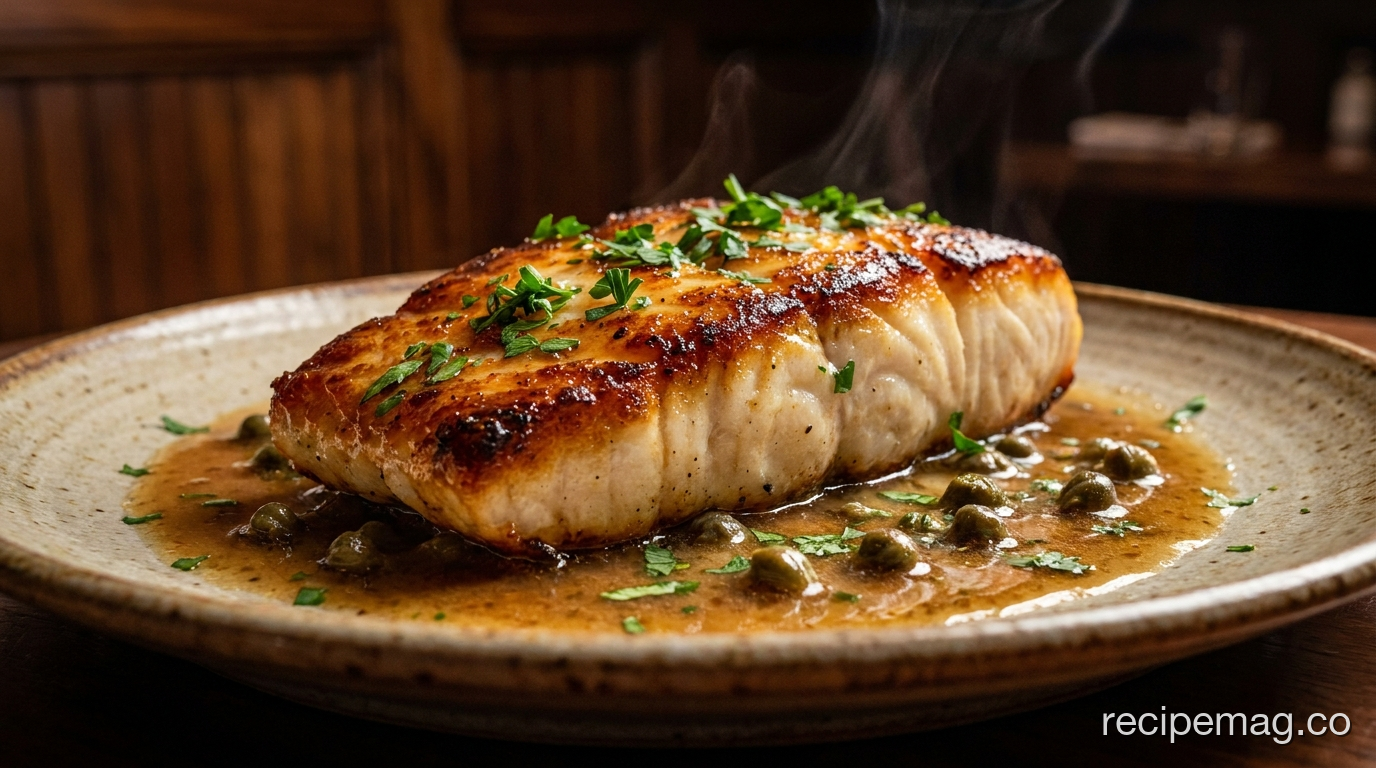
A great pan seared halibut recipe comes down to two things: a hot pan and a dry fish. This one delivers a deeply golden crust in about 8 minutes, then finishes with brown butter, lemon, and capers in the same skillet. Halibut is lean and firm, which makes it forgiving to sear but quick to overcook. The USDA lists halibut at roughly 19 grams of protein per 3-ounce cooked serving, so dinner is restaurant-quality and genuinely good for you. ([USDA FoodData Central](https://fdc.nal.usda.gov), 2023)
Key Takeaways
- Total time is under 20 minutes, with only 8 minutes of actual searing.
- Halibut delivers about 19 grams of protein per 3-ounce serving with very little fat. ([USDA FoodData Central](https://fdc.nal.usda.gov), 2023)
- A bone-dry surface is the single biggest factor in getting a crisp crust.
- Cook to an internal temperature of 130 to 135°F for moist, flaky fish.
- Brown butter, lemon, and capers come together in the same pan in 2 minutes.
Why Does This Pan Seared Halibut Recipe Work?
This recipe works because it respects halibut’s biggest weakness: it dries out fast. Halibut is one of the leanest white fish available, with less than 3 grams of fat per 3-ounce serving according to USDA data, which means there’s little fat to keep it juicy if you overcook it. ([USDA FoodData Central](https://fdc.nal.usda.gov), 2023) High heat and a short cook time solve that. You build a crust quickly, then pull the fish while the center is still tender.
The brown butter does the heavy lifting on flavor. When butter heats past the point where its water cooks off, the milk solids toast and turn nutty and golden. That transformation gives you a sauce that tastes far more complex than its three-minute effort suggests. Lemon brightens it. Capers add salty, briny pops that cut the richness.
[PERSONAL EXPERIENCE] We’ve cooked this dish dozens of times in our test kitchen, and the failure point is almost always the same: people move the fish too soon. Halibut releases from the pan on its own when the crust is ready. If it sticks, it isn’t done searing. Wait another 30 seconds and it lifts cleanly.
What Ingredients Do You Need?
Halibut prices have climbed in recent years as wild Pacific stocks tighten, with the NOAA Fisheries reporting that Pacific halibut remains a closely managed fishery with strict catch limits to protect long-term sustainability. ([NOAA Fisheries](https://www.fisheries.noaa.gov), 2023) That means you want to treat each fillet well. The good news is the supporting ingredients are pantry basics you likely already own.
For the Halibut
- 2 halibut fillets (6 oz each), about 1 inch thick, skin removed
- 1 tablespoon neutral oil (grapeseed, canola, or avocado)
- Kosher salt and freshly ground black pepper
For the Brown Butter Sauce
- 4 tablespoons unsalted butter
- 2 tablespoons capers, drained
- 2 tablespoons fresh lemon juice (about half a lemon)
- 1 tablespoon chopped fresh parsley
- Lemon wedges, for serving
Buy the thickest fillets you can find. A 1-inch fillet gives you a window to build a crust without the center overcooking. Thin pieces sear and overcook almost simultaneously, which leaves no room for error. Avocado oil is the best choice for the sear because its high smoke point handles the heat without burning.
How Do You Get a Crispy Sear on Halibut?
The crust comes down to moisture control and pan temperature. A wet fillet steams instead of searing, because the surface water has to evaporate before browning can begin. America’s Test Kitchen recommends patting fish completely dry and letting it sit uncovered before cooking, a step that meaningfully improves browning. ([America’s Test Kitchen](https://www.americastestkitchen.com), 2022) Dry fish, hot pan, and patience are the whole game here.
Step-by-Step Searing Instructions
- Dry the fish thoroughly. Press both sides of each fillet with paper towels until completely dry. Then let them sit uncovered at room temperature for 10 minutes. This is non-negotiable for a crisp crust.
- Season right before cooking. Salt and pepper both sides generously. Salting too early draws out moisture, so do this just before the fish hits the pan.
- Heat the pan properly. Add oil to a stainless steel or cast iron skillet over medium-high heat. Wait until the oil shimmers and just barely begins to smoke.
- Lay the fish down away from you. Place each fillet in the pan presentation-side down. Press gently for 5 seconds to ensure full contact, then leave it alone.
- Sear undisturbed for 4 minutes. Do not move, poke, or peek. The fish will release on its own when the crust forms. Forcing it early tears the crust.
- Flip once and finish. Turn the fillets and cook the second side for 2 to 3 minutes, until the internal temperature reaches 130 to 135°F. Transfer to a warm plate.
[UNIQUE INSIGHT] Most home cooks underheat the pan because they’re afraid of a smoke alarm. That fear costs them the crust. A properly hot pan should make the oil shimmer and ripple before the fish goes in. If your halibut sits there quietly without a vigorous sizzle, the pan is too cool and the fish is steaming, not searing.
How Do You Make the Brown Butter Sauce?
Brown butter, or beurre noisette, is one of the fastest high-impact techniques in cooking. The flavor change happens through the Maillard reaction, the same browning chemistry that gives seared meat and toasted bread their depth, as documented across food science literature. ([Serious Eats](https://www.seriouseats.com), 2021) In two minutes, plain butter becomes a nutty, golden sauce. Watch it closely, because it goes from browned to burnt in seconds.
Building the Sauce
- Lower the heat to medium. In the same pan you seared the fish, add the butter. The browned bits left behind add even more flavor.
- Swirl as it melts. The butter will foam, then quiet down. Keep swirling so the milk solids brown evenly rather than scorching in one spot.
- Watch for the color and smell. After about 2 minutes, the foam subsides and the solids turn golden brown with a nutty aroma. That’s your cue.
- Add capers and lemon off the heat. Pull the pan from the burner, then stir in the capers and lemon juice. It will sizzle. Stir in the parsley.
- Spoon over the fish immediately. Pour the warm sauce over the seared halibut and serve with lemon wedges on the side.
How Do You Know When Halibut Is Done?
Temperature is the only reliable test, not time. Halibut is fully cooked and safest at an internal temperature of 145°F according to USDA guidance, but most chefs pull it earlier at 130 to 135°F so carryover heat finishes it without drying it out. ([USDA Food Safety and Inspection Service](https://www.fsis.usda.gov), 2023) The fish keeps cooking for a minute or two off the heat, climbing those final degrees while it rests on the plate.
If you don’t have an instant-read thermometer, use the flake test. Slide a fork into the thickest part and twist gently. Properly cooked halibut separates into clean, opaque flakes with a slight translucence at the very center. If it resists and looks glassy throughout, give it another minute. If it falls apart into dry shreds, it’s overcooked.
Carryover cooking is the part people forget. A fillet pulled at 132°F will coast up to around 140°F as it rests. That’s why timing the rest matters as much as timing the sear. Plate the fish, build the sauce, and by the time you spoon it over, the halibut has finished cooking on its own.
What Should You Serve With Seared Halibut?
Halibut is mild and lean, so it pairs best with sides that add freshness or substance without overpowering it. Seafood consumption in the United States continues to grow, with the National Fisheries Institute reporting Americans ate about 20.5 pounds of seafood per person in a recent year, much of it at home. ([National Fisheries Institute](https://www.aboutseafood.com), 2023) These pairings turn a single fillet into a complete dinner.
- Roasted baby potatoes. Crispy, salty, and sturdy enough to soak up the extra brown butter sauce.
- Blistered green beans or asparagus. A quick high-heat vegetable echoes the sear on the fish and adds color.
- Lemon orzo or herbed rice. A light starch that carries the lemon-caper flavor without competing with it.
- Simple arugula salad. Peppery greens with a sharp vinaigrette cut the richness of the butter beautifully.
- Crusty bread. For the practical reason that you will not want to leave any sauce behind.
Pan-Seared Halibut with Brown Butter, Lemon, and Capers
Prep Time: 10 minutes | Cook Time: 8 minutes | Serves: 2
Ingredients
Halibut
- 2 halibut fillets (6 oz each), about 1 inch thick, skin removed
- 1 tablespoon neutral oil (grapeseed, canola, or avocado)
- Kosher salt and freshly ground black pepper
Brown Butter Sauce
- 4 tablespoons unsalted butter
- 2 tablespoons capers, drained
- 2 tablespoons fresh lemon juice
- 1 tablespoon chopped fresh parsley
- Lemon wedges, for serving
Instructions
- Pat the halibut completely dry with paper towels. Let it sit uncovered at room temperature for 10 minutes.
- Season both sides generously with salt and pepper just before cooking.
- Heat the oil in a stainless or cast iron skillet over medium-high until it shimmers and barely smokes.
- Lay the fillets in presentation-side down. Press gently for 5 seconds, then sear undisturbed for 4 minutes.
- Flip and cook 2 to 3 minutes more, until the internal temperature reaches 130 to 135°F. Transfer to a warm plate.
- Lower heat to medium. Add butter to the same pan and swirl for about 2 minutes until golden and nutty.
- Off the heat, stir in capers, lemon juice, and parsley. Spoon over the halibut and serve with lemon wedges.
Notes
- No thermometer? Use the flake test: properly cooked halibut separates into clean, opaque flakes.
- Halibut keeps cooking off the heat, so pull it a few degrees early to avoid drying it out.
- Swap halibut for cod, sea bass, or thick haddock fillets using the same method.
- Brown butter burns fast. Pull the pan the moment the milk solids turn golden and smell nutty.
Frequently Asked Questions About Pan-Seared Halibut
Should I cook halibut with the skin on or off?
Either works, but skin-off is simpler for this recipe since halibut skin is thick and often removed at the market. If you do have skin on, sear it skin-side down first for crispness, and add an extra minute to that side. For a clean brown butter finish, skinless fillets sit better in the sauce and absorb its flavor more evenly across the surface.
Why does my halibut stick to the pan?
Sticking almost always means two things: the fish wasn’t dry enough, or you moved it too soon. A wet surface bonds to hot metal, and a forming crust grips the pan until it’s ready. Pat the fillets bone-dry, heat the pan until the oil shimmers, and leave the fish alone. When the crust is set, it releases on its own without any prying.
Can I use frozen halibut for this recipe?
Yes, but thaw it completely first. Cook it from frozen and you’ll steam the outside before the center warms through. Thaw fillets overnight in the fridge, then pat them extremely dry, since frozen fish releases more water as it thaws. That extra moisture is the enemy of a good crust, so be thorough with the paper towels before the fish hits the pan.
What’s the best internal temperature for halibut?
The USDA recommends 145°F for fully cooked fish, but many cooks pull halibut at 130 to 135°F and let carryover heat finish it. ([USDA Food Safety and Inspection Service](https://www.fsis.usda.gov), 2023) This keeps the lean flesh moist and flaky rather than dry. If you’re serving guests who prefer fish fully cooked through, target the USDA 145°F mark and rest it briefly before plating.
Can I make this without a thermometer?
Absolutely. Use the flake test and the timing as your guide. A 1-inch fillet needs about 4 minutes on the first side and 2 to 3 on the second. Slide a fork into the thickest part and twist gently. When it separates into opaque flakes with just a hint of translucence at the center, it’s ready to come off the heat.
This pan seared halibut recipe proves that a special dinner doesn’t require special skills. Dry the fish, get the pan hot, sear without fidgeting, and finish with brown butter. The whole thing takes less time than ordering takeout, and it tastes like a coastal restaurant plate.
Once you’ve mastered the technique, the variations open up. Swap in cod or sea bass, trade the capers for olives, or add a handful of cherry tomatoes to the butter. The method stays the same. The crisp crust and the nutty sauce carry every version.
Make it once this week. You’ll find yourself reaching for that hot pan and a stick of butter long after the halibut is gone.
