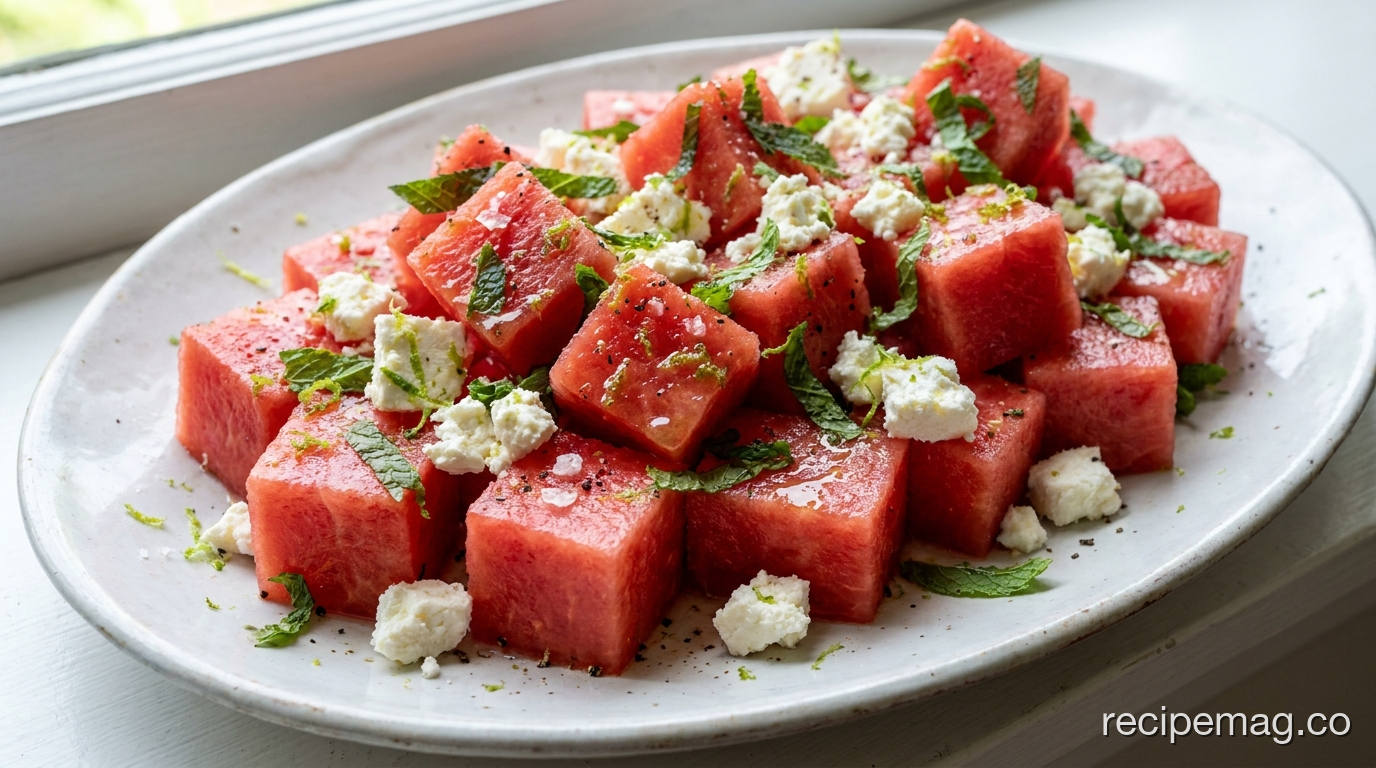
Watermelon feta mint salad is the easiest summer salad you can put on a table: just watermelon, feta, fresh mint, and lime, tossed cold and served right away. It hits every note at once, sweet, salty, herbal, and bright. Watermelon is roughly 92% water by weight, according to the USDA, which is exactly why it tastes so refreshing on a hot day. ([USDA FoodData Central](https://fdc.nal.usda.gov), 2023) Four ingredients, five minutes, zero cooking.
Key Takeaways
- Four ingredients, five minutes: watermelon, feta, mint, and lime, no cooking required.
- Watermelon is about 92% water (USDA, 2023), so serve it ice-cold for maximum refreshment.
- The sweet-salty contrast between watermelon and feta is the whole point of the dish.
- Dress and salt right before serving, never ahead, or the salad weeps and goes watery.
- Optional balsamic glaze or a drizzle of good olive oil takes it from simple to special.
Why Does Watermelon and Feta Taste So Good Together?
The magic here is contrast. Salt makes sweet taste sweeter, a well-documented effect in taste science: a small amount of sodium suppresses our perception of bitterness and pushes sweetness forward, which is why salty feta makes ripe watermelon taste even more like candy. ([Monell Chemical Senses Center](https://monell.org), 2022) Add cool mint and a squeeze of acidic lime, and you’ve balanced all four primary taste sensations on one fork.
Texture matters as much as taste. Watermelon is crisp and juicy. Feta is dense, creamy, and a little crumbly. That push-and-pull between the two keeps every bite interesting. Mint adds a cooling, aromatic lift that stops the salad from feeling one-note.
[UNIQUE INSIGHT] Most people assume more feta is better here. It isn’t. We’ve found that a roughly 4-to-1 ratio of watermelon to feta by volume lets the fruit stay the star while the cheese works as a salty accent. Tip the balance too far toward feta and the whole thing turns into a salty cheese plate with some melon in it.
What Ingredients Do You Need?
This is a genuinely four-ingredient recipe, and the quality of each one shows because there’s nowhere to hide. Watermelon is also a smart choice nutritionally: it’s one of the richest natural sources of lycopene, the same antioxidant found in tomatoes, and per the USDA it delivers all of that for roughly 46 calories per cup. ([USDA FoodData Central](https://fdc.nal.usda.gov), 2023) Buy the ripest melon you can find and don’t skimp on the feta.
The Four Core Ingredients
- Watermelon (about 6 cups, cubed) – seedless, ripe, and well-chilled. A creamy yellow field spot signals vine-ripened sweetness.
- Feta cheese (about 1.5 cups, cubed or crumbled) – block feta in brine, not pre-crumbled. Block feta is creamier and less dry.
- Fresh mint (about ½ cup leaves) – whole small leaves or roughly torn. Spearmint is the classic choice here.
- Lime (1 to 2) – for juice and a little zest. Lemon works too if that’s what you have.
Optional Finishers
- Balsamic glaze – a thin drizzle adds sweet-tart depth and looks beautiful against the pink.
- Extra-virgin olive oil – a peppery, fruity oil rounds out the salt and acid.
- Flaky sea salt – a pinch right before serving, only if your feta is on the mild side.
- Cracked black pepper – a few turns adds a gentle warm bite.
One note on the feta: buy it packed in brine if you can. Pre-crumbled feta is coated with anti-caking agents and dries out fast, which dulls the creamy contrast you want against the juicy melon. Cut a block into small cubes yourself in under a minute.
How Do You Make Watermelon Feta Mint Salad?
Assembly is the whole recipe, and timing is the only thing that matters. There’s no heat, no marinating, and no resting. According to America’s Test Kitchen, salting watermelon draws out its water within minutes through osmosis, which is why you dress this salad at the last possible moment rather than ahead of time. ([America’s Test Kitchen](https://www.americastestkitchen.com), 2022) Keep everything cold until you’re ready to serve.
Step-by-Step Assembly
- Chill everything first. Cold watermelon and cold feta make a more refreshing salad. Keep the melon in the fridge until the moment you cut it.
- Cube the watermelon. Cut into roughly 1-inch pieces. Pat the cubes gently with a paper towel if they look especially wet.
- Cube or crumble the feta. Small cubes hold their shape and give creamy pockets; crumbling spreads the salt more evenly. Your choice.
- Prep the mint. Use small leaves whole. Tear larger leaves just before adding so they don’t bruise and blacken.
- Combine gently. Add watermelon, feta, and mint to a wide bowl or platter. Toss with a light hand, just two or three turns.
- Dress right before serving. Squeeze lime juice over the top, add a little zest, and drizzle balsamic glaze or olive oil if using. Toss once more and serve immediately.
[PERSONAL EXPERIENCE] We’ve made this dozens of times for cookouts, and the single biggest mistake is dressing it early. A salad that looked perfect at noon turns into a pink puddle by the time guests arrive at one. Now we cube the melon and feta ahead, keep them in separate covered bowls in the fridge, and assemble at the table in about ninety seconds.
How Do You Keep It From Getting Watery?
Watery salad comes down to one thing: salt and acid pull liquid out of watermelon fast. The USDA notes watermelon is approximately 92% water, so even a small amount of weeping turns the bowl soupy quickly. ([USDA FoodData Central](https://fdc.nal.usda.gov), 2023) The fix is entirely about timing and a couple of simple habits, not any special technique.
- Dress at the last minute. Add lime, salt, and any glaze within a minute or two of serving, never before.
- Pat the cubes dry. A quick blot with paper towels after cubing removes surface juice that would otherwise pool.
- Keep components separate. Store cubed watermelon, feta, and mint in their own containers and combine just before eating.
- Serve on a platter, not a deep bowl. A wide, shallow surface keeps any released juice from collecting around the cubes.
- Drain leftovers. If you do have extra, tip off the accumulated liquid before refrigerating so it doesn’t keep softening.
One more habit worth adopting: salt the feta, not the melon, if you want extra seasoning. The brine on good feta usually provides enough salt on its own, so taste first. Letting the cheese carry the salt keeps the watermelon firm and crisp instead of slumping.
What Are the Best Variations?
This salad is a template you can riff on endlessly without losing its character. Mediterranean-style melon and cheese pairings have deep roots: the combination appears across Greek, Turkish, and Middle Eastern summer tables, where feta-style brined cheeses have been paired with fresh fruit for generations, per culinary food historians. ([Serious Eats](https://www.seriouseats.com), 2021) Start with the four core ingredients, then add one or two of these.
Add a Crunch or a Herb
- Cucumber. Adds extra cool crunch and stretches the salad for a crowd. Use seedless and slice thin.
- Fresh basil. Swap or combine with mint for a sweeter, more peppery aroma.
- Toasted pine nuts or pistachios. A small handful adds richness and texture against the soft feta.
- Red onion. Thinly shaved and briefly soaked in cold water to mellow the bite.
Change the Finish
- Balsamic glaze. The classic upgrade. Drizzle in thin lines for sweet-tart depth.
- Chili and lime. A pinch of Tajín or chili flakes turns it spicy-sweet, street-food style.
- Honey and olive oil. A light drizzle of each leans the salad sweeter and more luxurious.
- Lemon for lime. A simple swap that shifts the brightness slightly rounder and softer.
Watermelon Feta Mint Salad
Prep Time: 5 minutes | Cook Time: 0 minutes | Serves: 4 to 6
Ingredients
- 6 cups watermelon, cubed (about ½ small seedless melon), well-chilled
- 1½ cups feta cheese, cubed or crumbled (block feta in brine preferred)
- ½ cup fresh mint leaves, small leaves whole or larger ones torn
- 1 to 2 limes, for juice and a little zest
- Optional: balsamic glaze, extra-virgin olive oil, flaky sea salt, cracked black pepper
Instructions
- Keep the watermelon and feta chilled until just before serving.
- Cut the watermelon into 1-inch cubes. Pat gently with paper towels if very wet.
- Cube or crumble the feta into bite-size pieces.
- Add watermelon, feta, and mint leaves to a wide bowl or platter. Toss gently, just two or three turns.
- Right before serving, squeeze lime juice over the top and add a little zest. Drizzle with balsamic glaze or olive oil if using.
- Toss once more and serve immediately while cold.
Notes
- Dress only at the last minute. Lime and salt pull water out of watermelon fast, so early dressing makes it weep.
- Block feta in brine is creamier than pre-crumbled, which is coated with anti-caking agents and dries out.
- Taste before adding salt. The feta’s brine is often salty enough on its own.
- For a crowd, prep all components ahead, store separately, and assemble at the table in under two minutes.
Frequently Asked Questions About Watermelon Feta Salad
Can I make watermelon feta salad ahead of time?
You can prep the parts ahead, but don’t assemble until serving. Cube the watermelon and feta and store them in separate covered containers in the fridge for up to a day. Keep the mint whole and unwashed until the last minute. Combine everything and add the lime, salt, and any glaze within a couple of minutes of serving. Dressing early makes the salad weep and go watery fast.
What kind of feta should I use?
Buy block feta packed in brine rather than pre-crumbled. Block feta is creamier, holds its shape better when cubed, and tastes fresher. Pre-crumbled feta is coated with anti-caking agents that dry it out and dull the creamy contrast against the juicy melon. Greek or Bulgarian sheep’s-milk feta both work beautifully here. Cut a block into small cubes yourself; it takes under a minute.
Is watermelon feta salad healthy?
Yes, it’s light and nutrient-dense. Watermelon is about 92% water and roughly 46 calories per cup, and it’s one of the richest natural sources of the antioxidant lycopene, according to the USDA. ([USDA FoodData Central](https://fdc.nal.usda.gov), 2023) Feta adds protein and calcium along with sodium, so it’s reasonably balanced. Go easy on the feta and skip extra salt if you’re watching sodium, and the dish stays genuinely light.
Can I use a different herb instead of mint?
Absolutely. Fresh basil is the most popular alternative and brings a sweeter, peppery aroma that pairs well with watermelon. You can also combine mint and basil for more complexity. Cilantro works if you lean the salad toward a chili-lime, street-food direction. Whatever herb you choose, add it whole or torn at the last minute so it stays bright green and doesn’t bruise or blacken in the bowl.
What should I serve with watermelon feta salad?
It’s a natural partner for anything off the grill. Serve it alongside grilled chicken, lamb, shrimp, or fish, where its cool sweetness balances smoky, charred flavors. It also rounds out a Mediterranean spread with hummus, pita, and olives. For a light lunch, pair it with crusty bread and a chilled soup like gazpacho. The salad’s bright, salty-sweet profile cuts richness and refreshes the palate between bites.
Watermelon feta mint salad is proof that the best summer food barely qualifies as a recipe. Four cold ingredients, a squeeze of lime, and ninety seconds of assembly give you something that tastes far more impressive than the effort suggests.
Keep it simple and respect the timing. Buy a ripe melon, use good block feta, tear the mint fresh, and dress it only when you’re ready to eat. That last rule is the one that separates a crisp, vibrant salad from a watery bowl of disappointment.
Once you’ve made it plain, start playing. A drizzle of balsamic, a handful of pistachios, a pinch of chili. The four-ingredient base never lets you down, and there’s no faster way to bring summer to the table.
