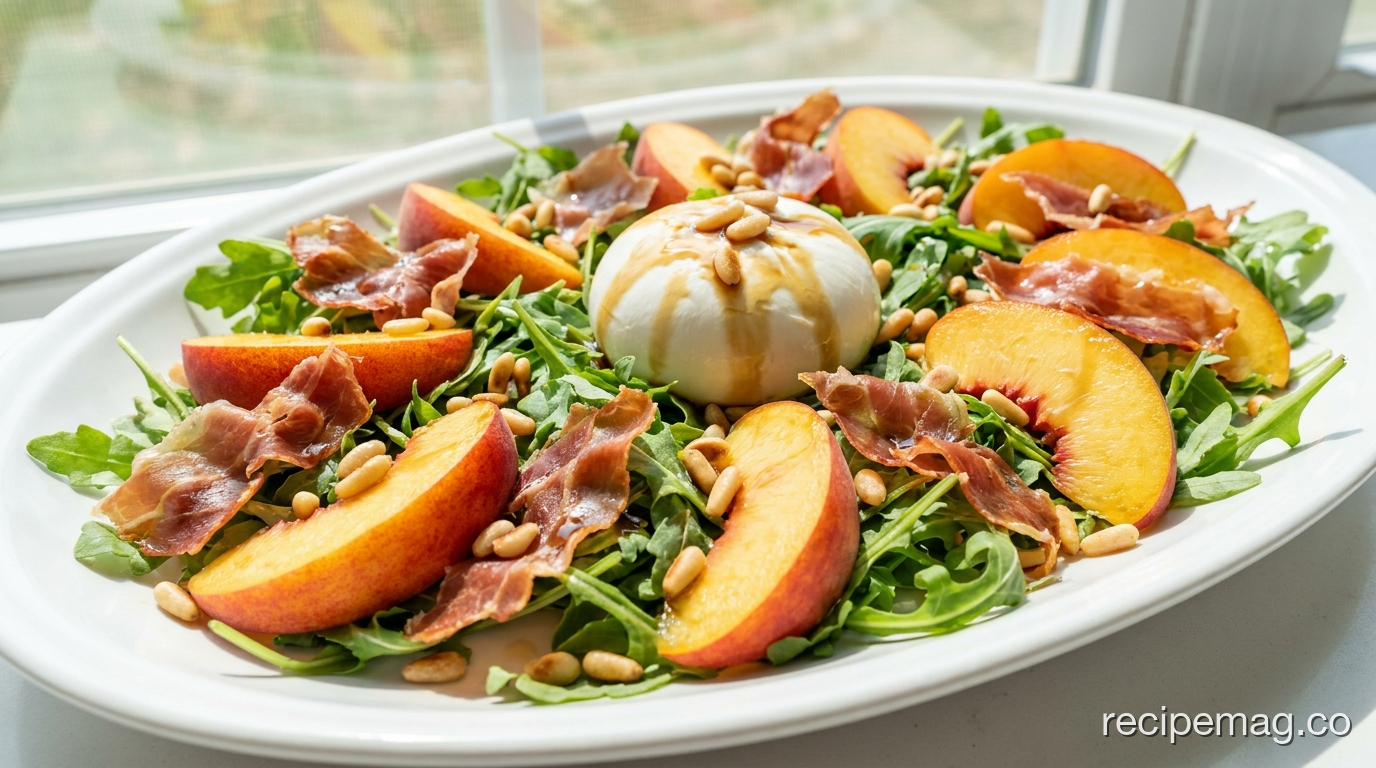
This peach and arugula salad with crispy prosciutto is a 20-minute summer plate that balances sweet, salty, and peppery in every bite. Ripe-but-firm peaches hold their shape against tender greens, the prosciutto crisps into salty shards, and a honey-balsamic vinaigrette pulls it all together. Add a torn ball of burrata and it becomes dinner. It serves four as a starter or two as a light main, and it comes together with almost no cooking.
Key Takeaways
- Ready in about 20 minutes, serving 4 as a starter or 2 as a light main.
- Ripe-but-firm peaches hold their slice and won’t turn to mush in the bowl.
- Crisping prosciutto in a dry pan or oven renders its fat and concentrates flavor; pork’s salt and umami pair naturally with sweet fruit. ([USDA FoodData Central](https://fdc.nal.usda.gov), 2023)
- Peppery arugula offsets sweet peach, so the salad never tips into dessert territory.
- A 3-ingredient honey-balsamic vinaigrette whisks together in under two minutes.
Why Peach and Arugula Work So Well Together
Sweet and bitter is one of the oldest flavor pairings in cooking, and this salad leans on it hard. Arugula’s peppery bite comes from glucosinolates, the same compounds that give mustard greens and watercress their kick, according to the University of California, Davis (UC Davis, 2022). That sharpness cuts the sugar in a ripe peach, so the two play against each other instead of competing.
Then the prosciutto adds the third note: salt. Salt amplifies sweetness and tames bitterness at the same time, which is why a few shards of crispy cured pork make both the peach and the arugula taste better. It’s a small amount of meat doing a lot of work.
Texture matters as much as flavor here. Soft peach, tender greens, and crunchy prosciutto give your mouth three different things to do. Add burrata and you get a fourth, that cool creamy pull against the warm salty crisp. Few salads cover this much range with so little effort.
What Kind of Peaches Should You Use?
Use ripe-but-firm peaches, not soft ones. A peach for slicing should yield slightly to gentle thumb pressure near the stem but still hold its edge under a knife. Peaches peak between mid-July and mid-August across most U.S. growing regions, with Georgia, South Carolina, and California leading production, per the USDA crop calendar (USDA NASS, 2023). Even in early summer, the right firmness matters more than perfect ripeness.
Freestone vs. Clingstone
Freestone peaches, where the pit pulls away cleanly from the flesh, are far easier to slice into neat wedges. Clingstone varieties grip the pit and tear as you cut. For a salad where presentation counts, reach for freestone whenever you can find it. Most peaches sold from mid-July onward are freestone.
If Your Peaches Are Underripe
Leave them on the counter at room temperature, stem-side down, for a day or two. Never refrigerate an underripe peach. Cold halts ripening and produces a mealy, dry texture that won’t recover. A paper bag speeds things up by trapping the fruit’s own ethylene gas. Nectarines work as a direct, fuzz-free substitute if peaches aren’t cooperating.
Ingredients
This is a short list, and quality shows in every component. With so few ingredients, each one carries weight. Prosciutto di Parma, the most recognized dry-cured Italian ham, is aged a minimum of 12 months and protected under EU origin rules, which is why genuine prosciutto tastes so deeply savory (European Commission, 2023). Buy it sliced thin at the deli counter rather than pre-packaged when you can.
For the Salad
- 4 cups baby arugula (about 4 oz), washed and dried
- 2 ripe-but-firm peaches, pitted and sliced into thin wedges
- 4 thin slices prosciutto (about 2 oz)
- 1 ball burrata (about 4 oz), optional but recommended
- 2 tablespoons toasted pine nuts or sliced almonds
- Fresh basil or mint leaves, a small handful, torn
- Flaky sea salt and cracked black pepper, to finish
For the Honey-Balsamic Vinaigrette
- 3 tablespoons extra-virgin olive oil
- 1 tablespoon balsamic vinegar
- 1 teaspoon honey
- 1 teaspoon Dijon mustard (optional, helps it emulsify)
- Salt and black pepper, to taste
Dry the arugula well after washing. Wet leaves dilute the vinaigrette and make it slide off instead of clinging. A salad spinner is ideal, but a clean kitchen towel works too. Damp greens are the most common reason a salad tastes flat.
How Do You Make Prosciutto Crispy?
Crisp prosciutto in a dry pan or a hot oven, with no added oil. The fat in the cured pork renders out and crisps the meat on its own, browning through the Maillard reaction that kicks in above roughly 300°F, per America’s Test Kitchen (America’s Test Kitchen, 2022). Either method gives you brittle, salty shards in just a few minutes. Pick whichever fits your kitchen.
Oven Method (Best for Even Crisping)
- Preheat your oven to 375°F (190°C). Line a sheet pan with parchment paper.
- Lay the prosciutto flat in a single layer, with no overlap. Overlapping slices steam instead of crisp.
- Bake for 8 to 12 minutes, until the slices look dry, darkened, and rippled. They crisp further as they cool, so pull them just before they look fully done.
- Cool on the pan for 5 minutes, then break into rough shards.
Dry-Pan Method (Faster)
- Heat a dry skillet over medium heat. No oil. The prosciutto provides its own fat.
- Add the slices in a single layer and cook for 2 to 3 minutes per side, pressing gently with a spatula.
- Watch closely. Cured pork is salty and thin, so it goes from crisp to burnt fast. Pull it the moment it stiffens and darkens.
- Drain on paper towel, then break into pieces once cool and brittle.
[PERSONAL EXPERIENCE] We’ve crisped prosciutto both ways dozens of times for this salad, and the oven wins for consistency. The dry pan is faster, but a crowded skillet leaves you with some pieces crisp and others chewy. The oven gives you one even batch every time, hands-off, while you slice the peaches.
How to Make the Honey-Balsamic Vinaigrette
This vinaigrette is built on a classic ratio: three parts oil to one part acid. That balance keeps the dressing rich without going sour, a proportion long recommended by culinary authorities as the default starting point for vinaigrettes (Serious Eats, 2021). The honey rounds the sharp balsamic, and the result echoes the salad’s own sweet-and-savory theme.
How to Make It
- Add balsamic vinegar, honey, and Dijon mustard to a small bowl or jar.
- Whisk (or shake) to combine. The mustard helps everything hold together.
- Drizzle in the olive oil slowly while whisking, until the dressing looks glossy and slightly thickened.
- Season with salt and pepper. Taste and adjust: more honey for sweeter, more balsamic for sharper.
Make it up to three days ahead and store it in a sealed jar in the fridge. It will separate as it sits, which is normal. Just shake it hard before dressing the salad. Bring it to room temperature first if the olive oil has clouded or thickened in the cold.
How to Assemble the Salad
Assemble this salad at the last minute and dress it lightly. Arugula is delicate, and once dressed it wilts within minutes, so timing is everything. Plating with intention also pays off: a 2020 study in the journal Appetite found that attractive arrangement raised taste ratings by up to 29% versus the same food plated carelessly (Appetite, Elsevier, 2020). Spread the components, don’t pile them.
Assembly Steps
- Dress the arugula first. Toss the greens with about two-thirds of the vinaigrette in a large bowl, just enough to coat. Over-dressing collapses the leaves.
- Spread the greens on a platter. A wide, shallow platter shows off the components better than a deep bowl.
- Arrange the peach slices over and through the greens. Let the color show rather than hiding the fruit.
- Tear the burrata (if using) into pieces and tuck it among the peaches. Drizzle the torn pockets with a little more vinaigrette.
- Scatter the crispy prosciutto shards last so they stay crunchy and don’t go soft against the wet greens.
- Finish with toasted pine nuts, torn basil or mint, flaky salt, cracked pepper, and the remaining vinaigrette.
[UNIQUE INSIGHT] The order is not optional. Adding prosciutto before the vinaigrette is the single fastest way to ruin the texture you worked to build. Those crisp shards turn limp the instant they sit in dressing. Crispy elements always go on last, after everything wet is already in place.
Variations and Substitutions
This salad is a template that flexes with what you have. The core idea, sweet fruit against peppery greens and salty pork, survives plenty of swaps. Stone fruit consumption climbs every summer as peaches, nectarines, and plums hit peak supply, and any of them slot into this recipe directly (USDA AMS, 2023). Treat the list below as a starting point.
Easy Swaps
- Fruit: Nectarines, plums, or figs all work in place of peaches. Figs are especially good with prosciutto and burrata.
- Greens: No arugula? Use watercress for the same peppery bite, or a mix of arugula and baby spinach for a milder version.
- Cheese: Swap burrata for fresh mozzarella, crumbled goat cheese, or shaved Parmesan. Each changes the character a little.
- Nuts: Toasted pine nuts, sliced almonds, chopped pistachios, or candied pecans all add crunch.
- Make it vegetarian: Skip the prosciutto and add an extra pinch of flaky salt plus a handful of crisped chickpeas for the salty crunch.
Make It a Full Meal
Add a grilled chicken breast, sliced and fanned over the top, or a few torn pieces of fresh mozzarella with a slice of crusty grilled bread on the side. Burrata plus bread alone turns this into a satisfying light dinner. For a heartier plate, serve it alongside a grain like farro or a piece of grilled salmon.
Tips for the Best Peach Arugula Salad
Small choices separate a good version of this salad from a great one. The biggest factor is moisture control: dressing applied to wet greens or crispy prosciutto placed too early are the two most common mistakes. Get those right and the rest is forgiving. Here’s what we’ve learned from making this peach arugula salad with prosciutto on repeat all summer.
- Dry the greens completely. Wet arugula dilutes the vinaigrette and makes it slide off. Spin or towel-dry thoroughly.
- Slice peaches just before serving. Cut peaches brown over time. A squeeze of lemon slows it if you must prep ahead.
- Crisp the prosciutto early, add it late. It crisps in minutes and keeps for an hour. Scatter it on right before serving.
- Dress lightly, then add more. You can always drizzle extra vinaigrette. You can’t un-dress a soggy salad.
- Salt at the end. Prosciutto and burrata are already salty. Taste before you reach for the flaky salt.
- Serve at room temperature. Cold dulls the flavor of both peach and burrata. Let them sit out 15 minutes before plating.
—
Peach and Arugula Salad with Crispy Prosciutto
Prep Time: 12 minutes | Cook Time: 10 minutes | Serves: 4 (starter) or 2 (light main)
Ingredients
Salad
- 4 cups baby arugula (about 4 oz), washed and dried
- 2 ripe-but-firm peaches, pitted and sliced into thin wedges
- 4 thin slices prosciutto (about 2 oz)
- 1 ball burrata (about 4 oz), optional
- 2 tablespoons toasted pine nuts or sliced almonds
- Small handful fresh basil or mint, torn
- Flaky sea salt and cracked black pepper, to finish
Honey-Balsamic Vinaigrette
- 3 tablespoons extra-virgin olive oil
- 1 tablespoon balsamic vinegar
- 1 teaspoon honey
- 1 teaspoon Dijon mustard (optional)
- Salt and black pepper, to taste
Instructions
- Preheat oven to 375°F (190°C). Line a sheet pan with parchment.
- Lay prosciutto flat in a single layer. Bake 8 to 12 minutes until dry and crisp. Cool on the pan, then break into shards. (Or crisp in a dry skillet over medium heat, 2 to 3 minutes per side.)
- Make the vinaigrette: whisk balsamic, honey, and Dijon together. Slowly whisk in the olive oil until glossy. Season with salt and pepper.
- Pit and slice the peaches into thin wedges just before assembling.
- Toss the arugula with about two-thirds of the vinaigrette and spread on a wide platter.
- Arrange peach slices over the greens. Tear burrata over the top, if using.
- Scatter the crispy prosciutto, pine nuts, and torn herbs. Finish with the remaining vinaigrette, flaky salt, and cracked pepper. Serve immediately.
Notes
- No arugula? Watercress gives the same peppery bite; baby spinach makes it milder.
- Swap peaches for nectarines, plums, or figs depending on the season.
- Make it vegetarian: skip the prosciutto and add crisped chickpeas for salty crunch.
- Vinaigrette keeps refrigerated for 3 days. Shake well and bring to room temperature before using.
—
Frequently Asked Questions About Peach Arugula Salad
Can I make this peach arugula salad ahead of time?
Partly. Crisp the prosciutto and whisk the vinaigrette up to a day ahead, and store them separately. But slice the peaches and dress the salad only right before serving. Arugula wilts within minutes once dressed, and cut peaches brown over time. Assembling at the last minute keeps the greens lively and the prosciutto crunchy, which is the whole point of the dish.
Do I have to use burrata?
No, burrata is optional, though it adds a creamy contrast that’s hard to beat. Fresh mozzarella works as a close substitute with a firmer texture. Crumbled goat cheese brings a tangy edge, and shaved Parmesan adds a salty, nutty note. You can also skip cheese entirely; the peach, arugula, and crispy prosciutto carry the salad on their own.
What can I use instead of prosciutto?
Crispy pancetta or thin-cut bacon both deliver the salty crunch, though they’re richer and need draining on paper towel. For a vegetarian version, crisp a handful of chickpeas in a hot oven with olive oil and salt, or add toasted nuts and an extra pinch of flaky salt. The goal is salt plus crunch, and several ingredients can fill that role.
Why is my arugula too bitter?
Mature arugula with large, dark leaves is far more peppery than baby arugula. If yours bites too hard, reach for baby arugula next time, or blend it half and half with spinach. The honey-balsamic vinaigrette also tames bitterness: its sweetness and acidity balance the sharp greens. A little extra honey in the dressing softens an aggressively peppery batch.
Can I grill the peaches instead?
Absolutely, and it’s delicious. Halve the peaches, brush the cut sides with a little oil, and grill over medium-high heat for 2 to 3 minutes per side until charred and softened. Let them cool slightly, then slice. Grilling caramelizes the surface sugars and adds smoky depth. Just use peaches that are firm, since soft fruit falls apart on the grates.
This peach and arugula salad with crispy prosciutto is summer on a plate: sweet, salty, peppery, and creamy all at once, with maybe ten minutes of actual cooking. The pieces are simple, but the contrast between them is what makes it memorable.
Start with ripe-but-firm peaches and dry your greens well. Crisp the prosciutto, whisk the vinaigrette, and hold back on dressing until the last second. Add burrata when you want it to be dinner, and skip the pork when you want it meat-free. The framework bends easily.
Make it once this week while peaches are good. Then make it again with figs, with nectarines, with whatever stone fruit the market hands you next.
