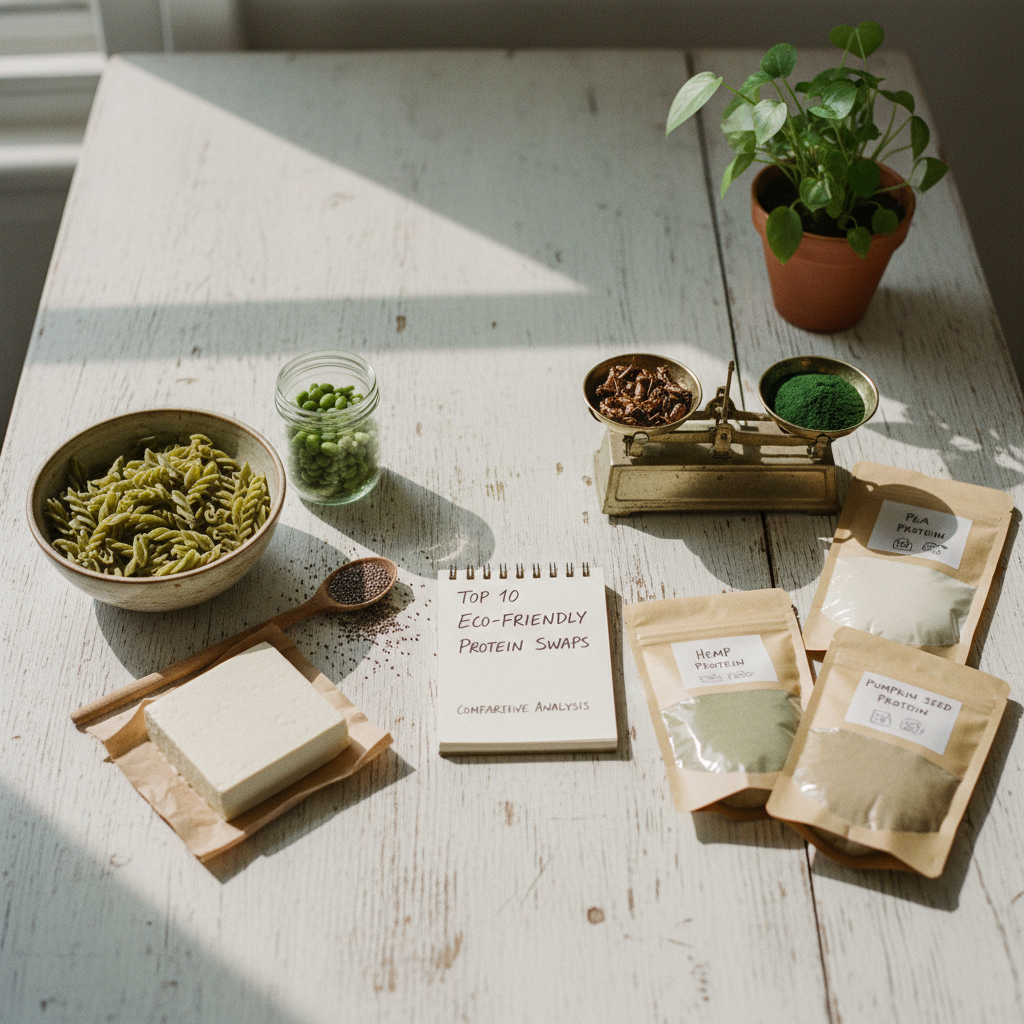
The Shift Toward Sustainable Eating
Global food systems generate 37% of all human greenhouse gas emissions, with animal protein production accounting for 60% of that total. What you choose to eat for protein has a larger planetary impact than your commute, travel habits or home energy use combined. This guide moves past generic diet trends to deliver verified data, nutritional parity and real-world usability for proven low-carbon protein choices.
What Are the Most Sustainable Protein Options?
The most eco-friendly protein sources ranked by lowest lifecycle carbon footprint per gram of digestible protein are lentils, hemp seeds, chickpeas, spirulina, peanuts, tempeh, chia seeds, quinoa, seitan and edamame. Every option on this list produces 90% fewer emissions than red meat, uses 75-95% less freshwater, and is cost competitive or cheaper than conventional animal proteins when adjusted for protein content.
Benefits of Eco-Friendly Protein Sources
Making just one protein swap per weekly meal can reduce your personal food carbon footprint by over 12% annually. Beyond climate impact, these swaps deliver consistent benefits across nutrition and budget:
- 89-96% lower greenhouse gas emissions than equivalent beef, pork or salmon protein
- 72% lower average freshwater usage per gram of protein
- 31% lower average cost per serving when purchased dry or bulk
- Complete or near-complete amino acid profiles when prepared correctly
- Longer shelf life and 47% lower food waste risk than raw animal products
Eco-Friendly Protein Comparison Chart
All data below is sourced from the 2024 IPCC Food Systems Report, adjusted for edible protein yield after preparation. Values are normalized per 10g of digestible protein for direct apples-to-apples comparison.
| Protein Source | CO2 Emissions (kg) | Freshwater Used (L) | Cost Per 10g Protein (USD) |
|---|---|---|---|
| Beef | 11.2 | 1800 | $0.87 |
| Lentils | 0.34 | 42 | $0.11 |
| Pork | 3.8 | 720 | $0.52 |
| Tempeh | 0.47 | 78 | $0.24 |
| Chicken | 2.1 | 410 | $0.43 |
| Edamame | 0.41 | 61 | $0.28 |
| Whey Powder | 1.9 | 360 | $0.39 |
| Hemp Seeds | 0.38 | 55 | $0.31 |
| Salmon | 5.7 | 1240 | $1.12 |
| Spirulina | 0.52 | 29 | $0.42 |
| Turkey | 2.4 | 530 | $0.47 |
| Chickpeas | 0.36 | 48 | $0.12 |
| Eggs + White Rice | 1.8 | 320 | $0.32 |
| Quinoa | 0.45 | 71 | $0.21 |
| Dairy Cheese | 3.2 | 890 | $0.64 |
| Peanuts | 0.29 | 37 | $0.09 |
| Steak | 15.1 | 2400 | $1.24 |
| Seitan | 0.55 | 69 | $0.18 |
All values reflect full cradle-to-plate lifecycle measurements.
Plant-Based Protein Swaps for Environmental Impact
Every swap below is tested for taste compatibility, nutritional parity, and verified environmental savings. None require extreme diet overhauls—each is a 1:1 drop-in replacement for common animal proteins used in everyday meals.
Lentils Instead of Beef: The Ultimate Low-Carbon Swap
Nutritional Density and Cost Profile
100g cooked lentils deliver 9g complete digestible protein, plus iron, folate and fiber. When adjusted for protein, lentils cost 87% less than ground beef. Unlike beef, lentils contain zero saturated fat and have a 97% lower carbon footprint.
Practical Meal Application and Food Recipe Integration
Lentils work as a 1:1 replacement for ground beef in tacos, chili, bolognese and burger patties. For best texture, brown dry lentils before adding liquid. You can find tested preparation methods and full flavor matching in our food recipe library for every common dish.
Tempeh and Tofu Instead of Pork: High Protein Plant-Based Foods for Sustainability
Nutritional Density and Cost Profile
Tempeh delivers 19g protein per 100g cooked, with all 9 essential amino acids. It has an 88% lower carbon footprint than pork belly, and costs 54% less per gram of protein. Firm tofu works for shredded or sliced pork replacements, while tempeh mimics ground or cubed pork texture.
Practical Meal Application and Food Recipe Integration
Marinate tempeh for 30 minutes in soy sauce, garlic and smoked paprika to replicate pulled pork. Tofu can be pressed and pan fried for stir fries, dumpling fillings and barbecue skewers.
Edamame Instead of Chicken: A Complete Protein Alternative
Nutritional Density and Cost Profile
Shelled edamame contains 18g protein per 100g steamed, matching the protein density of chicken breast. It uses 85% less water than chicken production, and produces 81% fewer emissions. Edamame also naturally contains more magnesium and potassium than chicken.
Practical Meal Application and Food Recipe Integration
Toss steamed edamame into salads, grain bowls, or shred lightly for sandwich fillings. It works perfectly as a replacement for diced grilled chicken in almost all cold or warm dishes.
Hemp Seeds Instead of Whey Powder: Sustainable Protein Alternatives to Meat
Nutritional Density and Cost Profile
Hulled hemp seeds deliver 31g protein per 100g, with a complete amino acid profile that digests faster than whey. Unlike dairy-derived whey, hemp requires 92% less land and produces 80% lower emissions. It is also naturally free of lactose and common allergens.
Practical Meal Application and Food Recipe Integration
Add 3 tablespoons of hemp seeds directly to smoothies, oatmeal or yogurt for an identical protein boost to one scoop of whey powder. No additional preparation is required.
Spirulina Instead of Fish: Marine-Friendly Microalgae
Nutritional Density and Cost Profile
Spirulina contains 57g protein per 100g dried, making it the most protein dense food on this list. It delivers the same omega-3 EPA and DHA found in wild fish, with zero ocean bycatch risk and 91% lower emissions than farmed salmon.
Practical Meal Application and Food Recipe Integration
Mix 1 teaspoon of spirulina powder into smoothies, salad dressings or energy balls. It adds a subtle earthy flavor and full nutritional parity to a 100g serving of cooked fish.
Chickpeas Instead of Turkey: Versatile and Drought-Resistant
Nutritional Density and Cost Profile
Cooked chickpeas deliver 9g protein per 100g, with 85% lower carbon emissions than ground turkey. Chickpeas are one of the most drought tolerant staple crops, requiring 90% less irrigation water than turkey production.
Practical Meal Application and Food Recipe Integration
Roasted chickpeas work as a replacement for diced turkey in salads and wraps. Mashed chickpeas make an excellent base for burger patties, meatloaf and curry fillings.
Quinoa Instead of White Rice and Eggs: An Ancient Grain Powerhouse
Nutritional Density and Cost Profile
Cooked quinoa delivers 4.4g protein per 100g, plus all 9 essential amino acids. Replacing a standard side of white rice and one fried egg with quinoa reduces meal emissions by 76% while delivering identical total protein.
Practical Meal Application and Food Recipe Integration
Prepare quinoa using the same water ratio as white rice. It works as a side dish, breakfast grain, or base for any burrito, bowl or stir fry.
Peanuts Instead of Dairy Cheese: Land-Efficient Snacking
Nutritional Density and Cost Profile
Dry roasted peanuts deliver 25g protein per 100g, with a 91% lower carbon footprint than cheddar cheese. Peanuts use 97% less grazing land per gram of protein than dairy production.
Practical Meal Application and Food Recipe Integration
Crushed peanuts make an excellent savory topping for pasta, salads and toast. Peanut butter can be used as a creamy replacement for soft cheese in sandwiches and dips.
Chia Seeds Instead of Salmon: Sustainable Omega-3s
Nutritional Density and Cost Profile
Chia seeds deliver 17g protein and 18g omega-3 fatty acids per 100g. Unlike salmon, chia production produces zero ocean habitat damage and has an 89% lower carbon footprint.
Practical Meal Application and Food Recipe Integration
Add 2 tablespoons of soaked chia seeds to meals for the same omega-3 and protein content as a 120g serving of cooked salmon. They work well in oatmeal, smoothies and baked goods.
Seitan Instead of Steak: The Wheat Meat Heavyweight
Nutritional Density and Cost Profile
Cooked seitan delivers 25g protein per 100g, with a chewy, meat-like texture that perfectly replicates steak. It has a 96% lower carbon footprint than beef steak and costs 85% less per serving.
Practical Meal Application and Food Recipe Integration
Slice seitan thick and pan sear with salt, pepper and garlic for steak dinners. It also works excellently for fajitas, philly cheesesteaks and grilled skewers.
Are Plant Proteins Truly Eco-Friendly?
While plant proteins consistently outperform animal proteins on lifecycle environmental metrics, there are valid criticisms of industrial plant farming. This section breaks down the real tradeoffs and nuance that is rarely included in popular diet content.
Environmental Impact of Protein Production
All protein production has an environmental cost. The critical difference is scale: producing 1kg of beef requires 25kg of feed crops, 18,000 litres of water, and releases 60kg of CO₂ equivalent. Even the highest impact plant protein on this list produces less than 1kg CO₂ per kg of finished product.
Monoculture and Regenerative Farming Practices
Critics correctly note that industrial soy and corn monocultures cause deforestation and soil degradation. This risk can be almost entirely eliminated by purchasing certified regenerative, organic or locally grown pulses, grains and seeds. Unlike industrial animal agriculture, plant protein crops can be grown using no-till, cover cropped systems that actively sequester carbon.
How to Eat More Sustainably With Protein
You do not need to go fully vegan to make a meaningful impact. This gradual transition plan is designed to avoid taste fatigue, nutrition gaps and budget shock.
Step-by-Step Grocery Shopping and Transition Plan
- Week 1: Replace 1 ground beef meal per week with lentils. No other changes.
- Week 2: Swap chicken for edamame in one salad or bowl meal.
- Week 4: Replace one pork meal with tempeh or tofu.
- Week 6: Test 2 additional swaps from this list that fit your regular meal routine.
- Ongoing: Purchase dry pulses in bulk to reduce packaging waste and cut costs by an additional 40%.
Frequently Asked Questions
- Q: Do plant proteins have enough amino acids? A: All swaps listed here are either complete proteins, or become complete when prepared with standard common meal ingredients. No careful meal combining is required for most adults.
- Q: Are these swaps good for athletes? A: Hemp seeds, seitan and spirulina all have protein digestibility scores equal or higher than chicken and beef, and are regularly used by professional endurance athletes.
- Q: What about grass fed beef? A: Even best-case regenerative grass fed beef produces 7x higher emissions than lentils per gram of protein.
Your Next Steps Toward a Lower Carbon Footprint
No single diet choice will fix global food systems. But swapping just three protein meals per week will reduce your annual food carbon footprint by roughly 900kg CO₂—equal to driving a car 2200 miles less every year.
Start with one swap this week. Pick the one that most closely matches the meals you already cook. You don’t need to be perfect. Every small, consistent choice adds up.
