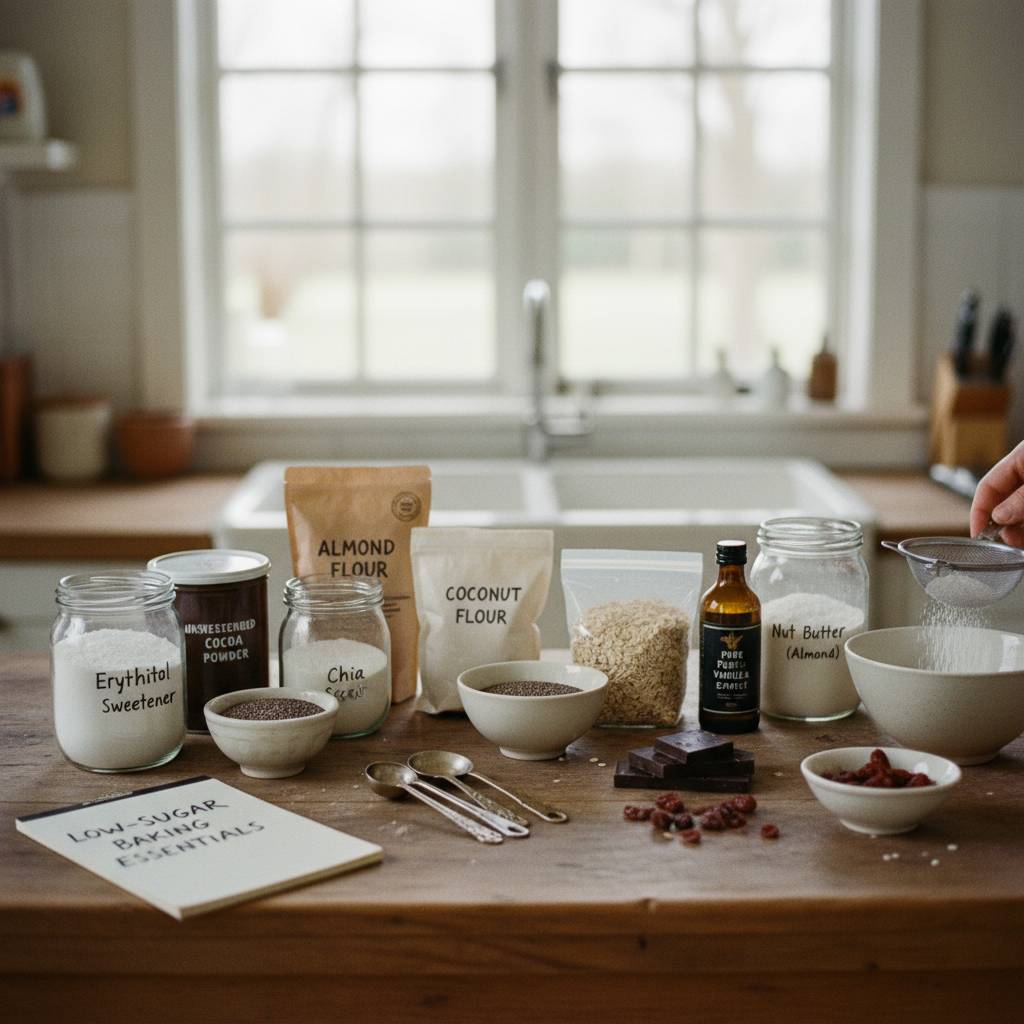
Low-sugar baking is a culinary art grounded in understanding how alternative ingredients interact to mimic the structure, moisture, and flavor profiles traditionally provided by sugar. By strategically replacing high-glycemic flours and sweeteners, bakers can create delicious treats that support stable blood sugar levels, aid in weight management, and promote overall metabolic health without sacrificing taste or texture. This guide provides a comprehensive overview of the essential ingredients for a successful low-sugar pantry, empowering you to bake healthier, more satisfying goods.
The Low-Sugar Baking Pantry Essentials: Direct Answer and Core Summary
Stocking a low-sugar baking pantry requires a curated selection of ingredients designed to replace traditional flour and sugar while maintaining the integrity of your baked goods. The essentials include almond flour and coconut flour for low-carb bases, erythritol, monk fruit sweetener, and allulose as sugar substitutes, xanthan gum for binding, grass-fed butter or coconut oil for moisture, and unsweetened applesauce, sugar-free dark chocolate chips, and pure vanilla extract for flavor and texture enhancement. These staples collectively enable the creation of delectable, healthier alternatives to classic high-sugar recipes.
To successfully navigate low-sugar baking, keep these golden rules in mind, which emphasize understanding ingredient properties and strategic substitutions.
Key Takeaways: The Golden Rules of Sugar-Free Baking
- Understand Absorption: Low-carb flours absorb liquids differently; adjust recipes accordingly.
- Balance Sweeteners: Combine sweeteners for optimal taste, texture, and to avoid aftertastes.
- Embrace Binders: Xanthan gum or psyllium husk are crucial for structure in gluten-free baking.
- Prioritize Moisture: Healthy fats and moisture-rich ingredients prevent dry, crumbly results.
- Flavor is Key: Use extracts, spices, and unsweetened add-ins to enhance perceived sweetness.
Complete Low Sugar Baking Ingredients List: Quick Reference Table
| Ingredient | Category | Key Benefit | Common Use |
|---|---|---|---|
| Almond Flour | Low-Carb Flour | Versatile, tender texture, high protein | Cakes, cookies, muffins, pie crusts |
| Coconut Flour | Low-Carb Flour | High fiber, very absorbent, unique flavor | Muffins, quick breads, thickens sauces |
| Erythritol | Sugar Substitute | Bulking agent, no aftertaste, low glycemic | Cookies, cakes, frostings, general sweetening |
| Monk Fruit Sweetener | Sugar Substitute | Zero-calorie, highly concentrated, natural | Small amounts for intense sweetness, often blended |
| Allulose | Sugar Substitute | Browns like sugar, adds softness, low glycemic | Chewy cookies, caramels, browning desserts |
| Xanthan Gum | Binder/Thickener | Replaces gluten, adds elasticity | Breads, cakes, cookies, prevents crumbling |
| Grass-Fed Butter/Coconut Oil | Healthy Fats | Richness, moisture, flavor | All baked goods, fat replacement |
| Unsweetened Applesauce | Moisture/Sweetener | Natural moisture, slight sweetness, fat repl. | Muffins, quick breads, cakes |
| Sugar-Free Dark Choc Chips | Flavor Enhancer | Rich chocolate flavor, keto-friendly | Cookies, brownies, energy bites |
| Pure Vanilla Extract | Flavor Enhancer | Enhances perceived sweetness, aromatic | Universal in almost all baked goods |
Guide to Low Glycemic Baking Ingredients: Essential Flours
Choosing the right flour is foundational to successful low-sugar baking. These alternatives dramatically reduce carbohydrate content and glycemic impact compared to traditional wheat flour, but they require a different approach due to their unique absorption and binding properties. Understanding their individual characteristics is key to achieving desirable textures and flavors.
Among the essential low-glycemic flours, almond flour stands out as a highly versatile option, forming the base for many delicious low-carb treats.
Almond Flour: The Versatile Low-Carb Base
- Almond flour*, made from finely ground blanched almonds, is a cornerstone of low-carb and gluten-free baking. It offers a delicate, slightly nutty flavor and a tender crumb, making it ideal for a wide range of recipes. Its high fat content contributes to moisture and richness, while its low carbohydrate profile helps maintain stable blood sugar.
Coconut Flour: The High-Absorbency Alternative
- Coconut flour*, derived from dried and defatted coconut meat, is exceptionally high in fiber and protein, and incredibly absorbent. This unique property means a little goes a very long way, often requiring significantly more liquid in recipes. It imparts a subtle coconut flavor that complements many sweet dishes.
Almond Flour vs Coconut Flour Low Carb Baking: A Comparative Analysis
While both are excellent low-carb flours, almond flour and coconut flour are not interchangeable without significant recipe adjustments.
- Texture & Flavor: Almond flour provides a finer, more tender crumb and a mild nutty taste. Coconut flour yields a denser texture and a distinct, tropical flavor.
- Absorption: Almond flour is less absorbent, behaving somewhat more like traditional flour. Coconut flour is a liquid sponge, requiring substantial hydration.
- Substitution: You cannot substitute them 1:1. Recipes specifically developed for one flour should be followed closely, or careful adjustments made when experimenting.
- Nutritional Profile: Almond flour is higher in fat and calories, while coconut flour is higher in fiber.
Best Sugar Substitutes for Baking Recipes
Replacing sugar in baking is perhaps the most challenging aspect of creating low-sugar treats, as sugar provides more than just sweetness. It contributes to bulk, moisture, browning, and texture. Modern sugar substitutes have evolved to address these complexities, offering various solutions for different baking needs.
When it comes to replacing sugar’s sweetness and bulk, erythritol is a primary choice, offering a clean taste and good baking properties.
Erythritol: Achieving the Perfect Texture
- Erythritol* is a sugar alcohol that is about 70% as sweet as sugar but contains virtually no calories or net carbs. It’s a popular choice for low-sugar baking because it provides bulk, similar to sugar, and bakes well. It has a clean taste with no noticeable aftertaste for most people, though it can sometimes create a cooling sensation.
How to Use Erythritol in Baked Goods Effectively
- Grind for Smoothness: For frostings and delicate baked goods, grind granular erythritol into a powder using a coffee grinder to prevent a gritty texture.
- Combine for Best Results: Often blended with other high-intensity sweeteners like monk fruit or stevia to achieve optimal sweetness without using excessive amounts, which can lead to crystallization.
- Watch for Crystallization: In recipes with high concentrations, erythritol can re-crystallize upon cooling. Combining it with liquid sweeteners or allulose can help mitigate this.
- Substitution: Use 1.25 to 1.3 times the amount of erythritol for every 1 cup of sugar called for in a recipe, adjusting for desired sweetness.
Monk Fruit Sweetener: Natural and Zero-Calorie
- Monk fruit sweetener* is a natural, zero-calorie sweetener derived from monk fruit. It is incredibly potent, often 150-250 times sweeter than sugar, and usually comes blended with erythritol or other bulking agents to make it easier to measure and use in baking. It offers a clean sweetness without the bitter aftertaste associated with some other high-intensity sweeteners.
Allulose: The Secret to Caramelization and Softness
- Allulose is a rare sugar that tastes like sugar but has only 1/10th the calories and does not raise blood sugar. Its unique advantage in baking is its ability to caramelize and brown* like traditional sugar, which most other sugar substitutes cannot do. It also contributes to a soft, moist texture, making it excellent for chewy cookies and soft cakes.
- Usage Tip: Allulose is about 70% as sweet as sugar, so use slightly more than sugar for equivalent sweetness. It’s particularly effective in recipes where browning and chewiness are desired.
Essential Keto Baking Ingredients: Binders and Fats
In low-carb and keto baking, where gluten is absent and moisture management is crucial, specific binders and fats play a critical role in achieving the desired structure, texture, and richness. These ingredients compensate for the properties typically provided by gluten and sugar.
To achieve the right structure and texture in gluten-free, low-carb baking, binders like xanthan gum are indispensable.
Xanthan Gum: Replacing Gluten in Low-Carb Doughs
- Xanthan gum* is a powerful polysaccharide commonly used as a thickener and stabilizer. In low-carb baking, it’s indispensable for mimicking the elasticity and binding properties of gluten, preventing baked goods from becoming crumbly or falling apart. Only tiny amounts are needed to achieve significant results.
- Usage Tip: For every cup of low-carb flour, use about 1/4 to 1/2 teaspoon of xanthan gum. Too much can result in a gummy texture. Add it directly to your dry ingredients.
Grass-Fed Butter and Coconut Oil: Essential Moisture
Healthy fats are vital in low-sugar baking, contributing moisture, richness, and flavor that sugar traditionally provides.
- Grass-Fed Butter: Offers a rich, creamy flavor and helps create tender, flaky textures. Its saturated fat content provides structure and satiety. Opt for grass-fed for higher nutrient content.
- Coconut Oil: A versatile plant-based fat that can be used in its solid or liquid form, depending on the recipe. It adds a subtle coconut flavor (refined coconut oil has a neutral flavor) and is excellent for vegan low-sugar baking. Both fats are crucial for ensuring your low-carb treats are moist and delicious.
Sugar-Free Baking Pantry Essentials: Flavor and Texture Enhancers
Beyond the core flours, sweeteners, and binders, certain ingredients elevate the flavor profile and enhance the texture of low-sugar baked goods, making them truly satisfying. These enhancers are key to creating treats that don’t feel “diet.”
Beyond the core structural ingredients, certain flavor and texture enhancers are crucial for making low-sugar baked goods truly enjoyable and satisfying.
Unsweetened Applesauce: Natural Moisture Without the Glycemic Spike
- Unsweetened applesauce* is a fantastic addition for adding natural moisture and a touch of subtle sweetness without significantly impacting blood sugar levels. It can often replace some of the fat in a recipe, contributing to a lighter texture while keeping baked goods tender.
- Usage Tip: Use unsweetened varieties to control the sugar content. It works particularly well in muffins, quick breads, and cakes.
Sugar-Free Dark Chocolate Chips and Cocoa Powder
For chocolate lovers, these are non-negotiable.
- Sugar-Free Dark Chocolate Chips: Sweetened with erythritol or stevia, these provide intense chocolate flavor without the sugar. Look for brands with high cocoa percentages.
- Unsweetened Cocoa Powder: Essential for rich chocolate flavor in brownies, cakes, and hot cocoa. It’s naturally low-carb and sugar-free, offering deep flavor without any added sweetness.
Pure Vanilla Extract: Enhancing Perceived Sweetness naturally
- Pure vanilla extract is a universal flavor enhancer in baking. Its warm, aromatic notes have a remarkable ability to deepen and round out other flavors, often making baked goods taste* sweeter than they actually are. A high-quality vanilla extract is a small but mighty investment in your low-sugar baking success.
- Usage Tip: Don’t skimp on good quality vanilla. It can significantly impact the overall flavor perception of your sugar-free treats.
Expert Analysis: The Chemistry of Low-Sugar Baking Substitutions
The art of low-sugar baking lies in understanding the intricate chemistry behind traditional ingredients and how to replicate their functions with healthier alternatives. Sugar, for instance, is not merely a sweetener; it provides bulk, tenderizes gluten (or protein networks in low-carb flours), retains moisture, and aids in browning through the Maillard reaction. When we remove sugar, we must address each of these roles. Low-carb flours like almond and coconut require more liquid due to their absorbency and often need binders like xanthan gum to compensate for the lack of gluten’s elastic network. Sweeteners like erythritol provide bulk but lack the browning and moisture-retaining properties of sugar, which is where allulose shines by offering caramelization.
Understanding the chemical properties of ingredients is key, and a closer look at macronutrient profiles and substitution ratios further illuminates the science of low-sugar baking.
Data Breakdown: Macronutrient Profiles and Exact Substitution Ratios
Understanding the macronutrient impact and proper substitution ratios is crucial for consistent results in low-sugar baking.
| Ingredient Type | Macronutrient Impact (per 100g) | Typical Substitution Ratio (vs. 1 cup sugar) | Key Functional Difference |
|---|---|---|---|
| Granulated Sugar | 387 kcal, 100g Carbs | 1:1 (base for comparison) | Bulk, sweetness, moisture, browning |
| Erythritol | 20 kcal, 0g Net Carbs | 1.25 – 1.3 cups | Bulk, sweetness (70%), no browning |
| Allulose | 20 kcal, 0g Net Carbs | 1.3 – 1.4 cups | Bulk, sweetness (70%), browning, softness |
| Monk Fruit (Pure) | 0 kcal, 0g Net Carbs | Tiny pinch (highly concentrated) | Intense sweetness, no bulk |
| Almond Flour | 579 kcal, 11g Net Carbs | 1:1 by volume (adjust liquid/binder) | Structure, moisture, protein |
| Coconut Flour | 467 kcal, 21g Net Carbs | 1/4 – 1/3 cup (increase liquid significantly) | Absorbency, fiber, structure |
How to Stock a Low Carb Baking Pantry on a Budget
Building a low-carb baking pantry doesn’t have to break the bank. Strategic shopping and smart storage can make healthy baking accessible to everyone.
- Buy in Bulk: Flours like almond and coconut, and sweeteners like erythritol, are often more cost-effective when purchased in larger quantities from online retailers or warehouse stores.
- Prioritize Essentials: Start with the absolute core ingredients needed for your favorite recipes, then gradually expand your pantry.
- Look for Sales: Keep an eye out for discounts at local health food stores or online.
- DIY Where Possible: Making your own almond flour from blanched almonds can sometimes be cheaper, though labor-intensive.
- Proper Storage: Store nuts, seeds, and flours in airtight containers in the refrigerator or freezer to extend shelf life and prevent spoilage, saving you money in the long run.
Frequently Asked Questions About Healthy Low Sugar Baking Staples
To help solidify your understanding, here are answers to some frequently asked questions about low-sugar baking.
What flours are best for low sugar baking?
The best flours for low-sugar baking are almond flour and coconut flour. Almond flour offers a versatile, tender base suitable for most recipes, while coconut flour provides high fiber and absorbency, ideal for specific applications and often blended with other flours. Both are low in net carbs and gluten-free.
Can I substitute regular sugar exactly for keto sweeteners?
No, you cannot substitute regular sugar exactly for keto sweeteners like erythritol or monk fruit. Keto sweeteners often have different sweetness levels, provide less bulk, and do not caramelize or retain moisture in the same way as sugar. Recipes must be specifically formulated for low-sugar sweeteners, or significant adjustments made, especially regarding liquid content and binders.
Conclusion: Your Blueprint for Sugar-Free Baking Success
Embarking on the journey of low-sugar baking opens up a world of delicious, healthier possibilities. By thoughtfully stocking your pantry with essential low-glycemic flours, effective sugar substitutes, vital binders, and flavorful enhancers, you gain the power to transform classic treats into guilt-free delights. Understanding the unique properties of each ingredient is your blueprint for success, ensuring every cookie, cake, or muffin is both satisfying and supportive of your health goals. Embrace the science, experiment with confidence, and savor the sweet rewards of your low-sugar baking prowess.
