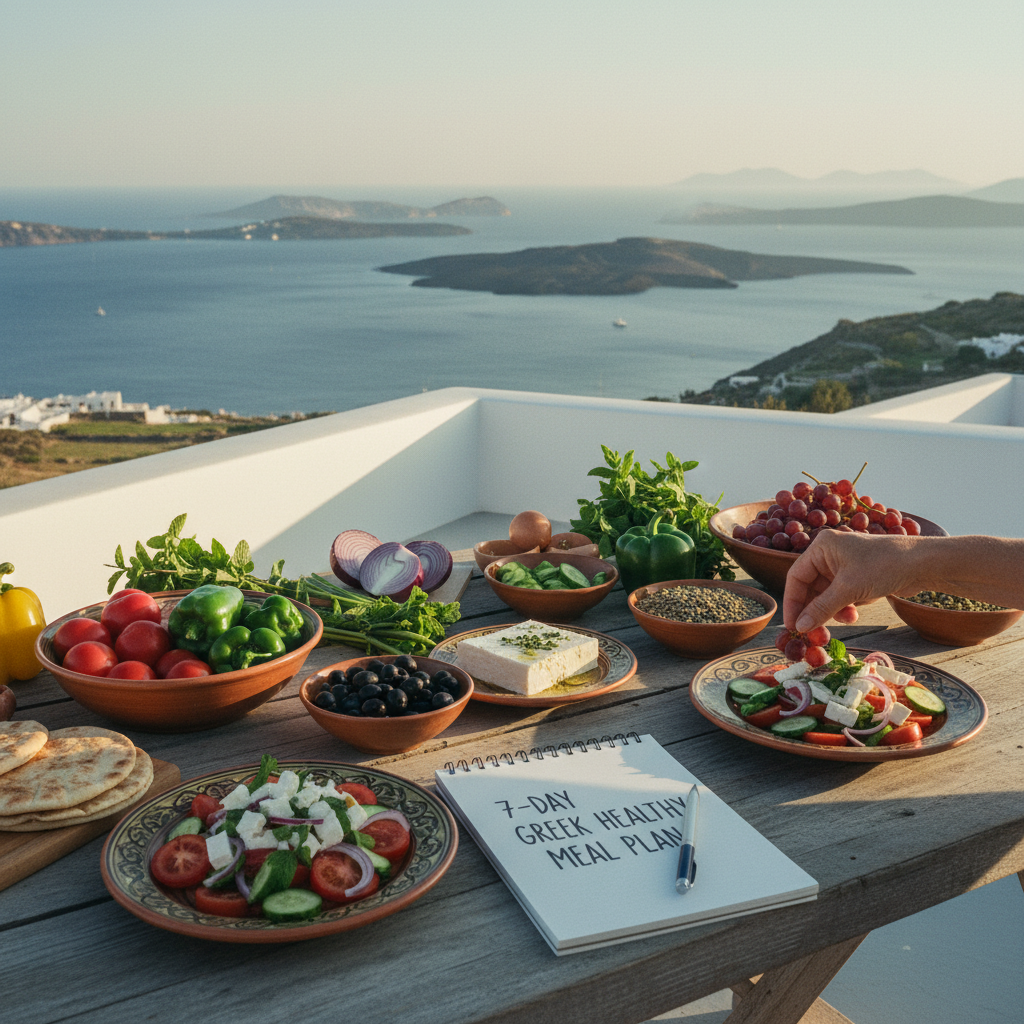
Embark on a culinary journey inspired by the centenarians of Ikaria with this 7-day Greek healthy meal plan, meticulously crafted to promote longevity and vibrant well-being. This protocol focuses on whole, unprocessed foods, abundant plant-based ingredients, lean proteins, and healthy fats, mirroring the dietary patterns that have consistently led to extended lifespans in the Mediterranean Blue Zones.
Unlock the Secrets of Ikaria: The 7-Day Greek Healthy Meal Plan
The island of Ikaria, a renowned Blue Zone, offers living proof that diet plays a pivotal role in extending healthy lifespans. This 7-day meal plan distills the essence of their traditional eating habits, providing a practical, delicious, and sustainable framework to integrate these longevity-boosting principles into your daily life. It’s more than just a diet; it’s a lifestyle blueprint for sustained vitality.
The 7-Day Greek Longevity Protocol: A Quick Summary
Our 7-day Greek Longevity Protocol emphasizes a plant-forward approach, prioritizing legumes, fresh vegetables, fruits, whole grains, and healthy fats like extra virgin olive oil. Fish is included a few times a week, with lean poultry in moderation. The plan encourages mindful eating, hydration, and the enjoyment of simple, seasonal ingredients, echoing the time-tested wisdom of the Mediterranean diet for promoting health and longevity.
Core Definition: What Defines a Longevity-Focused Greek Diet?
A longevity-focused Greek diet is characterized by its reliance on whole, unprocessed foods, with a strong emphasis on plant-based ingredients. It champions extra virgin olive oil as the primary fat source, alongside abundant legumes, fresh seasonal vegetables, fruits, nuts, and whole grains. Moderate consumption of fish, dairy (especially Greek yogurt), and red wine, coupled with minimal red meat and processed foods, forms the cornerstone of this healthful eating pattern.
Key Takeaways: The 3 Pillars of the Greek Blue Zone Diet
The exceptional longevity observed in Greek Blue Zones like Ikaria is built upon three fundamental dietary pillars:
- Plant-Centric Eating: The vast majority of calories come from vegetables, fruits, legumes, and whole grains. These foods are rich in fiber, antioxidants, and essential nutrients, crucial for combating inflammation and cellular aging.
- Healthy Fats Abundance: Extra virgin olive oil is used generously in cooking and as a dressing. Its monounsaturated fats and polyphenols are powerful allies against cardiovascular disease and cognitive decline.
- Mindful and Communal Eating: Meals are often slow, savored, and shared with family and friends. This social aspect reduces stress and fosters a sense of well-being, complementing the physical benefits of the food itself.
Visual Schedule: Your 7-Day Mediterranean Diet Menu Table
Here’s a snapshot of your week, designed to be delicious, nourishing, and promote longevity.
| Day | Breakfast | Lunch | Dinner |
|---|---|---|---|
| Day 1 | Greek Yogurt with Honey and Walnuts | Lentil Salad (Fakes Salata) with Herbs | Spanakopita (Spinach Pie) with a Side Salad |
| Day 2 | Whole-grain Toast with Avocado and Tomato | Leftover Spanakopita | Psari Plaki (Baked Fish with Vegetables) |
| Day 3 | Oatmeal with Berries and Almonds | Fasolakia (Green Bean Stew) | Gigantes Plaki (Baked Giant Beans) |
| Day 4 | Smoothie: Greek Yogurt, Spinach, Banana | Tuna Salad (Mediterranean style, no mayo) | Chicken Souvlaki Skewers with Horta (Greens) |
| Day 5 | Hard-boiled Eggs with Olives and Whole-grain Bread | Revithia Salata (Chickpea Salad) | Briam (Roasted Mixed Vegetables) |
| Day 6 | Fruit Salad with a sprinkle of Feta | Leftover Briam | Grilled Lamb Chops with Tzatziki and Salad |
| Day 7 | Revani (Semolina Cake, small portion) | Leftover Grilled Lamb/Tzatziki | Vegetable Soup (using leftover produce) |
Day-by-Day Guide: How to Follow a Greek Mediterranean Diet for a Week
This detailed guide walks you through each day of the longevity protocol, highlighting key ingredients and their benefits. Each meal is designed to be simple, flavorful, and deeply nourishing, adhering to the principles of /Healthy Food.
Day 1: The Reset (Fakes/Lentils and Vinegar)
Start your week with a focus on legumes, a cornerstone of the Mediterranean diet.
- Breakfast: A bowl of creamy Greek yogurt, drizzled with local honey and topped with a handful of walnuts, provides protein, probiotics, and omega-3s.
- Lunch: A hearty Fakes Salata (Lentil Salad) made with brown lentils, finely chopped red onion, parsley, and a generous dressing of extra virgin olive oil and red wine vinegar. Lentils are packed with fiber and plant-based protein, promoting satiety and stable blood sugar.
- Dinner: A comforting slice of homemade Spanakopita (Spinach Pie), made with whole-wheat phyllo if possible, served with a simple side salad dressed with olive oil and lemon. Spinach is rich in vitamins and antioxidants.
Day 2: Omega-3 Focus (Psari Plaki/Roasted Fish and Horta)
Today emphasizes omega-3 fatty acids from fish and nutrient-dense greens.
- Breakfast: Whole-grain toast topped with mashed avocado, sliced tomatoes, a sprinkle of sea salt, and a drizzle of olive oil.
- Lunch: Enjoy any leftover Spanakopita from dinner, ensuring zero waste.
- Dinner: Psari Plaki (Baked Fish with Vegetables). Choose a white fish like cod or snapper, baked with sliced tomatoes, onions, garlic, and herbs, all generously drizzled with olive oil. Serve alongside a plate of Horta (boiled wild greens), dressed simply with lemon and olive oil.
Day 3: The Plant-Based Powerhouse (Fasolakia/Green Beans)
This day highlights the power of vegetables and legumes in promoting health.
- Breakfast: A warm bowl of oatmeal prepared with water or unsweetened almond milk, topped with fresh berries and a sprinkle of slivered almonds.
- Lunch: A generous serving of Fasolakia (Green Bean Stew), a traditional Greek dish cooked with tomatoes, potatoes, and plenty of olive oil. It’s a delicious way to enjoy a variety of vegetables.
- Dinner: Gigantes Plaki (Baked Giant Beans), large white beans baked in a rich tomato sauce with herbs. This dish is incredibly satisfying, high in fiber, and plant-protein rich.
Day 4: Lean Protein and Probiotics (Greek Yogurt and Walnuts)
Focus on gut health and lean protein sources.
- Breakfast: A vibrant smoothie made with Greek yogurt, a handful of spinach (you won’t taste it!), half a banana, and a splash of water or unsweetened almond milk.
- Lunch: A Mediterranean-style tuna salad (canned in olive oil), mixed with chopped celery, red onion, capers, and a lemon-olive oil dressing, served over a bed of mixed greens.
- Dinner: Chicken Souvlaki Skewers (grilled lean chicken pieces) served with a side of steamed Horta (greens) or a fresh cucumber and tomato salad.
Day 5: Traditional Fasting Mimicking (Revithia/Chickpeas)
Another day to embrace legumes, often used in traditional “fasting” periods where meat and dairy are avoided.
- Breakfast: Two hard-boiled eggs with a few Kalamata olives and a slice of whole-grain bread.
- Lunch: Revithia Salata (Chickpea Salad) with diced bell peppers, cucumber, red onion, and a lemon-herb dressing.
- Dinner: Briam (Roasted Mixed Vegetables). A colorful assortment of seasonal vegetables like zucchini, eggplant, potatoes, and tomatoes, roasted with garlic, herbs, and ample olive oil until tender and caramelized.
Day 6: The Celebration Meal (Souvlaki with Tzatziki)
Enjoy a more celebratory meal that still adheres to healthy principles.
- Breakfast: A simple fruit salad featuring seasonal fruits like melon, grapes, and oranges, perhaps with a small sprinkle of crumbled feta cheese.
- Lunch: Leftover Briam, delicious served cold or warm.
- Dinner: Grilled Lamb Chops (lean cuts) served with a generous dollop of homemade Tzatziki (Greek yogurt, cucumber, garlic, dill) and a large Greek salad.
Day 7: Rest and Leftovers (Zero Waste Cooking)
Embrace the concept of zero-waste cooking and mindful eating.
- Breakfast: A small portion of Revani (Greek semolina cake) as a treat, or a repeat of your favorite healthy breakfast from the week.
- Lunch: Utilize any leftover grilled lamb or Tzatziki from the previous night, perhaps in a whole-wheat pita.
- Dinner: A nourishing Vegetable Soup made from any remaining fresh produce, vegetable broth, and a handful of whole grains like orzo or barley. This is a perfect way to use up ingredients and prevent food waste.
Expert Analysis: Benefits of the Mediterranean Diet for Anti-Aging
The Mediterranean diet isn’t just a trend; it’s a scientifically validated approach to anti-aging and disease prevention. Its holistic nature addresses multiple pathways to improved health.
The Science: Why These Specific Foods Extend Life
The longevity benefits of the Mediterranean diet are rooted in its emphasis on certain food groups:
- Antioxidant-Rich Produce: Fruits, vegetables, and herbs are packed with antioxidants that combat oxidative stress, a key driver of aging and chronic diseases.
- Anti-Inflammatory Fats: Extra virgin olive oil, rich in monounsaturated fatty acids and polyphenols, significantly reduces inflammation throughout the body, protecting cells and organs.
- Fiber Powerhouse: Legumes, whole grains, and produce provide abundant fiber, promoting gut health, stabilizing blood sugar, and lowering cholesterol. A healthy gut microbiome is increasingly linked to longevity.
- Lean Protein & Omega-3s: Fish provides essential omega-3 fatty acids, crucial for heart and brain health, while lean poultry and legumes offer protein without excessive saturated fat.
- Reduced Processed Foods: By prioritizing whole foods, the diet naturally reduces intake of refined sugars, unhealthy fats, and artificial additives that contribute to inflammation and disease.
Comparison: Modern Greek Diet vs. Traditional Blue Zone Diet
While Greece is the home of the Mediterranean diet, the modern Greek diet has, in many urban areas, drifted from its traditional roots. It often includes more processed foods, red meat, and sugary drinks, resembling a Westernized diet. In contrast, the traditional Blue Zone diet of Ikaria remains largely plant-based, with daily consumption of legumes, wild greens, fruits, and whole grains, minimal processed ingredients, and moderate fish, dairy, and wine. The key difference lies in the consistent adherence to whole, seasonal, locally sourced foods, which is crucial for maximizing health benefits.
Data Breakdown: Nutritional Macros and Cost Analysis
Adopting a Mediterranean diet is not only good for your health but can also be surprisingly economical.
Weekly Nutritional Profile (Calories, Fiber, Healthy Fats)
While specific macros will vary based on portion sizes and cooking methods, this 7-day plan generally provides:
- Calories: Approximately 1800-2200 calories per day, suitable for maintaining a healthy weight for most adults.
- Fiber: High, typically exceeding 30-40 grams daily, thanks to generous servings of legumes, vegetables, fruits, and whole grains.
- Healthy Fats: Predominantly monounsaturated fats from olive oil and nuts, with a good balance of omega-3s from fish and walnuts. Total fat intake is moderate to high, but from healthy sources.
- Protein: Adequate, derived from legumes, fish, Greek yogurt, and lean meats, ensuring muscle maintenance and satiety.
Cost Efficiency: Budgeting for a Healthy 7-Day Mediterranean Diet Menu
The Mediterranean diet is inherently budget-friendly, especially when focusing on its core principles:
- Legumes are King: Lentils, chickpeas, and beans are incredibly inexpensive and versatile protein sources.
- Seasonal Produce: Buying fruits and vegetables in season significantly reduces costs. Farmers’ markets are excellent for this.
- Bulk Buying: Staples like olive oil, whole grains, and dried herbs can be bought in larger quantities for savings.
- Less Meat, More Plants: Reducing meat consumption and making it a “side dish” rather than the main focus saves money.
- Cooking at Home: Preparing meals from scratch is almost always cheaper and healthier than eating out.
The Essential Mediterranean Diet Food List for a Week
To successfully follow this plan, stock your kitchen with these essential ingredients. This ensures you always have the components for /Healthy Food on hand.
Pantry Staples: Olive Oil, Honey, and Dried Herbs
- Extra Virgin Olive Oil: The cornerstone. Use it for cooking, dressings, and finishing.
- Vinegars: Red wine vinegar, balsamic vinegar.
- Legumes: Dried or canned lentils, chickpeas, cannellini beans, gigantes beans.
- Whole Grains: Whole-wheat pasta, brown rice, oats, whole-wheat bread/pita.
- Nuts & Seeds: Walnuts, almonds, sesame seeds (for tahini).
- Honey: For natural sweetness.
- Dried Herbs & Spices: Oregano, thyme, rosemary, bay leaves, paprika, red pepper flakes.
- Canned Goods: Diced tomatoes, tomato paste, tuna in olive oil, capers, olives.
Fresh Produce: Best Greek Foods for a Healthy Diet
- Vegetables: Spinach, kale, wild greens (horta), tomatoes, cucumbers, bell peppers, zucchini, eggplant, onions, garlic, potatoes, green beans.
- Fruits: Lemons, oranges, berries, grapes, apples, melon.
- Dairy: Plain Greek yogurt, feta cheese.
- Protein: Fresh fish (e.g., cod, snapper, sardines), lean chicken breast/thighs, lean lamb.
Greek Meal Prep Ideas for Longevity
- Cook Grains & Legumes in Bulk: Prepare a large batch of brown rice, lentils, or chickpeas at the start of the week.
- Chop Veggies Ahead: Pre-chop onions, garlic, and other vegetables for quicker meal assembly.
- Prepare Dressings: Whisk together olive oil, lemon juice, and herbs for a ready-to-use salad dressing.
- Roast Vegetables: Make a big tray of roasted vegetables like Briam; they are delicious hot or cold.
- Make Tzatziki: A batch of Tzatziki can last several days and pairs well with many meals.
Conclusion: Making Healthy Food a Lifestyle
Adopting the ‘Master the Mediterranean’ 7-day Greek healthy meal plan is more than just a temporary diet; it’s an invitation to embrace a lifestyle rooted in millennia of wisdom. By prioritizing whole, unprocessed foods, savoring meals, and connecting with the origins of your ingredients, you’re not just eating for today – you’re nourishing your body for a longer, healthier, and more vibrant future. This journey towards longevity is delicious, sustainable, and deeply rewarding.
Frequently Asked Questions About Creating a Healthy Greek Diet Plan
- Can I substitute ingredients? Absolutely! The Mediterranean diet is flexible. Focus on similar food groups: swap one legume for another, or use seasonal vegetables available in your region.
- Is wine allowed? Moderate consumption (one glass for women, two for men) of red wine with meals is traditional, but it’s optional. Focus on the food first.
- What about snacks? Opt for fruits, a handful of nuts, Greek yogurt, or vegetable sticks with hummus.
- How much olive oil should I use? Don’t be shy! Use it generously for cooking, dressings, and drizzling over dishes. It’s a healthy fat integral to the diet.
- Is this plan suitable for weight loss? While not explicitly designed as a weight-loss diet, the emphasis on whole, high-fiber foods and healthy fats often leads to natural and sustainable weight loss due to increased satiety and improved metabolism.
