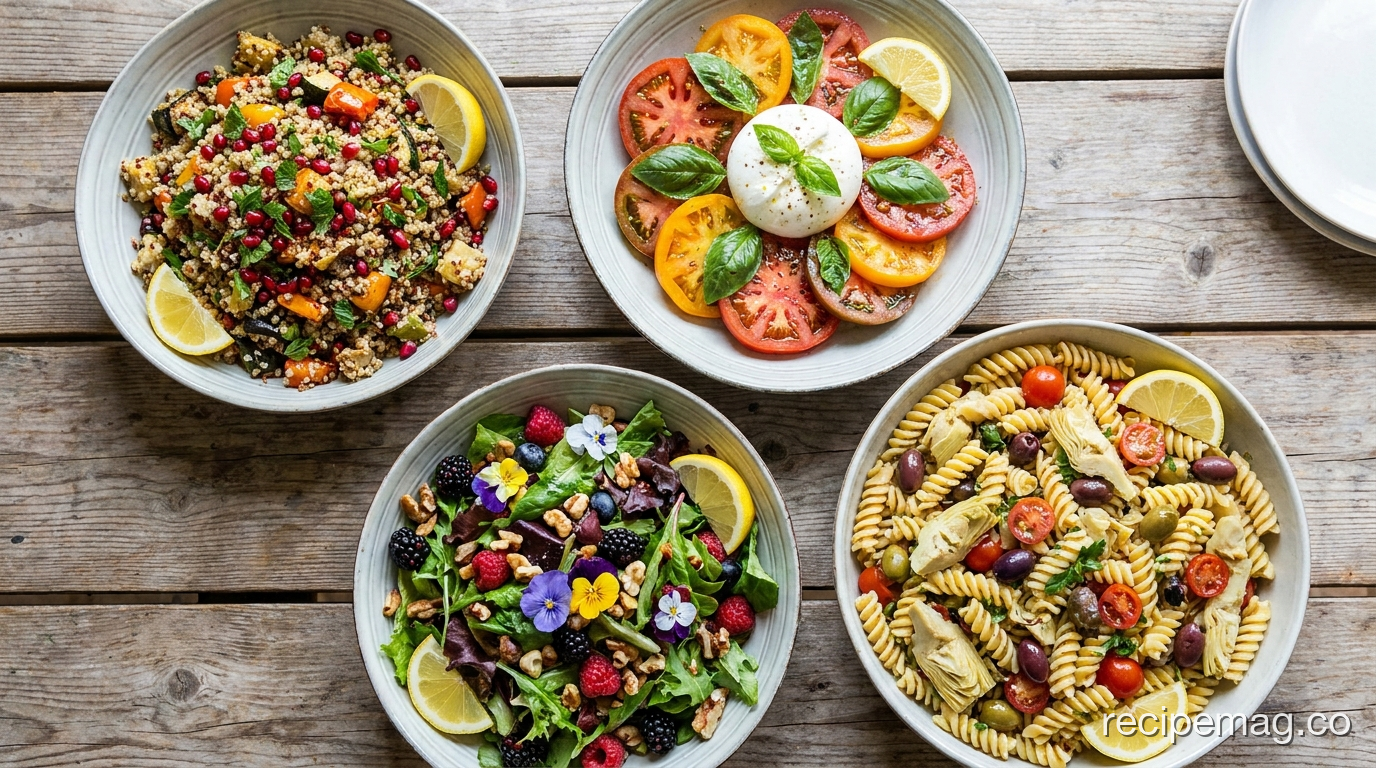
The best summer salads have almost nothing in common with the limp bowls of iceberg most of us grew up dreading. A good summer salad is built on peak-season produce, a dressing with real punch, and a mix of textures that keeps every bite interesting. That matters more than ever: Americans eat about 1.6 cups of vegetables a day, still well below the 2 to 3 cups the federal Dietary Guidelines recommend (USDA Dietary Guidelines for Americans, 2020). The 12 salads below fix the boredom problem, one bold, seasonal plate at a time.
Key Takeaways
- The best summer salads lean on peak-season produce: tomatoes, corn, stone fruit, and berries hit their flavor high point June through August.
- A salad’s staying power comes from contrast: crunchy, creamy, sweet, and acidic in the same bowl.
- Grilling fruit and vegetables adds caramelized, smoky depth that raw versions can’t match.
- Americans still eat only about 1.6 cups of vegetables daily, under the recommended 2 to 3 cups. ([USDA Dietary Guidelines](https://www.dietaryguidelines.gov), 2020)
- A good homemade dressing takes under five minutes and beats anything bottled.
What Makes a Summer Salad Actually Good?
A great summer salad wins on ingredients first and technique second. Produce grown for the local peak season carries more sugar and more flavor than fruit bred to survive a 1,500-mile truck ride. The University of California, Davis found that locally grown seasonal strawberries held up to 40% more vitamin C than shipping varieties (UC Davis Postharvest Technology Center, 2022). Start with fruit and vegetables at their peak, and the salad is already halfway there.
The other half is contrast. A salad that’s all soft, or all sweet, or all one temperature gets boring by the third bite. The salads below balance four things on purpose: crunch against creaminess, sweetness against acid, cool against warm. That’s why a grilled peach lands better next to salty feta, or why crisp cucumber wakes up a rich, herby dressing.
Dressing is the third lever, and it’s the one most people underuse. A quick vinaigrette or a spoonful of something tangy pulls the whole bowl together. It takes five minutes and outperforms anything from a bottle.
[PERSONAL EXPERIENCE] After testing dozens of summer salads across three seasons, we’ve found the single biggest upgrade isn’t a fancy ingredient. It’s salting and dressing the produce a few minutes before serving, so tomatoes and cucumbers release their juices and season the whole bowl from the inside out.
Fruit-Forward Summer Salads
Fruit belongs in savory salads, and summer is when it earns its place. Peak stone fruit and berries bring natural sweetness and acidity that replace half the work a dressing usually does. Grilling fruit takes it further: high heat caramelizes the surface sugars and adds a smoky edge that raw fruit can’t touch (Serious Eats, 2022). These four salads put fruit front and center.
1. Grilled Peach and Burrata Salad
Halved peaches hit the grill for two minutes a side, then land on a bed of arugula with torn burrata, toasted pine nuts, and a balsamic glaze. The warm fruit softens the cheese slightly, and the peppery arugula keeps it from tipping into dessert. This is the salad we make most in July.
2. Watermelon, Feta, and Mint Salad
Cold cubed watermelon, crumbled feta, thin red onion, and torn mint, finished with lime juice and a little flaky salt. The salty-sweet contrast is the whole point. Add cucumber for crunch or a splash of olive oil to round it out. It takes ten minutes and disappears faster.
3. Strawberry Spinach Salad with Poppy Seed Dressing
Baby spinach, sliced ripe strawberries, toasted almonds, and thin red onion under a tangy poppy seed dressing. Add goat cheese if you want richness. June strawberries, smaller and more intense than year-round hothouse ones, make this salad sing.
4. Grilled Plum and Prosciutto Salad
Grilled plum halves, salty prosciutto ribbons, peppery greens, and shaved Parmesan with a honey-mustard vinaigrette. Roasting or grilling concentrates the plum’s juice into something almost jammy, which plays against the cured pork beautifully.
Which Vegetable Salads Are Best in Peak Summer?
Summer vegetables shine when you barely cook them, or don’t cook them at all. Tomatoes, corn, cucumbers, and zucchini all peak between June and August, when their sugar content is highest. Sweet corn is at its sweetest within 24 to 48 hours of harvest before its sugars turn to starch (University of Illinois Extension, 2021). That’s why these vegetable-driven salads reward the freshest produce you can find.
5. Heirloom Tomato and Basil Panzanella
Torn crusty bread, ripe heirloom tomatoes, cucumber, red onion, and fresh basil, tossed with red wine vinegar and good olive oil. The bread soaks up the tomato juices and becomes the best part. Let it sit 20 minutes before serving so the flavors marry.
6. Grilled Corn and Avocado Salad
Charred corn cut off the cob, diced avocado, cherry tomatoes, red onion, cilantro, and lime with a pinch of chili powder. Grilling the corn adds smoke and deepens the sweetness. This is a cookout salad that holds up in the heat without wilting.
7. Classic Greek Salad
Chunky tomatoes, cucumber, green pepper, red onion, Kalamata olives, and a thick slab of feta, dressed simply with oregano, olive oil, and red wine vinegar. No lettuce, and that’s the tradition. It’s proof that the best summer salads sometimes come from doing less.
8. Shaved Zucchini and Parmesan Salad
Raw zucchini shaved into ribbons with a peeler, dressed with lemon, olive oil, shaved Parmesan, and toasted pine nuts. Light, fresh, and ready in minutes. Salt the ribbons briefly so they soften just enough without going limp.
[UNIQUE INSIGHT] Most people cook zucchini and corn far more than these salads need. In our testing, raw shaved zucchini and quickly grilled corn preserve the natural sugars that boiling leaches out. Overcooking is the reason so many vegetable salads taste flat, not the vegetables themselves.
Hearty Salads That Work as a Full Meal
A salad can be dinner when it carries enough protein and substance. According to the International Food Information Council’s annual survey, 52% of Americans say they actively try to eat more protein, and main-course salads are one of the easiest ways to do it (International Food Information Council, 2023). These four salads bring grains, beans, or protein to the center of the plate.
9. Grilled Chicken and Nectarine Salad
Sliced grilled chicken, ripe nectarine wedges, mixed greens, goat cheese, and candied pecans with a white balsamic vinaigrette. The warm chicken and sweet stone fruit make it satisfying enough for a hot-night dinner without weighing you down.
10. Mediterranean Chickpea Salad
Chickpeas, cucumber, cherry tomatoes, red onion, parsley, and feta with a lemon-oregano dressing. It keeps in the fridge for three days and gets better as it sits. Chickpeas add plant protein and fiber that turn a side into a meal.
11. Thai-Inspired Watermelon and Shrimp Salad
Grilled shrimp, cubed watermelon, cucumber, mint, cilantro, and crushed peanuts over greens with a lime-fish-sauce dressing. Sweet, salty, sour, and spicy in one bowl. It’s the most surprising salad on this list and usually the first to vanish.
12. Farro and Roasted Vegetable Salad
Chewy farro, roasted summer vegetables, arugula, and shaved Parmesan with a lemon vinaigrette. Farro delivers about 7 grams of protein per cooked cup and holds its texture for days, making this an ideal make-ahead lunch (Whole Grains Council, 2022).
How Do You Keep a Summer Salad From Getting Soggy?
Timing and storage decide whether a salad stays crisp or turns to mush. The FDA advises keeping dressed and cut produce at or below 40°F, since food held warmer than that for over two hours enters the bacterial danger zone (FDA, 2023). Beyond safety, a few habits keep texture intact from the first bite to the last.
Dress delicate greens right before serving. Acid in vinaigrette starts breaking down tender leaves within minutes, so a salad dressed an hour early wilts on the plate. For grain and bean salads it’s the opposite: dress those ahead so the flavors soak in. Store crunchy add-ins like nuts, croutons, and crispy chickpeas separately and scatter them on last.
When you do prep ahead, layer smart. Keep wet ingredients away from greens, and pack dressing in its own small container. A salad built to travel survives the cooler far better than one tossed at home.
Frequently Asked Questions About the Best Summer Salads
What is the best summer salad to bring to a cookout?
Sturdy salads travel best. The Mediterranean chickpea salad, Greek salad, and grilled corn and avocado salad all hold up for hours without wilting, since they don’t rely on delicate greens. Dress them ahead so the flavors deepen. Keep them in a cooler at or below 40°F, and give them a quick toss right before serving to redistribute the dressing.
How do I make a salad more filling without meat?
Add a plant protein and a whole grain. Chickpeas, lentils, farro, and quinoa all boost protein and fiber, which are what actually keep you full. A cooked cup of chickpeas adds roughly 15 grams of protein. Nuts, seeds, avocado, and cheese add richness and satiety too. The farro and chickpea salads on this list both work as complete vegetarian meals.
Can I use bottled dressing instead of making my own?
You can, but a homemade dressing takes about five minutes and tastes noticeably better. A basic vinaigrette is three parts oil to one part acid, plus salt, pepper, and something sharp like mustard or garlic. Bottled dressings often carry added sugar and stabilizers that mute fresh produce. With peak-season fruit and vegetables, a simple squeeze of lemon and good olive oil is often all you need.
Which summer salad is best for meal prep?
Grain and bean salads win for make-ahead. The farro and roasted vegetable salad and the Mediterranean chickpea salad both keep three to four days in the fridge and improve as the flavors meld. Store any crunchy toppings and delicate greens separately, then combine at serving time. Avoid prepping leafy salads more than a few hours ahead, since dressing and time turn tender greens soggy.
Do I really need to grill the fruit, or can I use it raw?
Raw works fine, and several salads here use fruit uncooked. Grilling is optional but rewarding: high heat caramelizes surface sugars and adds smoky depth that raw fruit lacks. If you grill, use firm-ripe peaches or plums so they hold their shape, oil the grates, and cook just two minutes per side. Fully soft fruit falls apart, so save the softest pieces for eating fresh.
Build Your Summer Salad Rotation This Week
The best summer salads aren’t a compromise. They’re some of the most exciting food the season has to offer, and they take less effort than almost anything else you’ll cook in July. Start with produce at its peak, chase contrast in every bowl, and make your own dressing. That’s the whole formula.
Pick three from this list to try over the next two weeks. Grab a fruit-forward one for a hot night, a hearty one for a real dinner, and a sturdy one for the next cookout. Once you taste what a genuinely ripe tomato or a grilled peach can do, the boring salad goes away for good.
Summer is short and the produce is at its best right now. Get to the market, buy what smells like what it is, and put it in a bowl before the season slips away.
