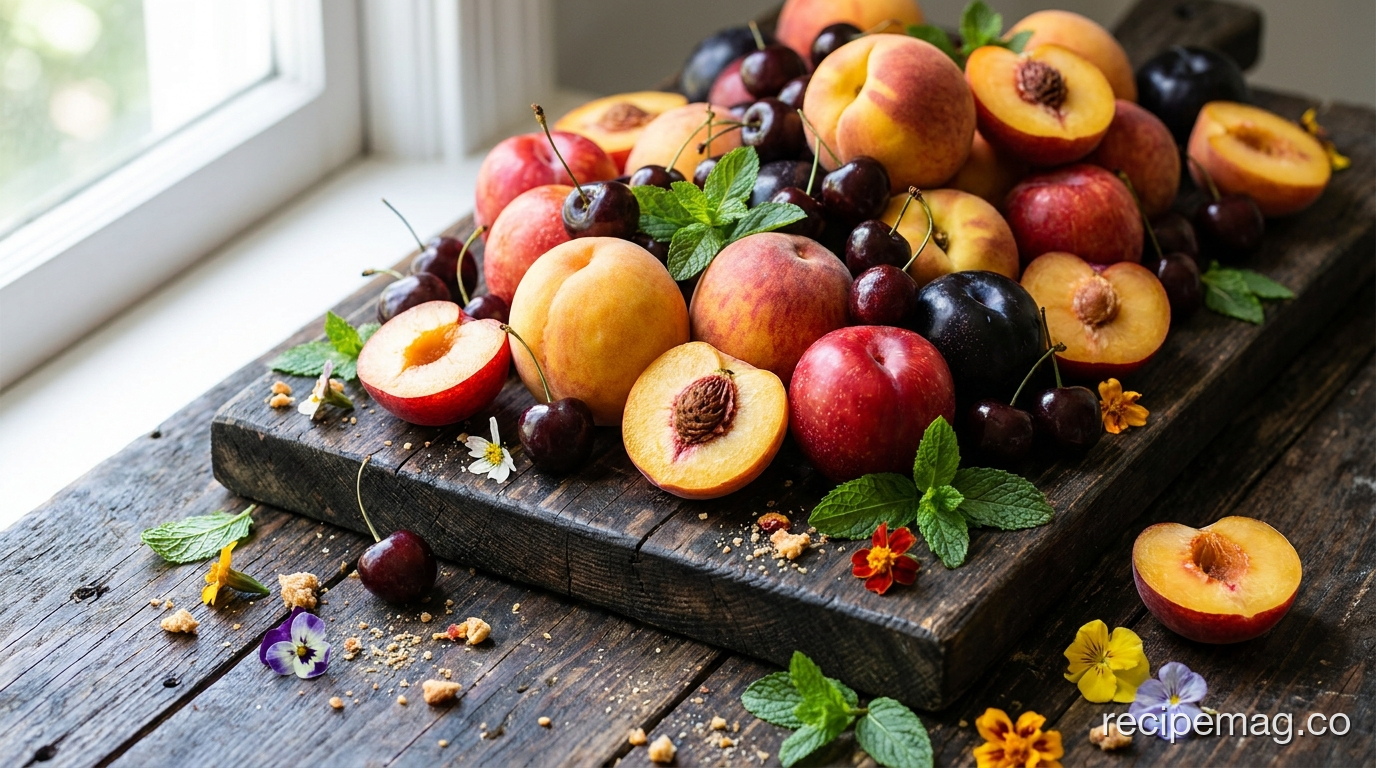
Stone fruit is any fruit with a single hard pit at its center, and the summer trio worth building your kitchen around is peaches, plums, and cherries. Their U.S. season is short and intense. The USDA Agricultural Marketing Service reports that domestic cherry season lasts just 6 to 8 weeks, from late May to early July, so timing your purchase matters more than with almost any other fruit (USDA AMS, 2023). This guide covers when each peaks, how to pick a ripe one, and how to store it so nothing goes to waste.
Key Takeaways
- Stone fruit peaks in a narrow window: cherries in June, peaches and plums from July into August.
- Cherry season lasts only 6 to 8 weeks in the U.S., so buy at the market when you see them. (USDA AMS, 2023)
- Ripen peaches and plums on the counter, then refrigerate. Never chill an unripe one.
- The right storage habits add 3 to 5 days of shelf life to most stone fruit.
- Freestone peaches and pitted cherries are the easiest varieties to cook and bake with.
What Exactly Is Stone Fruit?
Stone fruit refers to drupes, fruits built around one hard central pit that shields the seed. Peaches, nectarines, plums, cherries, and apricots all belong to the same family, and they behave alike in your kitchen. The USDA groups them together partly because they share a trait most shoppers overlook: cold sensitivity before ripeness (USDA, 2023). That single fact shapes how you should buy and store every fruit in this guide.
Here’s why it matters. These fruits are climacteric, which means they keep ripening after harvest. Growers pick them slightly firm so they survive the trip to market. Your job is to finish that ripening at home, on the counter, where the fruit can soften and sweeten before the cold ever touches it.
Get the timing right and stone fruit rewards you like almost nothing else in summer. A truly ripe peach is a different food from the pale, crunchy version sold in March. So is a plum picked at its August peak. Buying in season isn’t a preference here. It’s the whole point.
When Does Each Stone Fruit Peak?
Each stone fruit hits its stride in a different window, and the whole run is compressed into about three months. According to the USDA National Agricultural Statistics Service crop calendar, U.S. peach production concentrates in July and August across California, Georgia, and South Carolina, while cherries peak in June out of Washington and Oregon (USDA NASS, 2023). Learn the calendar and you’ll shop with confidence all summer.
Cherries: June
Cherries lead the season and leave first. Sweet varieties like Bing and Rainier peak in June and are usually gone by mid-July. Their window is the tightest of any stone fruit, which is exactly why farmers market cherries in June taste so much better than the cold-stored supermarket ones you’ll find in August.
Apricots: June into July
Apricots overlap with cherries and fade fast. They’re the most fragile stone fruit and rarely travel well, so a local, tree-ripened apricot is a genuine seasonal treat. If you see good ones, buy them and eat them within a couple of days.
Peaches and Plums: July through August
Peaches and plums are the heart of high summer. Both run from early July through August, with peaches often peaking in late July and plums stretching latest of all. Italian prune plums arrive in late August and are the best baking plum of the bunch. This is the stretch when stone fruit is cheapest and most abundant, so it’s the time to preserve, bake, and freeze.
How Do You Pick a Ripe Peach, Plum, or Cherry?
Your nose and your thumb beat your eyes when judging stone fruit. The UC Davis Postharvest Technology Center notes that fruit picked underripe never reaches full sweetness, because sugar builds only while the fruit hangs on the tree (UC Davis Postharvest Technology Center, 2022). So color alone can fool you. Smell and gentle pressure tell the real story of whether a peach or plum is worth buying.
Peaches
Press gently near the stem. A ripe peach yields slightly and smells deeply floral from a few inches away. Skip any with green patches near the stem, a sure sign it was picked too early. That green never fully ripens off the tree. Choose freestone peaches when you plan to cook, because the pit pulls away clean.
Plums
A ripe plum gives to light pressure and often wears a dusty, silvery bloom on its skin. That bloom is natural and a good sign, not something to wipe away. The flesh near the pit should smell sweet and fragrant. Black plums turn jammy and rich; red plums stay firmer and a touch tart.
Cherries
Look for cherries that are shiny, plump, and firm, with green, flexible stems. Brown or brittle stems mean they’ve been sitting too long. Dark, glossy skin signals ripeness on Bings, while Rainiers should be golden with a red blush. Wrinkling or softness means they’re past their best, so leave those behind.
How Should You Store Stone Fruit So It Lasts?
The golden rule for stone fruit is simple: ripen on the counter, then refrigerate. The University of Maine Cooperative Extension warns that chilling an unripe peach or plum causes chilling injury, a dry, mealy breakdown of the flesh that no amount of counter time can reverse (UMaine Extension, 2022). Cold isn’t the enemy of ripe fruit, only of unripe fruit. Get the order right and you’ll rarely waste a peach again.
Once a peach or plum is fragrant and gives to a gentle squeeze, move it to the fridge and eat it within two to three days. Cherries are the exception: refrigerate them right away and keep them dry, where they’ll hold for 5 to 7 days. Don’t wash any stone fruit until you’re ready to eat it, since surface moisture speeds mold.
[PERSONAL EXPERIENCE] We’ve found the fastest way to ripen a batch of hard peaches is a plain paper bag on the counter. The bag traps the ethylene the fruit gives off, and firm peaches usually turn ripe in 1 to 2 days instead of 4. Drop in an apple or banana and it happens even faster. Just check daily, because the last stretch from perfect to overripe moves quickly.
A Quick Storage Cheat Sheet
- Unripe peaches and plums: counter, out of direct sun, 1 to 3 days.
- Ripe peaches and plums: fridge, eaten within 2 to 3 days.
- Cherries: fridge immediately, dry and unwashed, 5 to 7 days.
- To speed ripening: paper bag with an apple or banana.
- To freeze: halve, pit, and lay flat on a tray before bagging.
What Are the Best Ways to Cook With Stone Fruit?
Ripe stone fruit needs very little help, which is why chefs keep reaching for it. The National Restaurant Association’s chef survey placed seasonal local fruit among the top menu trends for three straight years, with flavor intensity named as the key driver (NRA, 2023). At home, that translates to a simple rule: start with ripe fruit and get out of its way. Heat, a little salt, and good timing do the rest.
[UNIQUE INSIGHT] Most crumble and jam recipes call for too much sugar when you’re working with peak-season stone fruit. In our experience, cutting the sugar by about a quarter produces a brighter, more complex result. Ripe peaches and plums already carry balanced sugar and acid, and a full cup of granulated sugar just flattens that into candy. Taste the raw fruit first, then sweeten to fill the gap, not to override it.
Grilling and Roasting
Heat is stone fruit’s best friend. Halve and pit peaches or plums, brush the cut sides with a little oil, and grill them face down over medium-high heat until they carry char marks and soften. The surface sugars caramelize into something smoky and jammy. Roasting works the same magic in the oven and concentrates the juices into a natural sauce without any thickener.
Baking
Peaches and plums are reliable baking fruit because they hold their shape and their flavor deepens with heat. Freestone peaches slice clean for cobblers and galettes. Italian prune plums, dense and low in moisture, are the classic choice for tarts and cakes. Cherries bake beautifully too, though they release more liquid, so most recipes add a spoonful of cornstarch.
Savory Pairings
Stone fruit isn’t only for dessert. Grilled peaches love salty partners like burrata, prosciutto, and blue cheese. A quick cherry reduction is stunning over roasted duck or pork. Diced plum or peach salsa, sharpened with lime and chili, turns a plain grilled chop into something memorable. The natural sweetness plays against fat and salt in a way few other summer ingredients manage.
Frequently Asked Questions About Stone Fruit
What is the difference between a peach and a nectarine?
Genetically they’re nearly identical. The single meaningful difference is skin: peaches are fuzzy and nectarines are smooth. Nectarines tend to be slightly firmer and a touch more aromatic, and they’re often a hair sweeter. You can swap one for the other in any recipe with no adjustment. Both are stone fruit, ripen the same way, and share the same cold sensitivity before they’re ripe.
Why is my peach mealy and dry instead of juicy?
Mealiness almost always comes from chilling injury. When an unripe peach spends too long in cold storage, its cell structure breaks down into a dry, cottony texture that can’t be reversed. The University of Maine Extension identifies this as the most common stone fruit storage mistake (UMaine Extension, 2022). Ripen peaches on the counter first, and only refrigerate them once they’re soft and fragrant.
Can you eat stone fruit skin?
Yes, the skin of peaches, plums, and cherries is edible and nutritious, holding fiber and antioxidants. Some bakers peel peaches for a smoother texture in pies and preserves, but it’s optional. Just rinse the fruit well right before eating. If the fuzz on a peach bothers you, rub it gently with a paper towel or blanch briefly in hot water to loosen the skin.
How do you pit a cherry without a tool?
Push a sturdy drinking straw or a metal chopstick through the stem end, driving the pit out the bottom over a bowl. A paperclip bent into a hook works too: slide it in beside the stem, catch the pit, and twist it free. For plums and peaches, run a knife around the seam and twist the halves apart. Freestone varieties release the pit cleanly.
Is it safe to eat the pit or the kernel inside?
No, avoid the hard pits and the kernels inside them. Stone fruit pits contain amygdalin, a compound that releases small amounts of cyanide when the kernel is crushed or eaten. The FDA advises against consuming apricot kernels and similar pits for this reason (FDA, 2023). The flesh and skin are perfectly safe. Simply discard the pits as you cook or eat.
Make the Most of Stone Fruit Season
Stone fruit season is a sprint, not a marathon. Cherries vanish by mid-July, apricots barely last a fortnight, and even peaches and plums slip away by early September. The calendar above tells you exactly where you stand each week, so you can prioritize what’s at its peak when you shop.
Keep the essentials simple. Buy peaches and plums a day or two ahead and ripen them on the counter. Refrigerate cherries the moment you get home. Trust your nose at the market, and when the fruit is ripe enough to cook with, remember that a little sugar goes a long way.
Then eat it every way you can. Slice a peach over yogurt, grill plums alongside dinner, bake cherries into a galette while they last. The season is here and it won’t wait. Grab a basket this weekend and use it.
