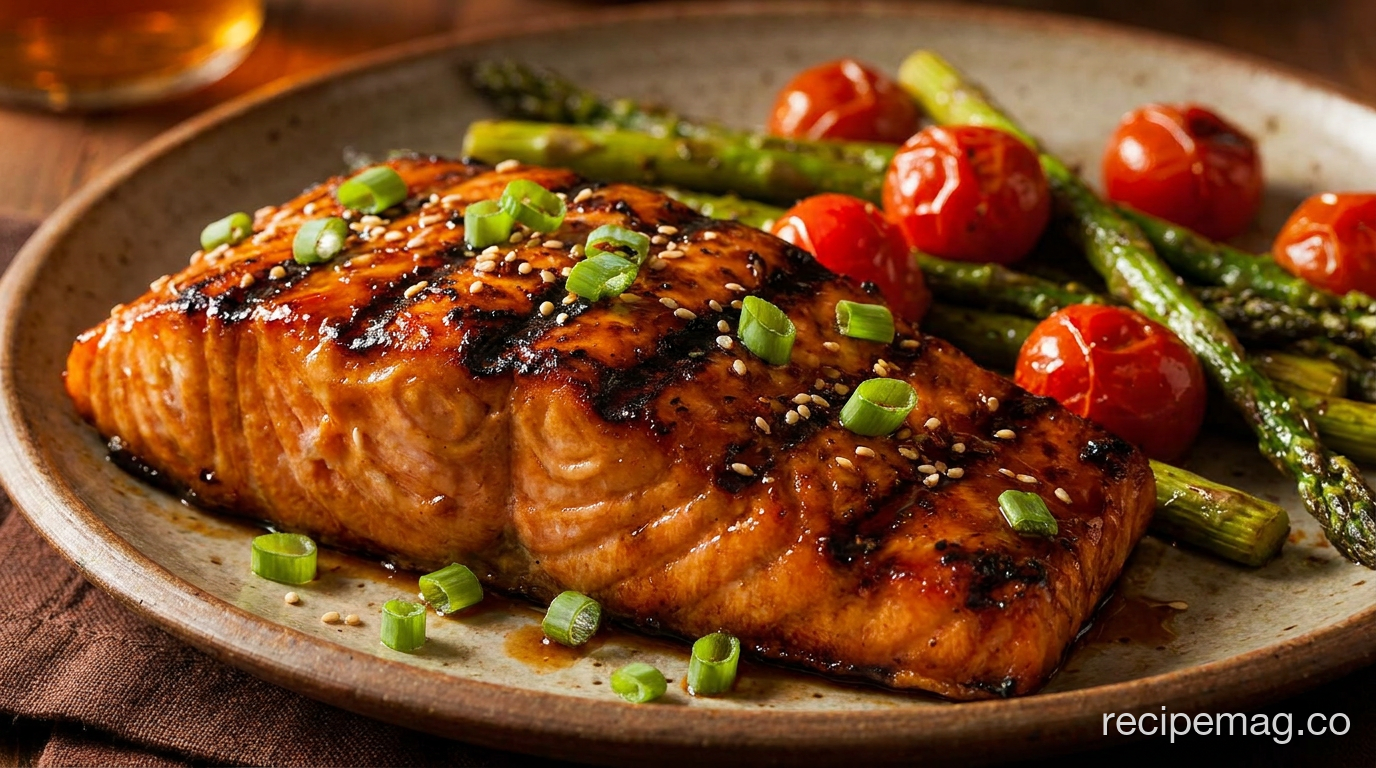
Bourbon-glazed grilled salmon is the summer dinner that tastes like you fussed when you really didn’t. A six-ingredient glaze reduces while the grill heats, the fillets cook in about 12 minutes, and the sugars in the bourbon and brown sugar caramelize into a sticky, smoky lacquer. Salmon stays the smart choice, too: Americans ate roughly 3 pounds of it per person in 2021, making it the country’s most-consumed fresh fish. ([National Fisheries Institute](https://www.aboutseafood.com), 2022) Pull it at 145°F and it flakes clean off the fork.
Key Takeaways
- Start to finish in under 30 minutes, with only 12 minutes on the grill.
- The glaze needs just 6 pantry ingredients: bourbon, brown sugar, soy sauce, Dijon, garlic, and butter.
- Cook salmon to an internal temperature of 145°F for safe, flaky results. ([USDA FSIS](https://www.fsis.usda.gov), 2023)
- Grill skin-side down first on a clean, oiled, medium-high grate to prevent sticking.
- Reserve half the glaze for serving so raw-brushed glaze never touches finished fish.
Why Does Bourbon Work So Well on Grilled Salmon?
Bourbon brings vanilla, oak, and caramel notes that play directly off salmon’s natural richness. As the glaze reduces, alcohol cooks off and concentrates the sugars, leaving warm, toasty depth behind. Salmon can carry it because the fish is genuinely fatty: a 3-ounce cooked portion delivers about 1.24 grams of omega-3 fatty acids, which keeps the flesh moist under high heat. ([USDA FoodData Central](https://fdc.nal.usda.gov), 2023) Fat and sugar are old friends.
The sweetness also balances salmon’s mineral, slightly briny edge. Brown sugar and bourbon push sweet, soy and Dijon push salty and sharp, and the fish sits comfortably in the middle. You get contrast in every bite instead of one flat note.
[PERSONAL EXPERIENCE] We’ve cooked this glaze on the stovetop, under the broiler, and over charcoal. The grill wins every time. Live fire adds a smoky char that mirrors the oak in the bourbon, and the two flavors read as one. Indoors, the dish is good. Outdoors, it’s the one people ask about.
What Ingredients Do You Need?
The whole recipe leans on pantry staples plus one good fillet. Wild-caught and farmed salmon both work here, and demand keeps climbing: global salmon production reached about 2.9 million metric tons in 2022, reflecting how central the fish has become to home cooking. ([Statista](https://www.statista.com), 2023) Buy center-cut fillets of even thickness so they cook at the same rate.
For the Salmon
- 4 salmon fillets (about 6 oz each, skin on)
- 1 tablespoon neutral oil, for the grate and the fish
- Salt and black pepper to taste
For the Bourbon Glaze
- 1/3 cup bourbon
- 1/3 cup packed brown sugar
- 3 tablespoons soy sauce
- 1 tablespoon Dijon mustard
- 2 garlic cloves, minced
- 1 tablespoon unsalted butter
Skin-on fillets are worth seeking out. The skin acts as a buffer between the delicate flesh and the hot grate, and it crisps into something genuinely good. Leave it on through cooking even if you plan to slide it off at the table.
How Do You Make the Bourbon Glaze?
The glaze comes together in one small saucepan in under 10 minutes. Reducing it does two jobs at once: it cooks off most of the alcohol and concentrates the sugars into a syrup thick enough to cling. Caramelization, the browning that builds toasty flavor, accelerates as sugars heat and water evaporates. ([Serious Eats](https://www.seriouseats.com), 2021) Watch it closely near the end, because sugar moves from perfect to burnt fast.
Step-by-Step Glaze Instructions
- Combine off heat. Add bourbon, brown sugar, soy sauce, Dijon, and minced garlic to a small saucepan and whisk until the sugar dissolves.
- Simmer gently. Set over medium heat and bring to a low simmer. Keep it at a steady bubble, not a hard boil, to avoid scorching the sugar.
- Reduce by about half. Simmer for 6 to 8 minutes, stirring often, until the glaze coats the back of a spoon and a finger drawn through it leaves a clean line.
- Finish with butter. Pull the pan off the heat and whisk in the butter. It adds gloss and a rounder mouthfeel.
- Split the batch. Divide the glaze in two. One half is for brushing during cooking, the other is reserved for serving.
[UNIQUE INSIGHT] Splitting the glaze is the step most recipes skip, and it matters for both safety and flavor. The brush you drag across raw fish should never touch the glaze you spoon over the finished plate. Reserve serving glaze before the brush ever gets wet, and you get a clean, fresh hit of bourbon at the table instead of muddy, overcooked sugar.
How Do You Grill Salmon Without It Sticking?
A clean, hot, oiled grate is the whole secret to salmon that releases instead of tears. Heat the grill to medium-high, scrub the grate, then oil it well right before the fish goes on. The target is simple: cook to an internal temperature of 145°F, where the flesh turns opaque and flakes cleanly. ([USDA FSIS](https://www.fsis.usda.gov), 2023) A thin fillet hits that mark in about 10 to 12 minutes total.
Step-by-Step Grilling Instructions
- Heat the grill to medium-high, roughly 400 to 450°F. Let it fully preheat with the lid down.
- Clean and oil the grate. Scrub it, then wipe with an oiled paper towel held in tongs. A clean, oiled grate is non-negotiable for release.
- Prep the fish. Pat the fillets dry, rub lightly with oil, and season with salt and pepper. Dry skin sticks less and crisps better.
- Grill skin-side down first. Lay the fillets skin-side down and close the lid. Cook undisturbed for 6 to 7 minutes so the skin sets and releases on its own.
- Brush and flip. Brush the tops with the cooking glaze, then flip gently with a thin spatula. Brush the skin side too.
- Finish the cook. Grill 3 to 5 more minutes, brushing once more, until the fillets reach 145°F at the thickest point. Pull a couple degrees early and let carryover finish them.
Resist the urge to move the fish. Salmon sticks when it isn’t ready to release; give it a minute longer and it lifts freely. If a fillet fights the spatula, it needs more time, not more force.
What Should You Serve With Bourbon-Glazed Salmon?
This salmon leans sweet and smoky, so the best sides bring acidity, char, or freshness to balance it. Summer produce makes that easy. Americans bought more fresh vegetables in recent years, with grilling season driving demand for corn, zucchini, and asparagus that pair naturally with fish off the same grate. ([USDA Economic Research Service](https://www.ers.usda.gov), 2022) Cook your sides alongside the salmon and dinner stays a one-grill affair.
- Grilled vegetables. Asparagus, zucchini, or corn go on the same grate while the glaze reduces. The char echoes the smoke on the fish.
- Herby grains. A bowl of rice, quinoa, or farro tossed with lemon and parsley soaks up extra glaze without competing with it.
- Crisp slaw. A vinegar-based cabbage slaw cuts the sweetness and adds crunch the soft fish lacks.
- Simple greens. Arugula with lemon and olive oil keeps the plate bright and light for a hot July evening.
—
Bourbon-Glazed Grilled Salmon
Prep Time: 10 minutes | Cook Time: 12 minutes | Serves: 4
Ingredients
Salmon
- 4 salmon fillets (about 6 oz each, skin on)
- 1 tablespoon neutral oil
- Salt and black pepper to taste
Bourbon Glaze
- 1/3 cup bourbon
- 1/3 cup packed brown sugar
- 3 tablespoons soy sauce
- 1 tablespoon Dijon mustard
- 2 garlic cloves, minced
- 1 tablespoon unsalted butter
Instructions
- Whisk bourbon, brown sugar, soy sauce, Dijon, and garlic in a small saucepan. Simmer over medium heat for 6 to 8 minutes until it coats a spoon. Off heat, whisk in butter. Divide into cooking glaze and reserved serving glaze.
- Heat the grill to medium-high (400 to 450°F). Scrub and oil the grate well.
- Pat fillets dry, rub with oil, and season with salt and pepper.
- Grill skin-side down with the lid closed for 6 to 7 minutes, undisturbed.
- Brush tops with cooking glaze, flip gently, and brush the skin side. Grill 3 to 5 more minutes to an internal temperature of 145°F.
- Rest 2 minutes, then spoon the reserved glaze over the top and serve.
Notes
- Always reserve half the glaze before brushing raw fish. Never serve glaze that touched the brush used on raw salmon.
- No grill? Broil the fillets 4 inches from the heat for 8 to 10 minutes, brushing with glaze halfway.
- Pull the fish a couple degrees shy of 145°F and let carryover heat finish it to keep it from drying out.
- Swap bourbon for apple juice plus a splash of vanilla for an alcohol-free version.
—
Frequently Asked Questions About Bourbon-Glazed Salmon
Does the alcohol cook out of the bourbon glaze?
Most of it does, but not all. Simmering the glaze for several minutes cooks off the bulk of the alcohol while concentrating the bourbon’s flavor. According to USDA data on alcohol retention, food simmered for 15 minutes retains around 40% of its original alcohol, and shorter cook times retain more. For a fully alcohol-free version, swap the bourbon for apple juice with a splash of vanilla extract.
Can I make bourbon-glazed salmon without a grill?
Yes. The broiler is the closest stand-in for live fire. Place the fillets on a foil-lined pan about 4 inches from the broiler element and cook for 8 to 10 minutes, brushing with the cooking glaze halfway through. You can also use a hot cast-iron skillet on the stovetop. Either way, cook to an internal temperature of 145°F and reserve serving glaze separately.
How do I know when the salmon is done?
The most reliable method is an instant-read thermometer inserted into the thickest part of the fillet. The USDA target is 145°F, where the flesh turns opaque and flakes easily with a fork. Many cooks pull salmon at 130 to 135°F for a moister, medium result, then let carryover heat finish it during a short rest. Visually, the fish should look opaque, not translucent, throughout.
What kind of bourbon should I use?
An inexpensive, mid-shelf bourbon is ideal here. You don’t need a premium bottle, because reducing the glaze concentrates and slightly flattens subtle tasting notes anyway. Look for a bourbon with noticeable caramel and vanilla character rather than a high-rye, spicy profile. Whatever you’d happily sip works fine in the glaze, so there’s no need to buy a separate bottle just for cooking.
Can I prep the glaze ahead of time?
Absolutely, and it’s a smart move for entertaining. Make the full batch of glaze up to five days ahead and store it in a sealed jar in the refrigerator. It thickens considerably when cold. Rewarm it gently on the stovetop or in the microwave with a splash of water to loosen it back to a brushable consistency before you fire up the grill.
Bourbon-glazed grilled salmon proves that a short ingredient list and a hot grate can carry a whole dinner. Twelve minutes of cooking turns four fillets and a six-ingredient glaze into a sweet, smoky main that feels far more involved than it actually is.
Make the glaze first, split it before the brush gets wet, and keep your grate clean and oiled. Those three habits are the difference between salmon that releases in glossy, flaking pieces and salmon that tears and sticks. Get them right and this becomes a recipe you reach for all summer.
Fire up the grill this week and see how fast it disappears.
