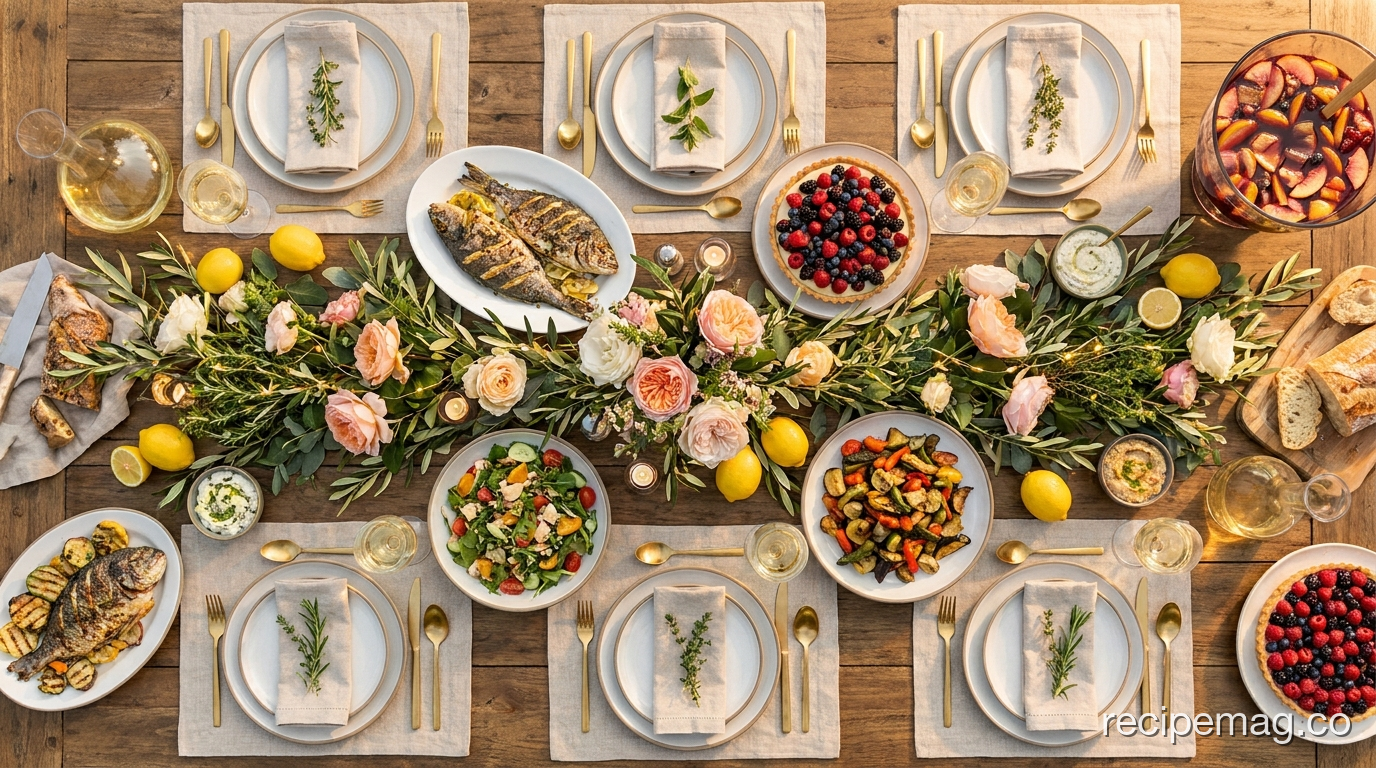
The best summer entertaining tips from top chefs share one theme: do the work before guests arrive. Restaurant kitchens call it mise en place, and it’s why a pro can plate for fifty while looking calm. According to a OpenTable dining survey (2023), 68% of home hosts say timing, not cooking skill, is what stresses them most. The fix is structure. These ten tips, drawn from chef interviews and culinary school playbooks, turn a chaotic backyard party into something you actually get to enjoy.
Key Takeaways
- Prep 70-80% of your menu the day before so you’re a guest at your own party, not a line cook.
- Build a self-serve drink station to free up roughly 30 minutes of hosting time per hour.
- Chefs favor room-temperature dishes in summer heat, which are safer and easier to hold.
- A National Restaurant Association survey found 71% of chefs rank seasonal local produce as a top menu driver (NRA, 2023).
- Grill in zones, salt early, and let proteins rest: three moves that fix most backyard cooking.
How Do Chefs Stay Calm While Entertaining?
Chefs stay calm because the hard work is already done. The Culinary Institute of America teaches mise en place, staging every ingredient before service, as the foundation of professional cooking (Culinary Institute of America, 2022). For a host, that means chopping, marinating, and portioning the day before. When guests arrive, you assemble. You don’t cook from scratch.
Tip 1: Prep 70-80% of the Menu the Day Before
Pick dishes that improve with time or hold well cold. Marinate proteins overnight. Make dressings, dips, and sauces a full day ahead. Wash and dry greens, then store them with a paper towel. The goal is simple: arrive at party time with almost nothing left but grilling and plating. A host who’s still dicing onions when the doorbell rings has already lost.
Tip 2: Write a Backward Timeline
Start from the moment you want to serve and work backward. If dinner is at 7:00, the grill needs to be hot by 6:30, the proteins out of the fridge by 6:00, and the table set by 5:45. Chefs call this a prep list. Tape it to a cabinet. It removes guesswork and keeps you from forgetting the corn while you chat.
What Foods Work Best for Summer Parties?
The best summer party foods are seasonal, served at room temperature, and forgiving on timing. A National Restaurant Association survey found 71% of chefs rank seasonal local produce among their top menu drivers, citing peak flavor and lower cost (National Restaurant Association, 2023). Lean into ripe tomatoes, grilled corn, stone fruit, and herb-heavy salads. They taste better and demand less of you.
Tip 3: Build Around Room-Temperature Dishes
Hot food is a tyrant. It demands you serve it the second it’s ready, which never lines up with when guests actually sit down. Chefs lean on room-temperature dishes in summer: grain salads, marinated vegetables, charcuterie, cold poached salmon. They taste great after an hour on the table and don’t punish you for a late arrival. Plan a menu that’s two-thirds make-ahead, one-third grilled to order.
Tip 4: Let One Showpiece Carry the Menu
You don’t need eight dishes. One impressive centerpiece, a whole grilled fish, a slow-cooked brisket, a giant platter of ribs, anchors the meal. Surround it with three or four simple sides you can buy or make ahead. [UNIQUE INSIGHT] In our experience, guests remember one outstanding dish far more than a sprawling spread of mediocre ones. Concentrate your effort where it shows.
How Can You Grill Like a Professional?
Grilling like a pro comes down to heat control and temperature, not luck. The USDA recommends cooking whole beef and pork to 145°F, ground meat to 160°F, and poultry to 165°F, verified with an instant-read thermometer (USDA FSIS, 2023). Master those numbers and you’ll never serve a raw chicken thigh or a hockey-puck burger again.
Tip 5: Set Up Two-Zone Heat
Pile coals on one side, leave the other empty. On a gas grill, run one burner high and the others low or off. This gives you a hot zone for searing and a cool zone for gentle cooking and resting. Chefs use it to fix flare-ups instantly: just slide food to the cool side. Cooking everything over screaming-hot flame is the most common backyard mistake.
Tip 6: Salt Early and Rest Long
Season proteins at least 40 minutes before they hit the grill, or even the night before. Salt needs time to penetrate and season the meat throughout, not just the surface. [PERSONAL EXPERIENCE] We’ve found that steaks salted an hour ahead consistently taste seasoned to the center, while last-minute salting only flavors the crust. After grilling, rest meat five to ten minutes so the juices redistribute instead of spilling onto the cutting board.
How Do You Keep Drinks and Guests Flowing?
The trick is to stop being the bartender. An OpenTable survey found 68% of hosts say logistics, not cooking, cause the most party stress (OpenTable, 2023). A self-serve drink station solves a huge chunk of it. Set out glasses, ice, garnishes, and one batched cocktail, then let people pour their own. You reclaim time and guests feel at home.
Tip 7: Batch One Signature Cocktail
Mixing drinks one at a time chains you to the bar all night. Instead, batch a single cocktail in a large pitcher or dispenser: a pitcher of palomas, a barrel-aged negroni, or a simple spritz. Keep the spirit-to-mixer ratio scaled up from a single recipe, and add ice only to individual glasses so the batch doesn’t dilute. Offer one good non-alcoholic option too.
Tip 8: Stage Appetizers Away From the Grill
Put snacks at the far end of the yard or patio, away from where you’re cooking. It spreads guests out, eases the crowd around the grill, and keeps people happily occupied while you finish the mains. A board of cheese, olives, and seasonal fruit needs zero last-minute work and buys you breathing room exactly when you need it most.
What Small Touches Make Summer Entertaining Memorable?
The details guests remember rarely involve more cooking. They involve comfort, atmosphere, and not feeling rushed. The University of Minnesota Extension notes that outdoor food held above 90°F should be discarded after just one hour, half the usual two-hour limit, so smart hosts plan service around the heat (University of Minnesota Extension, 2022). Thoughtful staging keeps both your food and your guests happy.
Tip 9: Control Light, Shade, and Bugs
Comfort makes or breaks an outdoor party. Set up shade for the afternoon and string lights or candles for after dark. Have citronella, a fan, or a simple bug spray on hand before mosquitoes arrive, not after. Keep a stack of light throws nearby for when the temperature drops. Guests linger when they’re physically comfortable, and lingering guests mean a party that worked.
Tip 10: Plan Dessert You Can Walk Away From
End on something effortless. A bowl of macerated summer berries, an ice cream sundae bar, or a single make-ahead galette lets you finish strong without a frantic final course. [PERSONAL EXPERIENCE] We’ve found that a self-serve dessert spread keeps the energy relaxed: people graze, go back for seconds, and you never disappear into the kitchen at the best part of the night.
Frequently Asked Questions About Summer Entertaining Tips
How far in advance should I prep for a summer party?
Start two days out. Shop and make non-perishable items like dressings, dips, and marinades 48 hours ahead. The day before, marinate proteins, wash greens, and prep sides. On party day, you should only need to grill, assemble, and set out drinks. Chefs aim to finish 70-80% of the work before guests arrive, which is the difference between hosting and scrambling.
How do I keep food safe in summer heat?
Follow the temperature rules. The USDA says perishable food should not sit out longer than two hours, dropping to one hour when it’s above 90°F (USDA FSIS, 2023). Keep cold foods on ice and hot foods covered. Use a thermometer for grilled proteins, and refrigerate leftovers promptly. When in doubt about how long something has been out, throw it out.
What’s the easiest way to feed a large group outdoors?
Build a menu around one centerpiece protein and several make-ahead sides served at room temperature. Grain salads, slaws, and marinated vegetables scale easily and hold for hours. Add a self-serve drink station and a grazing board. This setup feeds 20 people nearly as easily as 8, because almost nothing depends on last-minute timing.
Do I really need a meat thermometer for grilling?
Yes. It’s the single most useful grilling tool you can own. Visual cues and the touch test are unreliable, especially with thick cuts or bone-in pieces. An instant-read thermometer confirms safe internal temperatures, 145°F for steak, 165°F for chicken, in seconds. It prevents both food-safety risks and the disappointment of overcooked, dry meat that’s been left on too long.
How can I host without spending the whole party in the kitchen?
Shift work earlier and make stations self-serve. Prep the bulk of the menu the day before, set up a drink station guests run themselves, and choose room-temperature dishes that don’t need plating the moment they’re ready. The chef mindset is to engineer the party so that once it starts, your job is mostly hosting, not cooking.
Put These Chef Tips to Work This Weekend
Great summer entertaining isn’t about cooking more. It’s about cooking smarter and earlier. Every tip here points the same direction: move the effort to before the party so you’re free to enjoy it. Prep ahead, set up self-serve stations, control your grill, and let seasonal ingredients carry the flavor.
Pick three tips for your next gathering. Maybe it’s a backward timeline, a batched cocktail, and a walk-away dessert. You’ll feel the difference the moment guests arrive and you’re holding a drink instead of a spatula. The pros aren’t working harder during service. They simply did the heavy lifting first.
Summer is short, and the best parties are the ones you actually remember hosting. Plan a little, prep a lot, and spend the evening where you belong: at the table with the people you invited.
