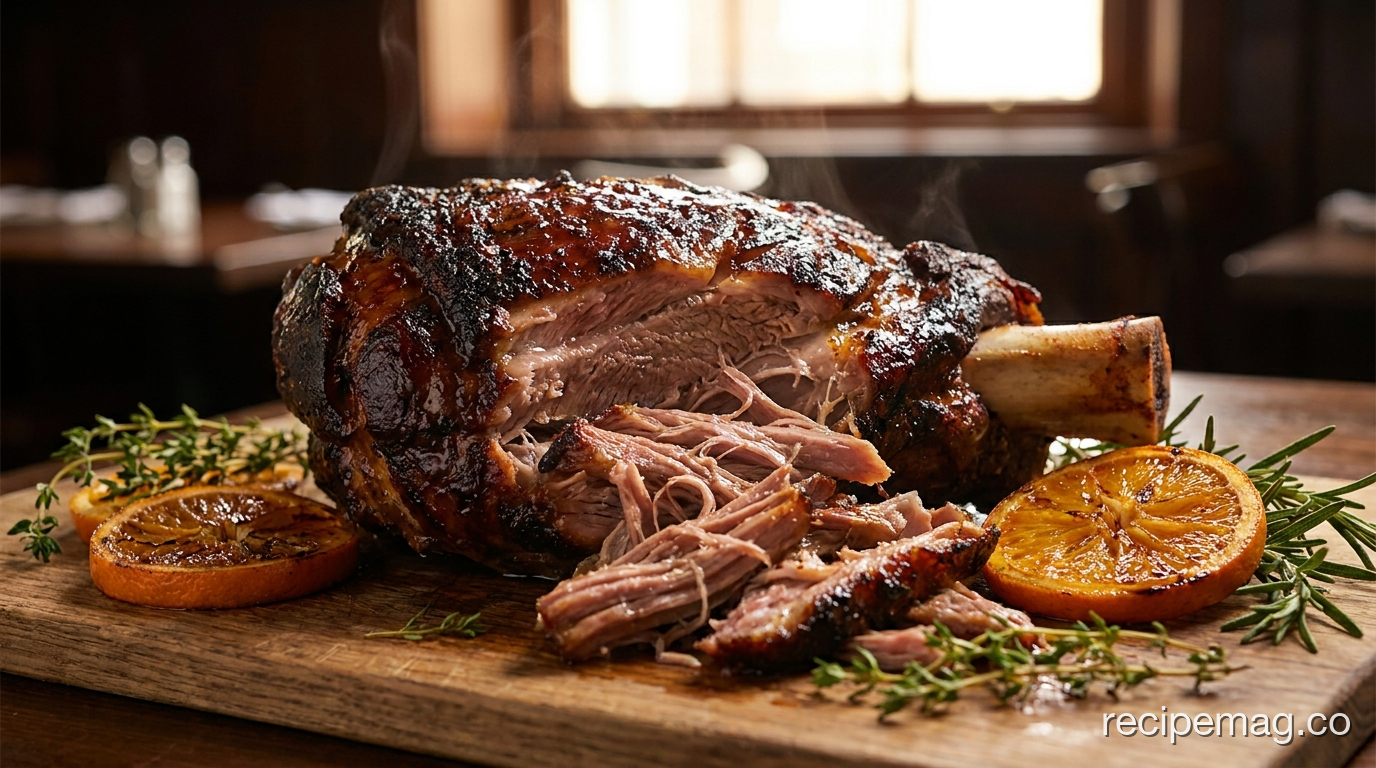
A slow-roasted pork shoulder is one of the most forgiving cuts you can put in your oven. Marinate it overnight in citrus, garlic, and fresh herbs, then roast it low at 300°F for about five hours until the meat shreds with a fork. The collagen in pork shoulder breaks down into gelatin between 160°F and 200°F, which is exactly why a long, gentle roast turns a tough, cheap cut into something tender and rich. ([USDA FoodData Central](https://fdc.nal.usda.gov), 2023) The marinade does the flavor work while you do nothing at all.
Key Takeaways
- Roast low and slow at 300°F for roughly 5 hours, or about 35 to 40 minutes per pound.
- Pork shoulder is safe at 145°F, but it only turns shreddable near 195°F to 203°F internal. ([USDA FSIS](https://www.fsis.usda.gov), 2023)
- A citrus and herb marinade adds brightness and helps tenderize the surface overnight.
- Rest the roast at least 30 minutes so the juices redistribute before you pull it.
- One 6-pound shoulder feeds 8 to 10 people and reheats beautifully all week.
Why Slow Roasting Works for Pork Shoulder
Pork shoulder comes from a hardworking part of the pig, so it’s packed with collagen and fat that need time to soften. The USDA notes that connective tissue converts into tender gelatin only after prolonged cooking, which is why a quick sear leaves this cut chewy. ([USDA FoodData Central](https://fdc.nal.usda.gov), 2023) Low heat gives the collagen the hours it needs without drying out the meat.
Here’s the trade-off worth understanding. Pork is safe to eat at 145°F, the temperature recommended by USDA since 2011. But safe and tender are two different things. At 145°F a shoulder is still tough and dense. The magic happens later, between 195°F and 203°F, when the meat pulls apart in soft, juicy strands.
[PERSONAL EXPERIENCE] We’ve roasted dozens of shoulders over the years, and the single biggest mistake is pulling it too early. A thermometer that reads 175°F feels close, but it isn’t. Give it another hour. The difference between a roast that slices and one that shreds is those final 20 degrees, and they take longer than you expect.
What You Need: Ingredients
This recipe leans on cheap, accessible ingredients, and the shoulder itself is one of the best values at the butcher counter. According to USDA retail price data, bone-in pork shoulder averaged around $2.30 per pound in 2023, a fraction of the cost of loin or tenderloin. ([USDA Economic Research Service](https://www.ers.usda.gov), 2023) A few citrus fruits and a handful of herbs turn that bargain cut into a centerpiece.
For the Pork
- 1 bone-in pork shoulder (also sold as pork butt or Boston butt), 5 to 6 pounds
- 2 tablespoons kosher salt
- 1 teaspoon black pepper
- 1 cup low-sodium chicken stock (for the roasting pan)
For the Citrus and Herb Marinade
- Juice and zest of 2 oranges
- Juice and zest of 2 limes
- Juice of 1 lemon
- 8 garlic cloves, minced
- 3 tablespoons olive oil
- 2 tablespoons fresh oregano, chopped (or 2 teaspoons dried)
- 2 tablespoons fresh cilantro, chopped
- 1 tablespoon ground cumin
- 1 teaspoon smoked paprika
- 1 teaspoon dried thyme
Look for a shoulder with the skin and a solid fat cap still attached. That fat renders slowly and bastes the meat from above as it roasts. If your butcher has trimmed it bare, ask for a piece with at least a quarter-inch of fat on top. It matters more than any single seasoning.
How Do You Marinate Pork Shoulder Overnight?
The marinade is part flavor, part insurance. Citrus acid brightens the pork and lightly tenderizes the surface, though America’s Test Kitchen points out that marinade acid penetrates only a few millimeters deep, so its main job is seasoning the exterior. ([America’s Test Kitchen](https://www.americastestkitchen.com), 2022) That’s exactly why you want it on the meat overnight and rubbed into every fold.
Step-by-Step Marinade
- Pat the shoulder dry. Dry meat takes seasoning better and browns more evenly later.
- Score the fat cap. Cut a shallow crosshatch through the skin and fat, about a quarter-inch deep. Don’t cut into the meat. This helps the marinade reach the fat and helps it render.
- Whisk the marinade. Combine the citrus juices, zest, garlic, olive oil, herbs, cumin, paprika, and thyme in a bowl.
- Coat thoroughly. Rub the salt all over the pork first, then massage the marinade into every crevice and the scored fat cap.
- Rest in the fridge. Seal the pork in a large bag or covered dish and refrigerate for at least 8 hours, ideally 24. Turn it once if you remember.
Pull the pork out of the fridge about an hour before roasting. A shoulder that goes in cold roasts unevenly, with a cool center that lags far behind the edges. Letting it sit at room temperature gives you a more consistent cook from the start.
How Long to Slow-Roast a Pork Shoulder
Plan on roughly 35 to 40 minutes per pound at 300°F, which puts a 6-pound shoulder near the 5-hour mark. The USDA confirms pork is safe at 145°F with a 3-minute rest, but for shreddable texture you’re aiming much higher, around 195°F to 203°F internal. ([USDA Food Safety and Inspection Service](https://www.fsis.usda.gov), 2023) Time is only a guide here. The thermometer is the real authority.
Roasting Steps
- Preheat to 300°F (150°C). Set a rack in the lower third of the oven.
- Set up the pan. Place the pork fat-side up on a rack inside a roasting pan. Pour the chicken stock into the bottom of the pan to keep the drippings from scorching.
- Roast covered for 3 hours. Tent loosely with foil. This traps moisture early and keeps the surface from drying out.
- Uncover and continue roasting. Remove the foil and roast 1.5 to 2 more hours, basting once or twice with the pan juices, until the fat cap is deep golden and crisp.
- Check the temperature. Insert a thermometer into the thickest part, avoiding the bone. You want 195°F to 203°F for pulling. A probe should slide in with almost no resistance.
[UNIQUE INSIGHT] Most recipes tell you to crank the heat at the end for crispy skin. We’ve found the opposite works better with citrus marinades: the sugars in the orange juice scorch fast above 400°F. Instead, uncover earlier and let the skin crisp gradually during the last two hours at 300°F. You get golden, crackly fat without a bitter, burnt edge.
How to Rest, Pull, and Serve
Resting is not optional, and it’s where impatient cooks lose all their juices. As the meat cooks, moisture is driven toward the center; resting lets it redistribute so it stays in the meat instead of running onto the board. Food scientists at Serious Eats recommend resting large roasts at least 30 minutes for this reason. ([Serious Eats](https://www.seriouseats.com), 2022) Cut too soon and you’ll watch all that work pool away.
Finishing Steps
- Rest 30 to 45 minutes. Tent the roast loosely with foil on a cutting board. It stays hot for a surprisingly long time.
- Pull or slice. For pulled pork, use two forks or your hands to shred the meat, discarding large fat pockets. For a sliced roast, carve against the grain.
- Dress it. Skim the fat off the pan juices and spoon the bright, citrusy drippings back over the meat.
- Serve. Pile it onto warm tortillas, fluffy rice, soft rolls, or alongside roasted vegetables.
The citrus marinade makes this pork especially good in tacos and bowls. A squeeze of fresh lime, some diced onion, and chopped cilantro at the table echo the marinade and keep everything tasting fresh.
Tips for the Best Slow-Roasted Pork Shoulder
A few habits separate a good roast from a great one, and most cost you nothing. The biggest factor is patience, but the details below close the gap. According to the National Pork Board, bone-in cuts cooked low and slow retain more moisture than boneless cuts roasted the same way, because the bone insulates the surrounding meat. ([National Pork Board](https://www.pork.org), 2022) Small choices add up to a juicier result.
- Salt early. Salting the night before, along with the marinade, seasons the meat deeper than salting at the oven.
- Use a probe thermometer. A leave-in probe lets you track the temperature without opening the oven and losing heat.
- Don’t drain all the fat. Those drippings carry the marinade’s flavor. Skim, don’t dump.
- Save the bone. Simmer it for stock or beans. It’s full of flavor and free.
- Reheat with a splash of stock. Add a little liquid when reheating leftovers to keep the pork moist.
Slow-Roasted Pork Shoulder with Citrus and Herb Marinade
Prep Time: 20 minutes | Marinate: 8 to 24 hours | Cook Time: 5 hours | Serves: 8 to 10
Ingredients
Pork
- 1 bone-in pork shoulder (pork butt), 5 to 6 pounds
- 2 tablespoons kosher salt
- 1 teaspoon black pepper
- 1 cup low-sodium chicken stock
Citrus and Herb Marinade
- Juice and zest of 2 oranges
- Juice and zest of 2 limes
- Juice of 1 lemon
- 8 garlic cloves, minced
- 3 tablespoons olive oil
- 2 tablespoons fresh oregano, chopped
- 2 tablespoons fresh cilantro, chopped
- 1 tablespoon ground cumin
- 1 teaspoon smoked paprika
- 1 teaspoon dried thyme
Instructions
- Pat the pork dry and score the fat cap in a shallow crosshatch.
- Whisk all marinade ingredients together. Rub the salt and pepper over the pork, then massage the marinade into every surface.
- Cover and refrigerate 8 to 24 hours. Remove from the fridge 1 hour before roasting.
- Preheat oven to 300°F (150°C). Set the pork fat-side up on a rack in a roasting pan. Add chicken stock to the pan.
- Tent with foil and roast 3 hours. Uncover and roast 1.5 to 2 more hours, basting once or twice, until internal temperature reaches 195°F to 203°F.
- Rest 30 to 45 minutes tented with foil. Pull or slice, skim the pan juices, and spoon them over the meat.
Notes
- No fresh herbs? Use one-third the amount of dried oregano and thyme.
- For crispier skin, broil the rested fat cap for 2 to 3 minutes, watching closely so the citrus sugars don’t burn.
- Leftovers keep refrigerated for 4 days and freeze well for 3 months.
Frequently Asked Questions About Slow-Roasted Pork Shoulder
What’s the difference between pork shoulder and pork butt?
They come from the same general area and are used interchangeably in most recipes. Pork butt (or Boston butt) is the upper, fattier section of the shoulder, while the picnic shoulder is the lower portion with more skin. Both slow-roast beautifully. For this recipe, either works, though the butt’s higher fat content gives slightly more tender, juicy results when pulled.
Can I cook a pork shoulder faster at a higher temperature?
You can, but you’ll sacrifice tenderness. Higher heat firms up the muscle fibers before the collagen has time to soften into gelatin, leaving a tougher roast. If you’re pressed for time, 325°F shaves off roughly an hour, but 300°F gives the best texture. Whatever temperature you choose, cook to an internal 195°F to 203°F, not to the clock.
Why is my pork shoulder tough after roasting?
Almost always, it was pulled too early. A shoulder that reads 160°F or 175°F is technically cooked but still tough because the connective tissue hasn’t fully broken down. Keep roasting until a thermometer reads 195°F to 203°F and a probe slides in with no resistance. Toughness from undercooking the collagen is the most common pork shoulder mistake by far.
Do I have to marinate it overnight?
Overnight gives the deepest flavor, but even 4 hours makes a noticeable difference. The citrus and garlic season the surface and the fat cap, where most of the flavor action happens during roasting. If you only have time for a short marinade, rub the salt in first and give the marinade as long as you can, even an hour helps the exterior taste brighter.
What should I serve with citrus pork shoulder?
The bright marinade pairs naturally with Latin-inspired sides. Warm tortillas with diced onion, cilantro, and lime turn it into tacos. Over rice and black beans it becomes a rice bowl. For a classic plate, serve it with roasted potatoes, a crisp slaw, or charred corn. The skimmed citrus pan juices are the one thing you shouldn’t skip pouring over the top.
A slow-roasted pork shoulder rewards patience more than skill. The marinade does the seasoning, the oven does the cooking, and your only real job is to wait for the thermometer to hit the right number. Start it the night before, slide it into the oven in the afternoon, and let the house fill with the smell of citrus and roasting pork.
Pull it, pile it high, and spoon those bright pan juices over the top. Whether you turn it into tacos, bowls, or a Sunday plate, one shoulder feeds a crowd and keeps giving leftovers all week.
Make extra. You’ll want it again on day three.
