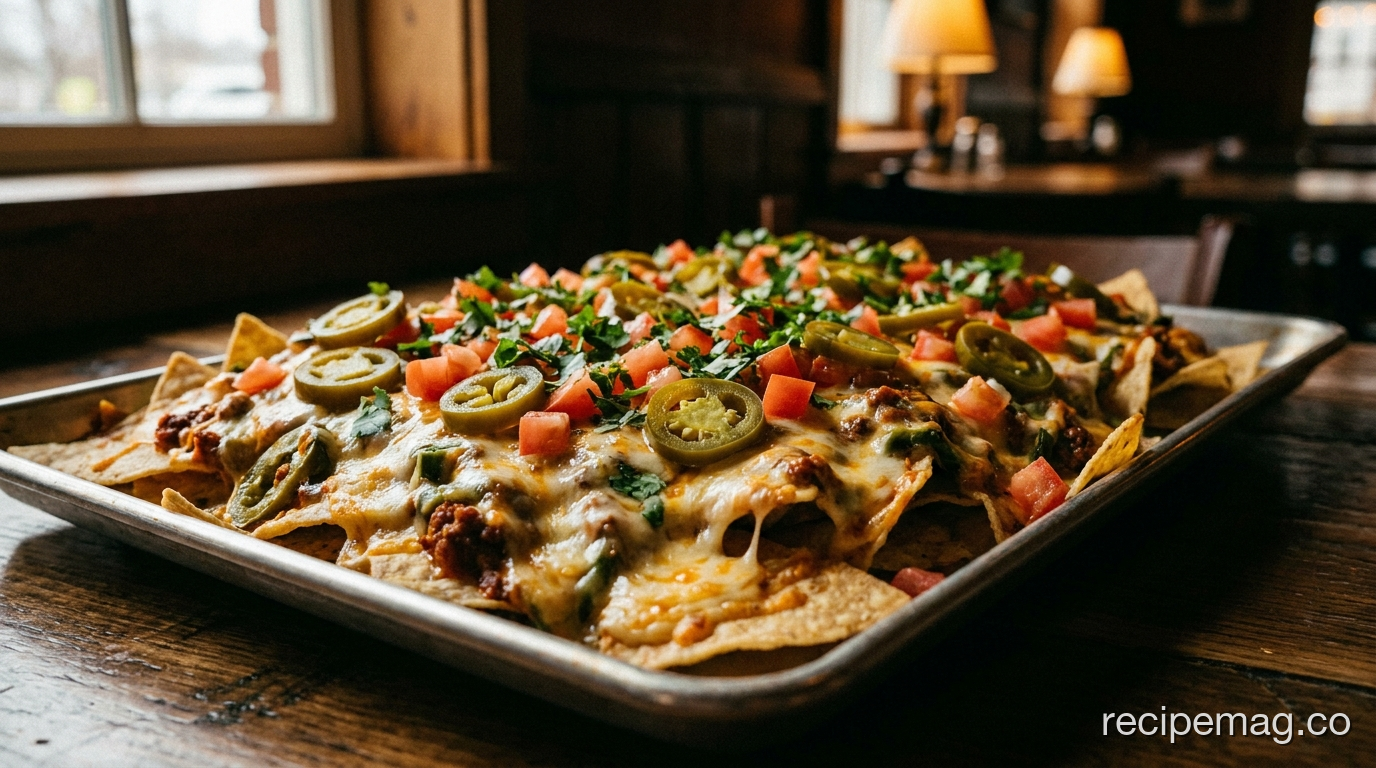
The difference between sad nachos and loaded nachos comes down to two decisions: real melting cheese instead of pre-shredded bags, and layering in two stages so no chip is left bare. This loaded nachos queso recipe builds a smooth homemade queso fundido from scratch, then stacks chips, cheese, and toppings in two rounds. The result feeds six, comes together in about 30 minutes, and stays gooey from the top layer all the way down. According to the USDA, Americans eat roughly 8 billion pounds of cheese a year, and a good share lands on nachos. ([USDA Economic Research Service](https://www.ers.usda.gov), 2023)
Key Takeaways
- Layer in two stages: chips, queso, and toppings twice, so every chip is coated instead of just the top inch.
- Use real melting cheese (Oaxaca, Monterey Jack, white cheddar), not pre-shredded bags coated in anti-caking starch.
- Pre-shredded cheese is dusted with cellulose and starch that block smooth melting. ([Cornell University](https://www.cornell.edu), 2022)
- Queso fundido takes about 10 minutes on the stovetop and serves 6 as a shareable appetizer.
- Bake at 350°F, not broil, so the cheese melts evenly without scorching the chips.
What Makes Loaded Nachos Actually Loaded?
Loaded nachos are defined by coverage, not quantity. Every chip should carry cheese and at least one topping, which only happens when you build in layers rather than dumping everything on top. A 2022 consumer survey from the National Restaurant Association found that shareable appetizers like nachos rank among the top three most-ordered bar foods in the United States, and texture complaints (soggy or bare chips) are the number one reason diners send them back. ([National Restaurant Association](https://restaurant.org), 2022) The fix is structural, not just adding more cheese.
The enemy of loaded nachos is gravity. Pour queso over a tall pile and it slides off the top, pooling at the bottom while the chips underneath stay dry. Toppings do the same thing. By the time you reach the middle of the pile, you’re eating plain tortilla chips. That’s the problem two-stage layering solves.
Real melting cheese matters just as much as layering. Cheese that melts into a smooth, glossy queso clings to chips. Cheese that breaks into a greasy, grainy mess slides right off. The two angles, layering and cheese choice, work together. Skip either one and the nachos fall apart.
[PERSONAL EXPERIENCE] We’ve made these nachos dozens of ways for parties and game days, and the single change that drew the most comments was switching from a bag of pre-shredded “Mexican blend” to block cheese grated fresh. People notice the smoothness immediately, even if they can’t name why.
Why Real Melting Cheese Beats Pre-Shredded
Block cheese you grate yourself melts smoother than anything from a bag. Pre-shredded cheese is coated with anti-caking agents (powdered cellulose, potato starch, sometimes natamycin) that keep the strands loose but interfere with melting. Food scientists at Cornell University note that these coatings can cause cheese to melt grainy or separate into oil and solids instead of forming a smooth sauce. ([Cornell University](https://www.cornell.edu), 2022) For queso fundido, that texture difference is everything.
The Best Cheeses for Queso Fundido
- Oaxaca cheese. A Mexican string cheese that melts into long, stretchy strands. It’s the traditional base for queso fundido and gives that signature pull.
- Monterey Jack. Mild, buttery, and one of the best melting cheeses you can buy. It melts smooth and stays creamy without breaking.
- White cheddar (mild to medium). Adds depth and a little tang. Skip sharp aged cheddar here; older cheese has less moisture and breaks more easily.
- Chihuahua (queso menonita). Another classic Mexican melting cheese, rich and slightly tangy, if your store carries it.
Avoid pre-shredded blends and avoid hard aged cheeses like Parmesan or aged Gouda as the base. They’re delicious, but they don’t melt into a sauce; they seize and grease out. A blend of Oaxaca and Monterey Jack, or Jack and mild white cheddar, gives you both stretch and smoothness.
How Do You Make Smooth Queso Fundido?
Smooth queso fundido relies on low heat, freshly grated cheese, and a small amount of starch to stabilize it. The starch (a teaspoon of cornstarch tossed with the grated cheese) keeps the proteins and fat from separating as the cheese warms. According to America’s Test Kitchen, tossing shredded cheese with cornstarch before melting is the most reliable home method for a smooth, dippable cheese sauce that doesn’t break. ([America’s Test Kitchen](https://www.americastestkitchen.com), 2021) Keep the heat gentle and the cheese melts into a glossy sauce in under 10 minutes.
Step-by-Step Queso Fundido
- Grate the cheese fresh. Grate 8 ounces of melting cheese (a mix of Oaxaca and Monterey Jack works well). Toss it with 1 teaspoon of cornstarch.
- Build a flavor base. In a small skillet or saucepan over medium-low heat, warm 1 tablespoon of butter or oil. Soften half a diced onion and a clove of minced garlic for 2 to 3 minutes until fragrant.
- Add liquid. Pour in ½ cup of whole milk or evaporated milk. Warm it gently; do not let it boil.
- Melt the cheese slowly. Lower the heat. Add the cheese a handful at a time, stirring constantly, letting each addition melt before adding more. Patience keeps it smooth.
- Season and finish. Stir in a pinch of salt, a pinch of cumin, and a spoonful of diced pickled jalapeño or roasted green chile. Keep it warm and pourable until you assemble.
[UNIQUE INSIGHT] The most common queso mistake at home is high heat. People want it fast, so they crank the burner, the cheese hits a hard boil, and the proteins tighten while the fat sweats out. You get a greasy puddle with a rubbery skin. Low and slow is not a suggestion here; it’s the whole technique. If your queso ever looks like it’s breaking, pull it off the heat and whisk in a splash of cold milk.
The Two-Stage Layering Trick
Layering in two stages is the difference between every-chip-loaded and a pile of dry chips with a cheesy crown. The principle is simple: build a shallow layer, top it fully, then build a second shallow layer on top and top that too. Even heating in the oven depends on this. The USDA notes that heat and melted fat travel downward through gaps in a dish, so a shallow, even spread heats far more uniformly than a tall mound. ([USDA Food Safety and Inspection Service](https://www.fsis.usda.gov), 2023)
How to Layer for Full Coverage
- First layer of chips. Spread half the tortilla chips in a single, slightly overlapping layer on a sheet pan or oven-safe platter.
- First layer of queso and toppings. Drizzle half the warm queso fundido over the chips. Scatter half the beans, half the cheese for baking, and half the firmer toppings (jalapeños, onion).
- Second layer of chips. Add the remaining chips on top in another single layer.
- Second layer of queso and toppings. Drizzle the rest of the queso and the remaining shredded cheese and beans over the top.
- Bake. Bake at 350°F for 8 to 10 minutes, until the cheese on top is fully melted and bubbling.
- Add cold toppings last. After baking, finish with fresh toppings that shouldn’t be heated: pico de gallo, avocado, sour cream, cilantro, and lime.
Toppings That Hold Up on Loaded Nachos
The best nacho toppings are layered by when they’re added: sturdy ones go in before baking, fresh ones go on after. A 2023 IFIC food trends report found that 62% of Americans say “customizable” dishes are more appealing to them, and nachos are one of the most customizable foods at any table. ([International Food Information Council](https://ific.org), 2023) The trick is knowing which toppings survive the oven and which wilt or melt into mush.
Bake-In Toppings (added before the oven)
- Black beans or refried beans (drained well so they don’t make chips soggy)
- Cooked seasoned ground beef, chorizo, or shredded chicken
- Pickled or fresh jalapeño slices
- Diced white or red onion
- Extra shredded melting cheese for the bubbly baked top
Finish-On-Top Toppings (added after baking)
- Pico de gallo or diced fresh tomato
- Diced avocado or guacamole
- Sour cream or Mexican crema (drizzle, don’t dump)
- Fresh cilantro leaves
- Sliced scallions and a squeeze of fresh lime
- Cotija or queso fresco crumbled over the top
Drain everything wet. Watery beans, undrained salsa, and juicy tomatoes added before baking are the fastest route to soggy nachos. Pat moist toppings dry, and save the juiciest ones for the very end.
Tips for the Best Loaded Nachos
A few small habits separate good nachos from great ones, and most of them are about moisture and timing. Restaurant kitchens build nachos on sheet pans for exactly this reason: the wide, shallow surface bakes evenly and keeps chips crisp. Sturdy chips matter too; thin, fragile chips collapse under queso and toppings. Thicker restaurant-style tortilla chips are built to carry the load.
- Use thick, sturdy chips. Restaurant-style or thick-cut tortilla chips hold up to queso and baking. Thin chips go limp.
- Bake, don’t broil. 350°F melts the cheese evenly. Broiling scorches chip edges before the center cheese melts.
- Drain everything. Beans, meat, and salsa all carry moisture. Drain and pat them dry before they touch the chips.
- Keep queso pourable. If it thickens while you assemble, whisk in a splash of warm milk to loosen it.
- Serve immediately. Loaded nachos are best within minutes of coming out of the oven, while the cheese is still molten and the chips still crisp.
- Use a sheet pan or platter, not a deep bowl. Shallow and wide beats tall and deep every time.
—
Loaded Nachos with Homemade Queso Fundido
Prep Time: 15 minutes | Cook Time: 15 minutes | Serves: 6
Ingredients
Queso Fundido
- 8 oz melting cheese (mix of Oaxaca and Monterey Jack), freshly grated
- 1 teaspoon cornstarch
- 1 tablespoon butter or neutral oil
- ½ small onion, diced
- 1 garlic clove, minced
- ½ cup whole milk or evaporated milk
- Pinch of cumin and salt
- 1 to 2 tablespoons diced pickled jalapeño or roasted green chile
Nachos
- 1 large bag (about 12 oz) thick, sturdy tortilla chips
- 6 oz additional shredded melting cheese (for baking)
- 1 can (15 oz) black beans, drained well
- 1 cup cooked seasoned ground beef, chorizo, or shredded chicken (optional)
- ½ cup sliced jalapeños
- ½ small onion, diced
Finish On Top
- 1 cup pico de gallo or diced tomato
- 1 avocado, diced, or guacamole
- Sour cream or crema, for drizzling
- Fresh cilantro, sliced scallions, lime wedges
- Crumbled cotija or queso fresco (optional)
Instructions
- Preheat oven to 350°F (175°C). Toss grated queso cheese with cornstarch.
- Make the queso fundido: melt butter in a saucepan over medium-low heat. Soften onion and garlic for 2 to 3 minutes. Add milk and warm gently without boiling.
- Lower heat. Add cheese a handful at a time, stirring constantly until smooth. Season with cumin, salt, and jalapeño. Keep warm.
- First layer: spread half the chips on a sheet pan. Drizzle with half the queso. Scatter half the beans, meat, shredded cheese, jalapeños, and onion.
- Second layer: add remaining chips, then remaining queso, shredded cheese, beans, meat, jalapeños, and onion.
- Bake 8 to 10 minutes, until cheese is fully melted and bubbling.
- Finish on top with pico de gallo, avocado, sour cream, cilantro, scallions, cotija, and lime. Serve immediately.
Notes
- Always grate your own block cheese. Pre-shredded cheese melts grainy because of anti-caking coatings.
- If the queso breaks or thickens, whisk in a splash of cold milk off the heat to bring it back.
- Drain beans, meat, and salsa well. Moisture is the main cause of soggy nachos.
- Make it vegetarian by skipping the meat and adding extra beans or roasted corn.
—
Frequently Asked Questions About Loaded Nachos and Queso
Why won’t my queso melt smoothly?
The two usual culprits are pre-shredded cheese and high heat. Pre-shredded cheese is coated with anti-caking starch that makes it melt grainy. And cranking the burner causes the cheese to seize and separate into oil and solids. Grate block cheese fresh, toss it with a teaspoon of cornstarch, and melt it slowly over low heat, adding it a handful at a time while stirring constantly.
What is the best cheese for queso fundido?
Oaxaca cheese is the traditional choice because it melts into long, stretchy strands. Monterey Jack is the best widely available substitute, melting smooth and creamy. A blend of the two, or Jack with a little mild white cheddar, gives both stretch and flavor. Avoid pre-shredded blends and hard aged cheeses like Parmesan, which break into a greasy mess instead of forming a smooth sauce.
How do I keep my nachos from getting soggy?
Drain everything wet and layer in two shallow stages. Soggy nachos come from moisture: undrained beans, juicy salsa, and watery meat soaking into the chips. Pat all bake-in toppings dry, and save the wettest toppings (pico, sour cream, avocado) for after baking. Use thick, sturdy chips and bake on a wide sheet pan rather than piling everything in a deep bowl.
Can I make loaded nachos ahead of time?
Partially. You can make the queso fundido and prep all the toppings a few hours ahead, then assemble and bake just before serving. Don’t assemble fully and let it sit; the chips absorb moisture and go limp fast. Reheat the queso gently with a splash of milk to loosen it. Loaded nachos are an immediate-eating dish, best within minutes of leaving the oven.
Should I bake or broil my nachos?
Bake at 350°F. Broiling runs the cheese under intense direct heat, which scorches the exposed chip edges before the cheese in the center has a chance to melt. A moderate 350°F oven melts the cheese evenly across both layers in 8 to 10 minutes without burning anything. If you want a little extra browning on top, broil for just the final 60 seconds, watching closely.
Loaded nachos aren’t complicated, but they reward a little technique. Make the queso fundido from real melting cheese, keep the heat gentle, and you’ll get a smooth sauce that clings to every chip instead of sliding off in a greasy slick.
Then layer in two stages. It’s a 30-second change in how you build the pan, and it’s the single thing that takes nachos from a cheesy top crust with bare chips underneath to a tray where every single chip is loaded. Drain your wet toppings, bake instead of broil, and finish with fresh pico, avocado, and lime.
Build the pan, pull it from the oven, and put it in the middle of the table. These don’t last long, and they’re not supposed to.
