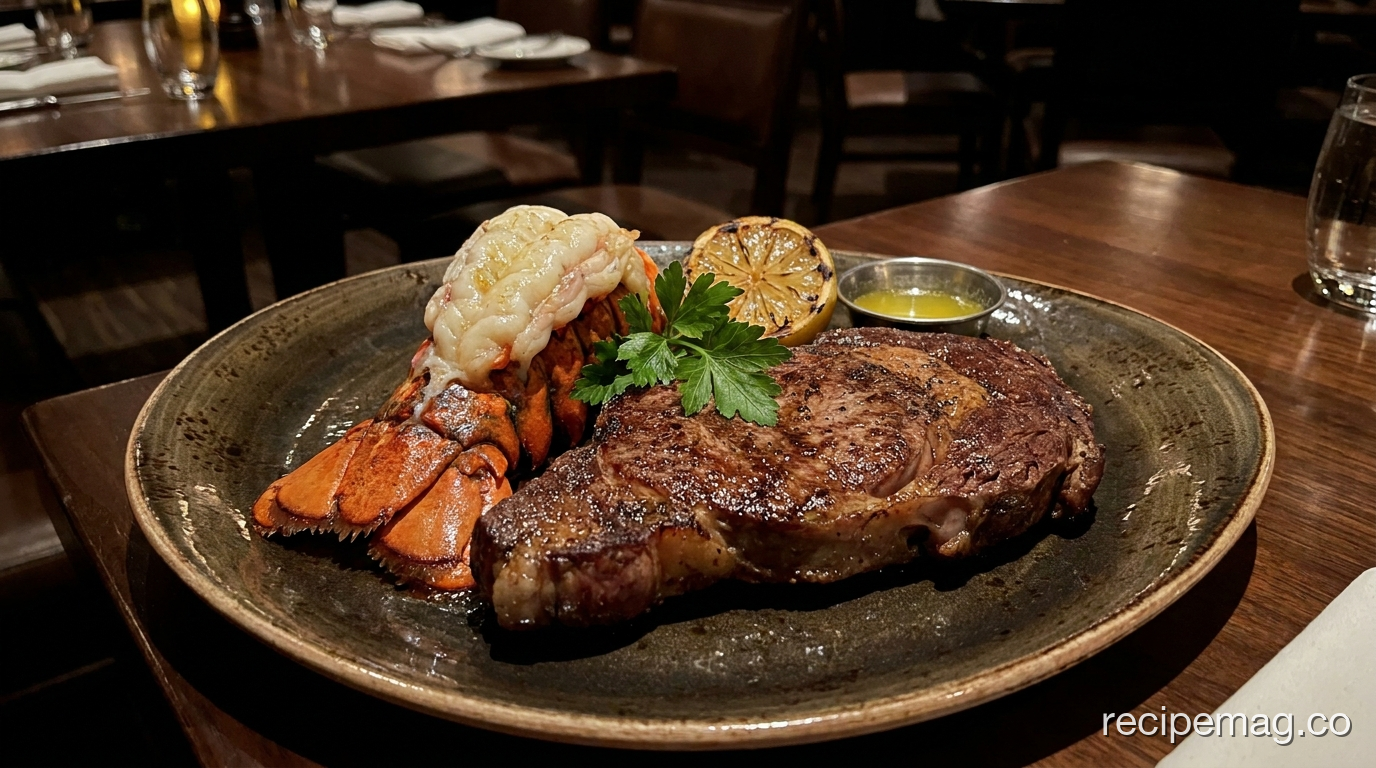
The hard part of any surf and turf recipe isn’t the cooking. It’s the timing. Get a good steak and a couple of lobster tails right, and the whole dinner hinges on landing both hot on the plate at the same moment. The trick is simple: sear the steak first, then let it rest while you finish the lobster in garlic butter. Steak needs that rest anyway, and a rested steak holds its heat for a solid 10 minutes. That’s your window. This is a restaurant plate for under $40, made in one skillet, on Father’s Day or any night worth celebrating.
Key Takeaways
- Cook the steak first and rest it while you finish the lobster, so both land hot together.
- A rested steak holds serving heat for about 10 minutes, which is exactly enough time to cook two lobster tails.
- Pull steak from the heat at 130°F for a perfect medium-rare after carryover. ([USDA FSIS](https://www.fsis.usda.gov), 2023)
- Cook lobster tail to 140°F internal for tender, opaque meat that isn’t rubbery.
- One garlic-herb butter does double duty: basting the steak and poaching the lobster.
What Exactly Is Surf and Turf?
Surf and turf is a single plate pairing seafood with red meat, almost always lobster or shrimp alongside steak. It became a steakhouse fixture in the United States in the 1960s, and it remains a special-occasion staple. Lobster demand still spikes hard around celebration dates: U.S. landings of American lobster topped 90 million pounds in recent years, with Maine accounting for the vast majority. ([NOAA Fisheries](https://www.fisheries.noaa.gov), 2023) The combination earns its reputation. Rich, beefy steak meets sweet, briny lobster, and a shared garlic butter ties them together.
For Father’s Day, it’s a smart choice. It feels like an event without trapping you in the kitchen all evening. The active cooking time is under 30 minutes. Most of that is hands-on for only the last 12.
The Best Steak Cuts for Surf and Turf
- Ribeye. The richest, most forgiving cut. Heavy marbling means it stays juicy even if you slightly overshoot your target temp.
- Filet mignon. The classic steakhouse pairing. Lean, buttery-tender, and mild enough to let the lobster share the spotlight.
- New York strip. A middle ground: more beefy flavor than filet, leaner than ribeye, with a satisfying chew.
- Sirloin. The budget pick. Leaner and firmer, so don’t push it past medium or it dries out.
How Do You Time the Steak and Lobster to Finish Together?
The whole plan rests on one fact: steak needs to rest, and lobster cooks fast. Beef pulled from heat keeps rising 5°F or more as residual heat moves inward, which is why you rest it. ([USDA FSIS](https://www.fsis.usda.gov), 2023) That rest runs 8 to 10 minutes for a thick steak. Two lobster tails cook in 6 to 8. So you sear the steak, set it aside to rest, and cook the lobster in the same buttery skillet while the steak coasts. Both finish hot at the same time, and you only washed one pan.
Here’s the order of operations, start to finish. Read it once before you turn on the burner. After that it runs itself.
The Timing Sequence
- Prep everything first. Steak salted and at room temp, lobster tails butterflied, garlic minced, butter measured, herbs chopped. There’s no time to chop once the pan is hot.
- Sear the steak (8 to 10 minutes). Get a hard crust, baste with butter, and pull it at 130°F for medium-rare.
- Rest the steak (8 to 10 minutes). Tent loosely with foil. The clock is now running on your lobster window.
- Wipe the skillet, melt the garlic butter, and cook the lobster (6 to 8 minutes). Baste constantly until the meat hits 140°F and turns opaque.
- Plate together. Steak and lobster land on the plate at the same moment, both hot, sharing the same garlic butter.
[PERSONAL EXPERIENCE] We’ve cooked this plate dozens of times, and the one mistake that wrecks the timing is trying to run both at once. You can’t baste a steak and a lobster tail in the same minute without overcooking one. Sequencing them, steak then lobster, is what makes it foolproof. The rest period isn’t downtime. It’s the second half of the recipe.
Ingredients
Quality matters more than quantity here. Two good steaks and two cold-water lobster tails feed two people generously, with one shared garlic butter doing all the heavy lifting. Buy the best beef you can: USDA grades beef by marbling, and Prime carries the most intramuscular fat, though good Choice ribeye delivers most of the experience for less money. ([USDA Agricultural Marketing Service](https://www.ams.usda.gov), 2023)
For the Steak
- 2 steaks (ribeye or filet mignon), about 1.25 to 1.5 inches thick, 8 to 10 oz each
- 1 tablespoon neutral high-smoke-point oil (avocado or grapeseed)
- Kosher salt (apply generously, 40 minutes ahead if you can)
- Freshly cracked black pepper
For the Lobster Tails
- 2 cold-water lobster tails, 5 to 6 oz each, thawed if frozen
- Lemon wedges, for serving
For the Garlic-Herb Butter (shared)
- 6 tablespoons unsalted butter
- 4 garlic cloves, smashed (for the steak) plus 2 cloves minced (for the lobster)
- 3 sprigs fresh thyme
- 1 tablespoon fresh parsley, chopped
- Pinch of flaky salt to finish
Thaw frozen lobster tails overnight in the fridge, never at room temperature or in warm water. Slow thawing keeps the texture firm. If you forgot, a sealed bag under cold running water works in about 30 minutes. Pat the tails bone-dry before they go anywhere near butter.
How to Sear the Steak (and Why You Cook It First)
A great crust is chemistry, not luck. The deep brown sear comes from the Maillard reaction, which kicks into gear above about 285°F and builds the savory, roasted flavor that defines a steakhouse steak. ([American Chemical Society](https://www.acs.org), 2022) Two things deliver it: a bone-dry steak surface and a ripping-hot pan. Cook the steak first because it needs that rest before slicing, and the rest is what frees you up to finish the lobster.
Step-by-Step Searing
- Dry and season. Pat both steaks completely dry. Season generously with kosher salt and pepper. A dry surface is non-negotiable for a crust.
- Heat the pan hard. Set a cast-iron skillet over high heat for 3 to 4 minutes until it just begins to smoke. Add the oil.
- Sear undisturbed. Lay the steaks away from you. Don’t move them for 3 minutes. Let the crust form. Flip and sear the second side for 2 minutes.
- Add butter and baste. Drop in 3 tablespoons butter, the smashed garlic, and thyme. Tilt the pan and spoon the foaming butter over the steaks for 60 to 90 seconds.
- Check the temp. Pull the steaks at 130°F for medium-rare. Use an instant-read thermometer in the thickest part. Guessing is how steaks get overcooked.
- Rest, tented. Move the steaks to a board or warm plate and tent loosely with foil. Start your lobster now.
How to Cook Lobster Tail in Garlic Butter
Lobster goes from tender to rubbery in under a minute, so temperature is everything. University of Maine seafood guidance points to an internal target near 140°F, where the meat is just opaque and firm but still juicy. ([University of Maine](https://extension.umaine.edu), 2022) Butter-basting in the still-hot skillet gives you total control: gentle heat, constant moisture, and a clear visual cue when the meat turns from translucent to white. This is the half of the plate that finishes while your steak rests.
Butterflying and Cooking
- Butterfly the tails. Using kitchen shears, cut down the top of the shell to the base of the tail, leaving the fan intact. Gently pry the shell open and lift the meat to rest on top of the shell.
- Wipe and rebutter the skillet. Pour off the burnt bits, lower the heat to medium, and melt the remaining 3 tablespoons butter with the minced garlic.
- Add the tails meat-side down. Cook for 1 to 2 minutes to pick up color, then flip them meat-side up.
- Baste constantly. Spoon the garlic butter over the meat for 4 to 6 minutes. The meat is done when it’s opaque all the way through and reaches 140°F.
- Finish. Squeeze a little lemon over the tails and sprinkle with chopped parsley.
[UNIQUE INSIGHT] Most home cooks broil lobster tails, and broiling works. But basting in butter is more forgiving for a beginner because you can see and feel the meat the whole time, and you control the heat by simply lifting the pan off the burner. With broiling, a 30-second lapse turns sweet lobster into an eraser. If you’d rather broil, place butterflied tails 6 inches under a high broiler for 8 to 10 minutes, basting once, and pull at the same 140°F.
Tips for the Best Surf and Turf at Home
A few small habits separate a good home version from a great one. The biggest single upgrade is an instant-read thermometer: a 2022 consumer survey by the food-safety nonprofit Partnership for Food Safety Education found that a large share of home cooks still judge doneness by eye, the leading cause of both overcooked and undercooked proteins. ([Partnership for Food Safety Education](https://www.fightbac.org), 2022) Take the guesswork out and both halves of this plate land perfectly.
- Salt the steak early. Salting 40 minutes ahead lets the surface dry and the salt penetrate, giving a better crust and seasoning throughout. No time? Salt right before searing instead.
- Get the steak to room temperature. A cold-from-the-fridge steak sears unevenly. Let it sit out 30 to 40 minutes before cooking.
- Don’t crowd the pan. Two steaks max in a 12-inch skillet. Crowding drops the pan temperature and steams the meat instead of searing it.
- Reserve the resting juices. Pour any juice from the resting board back over the sliced steak. That’s pure flavor.
- Use one butter for both. The same garlic-herb butter bastes the steak and poaches the lobster, which links the two flavors on the plate.
- Serve simple sides. Asparagus, a baked potato, or a green salad. The proteins are the show. Don’t compete with them.
—
Father’s Day Surf and Turf: Seared Steak and Garlic Butter Lobster Tail
Prep Time: 15 minutes | Cook Time: 20 minutes | Rest Time: 10 minutes | Serves: 2
Ingredients
Steak
- 2 steaks (ribeye or filet mignon), 1.25 to 1.5 inches thick, 8 to 10 oz each
- 1 tablespoon avocado or grapeseed oil
- Kosher salt and freshly cracked black pepper
Lobster Tails
- 2 cold-water lobster tails, 5 to 6 oz each, thawed
- Lemon wedges, for serving
Garlic-Herb Butter (shared)
- 6 tablespoons unsalted butter
- 4 garlic cloves smashed, plus 2 cloves minced
- 3 sprigs fresh thyme
- 1 tablespoon fresh parsley, chopped
- Flaky salt, to finish
Instructions
- Prep everything first: pat steaks dry and season with salt and pepper (40 minutes ahead if possible); butterfly the lobster tails with kitchen shears and lift the meat onto the shell; mince and smash the garlic; chop the herbs.
- Heat a cast-iron skillet over high heat for 3 to 4 minutes until just smoking. Add oil.
- Sear the steaks undisturbed for 3 minutes. Flip and sear 2 minutes more.
- Add 3 tablespoons butter, the smashed garlic, and thyme. Tilt the pan and baste the steaks for 60 to 90 seconds. Pull at 130°F for medium-rare.
- Rest the steaks on a board, tented loosely with foil, for 8 to 10 minutes. Begin the lobster now.
- Wipe the skillet, lower heat to medium, and melt the remaining 3 tablespoons butter with the minced garlic.
- Add the lobster tails meat-side down for 1 to 2 minutes, then flip meat-side up and baste with garlic butter for 4 to 6 minutes, until opaque and 140°F internal.
- Finish the tails with lemon and parsley. Plate the rested steak and lobster together, pour over the resting juices, and add flaky salt. Serve immediately.
Notes
- Pull temperatures: 120°F rare, 130°F medium-rare, 140°F medium. Carryover adds about 5°F during the rest.
- To broil the lobster instead: place butterflied tails 6 inches under a high broiler for 8 to 10 minutes, basting once, and pull at 140°F.
- Thaw frozen lobster tails overnight in the fridge for the firmest texture. In a pinch, use a sealed bag under cold running water for 30 minutes.
- Scale up to 4 servings by searing steaks in two batches so you never crowd the pan.
—
Frequently Asked Questions About This Surf and Turf Recipe
Should I cook the steak or the lobster first?
Cook the steak first, every time. A thick steak needs to rest 8 to 10 minutes after searing so the juices redistribute, and that rest is exactly long enough to cook two lobster tails. Sear the steak, set it aside to rest, then finish the lobster in the same skillet. Both land hot on the plate at the same moment, with no overcooking and only one pan to wash.
What internal temperature should lobster tail reach?
Pull lobster tail at about 140°F internal, measured in the thickest part of the meat. At that point the flesh is opaque, firm, and still juicy. University of Maine seafood guidance warns that pushing well past 140°F toughens the protein and produces a rubbery texture. ([University of Maine](https://extension.umaine.edu), 2022) If you don’t have a thermometer, watch for the meat to turn fully white with no translucent center.
Can I make surf and turf without a cast-iron skillet?
Yes. Any heavy stainless-steel or carbon-steel skillet that holds high heat will sear a steak well. Avoid nonstick pans, which can’t safely reach searing temperatures and won’t build a proper crust. You can also sear the steak in a stainless pan and broil the lobster tails separately under the oven broiler. The timing logic stays the same: steak first, rest, then lobster.
How much does surf and turf cost to make at home?
For two people, expect roughly $30 to $40 using Choice ribeye and 5 to 6 oz lobster tails, depending on your market. That’s a fraction of a steakhouse bill, where the same plate often runs $60 or more per person. Buying lobster tails frozen rather than fresh, and Choice grade rather than Prime, keeps the cost down without a meaningful drop in quality.
Can I prep any of this ahead of time?
Yes, and you should. Salt the steaks and butterfly the lobster tails up to a few hours ahead, then refrigerate. Mince the garlic and chop the herbs in advance too. The actual cooking takes under 30 minutes, but having everything prepped is what keeps the timing tight. Once the pan is hot, there’s no time to stop and chop. Mise en place is the whole game here.
Surf and turf has a reputation as a restaurant-only splurge, but the only genuine challenge is timing, and now you know the answer. Cook the steak, rest it, finish the lobster while it rests. That single sequence turns two intimidating proteins into one calm, confident dinner.
Make it your Father’s Day move this year. The plate looks like a celebration, the cost is a fraction of dining out, and you’ll spend more time at the table than at the stove. A good thermometer and a hot pan do most of the work.
Sear with confidence, rest without rushing, and baste that lobster until it’s just opaque. Pour the steak juices over the top, add a squeeze of lemon, and bring both plates to the table hot. That’s the whole trick.
