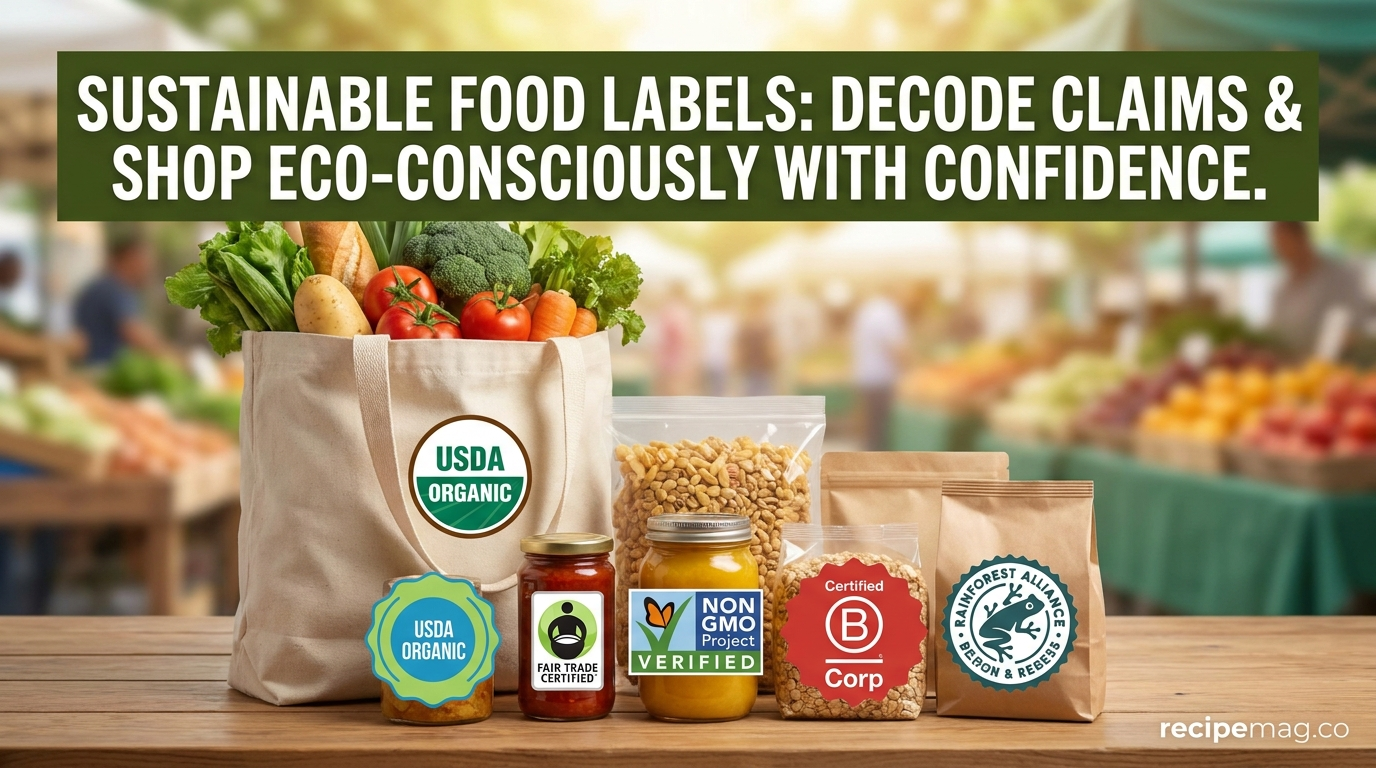
Standing frozen in the grocery aisle staring at 12 different cartons of oats, all claiming to be ‘green’ or ‘sustainable’? You are not alone. 68% of shoppers admit they cannot tell legitimate sustainable claims from marketing greenwashing, according to 2025 Consumer Reports data.
This is Decoding Food Labels for Sustainability: A Shopper’s Handbook, your no-nonsense guide to cutting through marketing noise. We will break down exactly what labels mean, which certifications you can trust, and how to walk out of the store with products that align with your values.
Before you head to the checkout, pair this guide with Mastering Sustainable Dishes: Your Complete Guide to Eco-Conscious Cooking to turn your good purchases into great low-waste meals.
==========
Common Sustainable Food Label Claims & What They Actually Mean
Unregulated Marketing Terms To Ignore
Almost 70% of popular ‘sustainable’ wording on packaging has zero legal or third-party verification. These words are designed only to make you feel good about your purchase.
Terms including ‘planet friendly’, ‘eco’, ‘natural’, and ‘sustainably sourced’ have no standard definition. Any brand can print these on packaging without proof or audit.
Never make a purchasing decision based only on these unregulated front-of-pack words. Always flip the package and look for official third-party certification logos.
Verified Claims You Can Rely On
Only claims that are backed by independent third party auditing hold real weight. These labels require regular facility audits, supply chain tracking, and public transparency reports.
- Regenerative Organic Certified
- Fair Trade Certified
- Marine Stewardship Council (MSC)
- Rainforest Alliance Certified
==========
Sustainability Certification Comparison Reference Table
Not all certifications are created equal. Some have extremely strict standards, while others are little more than paid membership labels for brands.
Use this reference table next time you are shopping to quickly evaluate the labels you see on packaging.
| Certification | Third Party Audited | Covers Carbon Footprint | Worker Fair Wage Requirements | Trust Score /10 |
|---|---|---|---|---|
| Regenerative Organic Certified | ✅ Yes | ✅ Yes | ✅ Yes | 10/10 |
| Fair Trade International | ✅ Yes | ❌ No | ✅ Yes | 9/10 |
| USDA Organic | ✅ Yes | ❌ No | ❌ No | 7/10 |
| Non GMO Project Verified | ✅ Yes | ❌ No | ❌ No | 6/10 |
==========
How To Spot Greenwashing On Food Labels
Red Flags To Watch For
Greenwashing works because it looks and feels legitimate. There are very consistent patterns that almost all greenwashed products follow.
Watch out for vague nature imagery with no actual claims, tiny fine print disclaimers, and brands that only talk about one small sustainability feature while ignoring all other impacts.
30 Second Label Check Routine
You don’t need 10 minutes per product to verify claims. Train yourself to run this quick check every time you pick up a new product.
- Ignore all front of pack marketing text completely
- Flip directly to the back panel and look for certification logos
- Check for public supply chain transparency links
- Skip any product that only uses unregulated descriptive words
==========
Expert Tips For Eco-Conscious Grocery Shopping
These actionable tips come from sustainable food system analysts and veteran ethical shoppers. They will save you time and money while helping you stick to your values.
- Make a short list of 3-4 trusted certifications you will prioritise. Don’t try to memorise every single label that exists.
- Shop seasonal whenever possible. For extra guidance reference The Ultimate Guide to Seasonal Eating: What to Cook When & Why It Matters.
- Ignore packaging colour. Green and brown packaging does not mean the product inside is sustainable.
- When in doubt, choose loose unpackaged produce over pre-bagged options every single time.
- Check brand transparency reports once, not every time you shop. Once you verify a brand you can trust them long term.
==========
Related Reading
Frequently Asked Questions
Is ‘organic’ the same as sustainable?
No. Organic only regulates farming inputs like pesticides. It does not cover carbon emissions, water use, worker wages or transportation impacts.
Can brands fake certification logos?
It is illegal but very rare. Most brands will not risk the massive fines and reputational damage of faking an official certification mark.
What is the most trusted sustainable food certification?
As of 2025, Regenerative Organic Certified is universally considered the gold standard for food products across all impact categories.
Do local farms need certifications?
Small local farms often cannot afford expensive third party certifications. Ask them directly about their practices instead of looking for labels.
How much more do certified sustainable products cost?
On average, properly certified sustainable products cost 11-17% more than conventional equivalents, according to 2024 grocery price data.
Is carbon neutral labelling reliable?
Most carbon neutral food claims rely on unregulated offset schemes. Always check exactly how the neutrality is being calculated.
Should I ignore products with no sustainability labels?
No. Many excellent small producers do not pay for certification labels. Always evaluate products on multiple factors not just logos.
How do I avoid getting overwhelmed checking labels?
Start with just one product category first. Master reading labels for one thing before expanding to your entire grocery list.
==========
Final Thoughts
Decoding Food Labels for Sustainability: A Shopper’s Handbook exists because good intentions are not enough. Every dollar you spend at the grocery store is a vote for the food system you want to exist.
You do not need to be perfect. Even checking labels for 2 or 3 items on every shop will add up to massive positive impact over time.
Continue building your sustainable kitchen skills by exploring our full collection of guides in this cluster. Start with building your pantry, planning seasonal meals, and learning low waste cooking techniques.
Next time you head to the grocery store, bring this guide. You will walk out knowing you made choices that align with your values.
