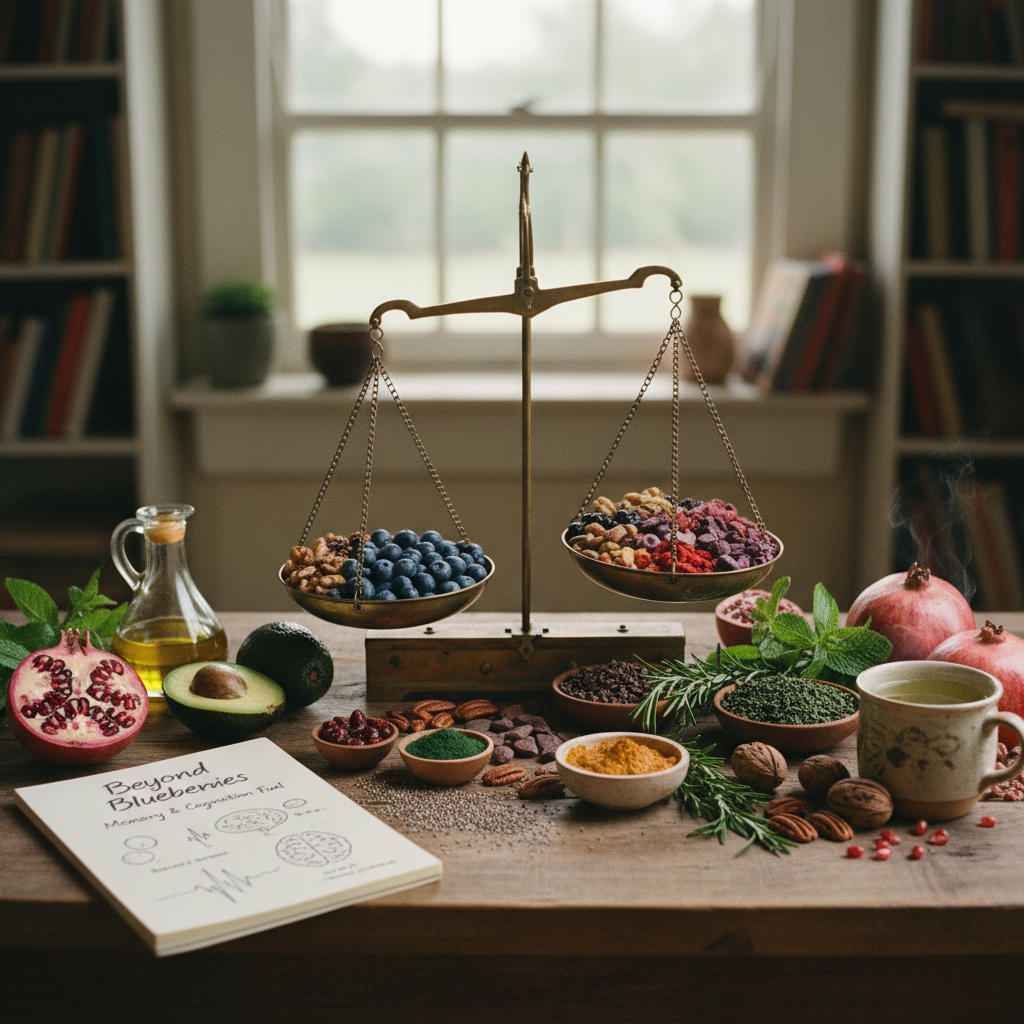
While blueberries have long held the crown as a go-to brain-boosting superfood, the landscape of cognitive nutrition extends far beyond these familiar berries. In fact, a global pantry offers a diverse array of superfoods with even more potent, targeted, and bioavailable antioxidant compounds capable of significantly enhancing memory, focus, and overall cognitive function. This showdown will reveal these unsung heroes, providing you with the knowledge to upgrade your brain-boosting diet.
The Direct Answer: Foods Better Than Blueberries for Brain Power
For superior brain power, several superfoods offer a more concentrated or unique array of benefits than blueberries. Top contenders include Matcha green tea, with its calming L-theanine and potent EGCG; Lion’s Mane mushroom, renowned for stimulating Nerve Growth Factor; Astaxanthin-rich marine foods like salmon and krill, a carotenoid with exceptional blood-brain barrier penetration; dark cacao, packed with brain-boosting flavonoids; and exotic fruits like Amla and Camu Camu, which boast staggering Vitamin C and polyphenol levels. These foods often surpass blueberries in specific antioxidant potency or offer additional compounds directly beneficial for neuronal health and function.
Key Takeaways: Essential Elements of a Natural Memory Enhancers Diet
A diet designed to naturally enhance memory and cognitive function focuses on a synergy of powerful, nutrient-dense foods. It’s about more than just antioxidants; it’s about creating an optimal environment for brain health.
Key elements of such a diet include:
- High Antioxidant Density: Prioritizing foods rich in compounds that combat oxidative stress.
- Anti-inflammatory Properties: Incorporating foods that reduce chronic inflammation, a known contributor to cognitive decline.
- Neurotransmitter Support: Supplying precursors and cofactors for neurotransmitter synthesis.
- Optimized Blood Flow: Including ingredients that enhance cerebral circulation, ensuring ample oxygen and nutrient delivery.
- Gut-Brain Axis Nurturing: Fostering a healthy gut microbiome, which profoundly impacts brain function and mood.
The Science: What Role Do Antioxidants Play in Brain Aging
The human brain, despite making up only about 2% of body weight, consumes roughly 20% of the body’s oxygen. This high metabolic activity generates a significant amount of free radicals, unstable molecules that can damage cells through a process called oxidative stress. Over time, this damage contributes to brain aging and cognitive decline.
Understanding this damage, we can then explore how antioxidants actively work to combat oxidative stress and prevent cognitive decline.
Combating Oxidative Stress and Preventing Cognitive Decline
Antioxidants are crucial in the brain’s defense system, acting as molecular bodyguards. They neutralize free radicals, preventing them from causing damage to neurons, lipids, and DNA. By mitigating oxidative stress, antioxidants protect against inflammation, preserve synaptic plasticity, and reduce the risk factors associated with neurodegenerative diseases like Alzheimer’s and Parkinson’s. A steady supply of diverse antioxidants is paramount for long-term brain health and preserving cognitive function.
How Specific Antioxidants Cross the Blood-Brain Barrier
The blood-brain barrier (BBB) is a highly selective physiological barrier that protects the brain from harmful substances while allowing essential nutrients to pass. Not all antioxidants can cross this barrier effectively. Certain compounds possess unique properties, such as small molecular size, lipophilicity (fat-solubility), or specific transport mechanisms, that enable them to penetrate the BBB.
For instance, Astaxanthin is a powerful carotenoid known for its exceptional ability to cross the BBB, directly delivering its antioxidant and anti-inflammatory benefits to brain cells. Similarly, certain polyphenols and flavonoids found in dark cacao or green tea can also traverse the barrier, directly influencing neural pathways and protecting brain tissue. Understanding which antioxidants can access the brain is key to selecting the most effective cognitive superfoods.
The Global Cognitive Superfood Showdown
Let’s dive into the contenders that challenge, and often surpass, blueberries in their brain-boosting prowess. These global superfoods offer a spectrum of benefits, from enhanced focus to nerve regeneration.
In this section, we pit various powerful superfoods against the conventional perception of blueberries, starting with a potent green tea.
Matcha Green Tea vs Standard Blueberries
- Matcha green tea, a finely ground powder of specially grown and processed green tea leaves, offers a unique cognitive edge. Unlike standard blueberries, Matcha provides a powerful combination of EGCG (Epigallocatechin gallate), a potent antioxidant, and L-theanine*, an amino acid. L-theanine promotes a state of calm alertness, enhancing focus and reducing stress without drowsiness, a benefit less pronounced in blueberries. EGCG also offers significant neuroprotective properties.
Lion’s Mane Mushroom for Cognitive Performance and Focus
- Lion’s Mane mushroom (Hericium erinaceus) is a remarkable fungi gaining significant attention for its nootropic properties. It contains unique compounds called hericenones and erinacines, which are believed to stimulate the production of Nerve Growth Factor (NGF)* in the brain. NGF plays a critical role in the growth, maintenance, and survival of neurons, making Lion’s Mane a powerful ally for memory, focus, and potentially even nerve regeneration.
Astaxanthin-Rich Marine Superfoods
Often called “the king of carotenoids,” Astaxanthin is a naturally occurring pigment found in microalgae, salmon, krill, and shrimp. Its antioxidant power is significantly higher than many other antioxidants, including Vitamin C and E. Crucially, Astaxanthin’s unique molecular structure allows it to effectively cross the blood-brain barrier, directly protecting brain cells from oxidative damage and inflammation. It has been linked to improved memory, mental processing speed, and reduced cognitive fatigue.
Dark Cacao, Saffron, and Luxury Food Options for Focus
- Dark cacao, especially varieties with 70% cocoa or higher, is a rich source of flavonoids that improve blood flow to the brain, enhancing cognitive function and mood. Its neuroprotective compounds can also protect against age-related cognitive decline. Saffron*, a prized spice, contains compounds like crocin and safranal, which have demonstrated mood-enhancing, memory-boosting, and neuroprotective effects in studies. These premium ingredients, along with other specialized options, offer concentrated benefits for mental acuity and well-being. [Read more about incorporating luxury food (/) into your health regimen.]
Amla, Camu Camu, and Exotic Antioxidant-Rich Foods for Brain Health Beyond Blueberries
Venturing into exotic produce reveals even more potent brain allies. Amla (Indian Gooseberry) is an Ayurvedic superfood with an incredibly high concentration of Vitamin C, polyphenols, and tannins, making it a powerful antioxidant and traditional brain tonic. Camu Camu, a tart berry from the Amazon rainforest, is perhaps the richest natural source of Vitamin C on the planet, boasting up to 60 times more than an orange. Its potent anti-inflammatory and antioxidant properties are excellent for overall brain health and neuroprotection.
Data Breakdown: Brain-Boosting Superfoods Comparison Table
Understanding the specific benefits and accessibility of these superfoods can help you make informed dietary choices. Here’s a comparative breakdown:
Below, we present a detailed comparison, focusing on ORAC values and specific cognitive benefits.
ORAC Values and Specific Cognitive Benefits Ranked
| Superfood | Key Antioxidant/Compound | ORAC Value (per 100g, approx.) | Primary Cognitive Benefit(s) | Global Sourcing |
|---|---|---|---|---|
| Camu Camu Powder | Vitamin C, Ellagic Acid | ~3,000,000 | Mood, Neuroprotection, Anti-inflammatory | Amazon (powdered form widely avail.) |
| Amla Powder | Vitamin C, Tannins | ~261,500 | Memory, Anti-aging, Focus, Neuroprotection | India (powdered form widely avail.) |
| Dark Cacao (70%+) | Flavonoids, Theobromine | ~20,816 – 50,000 | Blood Flow, Mood, Focus, Neuroprotection | Global (accessible) |
| Matcha Green Tea | EGCG, L-Theanine | ~138,400 (per serving) | Calm Focus, Memory, Neuroprotection | Japan (specialty stores, online) |
| Astaxanthin | Carotenoid | (N/A – potency measured diff.) | Memory, BBB Protection, Reduced Fatigue, Anti-inflammatory | Marine (supplements, salmon, krill) |
| Lion’s Mane | Hericenones, Erinacines | (N/A) | NGF Production, Memory, Focus, Nerve Regeneration | Asia (supplements, fresh in specialty) |
| Blueberries | Anthocyanins | ~9,000 | General Memory, Antioxidant Support | Global (accessible) |
| Saffron | Crocin, Safranal | (N/A – potency measured diff.) | Mood, Memory, Neuroprotection | Middle East, Mediterranean (specialty) |
- Note: ORAC values are often debated and can vary based on growing conditions, processing, and testing methods. They serve as a general guide to antioxidant capacity.*
Global Sourcing: Accessible Supermarket Staples vs Exotic Imports
Many powerful brain foods are surprisingly accessible. Dark cacao is a supermarket staple, and high-quality green tea is increasingly common. For more exotic options, online retailers and specialty health food stores are excellent sources for powders like Amla and Camu Camu, or supplements for Lion’s Mane and Astaxanthin. Fresh Lion’s Mane and Saffron may require more specialized sourcing, often from farmers’ markets or gourmet purveyors.
Expert Analysis: How to Enhance Memory Naturally with Food
Enhancing memory naturally with food goes beyond simply adding a few “superfoods” to your plate. It requires a thoughtful and holistic approach to your overall dietary pattern.
A strategic approach to dietary patterns is essential for fostering an environment conducive to optimal brain health and memory.
Structuring a Diet to Improve Memory and Cognitive Function
A diet structured for optimal memory and cognitive function often mirrors principles found in the Mediterranean or MIND (Mediterranean-DASH Intervention for Neurodegenerative Delay) diets. This involves a strong emphasis on:
- Whole, Unprocessed Foods: Prioritizing fruits, vegetables, whole grains, nuts, seeds, and legumes.
- Healthy Fats: Including sources like avocados, olive oil, and fatty fish rich in Omega-3s.
- Lean Proteins: Opting for poultry, fish, and plant-based proteins.
- Variety: Consuming a wide range of colorful produce to ensure a broad spectrum of antioxidants and phytochemicals.
- Consistency: Making these dietary choices a regular habit, as brain health benefits accumulate over time.
Bioavailability: Maximizing Brain Nutrient Absorption
The effectiveness of brain-boosting nutrients depends heavily on their bioavailability—how well they are absorbed and utilized by the body and, crucially, the brain. Strategies to maximize absorption include:
- Pairing with Healthy Fats: Fat-soluble antioxidants like Astaxanthin are best absorbed when consumed with a source of healthy fats.
- Gentle Cooking Methods: Overcooking or excessive heat can degrade some heat-sensitive antioxidants (e.g., Vitamin C).
- Gut Health: A healthy microbiome can enhance nutrient absorption and produce beneficial compounds that impact brain function. Incorporating prebiotics (fiber) and probiotics (fermented foods) is key.
- Synergistic Combinations: Some nutrients work better together; for example, Vitamin C can regenerate other antioxidants like Vitamin E.
List of Foods That Improve Brain Fog (Quick Reference)
If you’re experiencing brain fog, incorporating these foods regularly can help sharpen your mental clarity:
- Fatty Fish: Salmon, mackerel (Omega-3s)
- Avocados: Healthy fats, Vitamin E
- Nuts & Seeds: Walnuts, chia seeds, flax seeds (Omega-3s, Vitamin E)
- Dark Cacao: Flavonoids, improved blood flow
- Matcha Green Tea: L-theanine, EGCG for focused calm
- Lion’s Mane Mushroom: NGF support
- Berries (especially dark ones): Anthocyanins, general antioxidant support
- Leafy Greens: Spinach, kale (folate, Vitamin K)
- Turmeric: Curcumin (anti-inflammatory)
- Water: Essential for all brain functions
Frequently Asked Questions
Here are some common questions regarding brain-boosting superfoods and their benefits.
What are the top brain-boosting superfoods?
The top brain-boosting superfoods include Matcha green tea, Lion’s Mane mushroom, Astaxanthin-rich marine foods, dark cacao, Amla, and Camu Camu. These foods offer a potent mix of antioxidants, neuroprotective compounds, and ingredients that support neural growth and cognitive function.
What are the best antioxidant superfoods for memory?
For memory specifically, the best antioxidant superfoods are those that can effectively cross the blood-brain barrier and directly protect brain cells. This includes Astaxanthin, the flavonoids in dark cacao, and the polyphenols found in Matcha green tea. Additionally, Amla and Camu Camu, with their extremely high Vitamin C content, provide broad-spectrum antioxidant defense that supports overall brain health, indirectly benefiting memory.
Conclusion: Building Your Ultimate Brain-Boosting Menu
Moving beyond the familiar blueberry, a world of powerful antioxidant superfoods awaits, ready to elevate your memory and cognitive performance. From the calming focus of Matcha to the neuroregenerative potential of Lion’s Mane, and the unparalleled antioxidant prowess of Astaxanthin, Amla, and Camu Camu, these global contenders offer a more diverse and potent approach to brain health. By strategically incorporating these foods into your diet, focusing on bioavailability, and maintaining a holistic, whole-food approach, you can build an ultimate brain-boosting menu that supports sharp memory, enhanced focus, and lasting cognitive vitality. Invest in your brain’s future, one powerful superfood at a time.
