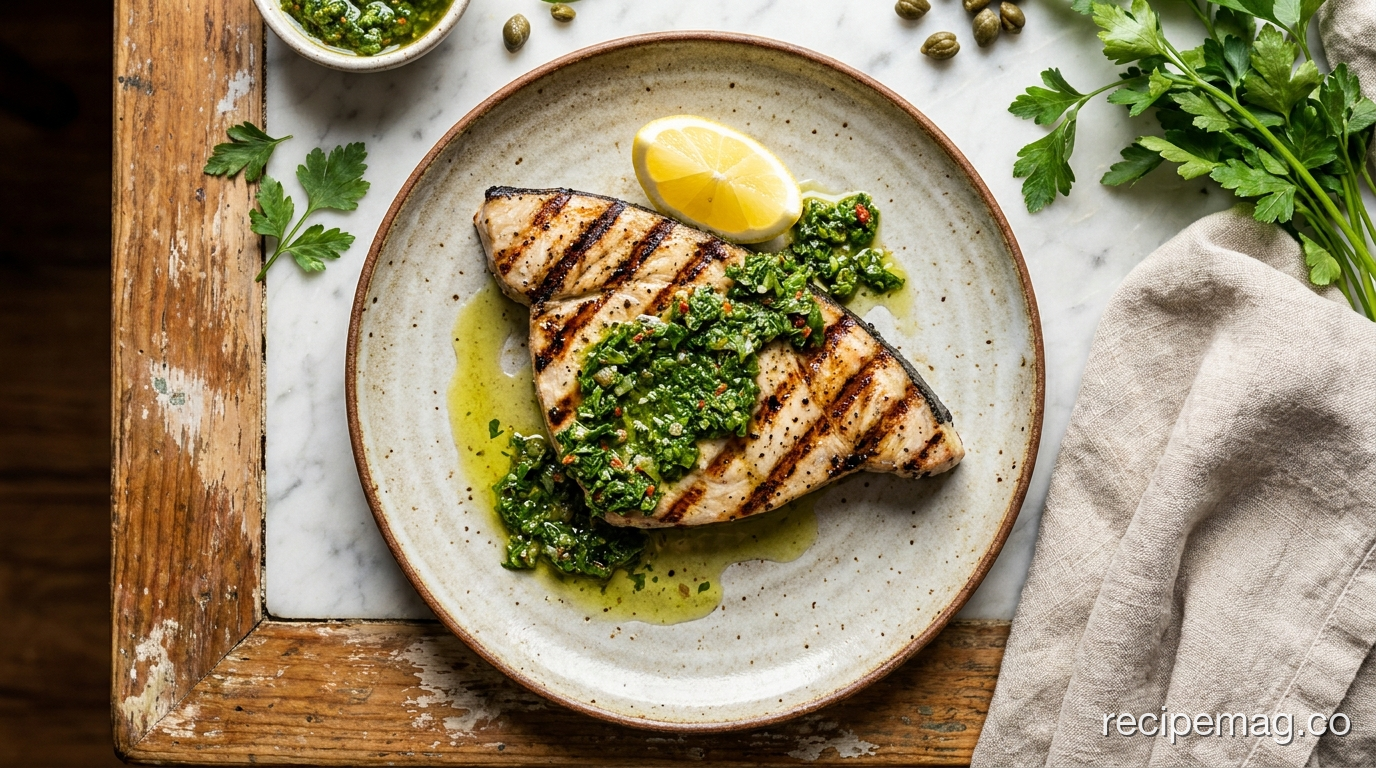
This grilled swordfish recipe gives you meaty, juicy steaks in under 15 minutes on the grill, finished with a bright, herby salsa verde that cuts right through the richness. Swordfish is the ideal grilling fish: firm, dense, and steak-like, so it holds together over high heat instead of falling apart. Grill it to an internal temperature of 130°F for a moist center, since the FDA notes fish is safely cooked at 145°F but continues rising after it leaves the grate (FDA, 2023). Serve four in the time it takes to set the table.
Key Takeaways
- Ready in under 30 minutes total, with only 12 to 14 minutes on the grill.
- Swordfish is firm enough to grill without falling apart, unlike flaky white fish.
- Pull the fish at 130°F internal; carryover heat brings it to a safe, juicy 145°F. (FDA, 2023)
- No-cook salsa verde comes together in a food processor in 5 minutes.
- The biggest mistake is overcooking. Dry swordfish is the most common failure.
Why Swordfish Is the Best Fish for the Grill
Swordfish grills better than almost any other fish because it’s built like a steak, not a fillet. The flesh is dense and firm, so it stays in one piece over direct heat while cod or tilapia would flake apart and fall through the grates. Its meaty texture and moderate fat make it a natural on the grill (Monterey Bay Aquarium Seafood Watch, 2023). You cook it, flip it once, and it behaves.
The flavor is mild and slightly sweet, which makes it a blank canvas. It takes to smoke, char, and bold sauces without getting lost. That’s exactly why a punchy salsa verde works so well against it.
[PERSONAL EXPERIENCE] After years of grilling fish, we still reach for swordfish when we want something foolproof for guests. It’s forgiving in every way except one: it turns dry and chalky the second it overcooks. Nail the timing and it’s the easiest impressive dinner you can put on a grill. That single variable, doneness, is where this whole recipe lives or dies.
Ingredients
Swordfish is widely available fresh or frozen at most fish counters, and demand for it stays strong through grilling season. Americans eat roughly 20 pounds of seafood per person a year, and firm grilling fish like swordfish and tuna are among the summer favorites (NOAA Fisheries, 2023). Look for steaks about an inch thick, with moist, pinkish flesh and no fishy smell.
For the Swordfish
- 4 swordfish steaks, about 1 inch thick (6 to 8 oz each)
- 2 tablespoons olive oil
- 1 teaspoon kosher salt
- ½ teaspoon black pepper
- 1 lemon, cut into wedges for serving
For the Salsa Verde
- 1 cup fresh parsley, packed
- ½ cup fresh basil, packed
- 2 tablespoons fresh mint (optional, but bright)
- 1 garlic clove
- 1 tablespoon capers, drained
- 1 tablespoon red wine vinegar
- Juice of ½ lemon
- ⅓ cup extra-virgin olive oil
- Salt and black pepper to taste
Take the swordfish out of the fridge about 20 minutes before grilling. Room-temperature fish cooks more evenly, so you don’t end up with a scorched exterior and a cold center. Pat the steaks completely dry with paper towels right before oiling, since surface moisture prevents a good sear and encourages sticking.
How to Make Salsa Verde
Salsa verde is a raw herb sauce that takes five minutes and no cooking at all. It’s a classic Italian condiment built from herbs, garlic, capers, acid, and olive oil, and its whole job is to slice through rich food with brightness and salt (Serious Eats, 2022). Against meaty grilled swordfish, it’s a perfect counterweight. Make it first so the flavors settle while you fire up the grill.
How to Make It
- Add the parsley, basil, mint, garlic, and capers to a food processor.
- Pulse a few times until everything is finely chopped but still has texture. Don’t purée it into baby food.
- Add the red wine vinegar and lemon juice. Pulse once or twice to combine.
- With the processor running, drizzle in the olive oil until the sauce loosens into a spoonable, chunky consistency.
- Taste and season with salt and pepper. Add more vinegar if it needs more punch.
[UNIQUE INSIGHT] The move most home cooks miss is treating salsa verde like pesto and blending it smooth. Don’t. The magic is in the texture, little flecks of herb and caper that catch on the fish and give each bite a different burst of flavor. A smooth purée goes flat and one-note. Pulse, don’t blend, and stop while you can still see the individual herbs. That coarse texture is the whole personality of the sauce.
No food processor? Just finely chop everything by hand and stir it together in a bowl. It’s actually the traditional way, and it gives you even more control over the texture.
How to Grill Swordfish Perfectly
Grill swordfish hot and fast, and pull it before you think it’s done. The FDA sets the safe internal temperature for fish at 145°F, but here’s the key: carryover heat keeps cooking the steak after it leaves the grate (FDA, 2023). Pull it at 130°F, let it rest, and it climbs to a safe, juicy 145°F on the plate instead of drying out on the grill.
Step-by-Step Grilling
- Heat the grill to high, around 450 to 500°F. A hot grate is what gives you those clean sear marks and keeps the fish from sticking.
- Oil and season the fish. Pat the steaks dry, brush both sides with olive oil, and season with salt and pepper right before they hit the grill.
- Clean and oil the grate. Scrub it well, then wipe it with an oiled paper towel held in tongs. A clean, oiled grate is your best defense against sticking.
- Grill 5 to 6 minutes on the first side. Lay the steaks down and leave them alone. Don’t poke or move them. They release naturally when seared.
- Flip once and grill 4 to 5 minutes more. The fish should have deep grill marks and feel firm but with a little give.
- Check the temperature. Pull the steaks at 130°F internal at the thickest point.
- Rest for 3 to 5 minutes. Tent loosely with foil. The temperature rises to 145°F and the juices redistribute.
The steaks are ready to flip when they release cleanly from the grate. If they stick, they aren’t seared yet, so give them another 30 to 60 seconds. Forcing a flip tears the surface and leaves half your sear stuck to the grill.
How Do You Know When Swordfish Is Done?
Use a thermometer, not the clock, to judge doneness. Steak thickness and grill heat vary too much for timing alone to work, which is why temperature is the only reliable measure (America’s Test Kitchen, 2022). An instant-read thermometer inserted into the thickest part takes the guesswork out completely. Pull at 130°F and rest, and you’ll hit juicy every time.
No thermometer? Use the visual cue. Perfectly cooked swordfish turns from translucent pink to opaque, off-white, and just barely flakes when nudged with a fork. The center should still look slightly moist. If it flakes into dry, stiff shards, it’s already overcooked.
The margin here is narrow, so err on the side of underdone. You can always throw a steak back on the grill for another minute, but you can’t undo dry, chalky fish. When in doubt, pull it early and let carryover heat finish the job during the rest.
What to Serve with Grilled Swordfish
Grilled swordfish with salsa verde is rich and bold, so it pairs best with light, fresh sides that keep the plate balanced. Grilled vegetables are the obvious match, and they cook right alongside the fish, making the most of a hot grill. Summer is peak grilling season for a reason: outdoor cooking spikes in July, when produce and seafood are both at their best (Hearth, Patio & Barbecue Association, 2023).
Best Side Dishes
- Grilled vegetables. Zucchini, asparagus, bell peppers, or corn char beautifully next to the fish and share the same salsa verde.
- A crisp green salad. A simple lemony arugula or spinach salad keeps the meal light and bright.
- Roasted or grilled potatoes. Crispy potatoes make it more filling without competing with the fish.
- Couscous or orzo. A herbed grain salad soaks up the extra salsa verde and rounds out the plate.
- Grilled bread. A slab of charred sourdough rubbed with garlic is perfect for mopping up sauce.
Whatever you serve, keep a little extra salsa verde on the table. It’s just as good spooned over grilled vegetables, potatoes, or bread as it is on the fish. One sauce can tie the whole plate together.
Grilled Swordfish Steaks with Salsa Verde
Prep Time: 15 minutes | Cook Time: 12 minutes | Serves: 4
Ingredients
Swordfish
- 4 swordfish steaks, about 1 inch thick (6 to 8 oz each)
- 2 tablespoons olive oil
- 1 teaspoon kosher salt
- ½ teaspoon black pepper
- 1 lemon, cut into wedges
Salsa Verde
- 1 cup fresh parsley, packed
- ½ cup fresh basil, packed
- 2 tablespoons fresh mint (optional)
- 1 garlic clove
- 1 tablespoon capers, drained
- 1 tablespoon red wine vinegar
- Juice of ½ lemon
- ⅓ cup extra-virgin olive oil
- Salt and black pepper to taste
Instructions
- Make the salsa verde: pulse parsley, basil, mint, garlic, and capers in a food processor until finely chopped but still textured. Add vinegar and lemon juice, then drizzle in olive oil while pulsing. Season with salt and pepper. Set aside.
- Let the swordfish sit at room temperature 20 minutes. Pat dry, brush with olive oil, and season with salt and pepper.
- Heat the grill to high, 450 to 500°F. Scrub the grate clean and wipe it with an oiled paper towel.
- Grill the steaks 5 to 6 minutes on the first side without moving them. Flip once and grill 4 to 5 minutes more, until the internal temperature reaches 130°F.
- Rest the steaks 3 to 5 minutes, tented with foil, until they reach 145°F.
- Spoon salsa verde over each steak and serve with lemon wedges.
Notes
- Pull the fish at 130°F. Carryover heat brings it to a safe, juicy 145°F during the rest.
- Overcooking is the top mistake. Dry swordfish is chalky, so err on the early side.
- Salsa verde keeps in the fridge for up to 3 days. Bring to room temperature before serving.
- No grill? Sear the steaks in a hot cast-iron pan, 4 to 5 minutes per side.
Frequently Asked Questions About Grilled Swordfish
How do you keep swordfish from drying out on the grill?
Pull it early. The number one cause of dry swordfish is overcooking, so take the steaks off at 130°F internal and let carryover heat bring them to 145°F during a short rest. Grilling over high heat for a short time seals in moisture, while oiling the steaks and the grate prevents sticking and tearing. A quick sear plus an early pull keeps the center juicy.
Can I make this recipe without a grill?
Yes. A hot cast-iron skillet or grill pan works beautifully. Heat it until nearly smoking, add a little oil, and sear the swordfish 4 to 5 minutes per side, pulling it at the same 130°F target. You can also broil the steaks on a foil-lined pan 4 to 5 inches from the heat for a similar time. The salsa verde stays exactly the same.
How far ahead can I make the salsa verde?
Salsa verde can be made up to three days ahead and stored covered in the fridge. The flavors actually deepen as the garlic and capers mellow into the herbs and oil. The herbs may darken slightly, which is purely cosmetic. Bring it to room temperature and give it a quick stir before serving, since the olive oil firms up when chilled.
Is swordfish healthy to eat?
Swordfish is lean, high in protein, and rich in heart-healthy omega-3 fatty acids, selenium, and vitamin D. Like other large predatory fish, it does carry more mercury, so the FDA recommends limiting swordfish to about one serving per week and advises pregnant people to avoid it. For most healthy adults eating it occasionally, it’s a nutritious, protein-packed choice for a summer dinner.
How thick should swordfish steaks be for grilling?
Aim for steaks about one inch thick. That thickness gives you enough time to build a good sear and grill marks without overcooking the center before the outside browns. Thinner steaks cook too fast and dry out easily, while much thicker cuts risk a raw middle. If your steaks vary, adjust grill time and always check the internal temperature to confirm doneness.
Grilled swordfish with salsa verde is the kind of dinner that looks like restaurant work but takes 30 minutes start to finish. Firm, meaty fish, a hot grill, and a bright herb sauce are all it takes to turn a weeknight into something that feels special.
The whole recipe hinges on one number: pull the fish at 130°F and let it rest. Get that right and everything else is easy. Make the salsa verde first, get your grill screaming hot, and keep an instant-read thermometer close.
Fire up the grill this weekend and give it a try. Once you see how simple juicy swordfish can be, it’ll earn a permanent spot in your summer rotation.
