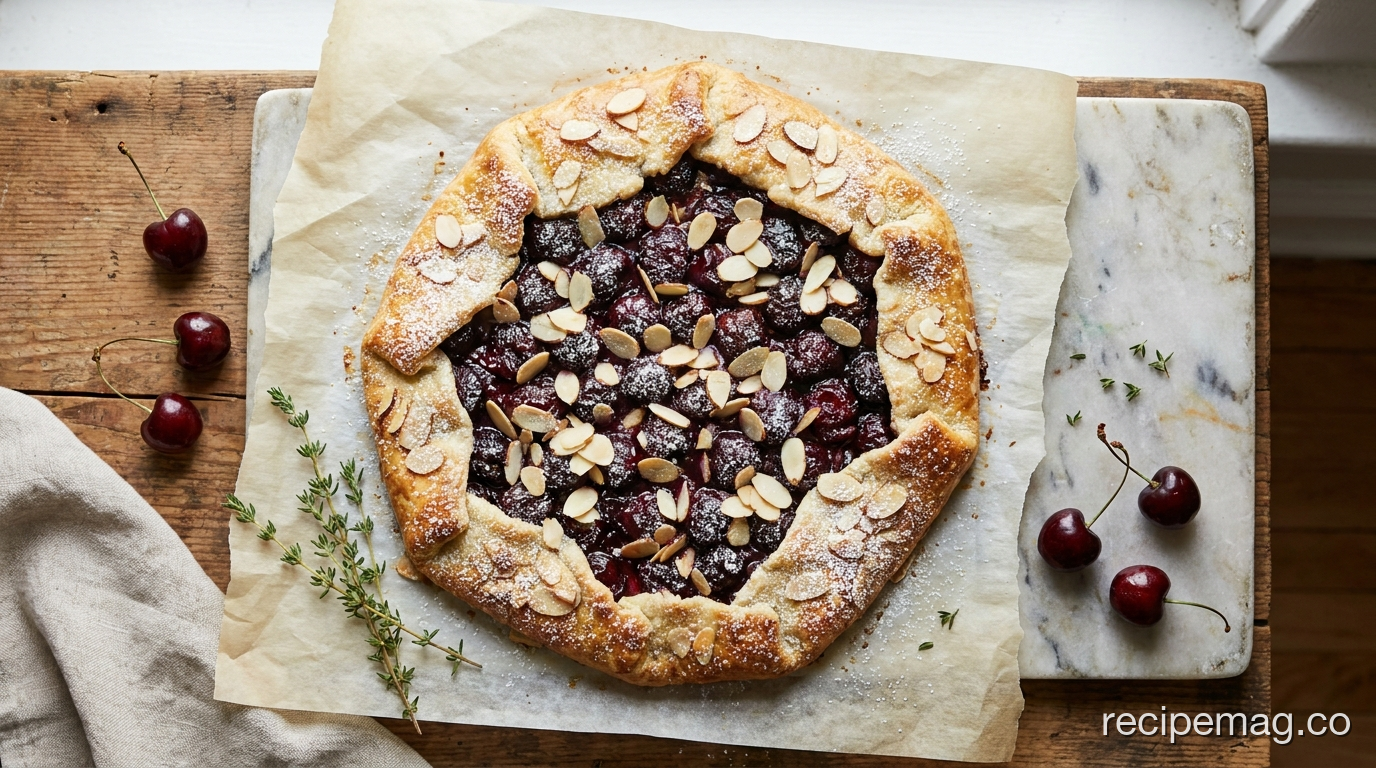
A galette is a free-form, single-crust tart baked flat on a sheet pan, and it’s the easiest way to turn peak-season cherries into dessert. This one layers sweet-tart cherries over an almond frangipane on a buttery, flaky crust. No pie dish, no perfect crimping, no stress. Cherries are worth the effort while they last: the USDA reports the U.S. sweet cherry season runs just 6 to 8 weeks, roughly late May through early July (USDA AMS, 2023). Bake this while they’re at their best.
Key Takeaways
- A galette skips the pie dish and the crimping, so it’s far more forgiving than a pie.
- Almond frangipane under the fruit soaks up cherry juice and keeps the crust crisp.
- Total time is about 90 minutes, including a 30-minute dough chill that keeps the crust flaky.
- Fresh cherries peak for only 6 to 8 weeks in the U.S., so bake this in June and July. (USDA AMS, 2023)
- Frozen or jarred cherries work off-season with a small tweak to the sugar and starch.
Why a Galette Is the Best Way to Bake Cherries
A galette gives you the flavor and flakiness of a pie with a fraction of the technique. Because you fold the dough loosely over the filling and bake it flat, there’s no soggy bottom crust to fight and no lattice to weave. The rustic look is the whole appeal: uneven edges are a feature, not a flaw. For anyone nervous about pastry, it’s the friendliest place to start.
Cherries suit this format especially well. They hold their shape under heat and release just enough juice to create a glossy, jammy filling without flooding the crust. Pair them with almond, their classic partner, and you get a dessert that tastes far more sophisticated than the effort it takes.
[PERSONAL EXPERIENCE] We’ve made this galette with a dozen different fruits, and cherries paired with frangipane is the version we come back to every summer. The frangipane is the quiet hero. It forms a barrier between juice and crust, so even a rustic tart stays crisp underneath. Skip it and you’ll notice the difference the next day.
Ingredients for Cherry Almond Galette
Everything here is straightforward, and the fruit does the heavy lifting. Cherries bring more than flavor: they’re rich in anthocyanins, the same pigments that give them their deep color, which USDA FoodData Central lists among their concentrated antioxidant compounds (USDA FoodData Central, 2023). Use the ripest, darkest cherries you can find, and keep the crust cold at every step.
For the Crust
- 1¼ cups (160g) all-purpose flour
- 1 tablespoon granulated sugar
- ¼ teaspoon salt
- ½ cup (113g) unsalted butter, cold and cubed
- 3 to 5 tablespoons ice water
For the Almond Frangipane
- 4 tablespoons (57g) unsalted butter, softened
- ⅓ cup (67g) granulated sugar
- ½ cup (48g) almond flour
- 1 large egg
- ½ teaspoon almond extract
- 1 tablespoon all-purpose flour
For the Cherry Filling
- 3 cups (about 450g) fresh sweet cherries, pitted and halved
- 2 tablespoons granulated sugar
- 1 tablespoon cornstarch
- 1 teaspoon fresh lemon juice
- Pinch of salt
To Finish
- 1 egg, beaten (for egg wash)
- 2 tablespoons sliced almonds
- 1 tablespoon coarse sugar (turbinado works well)
Cold butter is non-negotiable for a flaky crust. Cube it and return it to the fridge while you measure everything else. The little pockets of solid butter melt in the oven and create steam, and that steam is what lifts the pastry into flaky layers.
How to Make the Galette Dough
Flaky pastry comes down to cold fat and a light hand. America’s Test Kitchen advises keeping the butter and water as cold as possible and resting the dough for at least 30 minutes, since chilling relaxes gluten and firms the fat for a tender result (America’s Test Kitchen, 2022). Don’t rush this stage. A warm, overworked dough is the most common reason a galette turns out tough.
- Combine the dry ingredients. Whisk the flour, sugar, and salt in a large bowl.
- Cut in the butter. Add the cold cubed butter and work it in with your fingertips or a pastry cutter until the mixture looks like coarse crumbs with some pea-sized pieces of butter still visible. Those visible flecks matter.
- Add ice water gradually. Sprinkle in 3 tablespoons of ice water and toss with a fork. Add more, one tablespoon at a time, just until the dough holds together when you squeeze it. It should be shaggy, not wet.
- Chill. Pat the dough into a disk, wrap it, and refrigerate for at least 30 minutes. This step is where flakiness is won or lost.
How to Assemble and Bake a Cherry Galette
With the dough chilled, assembly moves fast. The order matters: frangipane first, cherries second, fold last. That sequence keeps the crust crisp and the fruit juicy without leaking through the bottom. Work on parchment so you can slide the whole galette onto the sheet pan without lifting it by hand.
Make the Frangipane
- Beat the softened butter and sugar until light, about 1 minute.
- Mix in the egg and almond extract until smooth.
- Stir in the almond flour and the tablespoon of all-purpose flour to form a soft paste. Set aside.
Prepare the Cherries
- Toss the pitted, halved cherries with sugar, cornstarch, lemon juice, and a pinch of salt.
- Let them sit for 5 minutes while you roll the dough. The cornstarch will thicken the juices as they bake.
Assemble and Bake
- Roll the dough. On a floured sheet of parchment, roll the chilled disk into a rough 12-inch circle about ⅛ inch thick. Don’t aim for perfect edges.
- Spread the frangipane. Leaving a 2-inch border, spread the almond frangipane over the center of the dough.
- Add the cherries. Spoon the cherries over the frangipane, leaving behind most of the pooled juice so the filling doesn’t run.
- Fold the border. Fold the bare edge of dough up and over the fruit, pleating loosely as you go. The center stays open.
- Chill again, briefly. Slide the parchment onto a sheet pan and chill the assembled galette for 15 minutes while the oven heats to 400°F (200°C). Cold dough holds its shape.
- Wash and top. Brush the folded crust with beaten egg, then scatter sliced almonds and coarse sugar over the crust and exposed fruit.
- Bake for 40 to 45 minutes, until the crust is deep golden and the cherry juices bubble at the center. If the almonds brown too fast, tent loosely with foil.
- Cool before slicing. Let the galette rest at least 20 minutes so the filling sets. Warm, not hot, is the sweet spot.
Tips for the Best Cherry Almond Galette
Small habits separate a good galette from a great one. Most of them come back to temperature and moisture control, the two things that decide whether your crust stays crisp. None of these steps add real time, and each one earns its place.
[UNIQUE INSIGHT] The single most useful trick is leaving the cherry juice behind in the bowl when you transfer the fruit. Most recipes tell you to pile everything on, but that pooled liquid is what makes a galette weep and soften. Drain it, and if you like, simmer that juice down into a quick glaze to brush over the baked tart. You get shine without the sog.
- Keep everything cold. If your kitchen is warm, chill the dough between steps. Soft butter equals a greasy, dense crust.
- Don’t skip the frangipane. It’s the moisture barrier that keeps the base crisp for days, not hours.
- Pit cherries over a bowl. A straw or chopstick pushes pits out cleanly and saves the juice.
- Taste your cherries first. Very sweet cherries need less sugar; tart ones may need a touch more. Adjust the 2 tablespoons up or down.
- Serve warm with something cold. Vanilla ice cream or lightly whipped cream is the classic finish.
Fresh Cherry Almond Galette
Prep Time: 30 minutes | Chill Time: 45 minutes | Cook Time: 45 minutes | Serves: 8
Ingredients
Crust
- 1¼ cups (160g) all-purpose flour
- 1 tablespoon granulated sugar
- ¼ teaspoon salt
- ½ cup (113g) cold unsalted butter, cubed
- 3 to 5 tablespoons ice water
Frangipane
- 4 tablespoons (57g) softened unsalted butter
- ⅓ cup (67g) granulated sugar
- ½ cup (48g) almond flour
- 1 large egg
- ½ teaspoon almond extract
- 1 tablespoon all-purpose flour
Filling and Finish
- 3 cups pitted, halved fresh cherries
- 2 tablespoons granulated sugar
- 1 tablespoon cornstarch
- 1 teaspoon lemon juice, pinch of salt
- 1 egg, beaten; 2 tablespoons sliced almonds; 1 tablespoon coarse sugar
Instructions
- Make the dough: whisk flour, sugar, and salt. Cut in cold butter to coarse crumbs. Add ice water a tablespoon at a time until it just holds. Pat into a disk, wrap, and chill 30 minutes.
- Make the frangipane: beat butter and sugar, mix in egg and almond extract, then stir in almond flour and flour.
- Toss cherries with sugar, cornstarch, lemon juice, and salt. Rest 5 minutes.
- Roll dough to a 12-inch circle on parchment. Spread frangipane in the center, leaving a 2-inch border. Add cherries, leaving juice behind. Fold and pleat the border over the fruit.
- Chill the assembled galette 15 minutes. Heat oven to 400°F (200°C). Brush crust with egg wash; top with almonds and coarse sugar.
- Bake 40 to 45 minutes until golden and bubbling. Cool at least 20 minutes before slicing.
Notes
- Frozen cherries: thaw and drain well, then add an extra teaspoon of cornstarch.
- No almond flour? Substitute finely ground blanched almonds, or omit the frangipane and dust the base with 2 tablespoons ground almonds or breadcrumbs.
- Store covered at room temperature for 2 days or refrigerate for 4. Re-crisp in a 325°F oven for 10 minutes.
Frequently Asked Questions About Cherry Galette
Can I use frozen cherries for this galette?
Yes, frozen cherries work well off-season. Thaw them fully and drain the liquid, which is heavier than fresh cherry juice, then add an extra teaspoon of cornstarch to compensate. Don’t toss frozen cherries in warm and expect them to hold up; the excess water will make the filling soupy. Pat them dry before mixing with the sugar and starch for the best result.
What kind of cherries are best for a galette?
Sweet dark cherries like Bing give the richest color and flavor, and they’re the easiest to find at peak season. Sour cherries such as Montmorency make an outstanding, more traditional pie-style galette, but they need extra sugar. If you use sour cherries, increase the filling sugar to about ¼ cup and taste as you go. Both work beautifully with almond frangipane.
Why did my galette leak juice and get soggy?
Two usual culprits: too much cherry juice in the filling, or warm dough that lost its structure. Leave most of the pooled juice in the bowl when you add the fruit, and make sure the frangipane fully covers the base as a moisture barrier. Chilling the assembled galette before baking also helps the crust hold its shape and seal against leaks.
Do I have to blind bake the crust?
No, and that’s part of a galette’s charm. Because it bakes flat and open on a sheet pan, the crust crisps directly in the oven without any pre-baking. The frangipane layer protects the base from the fruit’s moisture, so you skip the fuss of blind baking entirely. Just keep the dough cold before it goes in and bake until the crust is deep golden.
Can I make the galette ahead of time?
Yes. You can make and chill the dough up to 2 days ahead, or freeze it for a month. The fully assembled, unbaked galette can be frozen on its sheet pan, then baked straight from frozen with a few extra minutes added. Baked galette keeps at room temperature for 2 days; re-crisp slices in a 325°F oven for about 10 minutes before serving.
A cherry almond galette is proof that the most impressive summer desserts are often the least fussy. There’s no pie dish to wrestle, no crimp to perfect, just cold butter, ripe cherries, and a little almond paste doing quiet, delicious work.
Make it once and it becomes a template. Swap in plums or peaches as the season turns, keep the frangipane, and you’ll have a go-to tart from June clear through August. The technique never changes; only the fruit does.
Cherries won’t wait around. Buy a big bag this week, pit them over a bowl, and bake this galette while they’re at their peak. Serve it warm with something cold on the side, and you’ll understand why the rustic version wins.
