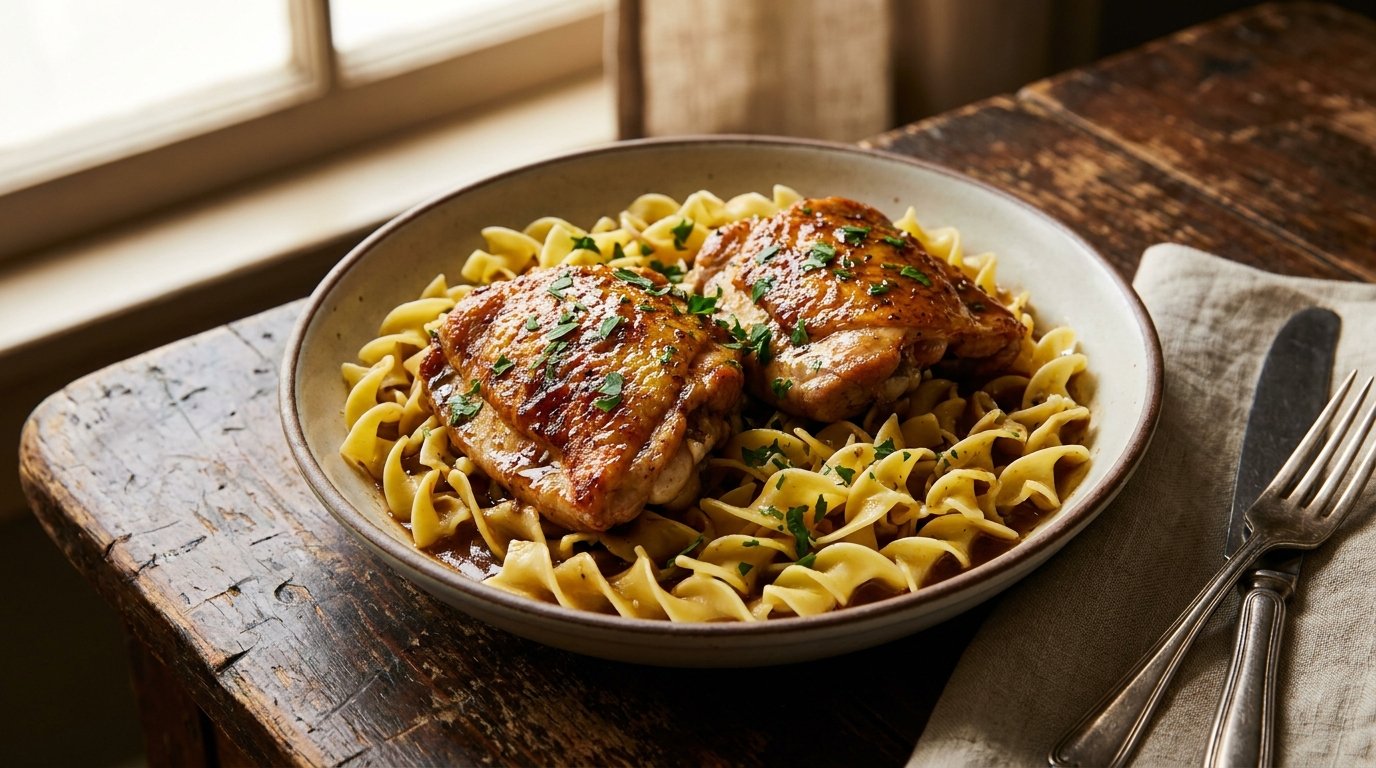
There is something universally soothing about sitting down to a warm, savory bowl of homemade comfort food at the end of a long day. When the weather turns chilly or you simply need a culinary hug, a plate of chicken thighs and buttered noodles always hits the spot. This classic combination pairs perfectly rendered, crispy-skinned poultry with rich, glossy pasta for a deeply satisfying meal. It reminds many of us of Sunday dinners at grandma’s house, yet it is easy enough to whip up on a busy Tuesday evening.
This affordable, family-friendly dinner has seen a massive resurgence in popularity among modern home cooks for good reason. Dark meat poultry is naturally juicier and more flavorful, making it practically foolproof for chefs of any skill level. Paired with a simple, carbohydrate-rich side dish, it creates a balanced plate that pleases picky eaters and gourmands alike. In fact, many people are discovering that returning to these basic, hearty staples saves both time and grocery money compared to ordering takeout.
In this comprehensive guide, we will explore everything you need to know about creating the ultimate version of this beloved dish. You will discover expert searing techniques, the best types of pasta to use, and simple ways to elevate the overall flavor profile. Whether you want to master the perfect pan sauce or just get a hearty dinner on the table quickly, these insights will transform your routine. Let’s dive into making this timeless recipe your new household favorite.
The Magic of Chicken Thighs and Buttered Noodles
Why Dark Meat Wins Every Time
White meat breast cuts may be incredibly popular for lean meal prep, but dark meat holds the secret to unmatched flavor and juiciness. Thighs contain more myoglobin, a unique protein that gives the meat its darker hue and richer, more robust taste. This extra fat content also acts as a built-in insurance policy against accidental overcooking on a busy night. You can leave them in the hot pan a few minutes too long, and they will still remain incredibly tender.
When making chicken thighs and buttered noodles, the rendered fat from the dark meat provides the perfect savory base for your sauce. As the skin crisps up in the skillet, it releases liquid gold, which is packed with deep, roasted poultry goodness. You can then use this highly flavorful fat to coat your pasta or create a rich, velvety pan gravy. It is a brilliant culinary trick to maximize flavor without relying on heavy, sodium-packed store-bought sauces.
The Secret to Perfect Egg Noodles
Not all pasta shapes are created equal when it comes to absorbing rich, buttery sauces gracefully. Wide, flat egg noodles are the traditional and vastly superior choice for this particular stovetop dinner. Their porous texture and broad surface area allow the melted butter and pan juices to cling effortlessly to every single strand. This ensures that every bite you take is perfectly seasoned, slippery, and satisfyingly rich.
Cooking your pasta properly is just as crucial as selecting the right shape from the grocery store aisle. You should heavily salt your boiling water until it tastes like the sea, as this is your only chance to season the pasta itself. Always cook the noodles just to al dente, draining them a minute before they become fully soft and mushy. They will continue to cook slightly when you toss them with your warm butter and fresh garden herbs.
Creating the Ultimate Pan Sauce
The culinary magic truly happens in your skillet after the poultry has finished cooking and is resting on the cutting board. Those brown, caramelized bits stuck to the bottom of the pan are called fond, and they are pure flavor treasure. Deglazing the hot pan with a splash of broth or dry white wine lifts these flavorful morsels into a fragrant liquid base. This simple restaurant technique elevates the entire homemade meal from basic to professional quality.
To beautifully finish your pan sauce, vigorously whisk in a tablespoon of cold butter off the residual heat. This classic French technique, known as monter au beurre, creates a glossy, emulsified finish that perfectly coats your protein. Pouring this luxurious sauce over your chicken thighs and buttered noodles ties the whole dish together beautifully. It elegantly bridges the gap between the ultra-crispy meat and the soft, comforting bed of pasta.
Source www.dreamstime.com
Essential Ingredients for Recipe Success
Selecting the Best Poultry
The foundation of a great, memorable meal always starts with sourcing high-quality, fresh ingredients from the market. When shopping, look specifically for bone-in, skin-on cuts to achieve the best possible texture and flavor profile. The bone acts as an insulator, helping to conduct heat evenly throughout the meat and preventing it from drying out. Meanwhile, the skin provides that irresistible, crispy crunch that contrasts so wonderfully with the soft, yielding pasta.
If you are drastically short on time, boneless, skinless options can work, but you will sacrifice significant flavor and texture. For those seeking maximum efficiency, quick weeknight dinners often utilize these boneless cuts for their rapid stovetop cooking times. However, taking the extra fifteen minutes to slowly render the fat from skin-on cuts is almost always worth the effort. Always remember to pat the skin completely dry with paper towels before cooking to guarantee a proper, golden sear.
Butter and Seasoning Ratios
You simply cannot make this classic dish properly without a generous amount of high-quality butter. European-style butters with a higher butterfat content (usually around 82%) melt beautifully and provide a much creamier mouthfeel. Because you are using it to generously coat the pasta, choose an unsalted variety so you can dictate the overall sodium level. This allows you to season the entire dish aggressively without crossing the line into overly salty territory.
A simple but robust seasoning blend is all you really need to make the natural flavors pop. A balanced mix of kosher salt, freshly cracked black pepper, garlic powder, and smoked paprika creates a wonderful crust. Be sure to season the meat generously on all sides, gently pressing the dry spices directly into the flesh. Let the seasoned meat sit at room temperature for about twenty minutes before it hits the sizzling hot pan.
Elevating with Fresh Herbs
Fresh herbs are the absolute perfect way to cut through the heavy richness of the butter and rendered fat. Flat-leaf parsley is the traditional garnish of choice, offering a clean, peppery brightness that balances the comfort-food elements. Chopping the parsley finely and tossing it directly into the warm pasta ensures the flavor distributes evenly. The vibrant green flecks also make the final monochromatic plate look incredibly visually appealing.
If you want to experiment in the kitchen, fresh thyme and rosemary pair beautifully with roasted poultry. Add whole sprigs to the hot skillet during the last few minutes of cooking to infuse the fat with aromatic essential oils. Just remember to pluck out and discard the woody stems before serving the meal to your family. A final squeeze of fresh lemon juice over the top adds a crucial hit of acidity to awaken the entire flavor profile.
Step-by-Step Cooking Techniques
Getting Crispy Skin on the Stovetop
Achieving perfectly crispy, shatteringly crunchy skin requires a bit of patience and proper stovetop temperature control. Start by placing your seasoned meat skin-side down in a cold cast-iron skillet, then gradually turn the heat to medium. This clever cold-start technique allows the fat to slowly render out before the skin actually begins to brown. It prevents the skin from shrinking rapidly and ensures a uniform, golden-brown crust across the entire surface.
You must resist the overwhelming urge to move, poke, or flip the meat for at least ten to twelve minutes. The skin will naturally release itself from the bottom of the pan when it has developed a proper, hard sear. If you feel resistance when trying to lift it with your metal tongs, simply give it another minute or two. Once flipped, the meat will only need a few more minutes to finish cooking through to a safe internal temperature.
Boiling and Coating the Pasta
Timing your pasta pot to finish at the exact same moment as your protein is a crucial culinary skill to master. Start boiling your heavily salted water right when you first flip your sizzling poultry in the skillet. Egg noodles typically only need about six to eight minutes in rolling water to reach a perfect al dente texture. Drain them well in a colander, but always reserve about half a cup of the starchy pasta water just in case.
While the cooked pasta is still steaming hot, immediately toss it with your cold butter and chopped fresh herbs. The residual heat from the noodles will melt the butter rapidly, creating a silky coating rather than a greasy, separated pool. If the pasta seems a bit sticky, thick, or dry, add a tiny splash of that reserved starchy cooking water. This starchy liquid acts as a magical binder, helping emulsify the butter into a cohesive, clinging sauce.
Bringing the Dish Together
Thoughtful presentation and careful final assembly can elevate a simple homemade dinner into a truly memorable feast. Create a wide, generous bed of the glossy, herb-flecked pasta in a shallow serving bowl or individual plates. Carefully place the rested, crispy chicken gently on top, ensuring the crispy skin remains exposed so it doesn’t steam and get soggy. The resting juices left on the cutting board should always be poured right over the pasta for an extra flavor boost.
For incredibly busy households, this streamlined method of creating cohesive meals in stages is an absolute lifesaver. It shares a lot of practical DNA with the convenience of one pot pasta recipes, minimizing the number of heavy dishes you need to wash later. Serve the hearty meal immediately while the pasta is piping hot and the skin retains its maximum, satisfying crunch. A quick side of roasted green beans or a simple balsamic side salad provides the perfect crisp contrast.
Nutritional Profile and Flavor Variations
Balancing Comfort and Nutrition
While this meal is undeniably rich and satisfying, it can easily fit into a balanced weekly diet when portioned correctly. Dark meat provides essential daily nutrients like iron, zinc, and B vitamins, which actively support energy levels and immune function. The hearty egg noodles offer complex carbohydrates that provide sustained energy, especially beneficial for growing children and highly active adults. Serving a modest, measured portion of pasta alongside a satisfying piece of protein keeps overall calorie counts reasonable.
You can easily modify the fat content slightly without losing the comforting soul of the original dish. Trimming excess flabby fat from the edges of the cuts before cooking reduces unnecessary calories while entirely preserving the flavorful skin. Using half butter and half extra-virgin olive oil to toss the pasta still provides a rich mouthfeel with added heart-healthy fats. Ultimately, homemade comfort food made from whole, recognizable ingredients is always a significantly better choice than highly processed frozen dinners.
Adding Vegetables for Color and Crunch
Incorporating fresh or frozen vegetables directly into the pasta turns this dish into a complete, balanced one-bowl meal. Frozen peas are a classic, beloved addition; simply stir them into the boiling pasta water during the final minute of cooking. They add vibrant, attractive bursts of sweetness that contrast beautifully with the deep, savory, buttery notes. Sautéed cremini mushrooms are another fantastic option, as they eagerly soak up the rendered poultry fat like little sponges.
If you want to boost the nutritional value even further, consider aggressively tossing in some hearty leafy greens. Fresh baby spinach or finely chopped kale will wilt down quickly and beautifully when mixed into the hot, freshly drained pasta. Blistered cherry tomatoes can also add a delightful, juicy acidity that perfectly cuts through the richness of the main ingredients. These incredibly simple additions rapidly increase the daily fiber content and make the meal visually stunning on the table.
Spice Tweaks for Adventurous Eaters
The traditional seasoning profile is intentionally mild and comforting, but the foundational recipe handles bold spices brilliantly. Adding a heavy pinch of crushed red pepper flakes to the melting butter gives the pasta a subtle, warming heat. A generous dash of Cajun or Creole seasoning on the poultry skin adds a beautiful reddish hue and a punch of zesty flavor. These minor, effortless tweaks keep the recipe exciting even if it makes a frequent, highly requested appearance on your dinner rotation.
For a more globally inspired take, consider adding a teaspoon of fragrant curry powder and a splash of coconut milk to the pan sauce. Alternatively, a heavy sprinkle of grated parmesan cheese and a splash of heavy cream can push the dish into decadent Alfredo territory. The beauty of chicken thighs and buttered noodles is its incredible versatility as a blank canvas for your favorite flavor profiles. You can fully customize it weekly based on whatever spices you currently have sitting neglected in your pantry.
Chicken Cuts Compared: Thighs vs. Breasts
When deciding what type of poultry to purchase for your weekly dinners, it immensely helps to understand the core differences between cuts. While breasts are undeniably popular for diets, thighs almost always provide better, tastier results for stovetop skillet meals. Below is a detailed, side-by-side breakdown of how these two popular options compare across various important culinary categories.
| Feature | Bone-In Thighs | Boneless Breasts |
|---|---|---|
| Flavor Profile | Incredibly rich, savory, and deeply chicken-flavored due to higher fat and myoglobin content. | Very mild and clean; acts primarily as a blank canvas for heavy marinades and sauces. |
| Texture & Juiciness | Exceptionally tender; high fat content keeps them juicy even if accidentally overcooked. | Firm texture; can easily become dry, stringy, and chalky if overcooked by even a minute. |
| Average Cost | Highly economical and budget-friendly, often pricing out at half the cost of white meat per pound. | Noticeably more expensive due to extremely high consumer demand and extra processing costs. |
| Best Cooking Methods | Pan-searing, slow braising, roasting, and grilling (takes remarkably well to high heat fat rendering). | Gentle poaching, quick stir-frying, or pounding very thin for schnitzel or rapid pan-frying. |
| Forgiveness Factor | Extremely high. Very hard to ruin, making them the absolute ideal choice for beginner home cooks. | Very low. Requires careful, constant temperature monitoring with a digital meat thermometer. |
Expert Tips for Flawless Chicken Thighs and Buttered Noodles
Achieving stunning, restaurant-quality results at home is all about mastering a few small but highly impactful details. Follow these professional techniques to elevate your simple stovetop dinner from just good to truly spectacular.
- Temper the Meat: Pull your raw poultry from the refrigerator 20 to 30 minutes before you plan on cooking. Room-temperature meat sears much more evenly than cold meat, preventing the hot pan temperature from dropping drastically when the meat hits the metal.
- Dry the Skin Thoroughly: Surface moisture is the absolute enemy of a crisp, golden sear. Use heavy paper towels to violently blot every single inch of the skin completely dry before applying any cooking oil or dry seasoning.
- Season from High Above: Sprinkle your kosher salt and dry spices from at least 12 inches above the wooden cutting board. This chef technique ensures an even, rain-like distribution of flavor rather than concentrated, overly salty clumps on the meat.
- Use a Cold Pan Start: Place the skin-side down in an entirely unheated cast iron pan, then turn on the gas burner. This slowly, methodically renders the thick subcutaneous fat, resulting in a shatteringly crisp texture that will not get soggy easily.
- Save the Pasta Water: Always remember to reserve a coffee mug full of the starchy boiling liquid right before draining your noodles. Adding a tiny splash of this to your melted butter helps create a creamy, emulsified sauce that coats every strand perfectly.
- Rest Before Serving: Allow your fully cooked protein to rest undisturbed on a cutting board for at least five full minutes before serving. This crucial step allows the internal juices to redistribute properly, ensuring every single bite remains succulent and flavorful.
- Garnish Generously: Do not ever skimp on the final bright touches right before serving the plate. A heavy, generous sprinkle of fresh, chopped parsley and a big squeeze of lemon juice will instantly brighten the heavy, rich flavors.
Frequently Asked Questions about chicken thighs and buttered noodles
Can I use boneless skinless chicken thighs for this recipe?
Yes, you can absolutely use boneless, skinless cuts if you prefer a leaner meal or desperately need to save time. They will cook much faster, usually taking only five to seven minutes per side over medium-high heat. However, you will sadly miss out on the ultra-crispy skin and the extra rendered fat that beautifully flavors the pasta.
How do I safely store and reheat my leftovers?
Store any leftover chicken thighs and buttered noodles in a highly airtight container in the refrigerator for up to four days. To reheat, microwave the pasta very gently with a tiny splash of water to revive the hardened butter sauce. For the meat, reheat it in a toaster oven or air fryer at 350°F to help expertly recrisp the soggy skin.
What is the absolute best type of pasta to use?
Wide, flat egg noodles are the traditional, time-tested, and best choice for this comforting, rich dish. Their broad surface area allows the melted, warm butter and savory pan juices to coat them thoroughly and evenly. If you cannot find egg noodles, pappardelle, fettuccine, or even large bowtie pasta make perfectly excellent, sturdy substitutes.
How can I thicken the butter sauce so it isn’t watery?
To create a thicker, noticeably creamier sauce without adding heavy cream, rely solely on the starchy water from your boiling pot. Whisk about a quarter cup of this hot, starchy water vigorously into your completely melted butter. The starches bind tightly with the fat, creating a silky emulsion rather than a thin, unappealing oily coating.
Can I make this dish ahead of time for meal prep?
While this meal is undeniably best enjoyed fresh to maximize the crispy skin, you can prep components well in advance. You can cook the pasta and store it tossed with a little oil, and season the raw meat a full day ahead. When you are ready to eat, simply sear the protein fresh and warm the pre-cooked pasta in melted butter.
Why did my chicken skin stick terribly to the pan?
Skin usually sticks stubbornly when the pan was not properly preheated or the meat was aggressively moved too soon. If using the cold-start method, leave the meat completely untouched until the fat fully renders and it naturally releases itself. Using a well-seasoned cast iron skillet or a high-quality, heavy-bottomed stainless steel pan also actively prevents sticking.
What side dishes pair well with this heavy meal?
Because chicken thighs and buttered noodles are quite rich and heavy, light and highly acidic side dishes pair perfectly. A crisp, peppery arugula salad dressed with a sharp lemon vinaigrette helps cut right through the heavy buttery notes. Roasted fresh asparagus, steamed broccoli, or garlic-sauteed green beans also make excellent, highly nutritious companions.
Is it safe if my chicken thighs look slightly pink near the bone?
Dark meat naturally contains significantly more myoglobin, which can sometimes retain a slight pinkish hue even when fully and safely cooked. The only reliable, foolproof way to ensure safety is by utilizing a high-quality digital meat thermometer. As long as the internal temperature registers at least 165°F (and ideally 175°F for maximum tenderness), it is perfectly safe to consume.
Mastering a plate of chicken thighs and buttered noodles is like adding a brilliant secret weapon to your culinary arsenal. It is the absolute perfect marriage of simple, affordable ingredients transformed through proper stovetop technique into something truly spectacular. The crispy, highly savory skin contrasts beautifully with the rich, tender meat, while the glossy, herb-flecked pasta provides the ultimate comfort food base. By utilizing the cold-start searing method and properly emulsifying your butter sauce, you can easily produce restaurant-quality results in your own kitchen any night of the week.
Do not be afraid to customize this excellent foundational recipe to suit your family’s unique daily tastes and dietary preferences. Whether you add a handful of vibrant green peas, a dash of spicy red pepper flakes, or a heavy squeeze of fresh lemon, the core dish remains highly resilient and delicious. The next time you find yourself staring blankly into the refrigerator after a long, exhausting day, remember this classic combination. Grab your favorite heavy cast iron skillet, boil a large pot of water, and start cooking up a bowl of pure, satisfying comfort today!
